
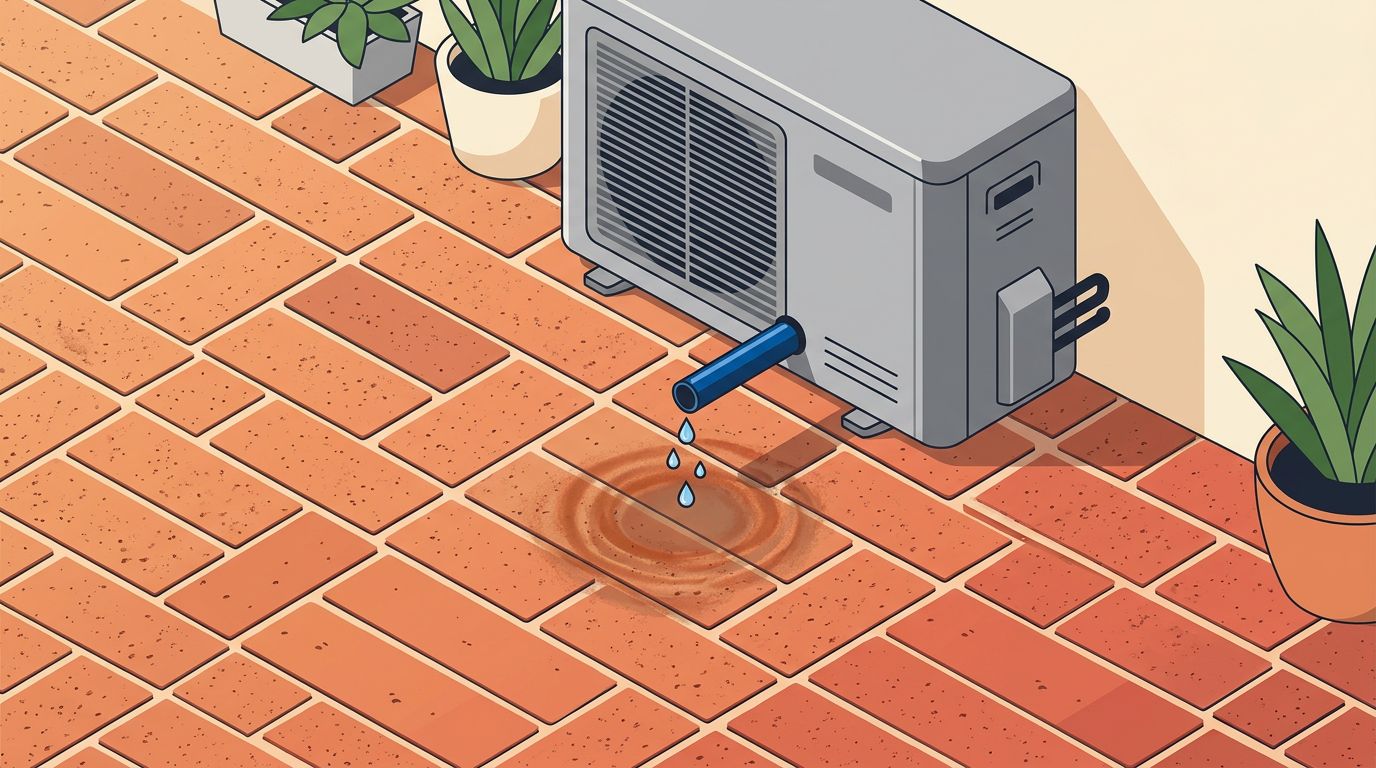
I see AC drip line stains on brick pavers all the time, especially on driveways, patios, and lanais. The mark usually starts under the condensate drain outlet of an air conditioning unit, then spreads into a rusty brown or dirty orange patch that looks much worse than the original drip itself.
Brick pavers are porous, and that is half the problem. The other half is repetition, as the same persistent moisture hits the same spot day after day until the stain settles deep into the material.
Key Takeaways
- Brick pavers are porous, meaning persistent dripping from AC condensate lines allows moisture, algae, and rust particles to penetrate deep into the material over time.
- Environmental factors, particularly in hot and humid climates like Florida, accelerate staining by preventing surfaces from drying and causing sediments to bake into the paver surface.
- Effective cleaning requires a cautious approach; high-pressure washing can damage the face of the brick or erode joint sand, so soft washing or professional methods are often safer.
- Long-term prevention involves extending the drain line away from walkways, flushing the system with vinegar, and maintaining a high-quality sealer on your pavers to create a protective barrier.
Why the drip line leaves a stain
The water coming out of an AC condensate drain line may look harmless, but the line itself often carries more than clear water. Dust from the unit, algae growth, rust from nearby metal, and even mold and mildew can all ride along with the runoff.
Once that mix lands on brick pavers, it does what liquid always wants to do; it follows the low spots and slips into the pores. If the pavers are unsealed, the water stains can move below the surface fast. If the joints are open, the sand can hold moisture and keep the discoloration alive longer than you expect.
Heat makes it worse. When the sun dries the water quickly, whatever was carried in the drip gets left behind. That is why the stain often looks baked in, even when the source is a tiny leak.
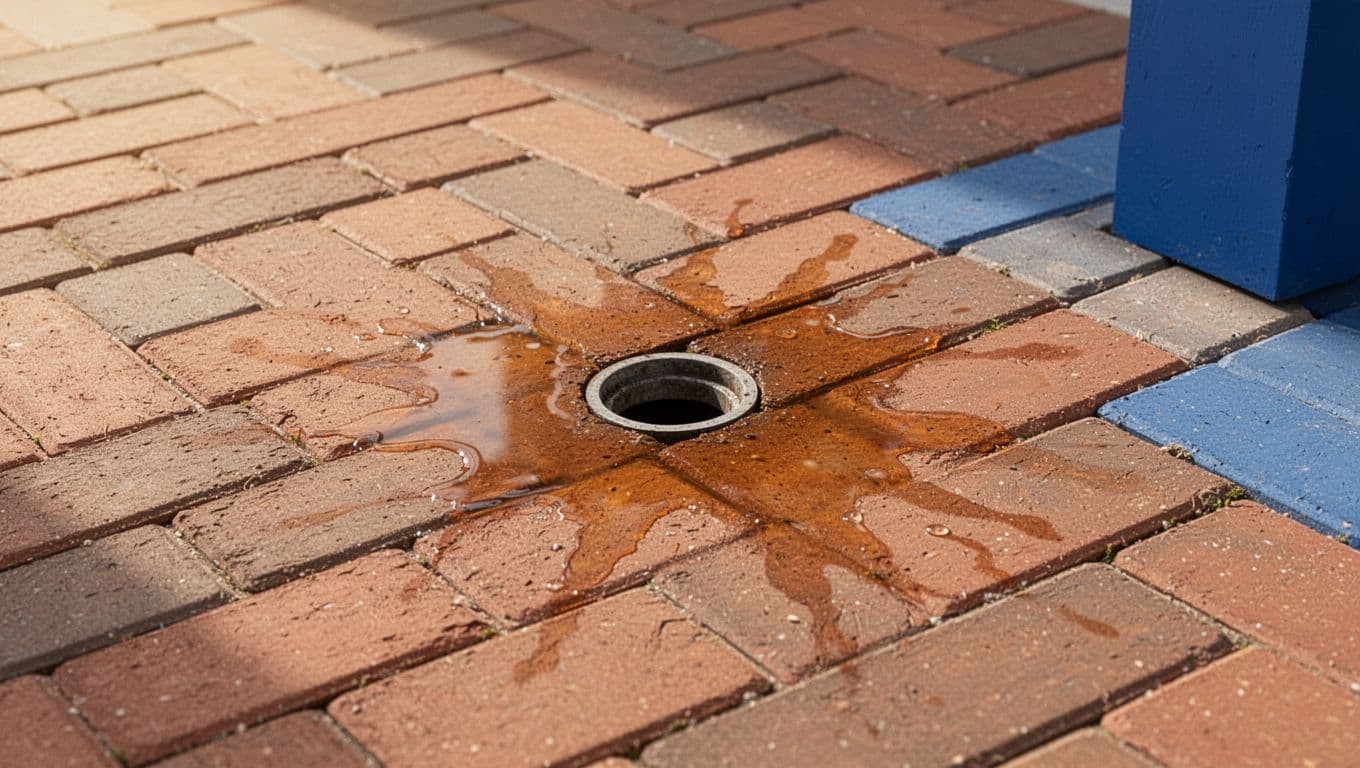
A slow drip can do more damage than one big spill, because it keeps feeding the same spot.
Why Florida makes the mark worse
Southwest Florida provides the perfect environment for these stains to develop. The intense heat, constant humidity, and frequent afternoon rain keep the pavers damp, preventing the area from ever fully drying out. This persistent standing water creates a cycle that drives the stain deeper into the surface of your pavers.
I also notice that the problem appears much faster on older pavers and on driveways where the protective sealer has worn thin. Once that sealer fails, the pavers act like a sponge. They absorb every bit of runoff from your hvac system, then hold onto it.
If the drain line runs near the roof edge, I always examine the full path of the water. Dirty runoff from above can significantly add to the mess, which is why regular roof cleaning and gutter maintenance are so important. A clogged gutter or a dirty roof edge can feed the same stain over and over again.
The same process happens on pool decks and shaded patios. The water may not seem like much at first, but the surface remembers every single drip.
How I clean it without wrecking the pavers
I don’t start with the strongest pressure setting. I start with a test spot. That tells me whether I am dealing with fresh residue, an older stain, or a mix of rust and organic buildup that needs a little more work.
On brick pavers, pressure washing can help, but only when it is controlled. Before you begin, you must properly clean and unclog the surrounding drainage area to ensure no additional water damage occurs to the foundation or the pavers themselves. Too much force can rough up the face of the brick or blow out joint sand. That turns a stain problem into a repair problem, and nobody wants that.
When the stain is tied to algae or grime near the line, a soft wash is often the better move. The cleaner does the heavy lifting, and the rinse stays gentle. I use that approach a lot on roof cleaning jobs too, because a roof, siding, or trim can be damaged fast if someone treats it like concrete.
If the stain has already settled deep, I still want the cleaning to be careful. I would rather make a second pass with the right method than chew up the paver surface on the first try. If your DIY attempts are not lifting the discoloration, reaching out for a professional service is the best way to ensure the job is done right without compromising the integrity of your hardscape.
If you’re staring at a stain that keeps coming back, Get a Quote and I can take a look before it gets harder to remove.
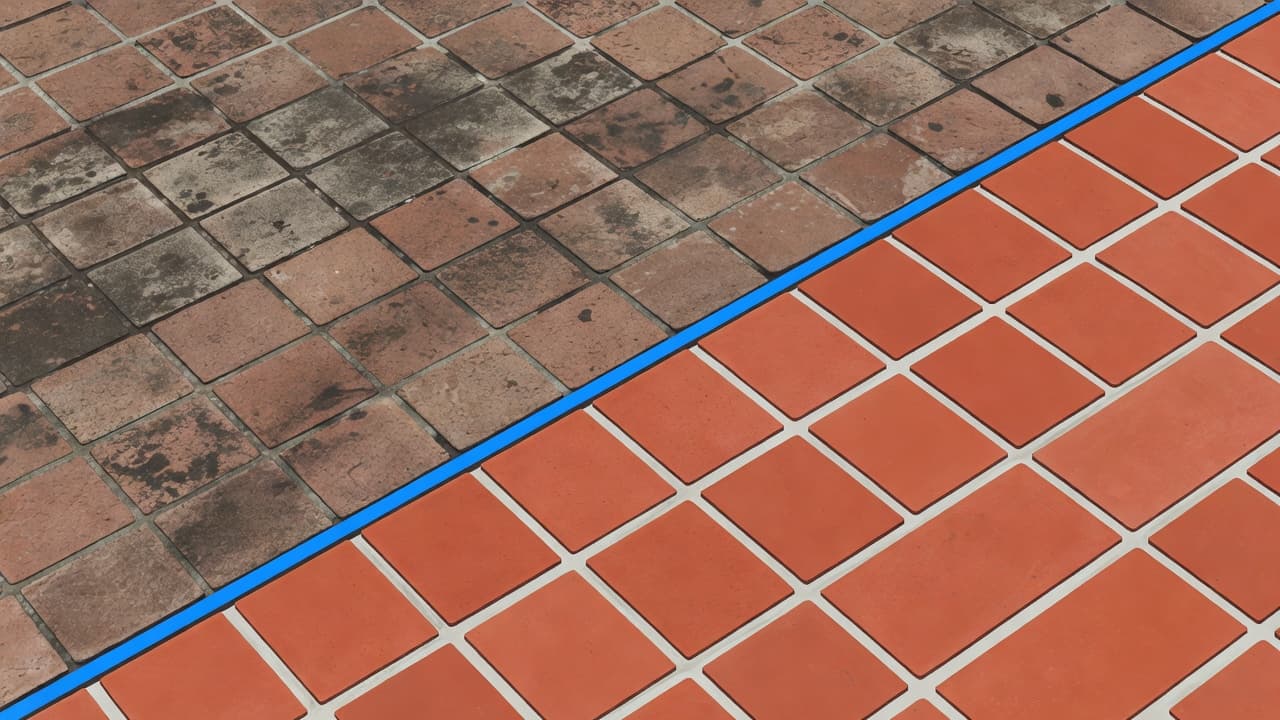
How I keep it from coming back
Cleaning the stain is one part of the job. Fixing the source is the part that keeps you from seeing those unsightly water stains again next month.
I look at the condensate drain line first. Sometimes the pipe needs to be extended away from the pavers, or the drain needs to be cleared. If you have a clogged ac drain, it can cause water to back up and overflow in spots you do not want. You can assist in preventing clogs by regularly using distilled white vinegar to flush the line through the drain line access point. If you notice slow drainage, a wet/dry vacuum can be highly effective to remove sludge buildup from the end of the pipe.
I also recommend including your HVAC system in your annual maintenance. This should involve inspecting the evaporator coil and the drain pan to ensure everything is flowing properly. If the drip originated from a wall unit, I want the discharge path pointed somewhere that will not hit the same brick every day.
Sealing helps too. That is where driveway sealing and paver sealing earn their keep. A sealed surface is easier to clean, and the next stain has a harder time sinking in. It does not make pavers bulletproof, but it gives you a better shot at keeping the next drip on the surface instead of deep in the brick.
A few simple habits go a long way:
- Keep the condensate drain line clear.
- Use distilled white vinegar to flush the line annually.
- Watch for rust around the outlet.
- Rinse the area after heavy maintenance.
- Re-seal pavers when the finish starts to fade.
That kind of routine care is a lot easier than fighting a deep stain later.
Frequently Asked Questions
Why do AC drip lines leave stains if the water is supposed to be clean?
While condensate starts as water, it picks up dust, organic matter, and rust particles as it travels through the drain system. When this mixture lands on porous brick, the water evaporates and leaves these sediments trapped deep within the paver surface.
Is it safe to pressure wash these stains myself?
You should proceed with caution because using too much pressure can damage the texture of the brick or wash away the sand between your pavers. It is always better to start with a gentle cleaner and a test patch to ensure you do not cause permanent surface damage.
How can I stop the staining from coming back after I clean it?
The best defense is keeping your condensate line clear so it drains properly and extending the pipe so the water misses your pavers entirely. Additionally, keeping your pavers properly sealed prevents the liquid from soaking into the porous material, making future cleanup much easier.
How often should I flush my AC drain line?
Performing a maintenance flush with distilled white vinegar at least once a year is a great habit to keep your drain line free of sludge and mold buildup. This simple preventative measure helps ensure water flows freely and avoids the backups that lead to overflowing and new stains.
What I tell homeowners about AC drip line stains
AC drip line stains are not random. They usually come from the same small source, the same wet spot, and the same porous brick taking the hit again and again. That is why they start as a light mark and end up looking like a bigger problem than they really are.
Once I trace the water path, clean the pavers the right way, and protect the surface afterward, these AC drip line stains stop feeling mysterious. To ensure this does not happen again, I often recommend that homeowners have a professional check their HVAC system. Installing a safety float switch is a great final preventative measure. It not only stops water from overflowing onto the pavers but also prevents a system shutdown by alerting you to drainage issues before they become costly repairs. The sooner you catch these moisture problems, the less time they have to settle in.