
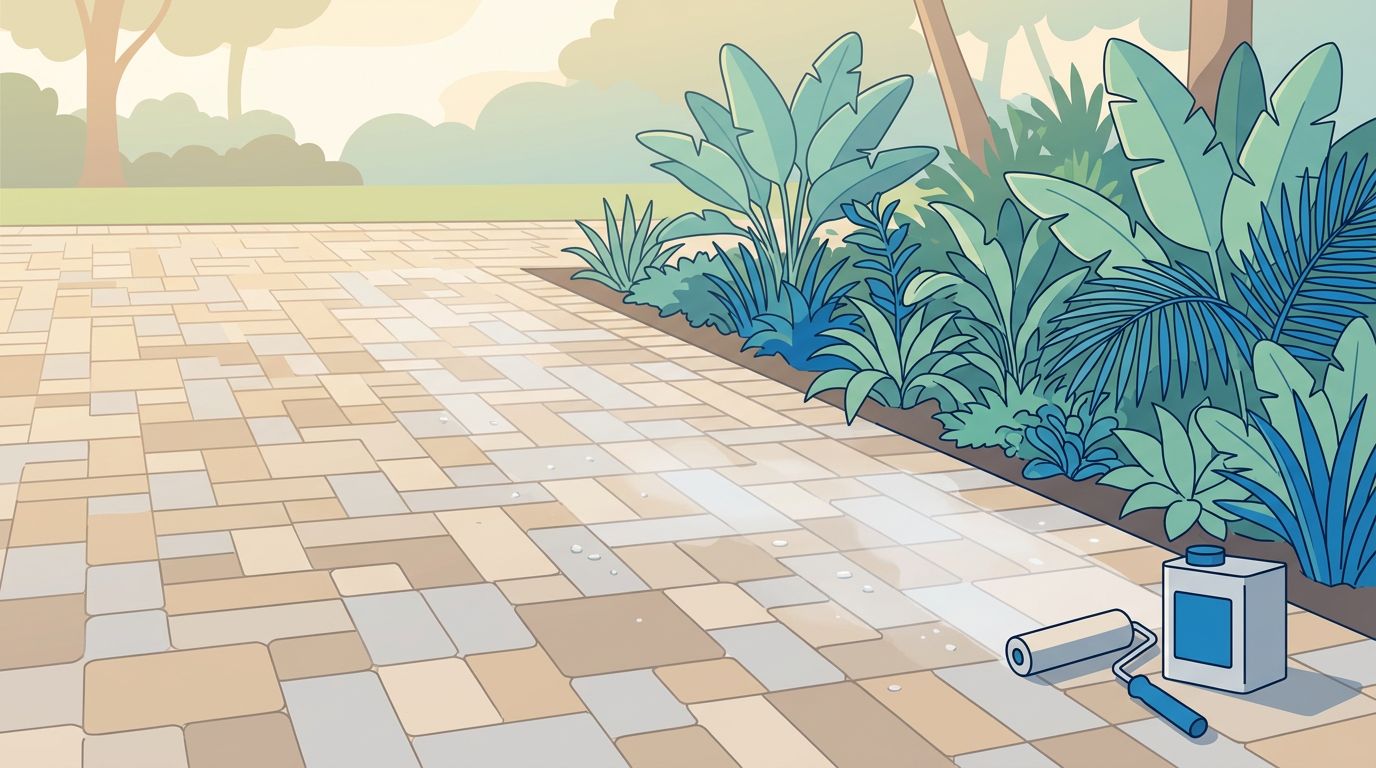
New pavers instantly transform your driveway, patio, pool deck, or walkway, providing a major boost to your home’s curb appeal. Still, applying a sealant too soon can trap moisture, leave an unsightly white haze on the surface, and create bonding problems that are difficult to correct.
I always recommend waiting before you begin the process to seal new pavers in Florida. This patience is essential for protecting investment in your home exterior, as the waiting period, surface preparation, weather conditions, and choice of sealer all significantly affect the final result. Here is how I approach a new installation in Southwest Florida.
Key Takeaways
- I recommend waiting 60 to 90 days before sealing newly installed pavers in Florida.
- Southwest Florida installations often benefit from waiting closer to 90 days, especially during winter, to account for the unique Florida climate.
- Fresh pavers need time to release moisture, allow joint sand to settle, and permit efflorescence, or white hazing, to come to the surface.
- Pavers must be cleaned, dry, stable, and free of debris before sealing.
- Properly timing your application helps prevent the future growth of mold and algae in the paver joints.
- Avoid sealing before rain, during high humidity, or when the surface still holds morning dew.
How Long Should You Wait Before Sealing New Pavers?
The safest general range for brick paver sealing is 60 to 90 days after installation. In Southwest Florida, I prefer the longer end of that range when conditions allow. Sixty days may be enough for some installations, but ninety days gives fresh pavers more time to weather naturally.
Concrete pavers and other porous surfaces contain moisture after manufacturing and installation. The bedding sand, joint sand, and surrounding soil can also hold moisture. As that moisture moves through the pavers, it can carry dissolved salts to the surface. Those salts may appear as a cloudy white film called efflorescence.
If you seal before the moisture and salts have worked their way out, the sealer can trap the residue beneath the finish. The result may include hazing, discoloration, peeling, or poor adhesion. Cleaning and sealing again may then require more time and expense.
The installation material also matters. Concrete pavers may need approximately 30 to 60 days in many climates, while Florida’s humidity often calls for a longer wait. Clay pavers and natural stone are unique, and these materials often require different sealant application techniques due to their specific moisture and porosity concerns. I always check the paver type and the sealer manufacturer’s instructions before choosing a date.
Homeowners often ask the same question in landscaping forums, including this discussion about sealing new pavers. The advice varies because every installation has different materials, drainage, weather, and joint sand.
Sealing new pavers is not a race. A clean, dry, settled surface produces a better result than an early application.
If your pavers were installed during the cooler months, I usually recommend waiting closer to 90 days. Lower temperatures and slower drying can extend the curing window. A summer installation may dry faster, but Florida’s storms and humidity still require careful timing.
Why Florida Weather Changes the Sealing Schedule
The unique Florida climate directly dictates when you should schedule your project, as local weather patterns influence both the initial waiting period and the eventual application process. While warm temperatures are standard, they do not automatically mean your pavers are ready. The surface might feel dry to the touch, but moisture often remains trapped inside the joints or beneath the pavers, which can compromise the final results.
For many outdoor spaces, including pool decks and driveways, the dry season from October through May offers the most reliable conditions for the job. The months of February through April are particularly favorable because they provide comfortable temperatures and lower humidity levels. While you can certainly seal during the summer, you must contend with daily afternoon storms, intense heat, and high humidity, which complicate the scheduling process. Furthermore, high-quality products help protect these surfaces against the harsh, relentless UV rays common in the Florida environment.
Before beginning, I look for the following conditions:
- Surface temperatures between 50 and 90 degrees Fahrenheit.
- No rain in the forecast for at least 24 hours, with 48 hours being the preferred window.
- No morning dew or visible moisture present on the pavers.
- Moderate humidity levels, ideally staying below 60 to 70 percent.
- Calm wind conditions to prevent dust, leaves, or debris from settling into the wet surface.
After the work is complete, the pavers need several hours of dry weather to begin the curing process. You can generally resume light foot traffic after 24 hours, but vehicles should stay off surfaces like driveways for at least 48 to 72 hours, depending on the specific product and current weather.
A sudden Florida rainstorm can easily ruin an uncured finish. Rain often creates cloudy areas, streaks, uneven color, or a soft, tacky texture. Because of these risks, I never schedule a sealant application based solely on the calendar. I always verify the forecast, check the surface moisture, and evaluate shade coverage before beginning any work.
What Needs to Happen Before Sealing?
Waiting 60 or 90 days does not replace proper surface preparation. New pavers still need to be inspected and cleaned before a sealer is applied to ensure a professional finish.
I start by checking for loose pavers, uneven areas, damaged edges, settling, and open joints. Sealing over movement or installation problems only covers the issue for a short time. Repairs, re-leveling, or additional joint sand may need to happen first. It is also important to consider stabilizing joint sand at this stage, as addressing sand erosion now prevents shifting later.
The surface also needs a careful cleaning. Dirt, construction dust, fertilizer, leaf stains, tire marks, and organic growth can interfere with the sealer. Proper pressure washing can remove many types of buildup, but the pressure must match the paver material and condition. When performing pressure washing, I don’t treat every surface the same way. A wide spray pattern and controlled pressure are safer than holding a narrow nozzle close to the paver face. Excessive pressure can remove too much joint sand, chip the surface, or leave visible lines. A surface cleaner can help produce more even results across broad flat areas.
Some stains need more than water. Oil, rust, fertilizer, and decaying plant material may require a compatible cleaning treatment. If the pavers show algae or light organic growth, a soft wash approach may be more appropriate than aggressive cleaning. Taking the time to remove these contaminants now helps prevent future weed growth between your pavers.
After cleaning, the area needs enough time to dry. I look for remaining white haze, damp joints, and shaded sections that stay wet longer. In many cases, the pavers should remain dry for at least 48 hours before sealing. A quick rinse followed by an immediate sealer application is not a reliable preparation method.
Polymeric sand needs attention as well. If it has been installed recently, the sand must set according to the product instructions before the surface is sealed. This discussion about sealing after polymeric sand shows why timing after sanding is a common concern for homeowners.
Choosing the Right Sealer for Florida Pavers
The best sealer depends on the paver material, desired appearance, level of traffic, shade, and exposure to water. Driveways, pool decks, covered lanais, and front walkways often require different product specifications to ensure longevity.
When selecting a product, you must choose between a water-based sealer and solvent-based sealers. Water-based options are generally easier to apply and have lower odors, while solvent-based sealers often provide deeper penetration and a more durable barrier. Some homeowners prefer a natural finish that maintains the original look of the stone. Others opt for color enhancement to achieve a wet-look finish that brings out the vibrant tones of brick, concrete, or pavers. If you are performing travertine sealing, it is critical to select a breathable product that protects these porous surfaces from staining without trapping moisture.
I also consider how the area is used. Driveways deal with vehicle traffic, hot tires, and oil exposure, while pool decks must withstand constant water contact, sunscreen, and foot traffic. Meanwhile, patios and lanai pavers may remain shaded and damp for longer periods. These unique conditions dictate your product selection.
The sealer should be fully compatible with both the specific paver type and the joint sand. Applying a product without verifying compatibility can lead to blotching, white residue, sticky surfaces, or premature wear. Always confirm that your chosen sealer is appropriate for your specific installation before beginning.
I do not recommend sealing over dirt, moisture, efflorescence, or unstable pavers. Even if the finish looks good initially, trapped issues will compromise the integrity of the coating. Proper preparation is the primary factor that helps driveway sealing, pool deck maintenance, and patio sealing hold up through intense Florida rain, harsh sun, and daily use.
Should You Seal Pavers Yourself?
While many homeowners consider sealing their pavers, the process involves much more than simply rolling product across the surface. Proper brick paver sealing requires a meticulous approach to cleaning, drying, sand stabilization, weather assessment, application rate, and consistent backrolling to ensure a high-quality finish.
The equipment used is just as important as the technique. Improper pressure washing can easily remove joint sand or cause permanent damage to the surface of new pavers. Furthermore, applying an incorrect amount of sealer can lead to a milky, unattractive appearance or prevent the product from curing correctly. Conversely, applying too little sealer leaves the surface vulnerable to uneven protection and inconsistent color.
Safety is another critical factor. The use of cleaning chemicals, slippery wet surfaces, ladders, hoses, and high-pressure washing tools creates potential hazards for the inexperienced. Professionals take extra care to protect pool edges, steps, lanai screens, walls, doors, landscaping, and drainage areas throughout the process.
Hiring professional sealing services offers the added benefit of identifying underlying issues that are easy for a homeowner to miss, such as ground settlement, poor drainage, sand loss, and early signs of efflorescence. By entrusting this work to a pro, you ensure the structural integrity of your installation is fully preserved. At Kingsway, I prefer to thoroughly explain the condition of your pavers before recommending any work. If the surface is not ready, waiting is always a better option than forcing the job.
If your new installation is ready for professional cleaning, sanding, or sealing, you can Get a Quote for service in Fort Myers, Naples, Bonita Springs, Port Charlotte, Sanibel Island, and nearby communities.
How Often Should Florida Pavers Be Resealed?
Most Florida pavers need resealing every two to three years, but the right schedule depends on exposure and use. Brick paver sealing for driveways, coastal properties, sunny walkways, and heavily used pool decks may need attention sooner.
Shade can shorten the maintenance cycle as well. Areas that stay damp collect mold and algae alongside dirt much faster. Direct sunlight and intense UV rays can fade color and wear down the protective finish over time. Frequent pressure washing, heavy traffic, irrigation overspray, and storm debris also impact the longevity of the surface.
I recommend inspecting the pavers instead of sealing them automatically. Look for signs of fading, increased staining, visible water absorption, joint sand loss, and areas where the finish has worn away. Cleaning should occur before resealing, and any unstable areas should be repaired first. If you have natural stone features on your property, you may also require professional natural stone restoration to maintain the integrity of those surfaces alongside your paver maintenance.
Paver sealing is just one component of exterior maintenance. Depending on your property, you may also need house washing, gutter cleaning, roof cleaning, or a soft wash for surfaces that should not receive heavy pressure. Keeping these surrounding areas maintained helps prevent dirt and organic growth from migrating back to your pavers prematurely.
Frequently Asked Questions
Can I seal my pavers immediately after installation?
No, you should wait 60 to 90 days before applying any sealant to new pavers in Florida. This waiting period allows trapped moisture to escape and gives efflorescence, or white hazing, time to surface naturally.
What happens if I seal my pavers too soon?
Applying sealer too early can trap moisture and salts beneath the finish, which often results in an unsightly white haze or peeling. These defects are difficult to correct and may require professional intervention to strip and reseal the surface.
Does the time of year affect my sealing schedule?
Yes, the Florida climate plays a significant role in your project timing. It is best to schedule sealing during drier months with lower humidity, as high moisture levels in the air or sudden rainstorms can ruin the curing process and compromise the final finish.
Is it necessary to use professional sealing services?
Professional services ensure that your pavers are correctly cleaned, dried, and prepared before application. Experts can also identify underlying issues like poor drainage or sand loss that, if ignored, could lead to premature failure of the sealer.
Conclusion
While you can seal new pavers in Florida, it is best not to rush the process. Waiting 60 to 90 days allows the pavers to release moisture, gives efflorescence time to surface, and ensures the installation settles properly under local climate conditions.
The best results come from proper preparation, dry weather, compatible materials, and careful application. When the surface is ready, using professional paver sealing is an effective way of protecting your investment and simplifying future maintenance. By relying on professional sealing services, you ensure the long-term durability and curb appeal of your outdoor space for years to come.