
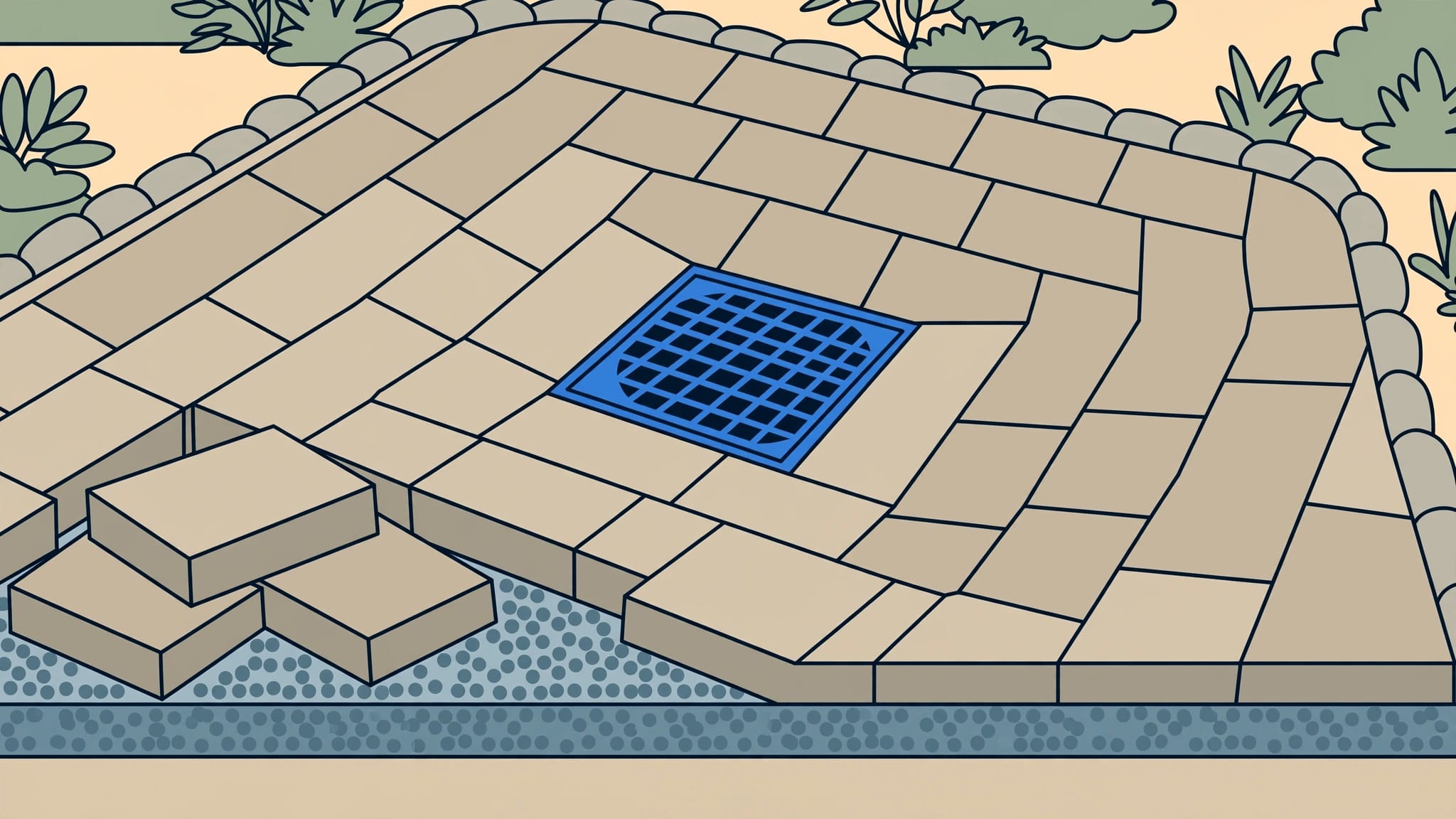
To repair pavers around a drain inlet, correct the drainage problem, rebuild weak support, and reset the pavers toward the grate. Adding sand beneath a sunken block won’t last if water keeps washing material away.
I recommend finding the cause before finishing the surface. A clean grate, stable inlet, and firm base all matter when you want the repair to hold.
Start by separating a surface low spot from a blocked or damaged drain.
Key Takeaways
- Clear the grate and inspect the outlet before lifting pavers. A blocked pipe can cause pooling even when the surface looks properly sloped.
- Rebuild soft or washed-out support instead of filling a deep cavity with bedding sand.
- Complete drainage repairs, paver resetting, and joint work before cleaning and sealing. Sealer protects the finished surface, but it won’t correct the grade.
Start Drain Inlet Paver Repair With a Drainage Check
Inspect the grate, basin, and outlet
Remove leaves, mulch, and loose debris from the grate. If it lifts safely, inspect the accessible basin from above. Never enter a drain structure.
Look for slow drainage, frequent backups, sediment buildup, cracked components, and visible damage around the frame. Foul odors deserve professional attention, especially if sewage contamination is possible.
Watch the outlet during a controlled hose test. Stop if water backs toward the garage or foundation. Water that reaches the inlet but doesn’t leave may point to a clogged drain, a blocked or damaged drain pipe, or a discharge problem.
Follow the water across the property
Inspect downspouts, nearby walkways, planting beds, and low points beside the driveway. Clogged gutters and soil piled above the paver edge can send runoff across the surface and cause erosion beside the pavers.
Identify the foundation drain outlet separately rather than assuming it connects to the inlet.
I recommend photographing standing water after rain. Note whether water misses the grate, collects behind a raised edge, or returns through the inlet.
Pooling near the house needs attention before cosmetic repairs. The University of Minnesota Extension explains how grading, gutters, and downspouts affect moisture.
For a closer look at the surface, our guide to checking paver patio slope covers drainage clues worth recording.
Lift the Pavers Without Creating More Damage
Record the layout and prepare the area
Photograph the pattern before removing anything during drain inlet paver repair. Record each paver’s size, color, and orientation so the repaired area matches the existing surface.
Keep vehicles and pedestrians away from unstable blocks. Wear gloves, eye protection, and sturdy footwear. Useful tools include a paver extractor, narrow joint tools, shovel, straightedge, level, and rubber mallet.
Have replacement pavers and compatible joint material ready. Avoid excavating during heavy rain, when water can soften the exposed area and carry loose material into the drain.
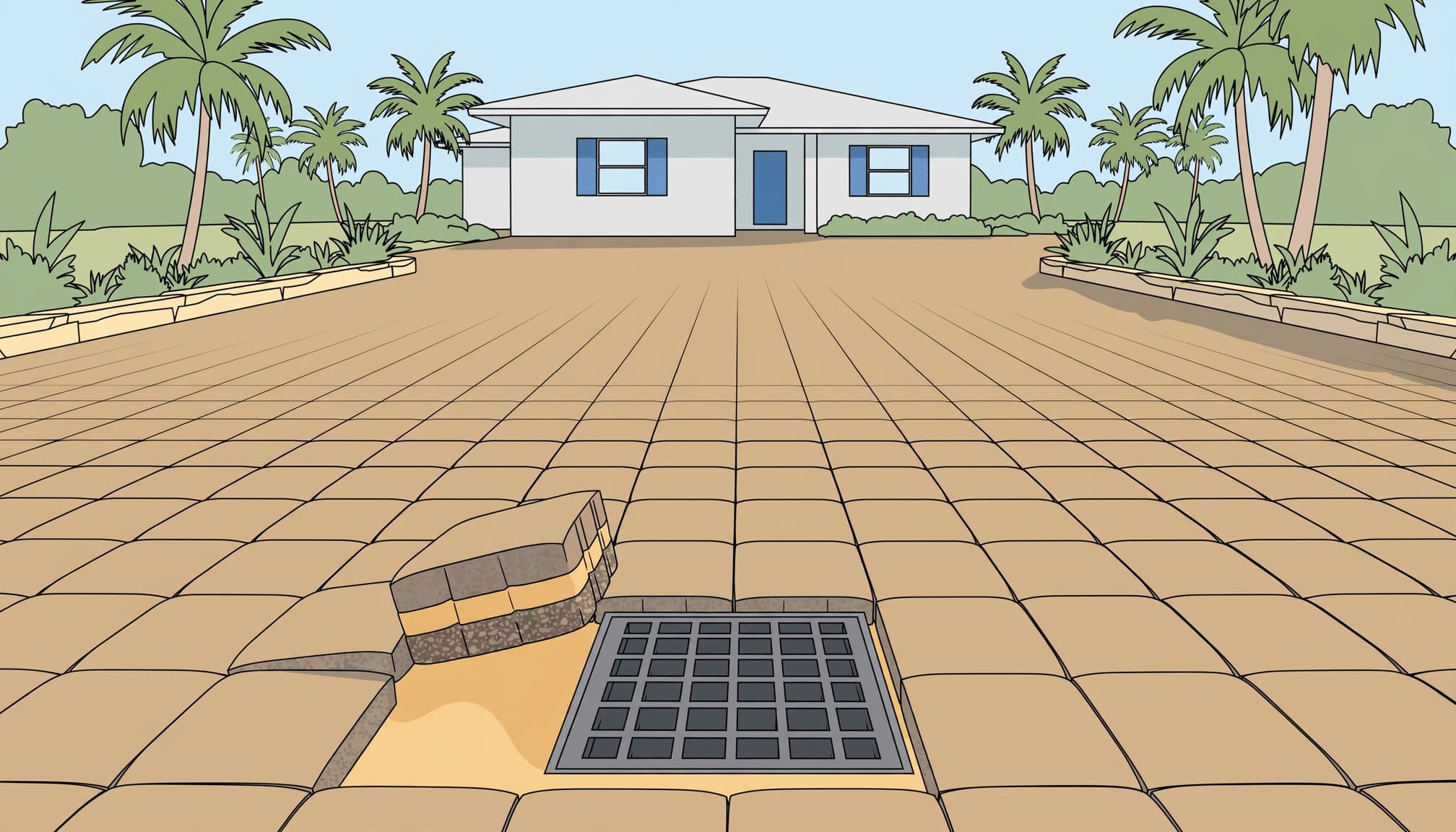
Remove enough pavers to reach firm support
Clear joint material around the affected units and lift them gradually. A paver extractor can help prevent damage from prying against neighboring edges.
Stack reusable pavers away from the opening. Replace cracked units instead of returning them to a vehicle path.
Extend removal beyond the visible dip until the remaining edges have firm support. A small depression may cover a wider washout.
Don’t use the grate or frame as a pry point. Movement there can damage the inlet connection.
Rebuild the Support and Reset the Pavers
Correct the failure beneath the surface
Remove loose bedding, debris, and failed material. Check for cavities, wet soil, root pressure, soil erosion, and sediment moving toward a pipe connection.
A damaged drain can pull surrounding dirt into the line and leave a void beneath the pavement. Correct the source of the washout before rebuilding, or continuing erosion can undermine the new aggregate. Soil shifting, roots, weather, and age can also damage drainage components.
Rebuild failed support with the aggregate required for the existing pavement assembly, compacted in manageable layers. Preserve or restore separation fabric where it belongs in the design.
Bedding sand isn’t structural fill. It should provide the setting layer over firm support, not fill a deep washout.
Restore the slope, joints, and inlet access
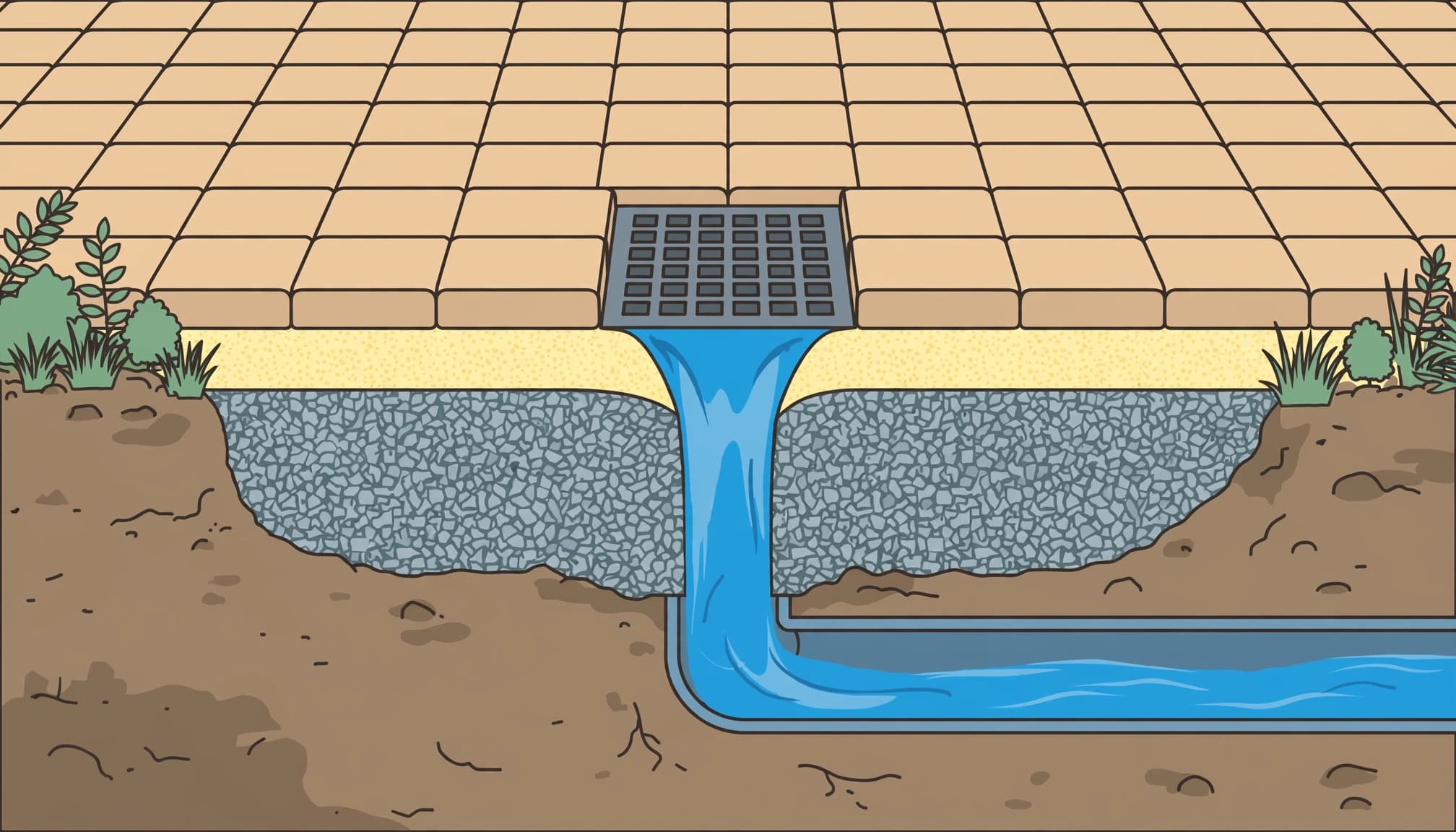
Reset the pavers so surface water reaches the grate without collecting along its edge. Use a straightedge to identify abrupt changes and gently seat individual units with a rubber mallet.
Support cut pieces around the frame and restore disturbed edge restraints. Keep the grate removable for maintenance. Don’t bury it beneath joint material or seal it permanently in place.
Refill joints with material approved for the pavement system. Permeable pavers require their specified jointing aggregate, not an automatic substitution with ordinary or polymeric sand.
Finish with a controlled water test after the joint material’s required curing period.
Know When the Drainage System Needs More Work
A localized reset suits a contained low spot with an intact inlet and working outlet. Repeated settlement, a rocking frame, or water backing through a clean grate needs deeper investigation.
I recommend a drainage contractor for damaged underground pipes, recurring clogs, root intrusion, or an inlet that moves under traffic. Excavation around buried utilities also requires proper utility locating.
When runoff reaches the inlet from several parts of the property, check the full yard drainage path. A localized reset may not fix flow problems farther uphill.
Some properties need slope adjustments, a catch basin, or a trench drain to intercept concentrated runoff. For recurring washouts, driveway drainage repair should address both the runoff source and the discharge route. Our guide to paver drainage channels explains how channel placement relates to driveway flow.
Permeable paving is another option, but it needs a suitable pavement assembly, soil conditions, and drainage route.
Penn State Extension’s guidance on establishing proper grading explains that finished ground should direct surface water away from buildings. Loose fill can settle or erode, while heavily compacted native soil may limit infiltration.
A lower grate won’t solve an outlet that sits too high. The inlet, pipe, and discharge point must work together.
What Drain and Paver Repairs Can Cost
Published drain repair estimates for Tuscaloosa and Lexington KY show how repair costs vary by location and scope. These figures cover exterior drain repair, not Kingsway prices or a quote for resetting pavers.
| Drainage work | Tuscaloosa, AL | Lexington, KY |
|---|---|---|
| Small exterior or driveway drain repair | $250 to $600 | $250 to $600 |
| Partial drainage repair | $600 to $2,000 | $1,000 to $3,000 |
| Full system replacement | $2,500 to $5,000 or more | $4,000 to $8,000 |
The estimates for small repairs are similar, but larger projects cost more. Tuscaloosa estimates place emergency or complex exterior drain work at $5,000 to $10,000 or more. Large-scale driveway drainage renovations in Lexington can reach $10,000 or more.
Access, project scope, and selected materials affect the final price. Lifting and reinstalling pavers requires different work than clearing an accessible basin. Replacing underground pipe may also require removing a larger pavement section.
I recommend requesting a written scope of work from local contractors and comparing proposals that separate drainage work from surface restoration. The scope should identify the materials, excavation area, base rebuilding, paver replacement, and cleanup.
Ask about warranty terms and references from past clients. These details make it easier to compare proposals that cover the same work.
Protect the Repair After the Next Storm
Inspect the area after heavy rain for water pooling, sand collecting in the basin, reopened joints, or movement beside the frame. I also recommend a more complete driveway inspection twice a year.
Keep leaves off the grate and maintain a clear outlet. Pull back mulch or soil that sits above the driveway edge so rain doesn’t wash it across the repaired area.
Controlled pressure washing can remove dirt after repairs, but a nozzle aimed into joints can displace joint material. Don’t use cleaning equipment to force sediment down the drain.
If roof cleaning or a soft wash is scheduled nearby, plan to collect debris and manage runoff. Keep both out of the storm drain.
Complete driveway sealing only after the surface is stable and properly prepared. Our paver restoration process covers the relationship between repairs, cleaning, and the final protective finish.
Frequently Asked Questions
Can sunken pavers be fixed without lifting them?
A lasting correction usually requires access to the material beneath the affected blocks. Sweeping extra sand over the surface won’t rebuild missing support. For a small, contained dip, lifting and resetting a few pavers may be enough, provided the drainage cause is corrected.
Can a homeowner repair pavers around a drain inlet?
A small reset can be manageable when the inlet is stable, the outlet works, and the surrounding base is firm. Stop if excavation exposes a deep cavity, damaged pipe, moving frame, or widespread wet ground. Those conditions call for professional repair before the pavers go back.
Why does water still pool after the grate is cleaned?
The surrounding surface may slope away from the inlet, or the underground line may remain blocked. A damaged connection, restricted outlet, or insufficient drainage capacity can also cause backups. Watch whether water fails to reach the grate or reaches it and then stops moving.
Fix the Water Path Before the Finish
A dependable drain inlet paver repair starts beneath the surface. Correct the runoff route, repair failed support, and restore the pavers without blocking future drain access.
I recommend watching the repaired area after rain before investing in the final finish. Stable pavers and working drainage provide the right foundation for maintenance.
Once drainage and structural repairs are complete, Get a Quote for our sealing or pressure cleaning services.