
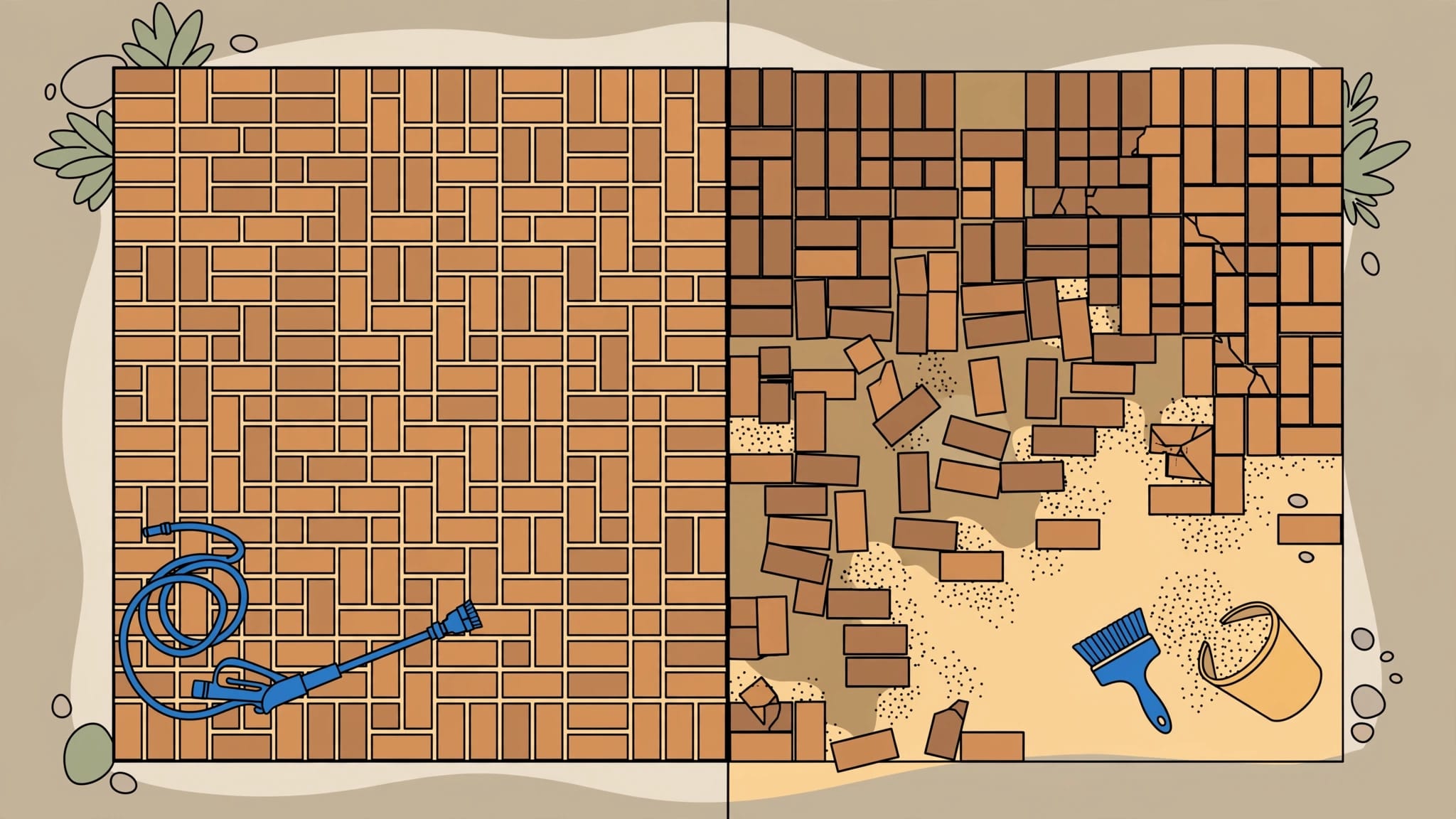
Cleaning is usually enough when your brick patio is level, stable, and dirty. Paver restoration makes sense when you also have loose pavers, washed-out joints, sinking sections, or failing sealer.
I recommend starting with surface stability, not color alone. A faded brick patio may need surface restoration, while a clean-looking one can still have problems underneath.
Here’s how to tell the difference and choose the right work for your property.
Key Takeaways
- Routine cleaning removes dirt, organic growth, and treatable stains from otherwise sound pavers.
- Restoration addresses repairs, failing coatings, open joints, missing joint sand, and surface protection.
- Sealer won’t level pavers, repair cracks, or rebuild a weak base.
- The dependable order is inspection, structural work, washing, sand replacement, and compatible coating.
Cleaning or Full Paver Restoration?
The condition beneath your feet matters more than how dark or faded the surface looks. Walk across the patio and check its edges before deciding.
Use these signs to choose between routine cleaning and broader repairs.
| What you notice | Likely next step |
|---|---|
| Dirt or algae on firm, level pavers | Routine cleaning |
| Small stains with intact sand | Targeted treatment |
| Missing sand or widespread weeds | Joint repair and weed removal |
| Rocking, sinking, or spreading pavers | Base, drainage, or edge repairs |
| Peeling, cloudy, or sticky sealer | Coating assessment and possible stripping |
| Cracked, chipped, or crumbling pavers | Individual replacement or broader repairs |
A patio may need surface restoration or several repairs without requiring complete replacement.
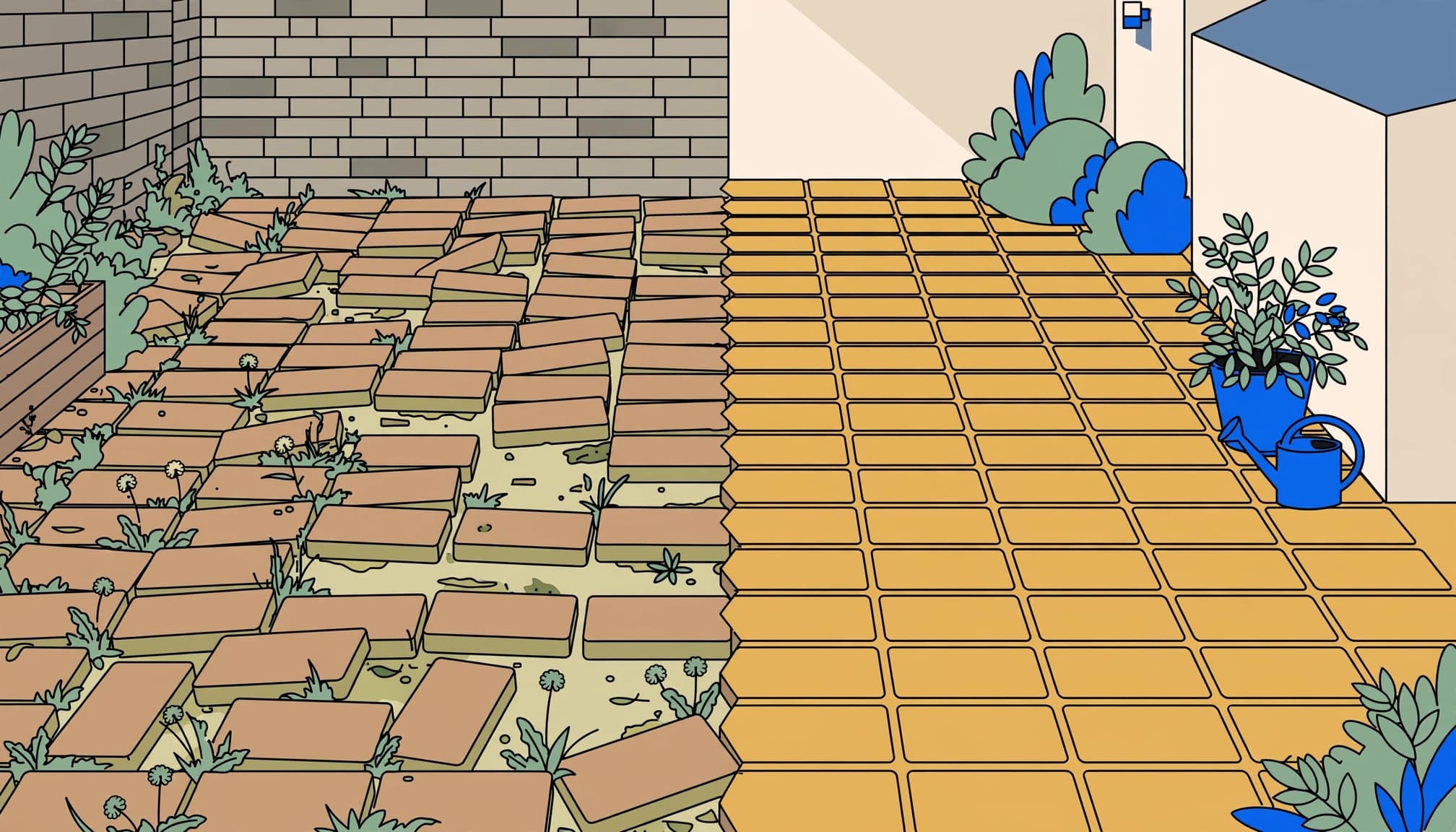
Significant weed growth often comes with dirty or depleted joints. Weeds alone don’t prove the foundation has failed. Movement, recurring washout, and standing water call for an inspection and may require broader work.
Begin With a Site Visit
I recommend a site visit before choosing a restoration package. Check the pavers, joint depth, borders, slope, drainage, and existing coating.
Loose edging can let a sound patio spread, while a downspout may wash material from one corner. Low spots can hold moisture long after nearby pavers dry.
Stains need different treatments. Rust, oil, mildew, mineral deposits, and cloudy coating each call for a different approach. Using one cleaner across every surface can waste time or cause damage.
Peeling or whitening sealer may point to trapped moisture, incompatible products, or poor preparation.
The inspection should identify reusable units and damaged ones, then define the repair area. Recurring movement, drainage problems, or coating failure are good reasons to seek a professional assessment before minor repairs require full replacement.
Repair the Support Before Cleaning
Reset sunken pavers and secure borders
Pavers can sink when poor site preparation and inadequate compaction leave voids beneath them. Water movement can remove additional support.
A lasting repair requires lifting affected units, correcting drainage, rebuilding deficient base material with proper compaction, and resetting them. Bedding sand sets the final height; it doesn’t replace a missing structural base.
Loose edge restraints also need attention before joint sand goes in. Otherwise, the surface can continue spreading.
For broken units, replacement and color matching help avoid an obvious patch.
Address roots and regional conditions
Root-lift repairs generally involve removing units, addressing the roots, restoring the base and bedding, compacting, and reinstalling the pavers. Root cutting needs an arborist’s assessment when it could affect tree health or stability.
Climate affects the diagnosis. Indiana patios face freeze-thaw movement, moisture, and clay-heavy soils. South Florida installations face moisture-related soil movement, drainage problems, roots, and vehicle loads.
Small, localized repairs can often take a few hours. Widespread movement may require reconstruction rather than surface restoration.
Treat Stains and Remove Failing Sealer
Match the treatment to the problem
Treat oil, food and beverage spills, rust, moss, and mildew before routine care. For regular upkeep, sweep, rinse gently, and use a paver-compatible cleaner.
Controlled pressure washing can remove embedded dirt from pavers. Excessive pressure can etch the surface, leave lines, and remove joint sand. Our guidance on cleaning pavers with polymeric sand explains why joint protection matters.
The CMHA cleaning and sealing guide also addresses surface preparation and joint stabilization.
Remove coatings that cannot be recoated
Failing or improperly applied coatings may require sealer removal and stripping with a compatible product, followed by controlled deep pressure cleaning. Simply recoating can trap the existing problem.
The process requires a test area, proper dwell time, careful rinsing, and runoff control. Protect nearby landscaping, screens, walls, and fixtures.
Coordinate roof cleaning separately. Even a soft wash needs runoff control around pavers so chemicals don’t stain the surface or interfere with restoration.
Replace Missing Joint Sand Correctly
Polymeric sand blends fine sand with bonding agents. Water activates those binders, creating firm seams that help lock interlocking pavers together and inhibit weed growth.
It supports joint stabilization, but it can’t support a paver over an unstable base.
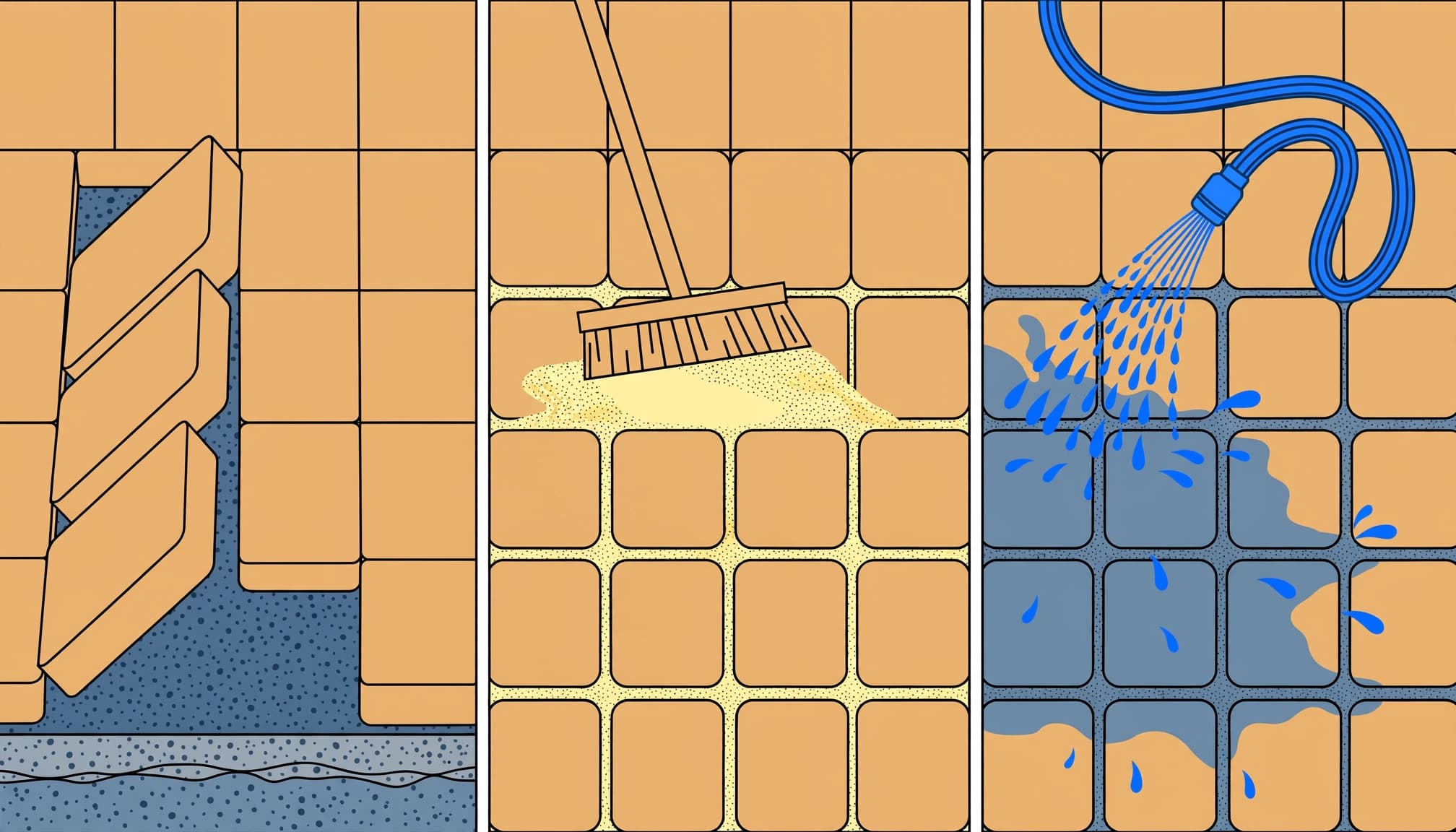
After repairs and cleaning, the pavers and seams must reach the dryness required by the product. Install polymeric sand to the specified depth, follow product directions for compaction, remove residue from the faces, and activate it with controlled water.
Rochester Concrete Products’ installation guidance emphasizes dry conditions, full seams, compaction, clean faces, and careful watering.
Water activates polymeric sand; it doesn’t replace a separate paver sealer.
Trotta’s Power Washing describes approximately five years of service for its hardened polymeric seams with proper care. That’s a provider-specific expectation, not a guarantee for every installation.
For permeable pavers, use the system’s approved drainage aggregate rather than ordinary joint sand. Standard sand can also suit some conventional installations. The material must match the paving system.
Choose Sealer for the Surface and Conditions
Understand finish and product differences
A suitable sealer can enhance color and reduce moisture absorption and staining. UV-resistant products can also help limit fading.
Water-based and solvent-based describe a product’s carrier. They don’t automatically indicate whether its finish is penetrating, glossy, breathable, or slip-resistant.
Penetrating products usually preserve a more natural appearance on pavers. Film-forming products can provide stronger color enhancement, sheen, and joint stabilization.
For pavers, patios, pool surrounds, and driveway sealing, I recommend choosing based on material, existing coating, traffic, and wet-surface traction. A glossy finish isn’t suitable everywhere.
Allow proper drying and curing
Cleaning and any needed surface restoration must come before sealing. Coating won’t correct movement or base problems.
Coating adhesion and performance depend on proper cleaning. Residual oil, cleaner, moisture, or loose coating can cause failure.
Florida humidity, shaded joints, rain, irrigation, and overnight dew can extend preparation time. Techniseal’s polymeric sand FAQ addresses sealing considerations after sand installation. There isn’t one waiting period for every combination.
Small repairs may finish within hours, but a complete restoration often needs separate work and drying periods. Keep furniture and traffic off the surface until the selected products permit use.
Understand Restoration Costs Before Comparing Quotes
Cleaning-only work and full restoration have different scopes. Square footage matters, but access and the condition of the pavers also affect the total.
One published Indianapolis benchmark from Perfect Paver Co lists these restoration rates.
| Project area | Published rate |
|---|---|
| Up to 700 square feet | $4.53 per square foot, $1,200 minimum |
| 701 to 1,500 square feet | $4.14 per square foot |
| 1,501 square feet or more | $3.06 per square foot |
These are that company’s regional prices, not Kingsway rates or a Southwest Florida average. Its listed extras include repairs, sealer removal, and tinting.
At the $4.53 rate, 600 square feet totals $2,718 before extras. That shows why a restoration quote shouldn’t be compared directly with a basic wash.
I recommend comparing the actual scope using a paver sealing quote checklist. The estimate should identify repairs, stripping, sealer removal, joint material, and the product to be applied.
A lower price can become expensive if rushed high-pressure washing damages pavers or a one-size-fits-all coating fails. Low price alone doesn’t prove poor work; missing preparation is the concern. Full installation also needs a site-specific estimate rather than a restoration rate.
Maintain the Results After Restoration
Regular cleaning and sweeping remove dirt and seeds from patio pavers before they collect in the joints. Clean up fertilizer, oil, leaves, and food spills promptly to reduce stains.
After heavy rain, look for new low spots, sand collecting near drains, and movement along the border. Repeated washout needs drainage attention, not another layer of sand.
Sealing can’t reverse deep wear or restore a crumbling paver face. Severely damaged or permanently stained pavers may still need replacement.
If the patio keeps moving after re-sanding, the base, drainage, or edge support still needs attention.
I recommend inspecting Florida patios regularly instead of relying on one fixed sealing calendar. Exposure, traffic, product type, and coating condition determine maintenance needs.
Frequently Asked Questions
Does vinegar remove polymeric sand haze?
I don’t recommend vinegar as a general haze treatment. Its acidity can damage sensitive surfaces, including travertine. Identify whether the film is polymeric sand binder, mineral residue, or sealer first. A compatible remover is safer than experimenting. Black Diamond Coatings’ sand guidance explains installation mistakes that contribute to joint problems.
Do Belgard pavers need sealing?
Sealing is generally optional for standard concrete Belgard products. It can improve stain resistance and appearance, but some products already have factory treatments. The particular paver and existing finish determine which maintenance products are suitable.
Can cleaning restore faded paver color?
Cleaning can remove buildup and surface stains from pavers, revealing their original color. An enhancing sealer can deepen the remaining color, but it can’t replace a worn surface or repair permanent damage.
Choose the Work Your Patio Needs
Stable, dirty pavers may need cleaning alone. Movement, depleted joints, or coating failure call for a broader restoration plan.
I recommend addressing repairs before sealing. A clean finish lasts longer when the support, drainage, and joints are sound.
For a free assessment of your Southwest Florida patio, Get a Quote for a plan based on its condition.