
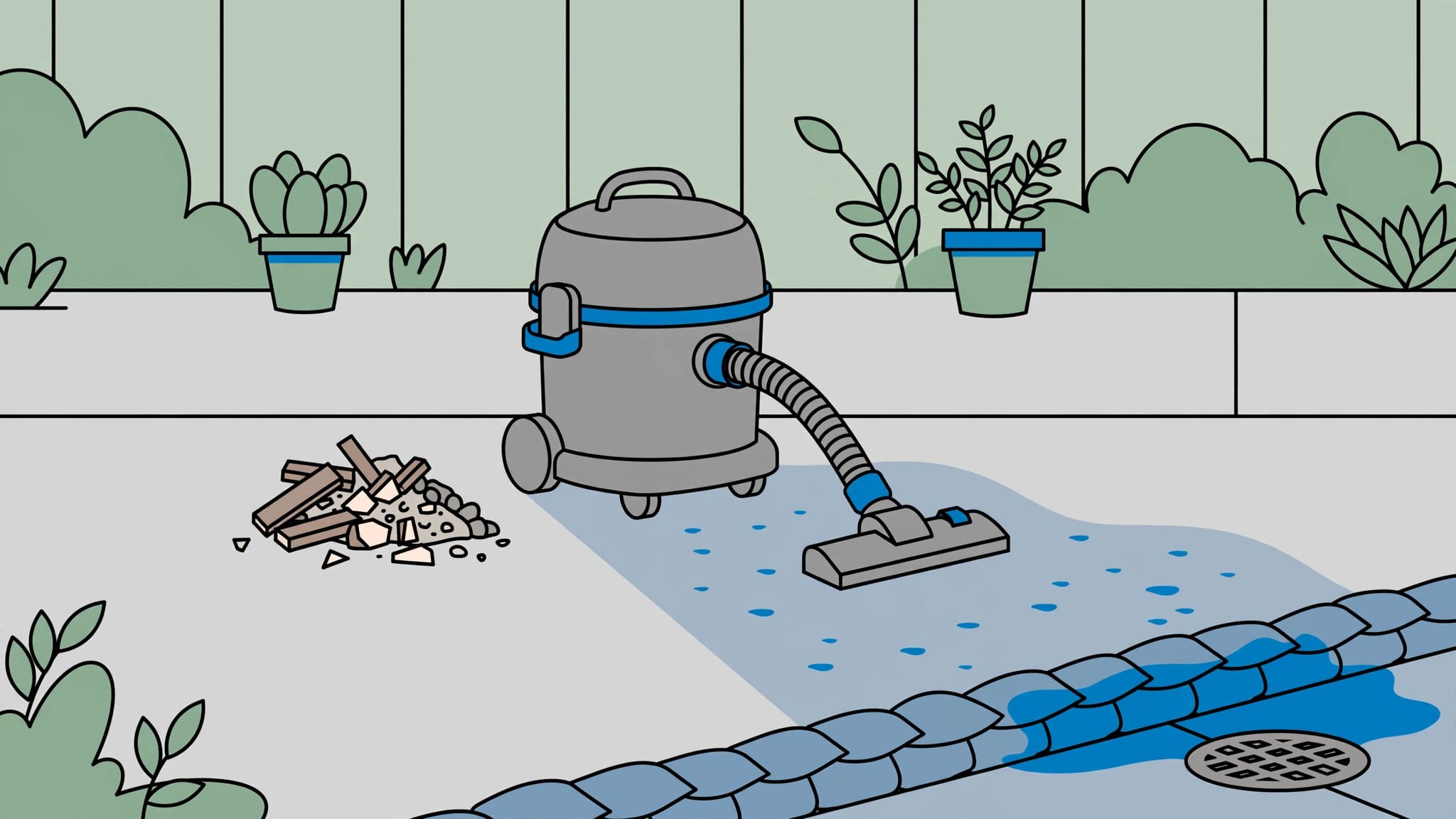
Post-construction cleaning of outdoor concrete works best in stages: collect loose debris, use a HEPA vacuum, then wash gently. A broom or powerful spray can spread dust across your property instead of removing it.
I recommend a staged approach to construction dust removal, with surface protection as the priority. Your driveway, patio, or walkway needs a careful cleanup, not unnecessary force.
Start by identifying what is sitting on the concrete and where the dirty water will go.
Key Takeaways
- Remove larger debris carefully, then capture fine construction dust with a sealed HEPA vacuum or a shop vacuum designed for fine dust.
- Keep people away from the work area, avoid dry sweeping and blowing dust, and plan how to contain and collect dirty water.
- Wash in manageable sections with water and a compatible cleaner, directing slurry away from storm drains, pools, landscaping, and neighboring property.
- Test pressure washing on a small area and use only the force needed to remove loosened residue.
- Let the concrete dry before inspecting it or applying sealer. Sealer won’t hide unfinished cleanup.
Identify loose dust, hardened residue, and surface damage
A pale driveway doesn’t always need stronger cleaning. Loose powder, hardened cement, and cloudy sealer can look similar but need different treatment.
Separate loose dust from bonded cement
Loose dust should lift during careful vacuuming. Hardened splatter stays attached and may feel raised or rough after the surrounding powder is gone.
I recommend treating those deposits separately rather than increasing pressure across the entire driveway. Blasting a stubborn spot can damage clean concrete around it before the deposit releases.
If the renovation also affected nearby brickwork, my guide to removing concrete splatter from pavers covers that different cleanup problem. A concrete slab and a jointed paver surface shouldn’t receive the same treatment automatically.
Look for existing coatings and weak areas
Before washing, look for peeling sealer, exposed aggregate, cracks, and a flaking surface. These conditions affect how much cleaning the concrete can tolerate.
Stamped or colored concrete also needs care because aggressive cleaning can leave a noticeable difference in texture or finish.
Newly placed concrete needs separate consideration. I don’t recommend treating a fresh slab like an older driveway. Keep aggressive pressure and strong cleaners away from concrete that is still curing.
Prepare for safe construction dust removal
Concrete dust can contain respirable crystalline silica. Working outdoors doesn’t make airborne dust harmless, especially when cleanup creates a visible cloud.
OSHA’s construction silica standard restricts dry sweeping and dry brushing when they could contribute to worker exposure, unless safer methods aren’t feasible. Although that standard addresses employers, its dust-control principle is useful for homeowners doing dust removal.
Keep children, pets, and other people away from the cleanup area. Close nearby windows and doors so disturbed fine dust doesn’t enter your home.
Choose a calm period rather than a windy afternoon. Move furniture, planters, mats, and tools before starting, without shaking dust into the air.
Plan the water route, too. Protect door thresholds, pool edges, landscaping, and neighboring property. Don’t begin rinsing until you have a way to contain and collect the dirty water.
A surface can look cleaner while the dust has simply moved into the air, landscaping, or street.
For heavy accumulations or cleanup that repeatedly produces airborne clouds, I recommend professional cleaning rather than continuing with household equipment.
Step 1: Remove debris, then vacuum fine dust
Clear the larger material first. This gives the vacuum better access and keeps sharp pieces from damaging its hose or collection system.
Lift larger debris without sweeping
Pick up packaging, offcuts, loose fasteners, and other manageable construction debris. Place it directly into a suitable container instead of dragging it across the slab.
Avoid using a leaf blower or compressed air. Both can send fine powder onto windows, vehicles, screens, and neighboring property.
A stiff broom can spread powder across the slab. Collect the larger pieces carefully, then leave the fine material for equipment designed to capture it. Don’t grind debris into the concrete with your shoes.
Use a vacuum designed for fine construction dust
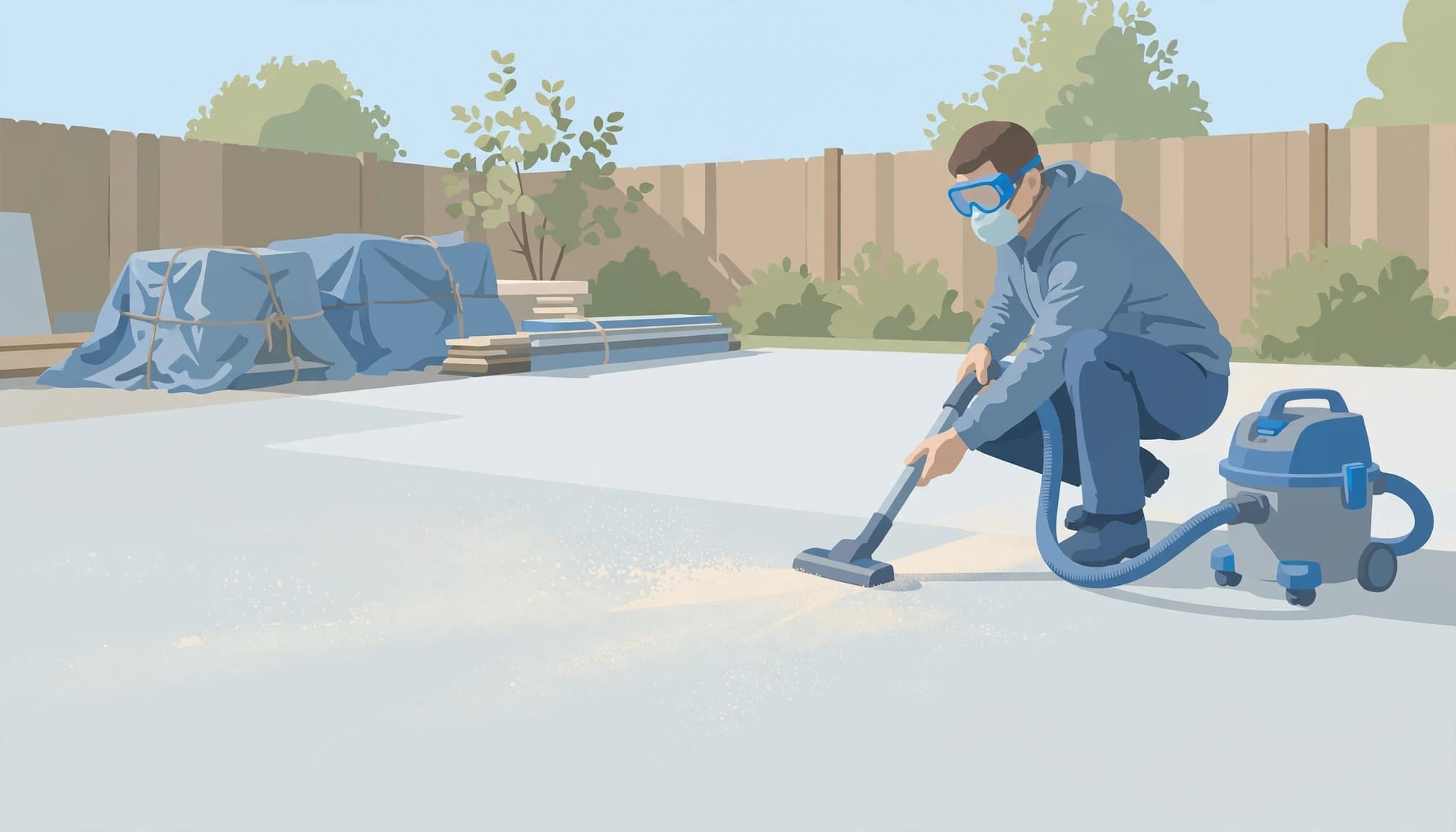
Use a sealed HEPA vacuum or a shop vacuum designed for fine construction dust, with its compatible filter and collection system. A HEPA filter alone doesn’t make every vacuum suitable.
Fine powder can clog an unsuitable filter, reduce suction, or escape through leaks. A standard household vacuum isn’t the right choice for this job.
The University of Tennessee’s silica management guidance identifies HEPA vacuuming and wet methods as acceptable removal approaches.
Make slow, overlapping passes, including slab edges and textured areas. Stop if suction drops or dust escapes.
Step 2: Clean overhead surfaces before the concrete
Dust left above the slab can fall onto it after washing. Clean the surrounding area from the top down before the final concrete cleanup.
On a covered patio or lanai, clean accessible ledges, shelving, door frames, and fixtures first. Keep electrical equipment dry, and don’t reach overhead from an unstable position.
Vacuum accessible dust before wiping. Follow with a slightly damp microfiber cloth on surfaces that tolerate moisture. Rinse the cloth often to lift residue instead of spreading a gray film.
A reusable microfiber duster can help on suitable dry surfaces, but clean it when loaded. Don’t shake it out over the patio.
Clean outdoor counters and furniture before returning to the concrete. If overhead work drops more dust, make another controlled pass before adding water.
Step 3: Wash gently and collect the residue
Once most loose material is removed, wet cleaning can lift the remaining film during dust removal. Work in manageable sections so dirty water doesn’t dry back onto the surface.
Start with water and a compatible cleaner
For a light film of fine dust, use a gentle rinse and a microfiber cloth on smooth concrete, or a soft nylon brush. Rough concrete generally needs a brush because a cloth can catch on the texture.
If water leaves a film, use a cleaner intended for that concrete surface and compatible with any existing sealer. Follow its dilution and dwell instructions, and don’t let it dry in place.
I don’t recommend reaching for muriatic acid or a wire brush to remove ordinary dust. Those methods can turn a manageable cleanup into permanent surface damage. Keep separate stains separate rather than treating the whole slab with stronger chemicals.
Keep slurry out of drains and planted areas
Fine powder and water create slurry. Allowing it to collect in low spots can leave another residue layer when the water evaporates.
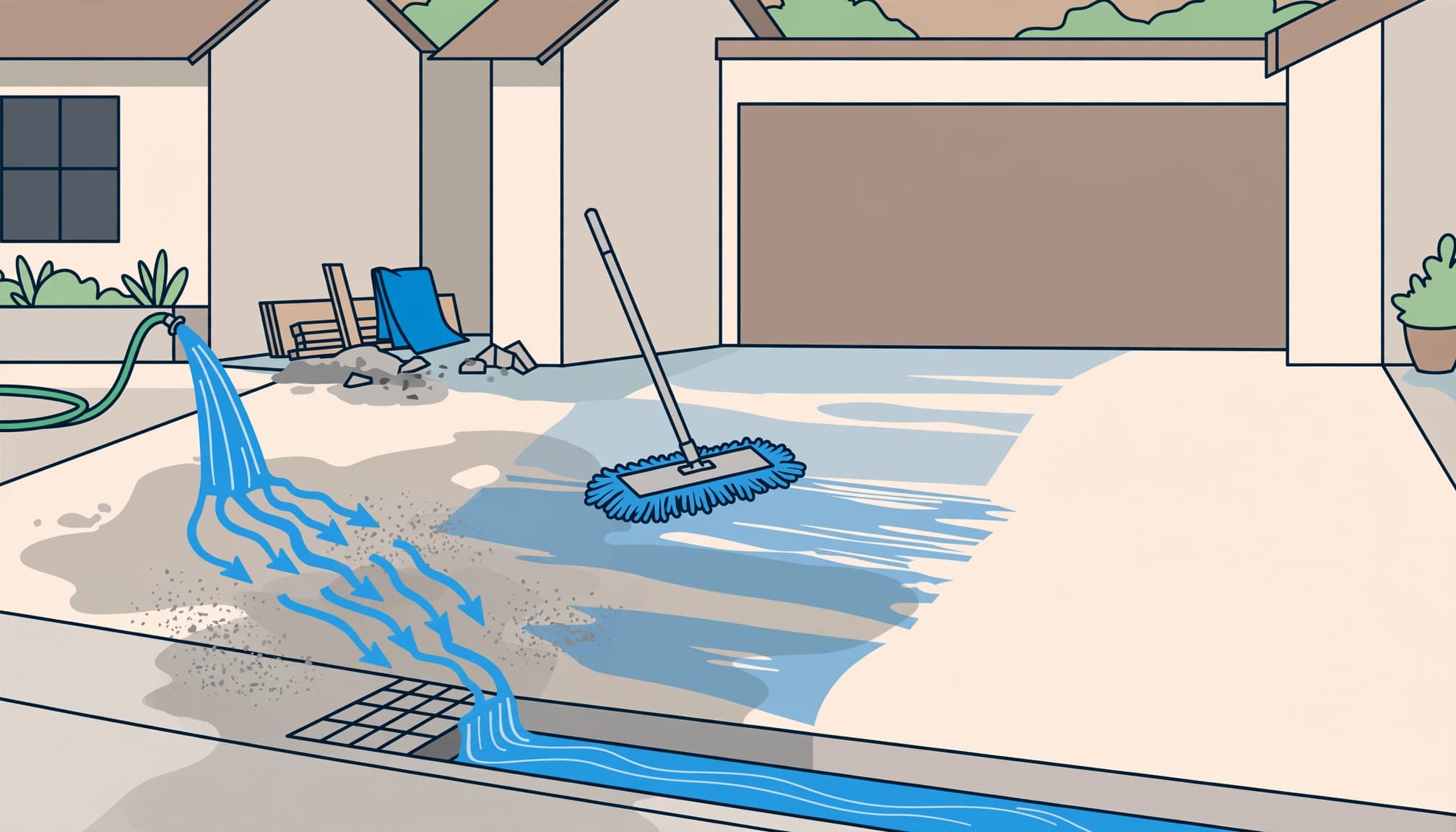
Direct the wash toward a contained collection area, away from storm drains, pools, and landscaping. Use suitable wet-recovery equipment for the liquid. A vacuum set up for dry dust isn’t automatically ready for wet pickup.
Use fresh rinse water as the section clears. On a small patio, frequent mop-water changes help prevent streaks. On a driveway, controlled recovery matters more than flooding the entire area and pushing the mess toward the street.
Step 4: Use pressure washing only where needed
Pressure washing can help remove remaining buildup, but it shouldn’t replace debris collection, vacuuming, or targeted treatment.
Test a small area before cleaning broadly
Start with a small, less noticeable section. Use an appropriate wide spray pattern, controlled distance, and the least force that removes the loosened residue.
Keep the wand moving. Holding a concentrated stream in one spot can cut lines into the concrete or damage an existing coating.
A surface cleaner can help produce even coverage across suitable flat areas. Edges, corners, cracks, and doorways still need individual attention. My guidance on safe power washing for concrete explains why pressure, nozzle choice, and technique matter together.
Match the method to each nearby surface
A driveway may tolerate a cleaning method that would damage painted trim, screens, or adjacent stone. Don’t carry the same pressure setting across every material.
Protect nearby paver joints as well. Excessive force can remove joint sand and create another repair.
If hardened material remains after the loose dust is gone, stop treating it as ordinary powder. It may need a compatible residue-removal treatment before a controlled rinse. Increasing pressure repeatedly is more likely to leave an uneven finish than provide a reliable solution.
Step 5: Inspect dry concrete before sealing
Wet concrete can hide remaining film, uneven cleaning, and coating problems. Let the surface dry before judging the result.
Look across the slab in daylight. Pay attention to pale streaks, residue around edges, and low spots where slurry may have collected.
A clean cloth can help identify remaining surface powder. It isn’t a test of airborne dust safety, but it can show where another localized cleaning pass is needed.
If the concrete still looks cloudy without producing loose powder, stronger washing may not help. The appearance could involve a coating issue or bonded residue.
Complete post-renovation cleaning before driveway sealing, and apply sealer only when the surface is clean, stable, and dry enough for the product. Sealer won’t hide unfinished cleanup. Trapped moisture or remaining contamination can interfere with the finish.
In Southwest Florida, shade, humidity, rain, and irrigation can all extend drying time. A dry-looking surface doesn’t always mean the material is ready.
Keep dust from returning during the project
Post-construction cleaning works best after dusty construction work has finished. Otherwise, cutting, sanding, material handling, and foot traffic can deposit another layer.
Ask crews to contain dust at its source and keep mixing or cutting areas away from cleaned concrete. Cover adjacent surfaces during remaining work, and keep dusty footwear off finished areas.
As part of post-renovation cleaning, schedule roof cleaning or a soft wash on nearby siding before the final driveway rinse. Later runoff can soil clean concrete again.
Dust that has entered the house needs separate attention. A portable HEPA air cleaner can help capture suspended particles, while an HVAC filter rated MERV 13 or higher is useful where the system accommodates it. The EPA’s home air-cleaner guidance explains filtration choices.
Indoor filtration won’t remove powder from your patio. Keep source control, surface cleaning, and indoor air cleaning as separate parts of the job.
Frequently Asked Questions
Can I sweep construction dust off outdoor concrete?
A stiff broom can spread fine powder across the slab. Pick up larger debris carefully, then use a vacuum designed to capture fine construction dust.
What vacuum should I use for concrete dust?
Use a sealed HEPA vacuum or a shop vacuum designed for fine construction dust, with its compatible filter and collection system. A standard household vacuum or a HEPA filter alone may not be suitable.
Should I pressure wash construction dust off concrete?
Pressure washing can help remove remaining buildup, but it shouldn’t replace debris collection and vacuuming. Test a small area first, use the least force that removes the residue, and keep the wand moving.
When can I seal concrete after construction cleanup?
Wait until the surface is clean, stable, and dry enough for the sealer. Inspect it after it dries, since trapped moisture or remaining contamination can interfere with the finish.
Restore clean concrete without creating damage
I recommend a controlled sequence: collect debris, capture fine dust, wash gently, and inspect the surface after it dries. Stronger equipment belongs only where the material and remaining buildup call for it.
At Kingsway, protecting your exterior surfaces matters as much as improving their appearance. For help with concrete pressure cleaning or sealing, Get a Quote for a free estimate.
The goal is clean concrete with its surface and finish protected.