
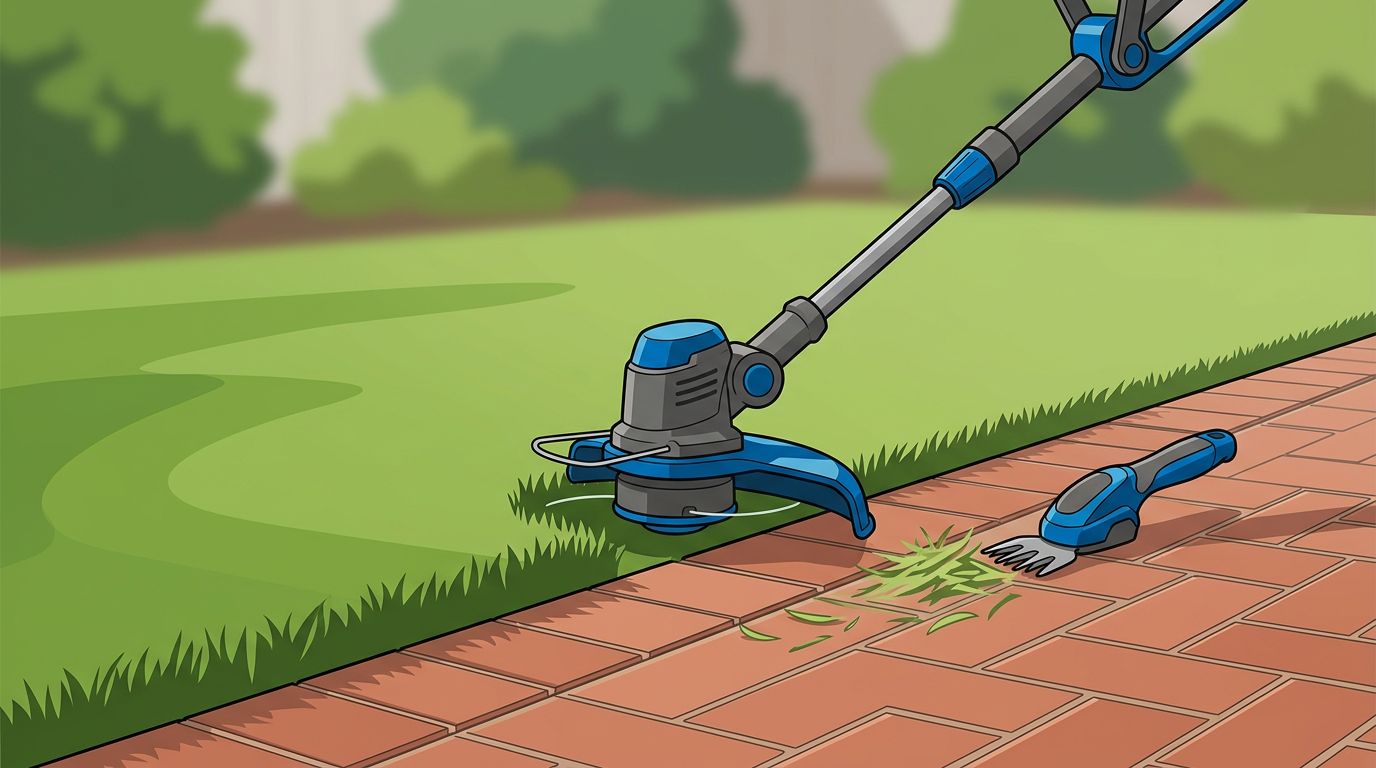
A clean lawn edge can make a driveway or walkway look finished, but one careless pass can chip pavers, remove joint sand, or loosen the border. I see this damage often when homeowners use a fast-spinning blade directly against brick or travertine. Implementing careful lawn edging techniques is essential for protecting your landscape investment while keeping your home exterior looking sharp.
The safest approach is simple: keep the cutting tool under control, leave a small buffer near the pavers, and use hand tools where the border is tight. With the right technique, you can maintain a sharp lawn line and prevent lawn edger damage to your hardscape.
Key Takeaways
- Keep rotary edger blades slightly away from paver edges to prevent damage.
- Use a string trimmer, hand shears, or manual edger for precision when you trim lawn edges.
- Remove grass clippings promptly before they collect in paver joints.
- Inspect the area for loose pavers and missing sand before beginning your trimming work.
- Clean and protect the border as part of your regular lawn maintenance routine.
Why Lawn Edgers Damage Paver Borders
Lawn edgers are designed to cut through grass roots and soil, but improper lawn edging often results in significant structural damage to your landscape. Paver borders are typically made from brick, natural stone, or concrete edging, and when a high speed spinning blade strikes these surfaces, the impact can chip the corners or scrape away the finished exterior.
The damage is not always obvious at first. A small chip can grow larger after repeated trimming, especially when rainwater enters the damaged area. Loose joint sand can also wash away, leaving gaps between the pavers. Those gaps allow the pavers to shift under foot traffic, lawn equipment, or heavy rain.
Florida weather adds another concern. Southwest Florida receives strong sun, heavy rain, and frequent moisture. Grass can grow quickly into open joints, while stormwater can move loose sand out of a border that already has weak spots.
I recommend checking the condition of your lawn edges before every major lawn cleanup. Look for:
- Cracked or chipped paver corners
- Pavers that rock when stepped on
- Low sections where soil touches the paver surface
- Missing or thin joint sand
- Grass roots growing between pavers
- Mulch or soil covering the edge
- Signs of poor lawn health that indicate the grass is encroaching on the stone
If the border is already unstable, edging over the problem will not correct it. The pavers may need cleaning, re-leveling, fresh joint sand, or sealing before regular lawn care continues.
Homeowners often discuss different ways to end a lawn where it meets masonry, and this lawn edging discussion shows how much the border design affects maintenance.
Choose the Right Tool for the Border
The tool you use makes a major difference. A rotary edger with a vertical metal blade gives a sharp line, but it also creates the greatest risk when operated directly beside pavers. The blade can strike the border, and the wheel can scrape the surface if the machine pulls toward the hardscape.
For most residential paver borders, I prefer a controlled approach. Use the rotary edger on the grass side and keep the blade from touching the pavers. The wheel should roll evenly, without forcing the machine against the border.
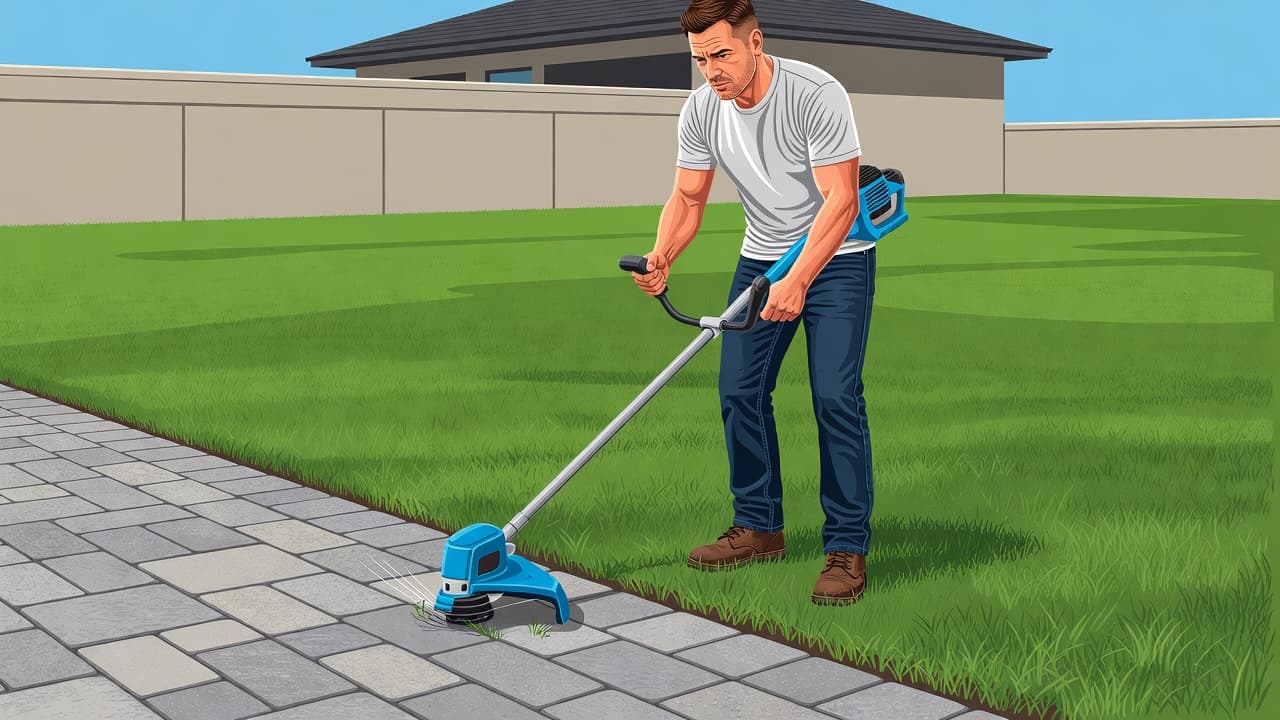
A string trimmer is often the best choice for curved walkways, patios, and pool decks because it is easier to control. By using a string trimmer, you gain better precision around tight spots. Maintain a vertical head position while edging to ensure the line cuts only the grass rather than digging into the pavers. This specific edging technique allows you to achieve a clean look while prioritizing the protection of your hardscape. Always keep the head upright and use short, light passes. Do not angle the line into the paver joints, as that can cut grass, sand, and loose soil at the same time.
Hand shears work well for small areas near steps, corners, mailboxes, and narrow paver sections. They take more time, but they give you much better control. A manual half-moon edger can also work when the soil is soft and the blade stays on the lawn side.
I don’t recommend using a metal blade as a scraper. Pavers have textured faces and rounded edges that can be marked quickly. A tool that seems harmless during one pass can leave permanent scratches after several seasons.
Create a Small Buffer Near the Pavers
The cleanest-looking edge isn’t always the safest edge. I usually leave a narrow strip of grass between the cutting path and the paver itself. That small buffer protects the border from direct blade contact and gives you room to correct the line during future maintenance while still achieving those crisp clean lines everyone desires.
Start by mowing the lawn normally. Then, use a string trimmer or hand shears to remove the grass that leans over the pavers. To maintain control, professionals often prefer to walk backwards because it provides better visibility of the string length against the paver. However, if you are just starting out, walking forward may help you maintain a steady, straight path. Work slowly around curves and corners, as a straight border is easier to protect because the tool has fewer chances to drift.
When the grass has grown across the pavers, do not force the edger through a thick mat in one pass. Cut the overgrowth down first, then remove the remaining blades with a blower or soft brush. Pulling hard on rooted grass can loosen the soil beside the paver, which ruins the foundation needed for crisp lawn edges.
A garden hose can help you plan a smooth curve before cutting. Lay it along the border, adjust the shape, and follow the line with your tool. This lawn edging video also shows how a hose can help establish a consistent edge layout.
Keep the tool moving at a steady pace. Stopping in one place allows the blade or trimmer line to dig into the soil. I also recommend wearing eye protection because small stones, sand, and dried clippings can move quickly around hard surfaces.
Protect Paver Joints From Grass and Sand Loss
Paver joints require consistent attention because they act as the structural glue for your hardscaping. When grass roots infiltrate these joints, they create an untidy appearance and can negatively impact water drainage, which often conflicts with your broader lawn care goals. Furthermore, if an edger accidentally removes the joint sand, the pavers lose vital support, potentially leading to shifting or settling over time.
I begin the maintenance process by removing loose grass and debris with a stiff outdoor broom. For stubborn growth, hand pulling is much safer than digging aggressively with a metal tool, which could chip your pavers. If the grass has spread significantly through the joints, the area may require a thorough paver cleaning before you add fresh joint sand.
When cleaning, do not aim a pressure washing wand directly into open joints. High pressure can remove more sand than expected and may inadvertently push dirt and debris deeper into the base. While professional pressure washing is an excellent way to clean pavers effectively, the pressure settings, spray distance, and technique must be carefully adjusted to match the specific material and condition of your surface.
Once the pavers are clean and dry, installing fresh joint sand will help stabilize the border. Applying a high-quality sealant can also reduce staining and make your routine maintenance tasks much easier. The right product choice depends on whether your surface consists of brick, concrete pavers, or travertine.
I take this same careful approach with other exterior surfaces around the home. Tasks like roof cleaning and soft wash applications require controlled pressure because aggressive methods can easily damage the integrity of the material. By treating your paver borders with that same level of care as part of a comprehensive home exterior plan, you ensure both aesthetic appeal and long-term durability.
Keep Grass Clippings Off the Pavers
Grass clippings may seem harmless, but they easily collect in textured pavers and open joints. In a damp Florida climate, that organic material holds moisture and creates an unsightly green or dark film. If you regularly use a lawn mower with a side discharge facing your hardscape, you are likely increasing your cleanup workload. Unlike a flower bed edge, where organic debris can break down and enrich the soil, grass clippings left on pavers are problematic because they trap moisture against the stone, which often leads to permanent staining.
Blow the border clean after mowing and edging. Use a lower setting around loose pavers so the blower does not scatter jointing sand. A soft broom is often a better choice for small patios, walkways, and areas near delicate landscaping.
Rinse the pavers when needed, but avoid flooding the joints with a powerful stream of water. If fertilizer, mulch, or grass clippings remain on the surface for too long, stains may develop. Fertilizer is particularly risky, as it can leave stubborn marks on brick and travertine, especially when granules become wet and sit within the stone pores.
I also recommend keeping mulch and soil slightly back from the paver edge. When those materials touch the border, grass can root into the joints and water can carry dirt across the surface. A clear, well-maintained edge makes lawn trimming easier and ensures your pavers stay cleaner for years to come.
Repair the Border Before Routine Edging
Some lawn edger damage is a maintenance issue. Other damage points to a larger paver problem. If a paver rocks, sinks, or sits higher than the surrounding surface, the base may need attention.
Continuing to edge beside a loose paver can make the condition worse. The vibration from lawn equipment during your regular lawn maintenance sessions may widen the gap, while water can wash soil into the open area. I recommend stopping and checking the affected section before using a machine again.
A proper repair may include:
- Removing the loose paver carefully.
- Cleaning old sand and soil from the opening.
- Correcting the base material and slope.
- Resetting the paver at the proper height.
- Replacing joint sand after the surface is stable.
A professional paver restoration service acts as a complete reset for your border, handling the cleaning, re-leveling, sanding, and sealing when you have several damaged sections. This is especially helpful around driveways, pool decks, patios, and lanais where the pavers receive regular traffic.
Driveway sealing can also protect cleaned pavers from moisture and staining, but the surface must be prepared correctly first. Sealer will not correct loose pavers or replace missing base material.
A Simple Maintenance Routine
I recommend following the same order each time you maintain the lawn beside pavers:
- Use the lawn mower first.
- Remove grass leaning across the pavers.
- Edge from the lawn side, not into the border.
- Use hand tools around corners and loose areas.
- Blow or sweep clippings away.
- Check for missing sand and movement.
- Rinse lightly when the surface needs it.
This routine keeps lawn work separate from hardscape repair. It also helps you notice small problems before they become expensive ones.
For larger cleaning projects, avoid combining aggressive pressure washing with lawn edging on the same day unless the pavers are ready for sand replacement. A professional can assess the surface and recommend the correct order for cleaning, sanding, and sealing.
Many homeowners find that consistent lawn care and routine lawn maintenance are the best ways to keep their landscape looking pristine, but sometimes, persistent organic growth or heavy buildup requires a professional touch. At Kingsway Paver Sealing & Pressure Cleaning, I help homeowners protect brick and travertine surfaces throughout Fort Myers, Naples, Bonita Springs, Port Charlotte, and nearby Southwest Florida communities. Our services include paver restoration, driveway sealing, pressure washing, house washing, gutter cleaning, roof cleaning, and soft wash service.
When the edge is chipped, stained, loose, or difficult to maintain, you can Get a Quote for professional cleaning and restoration.
Frequently Asked Questions
How can I trim grass against pavers without chipping the edges?
The safest way is to leave a small buffer of grass between your cutting tool and the paver. If you must trim right up to the border, use a string trimmer held in a vertical position or opt for hand shears to maintain total control.
Can a rotary edger be used safely near brick or stone borders?
A rotary edger is effective, but it carries a high risk of damage if the blade strikes the hardscape. To use one safely, operate it only on the grass side and ensure the guide wheel rolls smoothly without forcing the machine against the border.
What should I do if I notice grass roots growing between my pavers?
Do not use a metal tool to dig the roots out, as this can chip the pavers and remove structural joint sand. Instead, hand-pull the weeds carefully or use a stiff broom to brush away debris, then replenish the joints with fresh sand to prevent further encroachment.
Why is it important to remove grass clippings from my paver borders?
Grass clippings trap moisture against the stone, which can lead to unsightly staining and promote weed growth in the joints. For the best results, use a blower or a soft broom to clear the border immediately after every mowing and edging session.
Conclusion
The best way to prevent lawn edger damage is to keep your cutting tool under control and away from direct contact with your pavers. Maintaining a small grass buffer, making careful passes, and utilizing hand tools around tight areas can protect your border for years to come.
Do not ignore loose pavers, open joints, or missing sand. Proper lawn maintenance keeps your yard looking sharp, while timely paver restoration protects the surface underneath. By following this simple routine, you can consistently achieve crisp lawn edges without the risk of expensive hardscape repairs. A proactive approach is always easier and less costly than fixing damage after it spreads.