
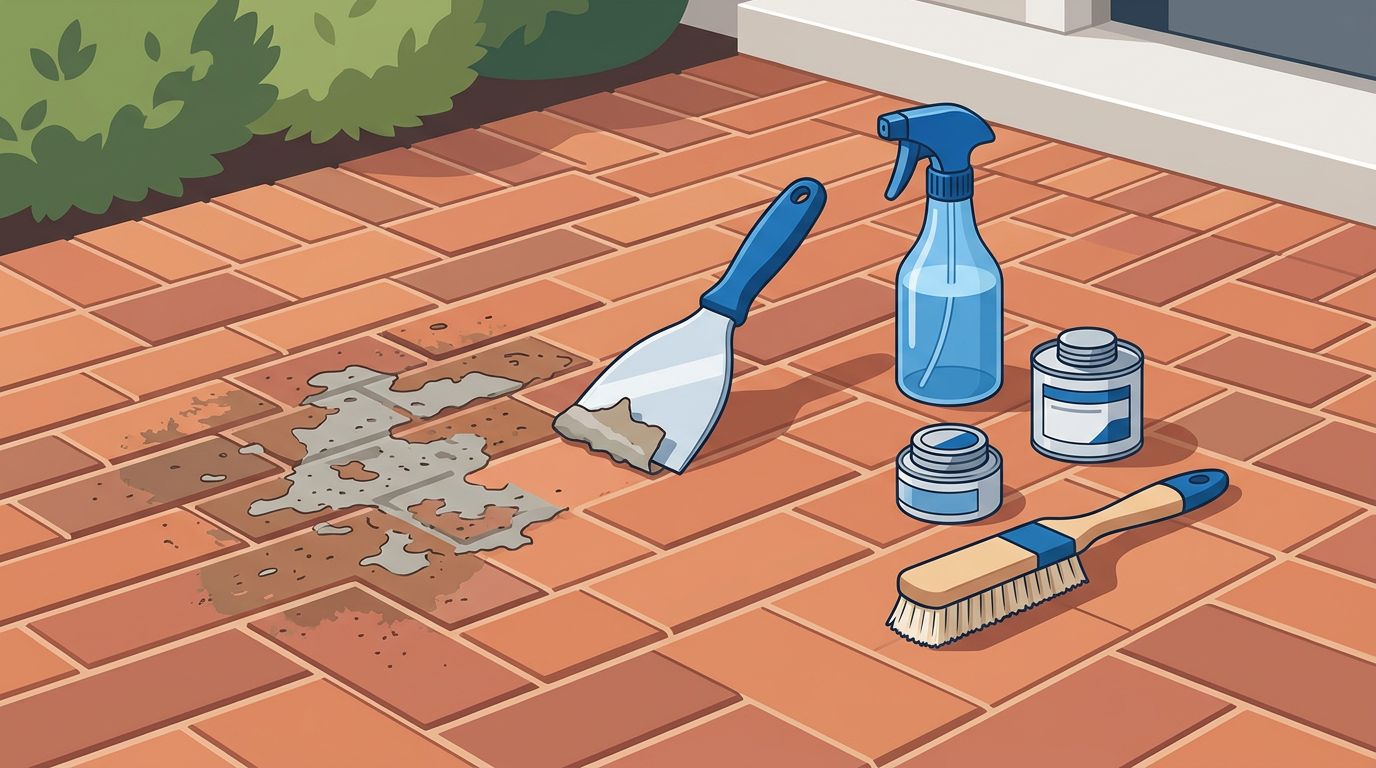
Adhesive on brick pavers can turn a clean driveway, patio, or walkway into a patchy mess. If you are looking for the best way to remove adhesive residue brick pavers to restore your exterior surfaces, you have come to the right place. Fresh glue may wipe away, but hardened construction adhesive often bonds with the porous surface and leaves behind a dark or shiny mark.
I always start with the gentlest method that fits the adhesive type. The right order is simple: identify the residue, loosen it, lift it carefully, clean the area, and inspect the paving stones before using stronger chemical products or power washing equipment.
Key Takeaways
- Fresh adhesive is easier to remove than old, hardened residue.
- A plastic scraper is safer than a metal blade on brick pavers and paving stones.
- Solvents and adhesive removers should be tested in a hidden area first.
- Pressure washing works best after the adhesive has been loosened.
- Sealing clean pavers can make future spills easier to remove.
Identify the Adhesive Before Cleaning
Before I reach for a cleaner, I look at the residue and ask how it got there. Dealing with sticky substances requires a clear understanding of the material involved, as construction adhesive from a repair project behaves quite differently than silicone caulk, double-sided tape, epoxy, or mortar. Chewing gum is another sticky residue that needs its own careful method, which I cover in my guide to removing gum from pavers. These materials also react differently depending on the surface porosity, whether you are dealing with brick pavers or more delicate natural stone.
Fresh, water-based adhesive may feel soft, rubbery, or tacky. A damp cloth and mild dish soap can sometimes remove it before it cures. Solvent-based construction adhesive usually becomes thicker and harder as it dries. Silicone often forms a flexible bead that can be cut and peeled. Epoxy becomes hard and brittle, while thinset and mortar leave a cement-like crust, the same binder residue that shows up as grout haze left after new tile work.
The color and texture also provide useful clues. A clear or white smear may be silicone or caulk. Tan, brown, or gray residue is common with construction adhesive. A glossy, hard patch may need a specialized adhesive remover rather than ordinary soap.
| Residue type | First method to try | Main concern |
|---|---|---|
| Fresh water-based glue | Damp cloth and mild detergent | Avoid spreading the smear |
| Hardened construction adhesive | Plastic scraper and masonry-safe remover | Solvent discoloration |
| Silicone or caulk | Lift the edge and peel slowly | Smearing into the joints |
| Epoxy | Careful scraping and professional treatment | Surface damage |
| Thinset or mortar | Gentle chipping and controlled cleaning | Chipping the brick face |
I don’t recommend attacking an unknown stain with the strongest product available. Some cleaners can soften an existing sealer, lighten the paver color, or push residue deeper into the pores. A discussion about old construction adhesive on brick also points out a problem I see often: removing the raised glue does not always remove the stain underneath.
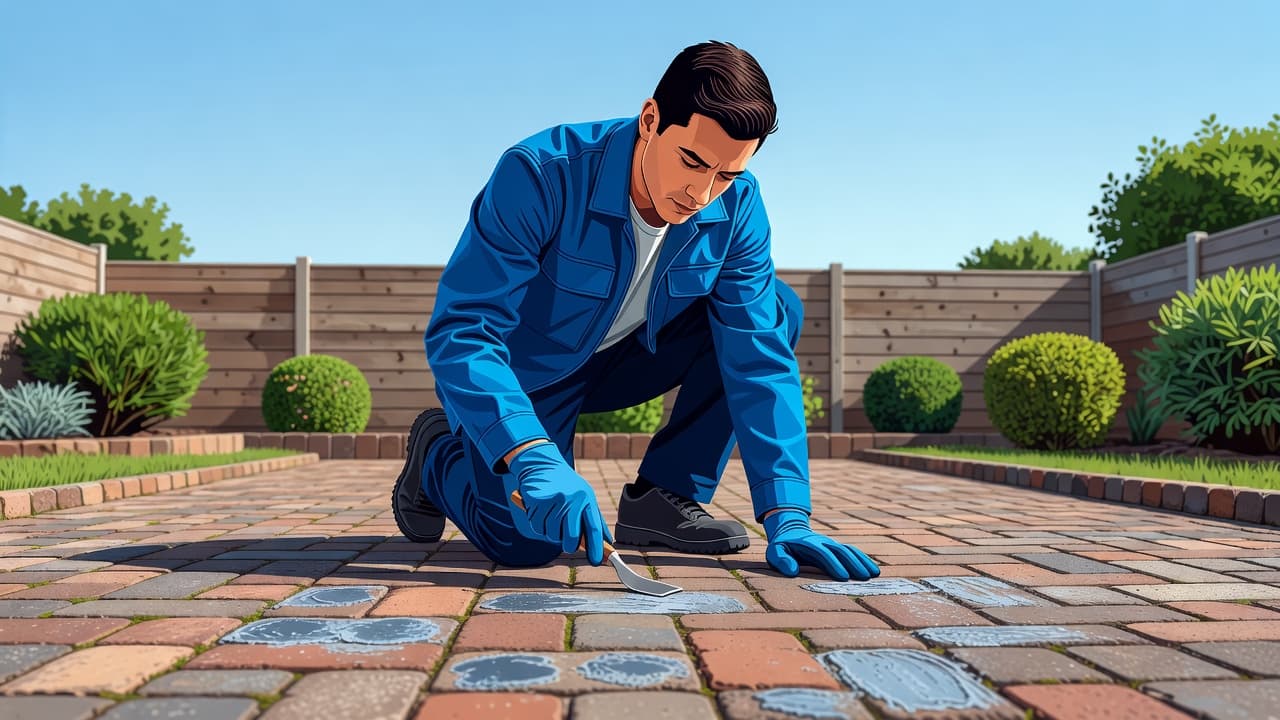
If the pavers feel rough, pitted, bleached, or unusually soft around the stain, stop before using more chemicals. That can indicate a chemical reaction or damage to the brick surface, not just ordinary construction adhesive residue.
Gather the Right Tools and Prepare the Area
I prefer to prepare the area before touching the adhesive. Move furniture, planters, vehicles, and decorations away from the work zone. Sweep off loose sand and dirt so the debris does not scratch the pavers while you scrape.
For a small spot, I usually keep these supplies nearby:
- Plastic putty knife or plastic scraper
- Nylon scrub brush
- Clean white cloths or absorbent towels
- Warm water and mild dish detergent
- Manufacturer-approved adhesive remover
- Nitrile gloves and safety glasses
- A garden hose with a gentle spray setting
A plastic scraper removes the raised adhesive without leaving the sharp scratches that a screwdriver, razor blade, or old chisel can create. I hold it at a low angle and work from the outside of the spot toward the center. If the residue is thick, I remove it in thin layers instead of forcing one large piece. While some suggest using a heat gun or propane torch to soften glue, I advise against this on outdoor surfaces. These tools often cause thermal shock, which can crack or permanently discolor brick pavers.
Always read the adhesive remover label. Look for a product that states it can be used on masonry, brick, or concrete. Depending on the substance, common solvents like mineral spirits or acetone can be effective for specific spills, but always verify compatibility with your paver type first. Do not assume a cleaner made for glass, metal, or painted surfaces is safe for pavers. A guide to hardened adhesive on masonry shows why the surface material matters when choosing a removal method.
Protect nearby grass, plants, painted walls, and drains before applying any solvent. Keep the area ventilated, and never mix adhesive remover with bleach, vinegar, ammonia, or another cleaning chemical.
A test spot is not an extra step. It is how I prevent one small adhesive mark from becoming a large discolored area.
Follow a Slow Removal Process
Once I know what I am dealing with and the area is ready, I use a controlled process. Rushing usually causes more damage than the adhesive itself. To effectively remove adhesive residue brick pavers, follow these careful steps:
- Remove the loose material first.
I gently lift flakes, edges, and raised beads with a plastic scraper. If the adhesive is fresh, I blot it with a clean cloth instead of rubbing. Rubbing can spread the residue across more paver pores. - Soften adhesive residue.
For some adhesives, warm water and mild detergent are enough. For hardened construction adhesive, I apply a small amount of a masonry-safe remover to a cloth or directly to the residue, based on the product directions. I let it work for the recommended time, but I do not allow it to dry on the paver. - Test the surface while working.
I check the color, texture, and sealer after each short application. If the paver becomes lighter, sticky, or unusually dull, I stop and rinse the area. Brick pavers vary in color and porosity, so a product that works on one driveway may mark another. - Scrub with a nylon brush.
After the adhesive softens, I work the spot with a stiff nylon brush. I use short strokes and moderate pressure. Avoid aggressive wire scraping, as using a wire brush can scratch the brick face and leave permanent rust marks in the joints. - Rinse in a controlled way.
I rinse with a garden hose or low-pressure spray, keeping dirty water from flowing across clean pavers. The goal is to remove glue residue completely while carrying the loosened material away, not spreading it over a larger area. - Let the pavers dry completely.
Adhesive shadows can look different on wet brick. I wait until the area dries before deciding whether another treatment is needed. If a dark mark remains, the residue may have entered the pores or the paver may have been stained by the adhesive.
Pressure washing has a place in the process, but I do not begin with maximum pressure. A concentrated nozzle can strip sealer, cut lines into the brick, remove joint sand, and chip the surface. I loosen the adhesive first, then use a wide spray pattern and enough pressure to rinse the material without disturbing the paver system.
For a visual example, this masonry adhesive removal demonstration shows the type of residue that can require scraping before washing. The exact method still depends on the adhesive, paver material, age of the stain, and condition of the sealer.
Know When Professional Paver Cleaning Is Safer
Small, fresh residue on one or two pavers is often manageable with patience. I recommend professional help when the adhesive covers a large area, has entered several joints, or has remained on the surface through multiple seasons.
Old adhesive can be difficult because the raised material and the stain underneath are separate problems. Removing the top layer may leave a shadow, and attempting to remove glue stains through aggressive scraping can damage the brick before the discoloration is fully gone.
Professional paver restoration starts with an inspection of your external surface cleaning needs. I look for loose pavers, missing joint sand, existing sealer, color variation, chemical burns, and areas where adhesive has spread. That inspection helps determine whether the job needs spot treatment, full cleaning, re-sanding, sealing, or replacement of a few damaged pavers.
I use pressure washing carefully on outdoor surfaces like driveways, patios, pool decks, and walkways. Flat areas may respond well to a surface cleaner, while delicate or heavily stained areas need lower pressure and a suitable cleaning solution. A soft wash is more appropriate for organic growth on surfaces that do not tolerate heavy force. It is also the method I use for certain house washing and roof cleaning services, not for blasting adhesive from brick.
After the pavers are clean and dry, driveway sealing can help limit future absorption. Note that professional degreasing may be required before the sealer application to ensure proper adhesion. Sealing does not make adhesive impossible to remove, but it can keep spills closer to the surface and make routine cleanup easier. The pavers must be clean, dry, and properly prepared before sealer is applied.
If adhesive has damaged your driveway or patio, I can inspect the surface and explain the available options. Homeowners in Fort Myers, Naples, Cape Coral, Bonita Springs, Port Charlotte, and nearby Southwest Florida communities can Get a Quote for paver cleaning, restoration, sealing, or pressure washing.
Prevent Adhesive Stains During Future Projects
The easiest adhesive stain to remove is the one that never reaches the pavers. When I see construction, patio repairs, fire pit work, or outdoor furniture installation taking place, I recommend covering the brick with a clean drop cloth and a layer of protective plastic.
Keep adhesive tubes, caulk guns, buckets, and tools on a board or tarp instead of placing them directly on the driveway. If a spill happens, pick up the excess without dragging it across the surface. Fresh residue should be blotted and lifted, not scrubbed into the pores, as this is a vital part of cleaning paving stones effectively.
After a project, inspect the paving stones in daylight. Check the edges of the work area, the joints, and any places where a tool or container rested. Finding stubborn marks while they are still soft can save hours of scraping later.
A quality sealer also gives the surface another layer of protection. It will not replace careful maintenance, but it can reduce absorption and help the paving stones stay cleaner between professional services.
Frequently Asked Questions
Is it safe to use a metal scraper to remove adhesive from brick pavers?
I strongly advise against using metal scrapers, razor blades, or chisels on brick surfaces. These tools can easily gouge the stone or create permanent scratches, so a plastic scraper is the much safer choice for lifting residue.
Can I use a pressure washer to blast away construction adhesive?
While a pressure washer can help rinse away loosened residue, it should not be your primary tool for removing hardened adhesive. Using high pressure before the glue is softened can damage the brick face, remove joint sand, and force the adhesive deeper into the porous surface.
Why does a dark mark remain even after the adhesive is gone?
Construction adhesive often leaves a “shadow” because the chemicals or oils have penetrated the porous brick surface. If you have removed the physical residue but a dark stain persists, it may be set deep within the material and often requires professional cleaning methods to address.
Should I use heat, like a heat gun or torch, to soften the adhesive?
I do not recommend using heat sources on exterior pavers. The sudden change in temperature can cause thermal shock, which often leads to cracking, spalling, or permanent discoloration of your brick pavers.
Conclusion
Removing stubborn construction adhesive from brick pavers requires patience and a methodical approach. While online DIY hacks often suggest using petroleum jelly or wax remover to soften buildup, professional-grade cleaning products are generally safer for protecting the long-term integrity of your paving stones. I always recommend identifying the material first, testing every cleaner in an inconspicuous spot, using plastic scraping tools, and rinsing only after the bonding agent has fully softened.
Pressure washing alone is rarely a complete solution for these types of stains. When combined with controlled cleaning techniques and proper surface care, however, it can finish the job without stripping joint sand or damaging the textured face of the brick. If the buildup is old, widespread, or has already caused significant discoloration, scheduling professional paver restoration is the safest way to remove adhesive residue.