
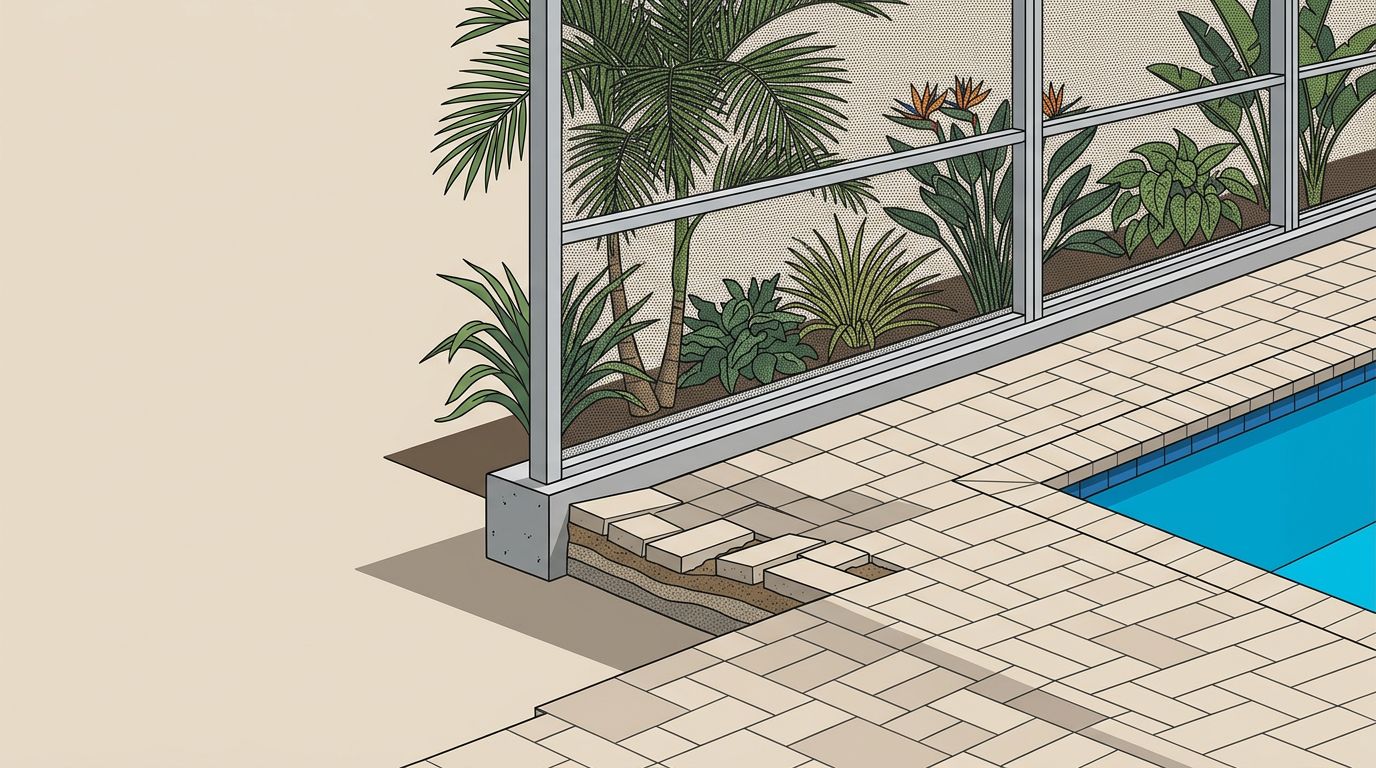
When you notice pool deck pavers settling beside a screen enclosure, the problem usually needs more than extra sand swept across the surface. The pool deck pavers may have lost support below, or water may be moving through soil disturbed during the enclosure installation.
I see this issue often on Southwest Florida pool decks, lanais, and patios. The good news is that these interlocking pavers can usually be removed, the base can be corrected, and the area can be reset without replacing the entire concrete pool deck. First, it helps to understand what caused the movement.
Key Takeaways
- Pool deck pavers beside screen enclosure footings often settle because the soil or base was disturbed during construction.
- Uneven pavers in a low spot can create water problems, loose joints, tripping hazards, and added pressure near the enclosure.
- Re-leveling requires removing the affected pavers and rebuilding the base preparation and support below them.
- Pressure washing and sealing improve the surface, but neither service fixes a weak base or prevents weed growth in the long run.
- A careful inspection is the best way to determine whether the pavers or the footing are moving.
Why Pool Deck Pavers Settling Happens Near Screen Enclosures
Screen enclosure footings require trenches, concrete forms, and post locations around the pool deck. During that work, the soil beside the footing may be excavated and replaced. If proper soil compaction and base preparation were missed during the original pool deck installation, the fill can compress later under the weight of the pool deck pavers, furniture, and foot traffic.
Water drainage is another common cause, especially when heavy rains affect a concrete pool deck. Poor drainage planning lets water move along the edge of a concrete footing, wash away joint sand, or carry fine soil out from beneath interlocking pavers, natural stone pavers, or porcelain pavers. Once the support disappears, shifting pavers drop into the open space.
Roots, leaking irrigation lines, and poor grading can create the same result. A downspout or roof runoff may send water toward the enclosure instead of away from it. Even a small plumbing leak can soften the soil over time.
The footing itself may also be part of the problem. If temperature shifts or concrete slabs have cracked, shifted, or separated from the surrounding edge restraints, resetting pool deck pavers alone won’t correct the movement. I look at the footing, post alignment, paver pattern, drainage path, and width of the settled area before recommending any repair.
Signs the Pavers Need Re-Leveling
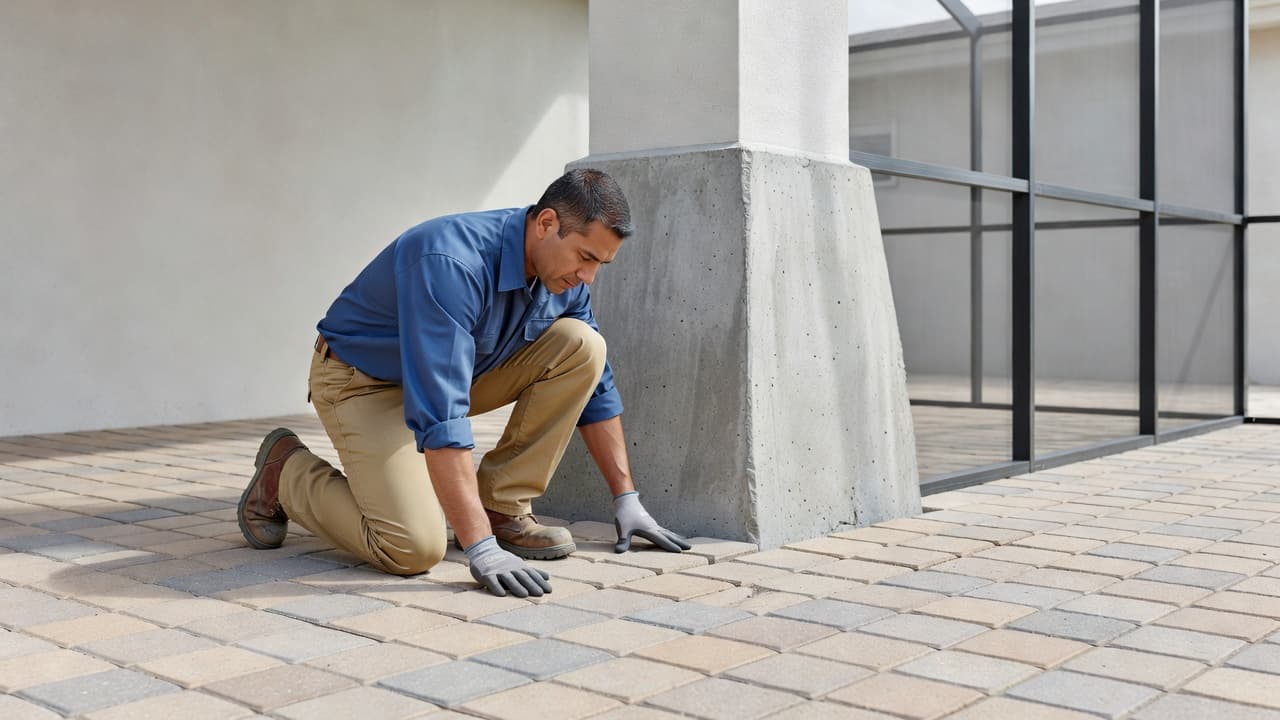
Some homeowners first notice a single low paver. Others see a long sunken strip running beside the enclosure. Both conditions deserve attention because the visible dip may not show the full size of the problem below, especially when dealing with shifting pavers that compromise safety.
Look for these warning signs around the footing:
- Pool deck pavers that rock or move when you step on them
- A noticeable lip between the concrete pool deck and the screen footing
- Open joints where sand has washed away
- Water that remains beside the enclosure after rain
- Cracked or uneven pavers near a screen post
- A low strip that becomes wider after storms
- Sand collecting at the bottom of the pool or along the deck edge
A level can help identify a slope, but it doesn’t tell you why the surface moved. I also check whether the pool deck pavers are loose only at the edge or across a larger section, similar to how adjacent concrete slabs might settle independently. A small isolated repair may need different preparation than a full side of the lanai.
Pay attention to the screen structure as well. Doors that drag, posts that no longer look straight, or gaps near the enclosure may point to movement in the footing. That condition should be reviewed before the pavers are repaired, and maintaining proper slip resistance across the walking surface remains vital for safety.
A sealer can protect pavers after repair, but it cannot support pavers that are sinking into a weak base.
How the Pool Deck Repair Process Works
A proper repair starts with a careful inspection and a clear estimate. The affected section is marked so the work stays focused. The cost depends on the size of the area, how deep it has settled, access around the pool, and the condition of the existing base.
I remove the sunken pool deck pavers carefully and keep them organized so they can be reused when they are still in good condition. Damaged or broken pieces, including traditional interlocking pavers or natural stone pavers, may need replacement during typical paver repairs. Next, I remove loose bedding sand and soft material until the stable base is reached.
The low area is rebuilt with suitable aggregate base material. Through thorough base preparation and careful soil compaction, that material is placed and compacted in controlled lifts rather than dumped into the hole all at once. Proper compaction is one of the most important parts of preventing the same pool deck pavers from settling again.
After the base is corrected, a consistent bedding layer is installed. The pavers are placed back into their original pattern, checked for height and slope, and adjusted around the footing. Edge restraints may need repair if they have pulled away or stopped holding the paver field in place, matching the standards of a quality pool deck installation.
Traditional joint sand is then added and worked into the spaces between the pavers. In some cases, polymeric sand is appropriate. The right choice between regular joint sand and polymeric sand depends on the paver material, joint width, drainage, and the condition of the surrounding deck, ensuring long-lasting stability that rivals professional installation methods.
The surface should be dry and clean before sealing. I don’t rush this step. Applying sealer over moisture, trapped dirt, or unstable joints can create a poor finish and make future repairs harder.
Cleaning and Sealing Before or After Re-Leveling
Cleaning can reveal the actual condition of the deck, but the order matters. If the pool deck pavers are badly sunken, I prefer to evaluate and re-level them before a full cleaning and sealing service. Otherwise, pressure washing may disturb already loose joint sand.
Controlled pressure washing can remove dirt, mold, algae, and old surface residue from brick, travertine, or natural stone pavers. The equipment and spray pattern must match the material, whether you have a concrete pool deck or delicate porcelain pavers. Excessive pressure can damage the paver face, strip sealer, or remove more joint sand than necessary.
I use a measured process that may include a pre-treatment, a surface cleaner on open flat areas, and a controlled rinse. The goal is to remove buildup without creating new damage while maintaining proper slip resistance. A soft wash is often better for organic growth on nearby screens, walls, and other surfaces that don’t need heavy force.
Roof cleaning and nearby exterior maintenance can also reduce the amount of dirt and organic debris washing onto the stone pavers. Keeping gutters clear helps control runoff around the lanai.
Once the pool deck pavers have been re-leveled, joints are properly filled with polymeric sand, and the surface has dried, sealing can help reduce moisture absorption, staining, and weed growth. Sealing isn’t a substitute for a sound base, but it is a useful part of long-term paver maintenance. The same careful approach matters for driveway sealing because different paver materials and existing coatings require different products.
What Homeowners Should Avoid
The most common mistake is adding sand to the surface without correcting the void below. Sand may hide the low spot for a short time, but rain and foot traffic can move it again. If poor base preparation left the soil weak, the underlying support problem remains.
Avoid forcing uneven pavers back into place with a rubber mallet. This can crack the piece or push the surrounding interlocking pavers out of alignment. It also does nothing to correct the soft soil underneath.
I also recommend avoiding high-pressure cleaning directly over shifting pavers. A narrow nozzle held too close can cut into the joints and blow sand beneath the enclosure footing. That can make the low spot larger.
Do not seal a deck that still has movement, standing water, or unfinished joints. Sealer may lock in dirt, trap moisture, and complicate the repair. It is better to correct the structure first and protect the surface afterward.
If you notice issues stemming from a faulty pool deck installation or missing edge restraints, contact a specialist. While pool deck pavers can be restored to fix the surface, they should not be used to mask deeper structural failures. For major issues, professional installation techniques may be required to secure the area permanently.
Keeping the Area Stable After Repair
Good paver maintenance helps protect the repair. Watch the area after heavy rain and look for new pooling or washed-out joints. If water repeatedly collects beside the footing, proper water drainage and proactive drainage planning need attention before your pool deck pavers settle again.
Keep irrigation heads from spraying directly at the enclosure edge. Clear leaves, pine needles, and debris before they block drainage paths. When you rinse your concrete pool deck, use a controlled flow instead of directing water into the joints.
Routine cleaning also helps. Dirt, mold, and organic growth hold moisture against pool deck pavers, and they can also contribute to weed growth and reduced slip resistance. A clean deck is easier to inspect, easier to maintain, and less likely to hide early movement.
I recommend checking the pavers, whether you have standard brick or natural stone pavers, whenever the pool area receives other exterior work. House washing, screen cleaning, and gutter service can expose drainage problems that weren’t obvious before, minimizing the need for future paver repairs.
If you see a low area near a screen enclosure, Get a Quote for an inspection and clear repair recommendation. A professional can explain whether you need paver re-leveling, fresh joint sand or polymeric sand, drainage correction, sealing, or additional evaluation of the footing.
Frequently Asked Questions
Why are my pool deck pavers sinking only next to the screen enclosure?
Settling near screen enclosures usually happens because the soil was excavated during construction and not compacted correctly. Water drainage from heavy rains or poor grading can also wash away the base material from beneath the pavers.
Can I just add more sand to fix the low spot?
Adding sand to the surface only hides the problem temporarily and will not fix the weak base underneath. The affected pavers must be lifted so the aggregate base can be rebuilt and properly compacted.
Should I pressure wash and seal my pavers before they are re-leveled?
It is usually best to re-level sunken pavers before cleaning and sealing to avoid washing out loose joint sand. Once the base and joints are fully repaired, cleaning and sealing will protect the surface and help prevent future weed growth.
Conclusion
Pool deck pavers settling beside a screen enclosure usually point to a support, drainage, or soil problem below the surface. Addressing the root cause by replacing the base and resetting the pool deck pavers is far more reliable than simply covering the dip with sand or sealer.
I look for the underlying cause before starting the repair. Once the footing and drainage are reviewed, the affected pavers can be cleaned, re-leveled, re-sanded, and protected properly. That keeps your pool deck safer, cleaner, and ready for many more Southwest Florida seasons.