
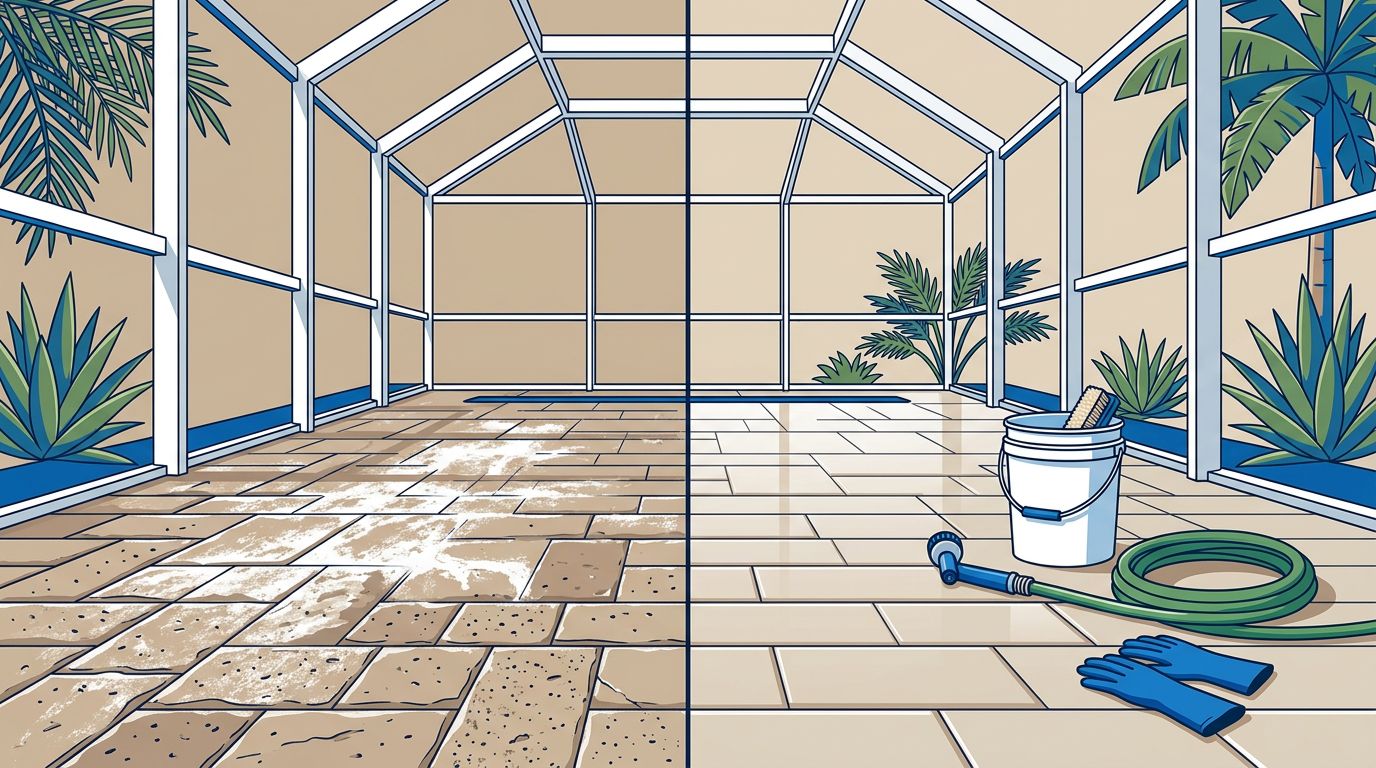
White, chalky marks beneath a pool cage can make clean pavers look old overnight. Aluminum oxidation stains often appear where rainwater washes away the chalky white film left by frame aging as it dries on brick, travertine, or concrete pavers.
I see this issue often in Southwest Florida, especially around lanais, pool decks, and screened patios. Simple home maintenance steps help to remove aluminum oxidation and prevent long-term surface corrosion on brick and stone decks. Meanwhile, applying protective coatings helps keep pool cages and underlying deck surfaces looking like new, and the right cleaner, controlled rinsing, and proper sealing make a major difference.
Key Takeaways
- Aluminum oxidation comes from weathered cage frames and runoff, not ordinary dirt.
- As the protective aluminum oxide layer breaks down, it deposits a stubborn white residue that can bond to porous pavers and become harder to remove over time.
- Strong pressure or the wrong chemical can damage pavers, strip joint sand, or affect nearby screens, meaning you need safe techniques to properly remove aluminum oxidation without causing further harm.
- A controlled cleaning process works better than trying to blast the stain away in one pass.
- Sealing the pavers and correcting runoff can help reduce future staining.
What Causes Aluminum Oxidation Stains on Pavers?
Aluminum pool cages are exposed to Florida sun, humidity, rain, salt air, and frequent temperature changes. Over time, outdoor exposure damages anodized aluminum and various aluminum alloys, breaking down the protective aluminum oxide layer and releasing a fine, chalky residue.
Rainwater carries that residue down the cage posts and across the pavers. Once the water evaporates, it leaves behind white, gray, or dull-looking marks. The staining is usually most visible along the cage perimeter, beneath door tracks, and near vertical posts.
The pavers underneath can make the problem worse. Brick and travertine have natural pores and texture that hold onto mineral residue. Older pavers may also have worn surfaces, open joints, or failed sealer. These conditions give the oxidation more room to settle.
Florida storms add another problem. Heavy rain can move oxidation residue across a larger section of the pool deck. If the area stays damp beneath the screen enclosure, moisture and metallic contact can induce galvanic corrosion and severe pitting corrosion, compounding surface corrosion and causing the residue to mix with pollen, mildew, dirt, and other organic material.
That combination can make the stains look darker and more permanent than they are.
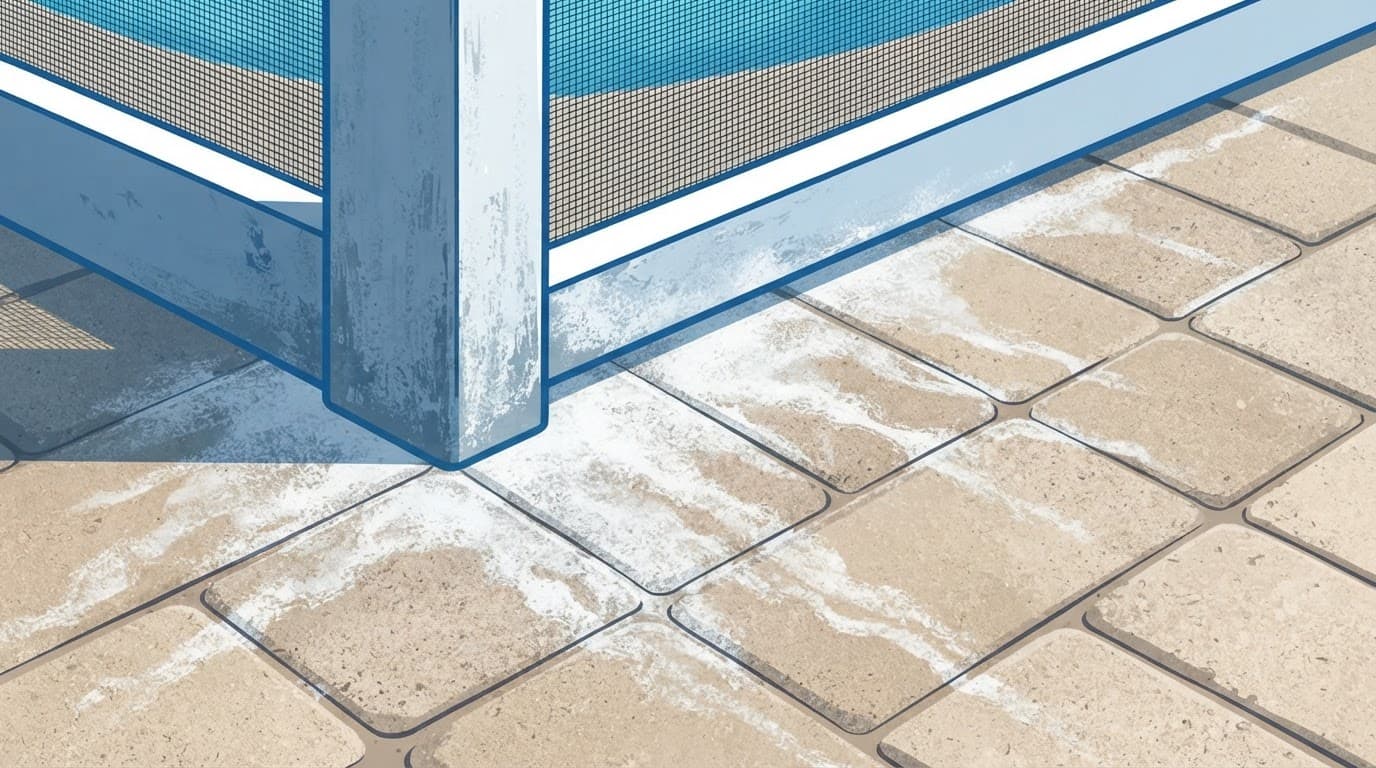
The pool cage itself also matters. When property owners attempt to remove aluminum oxidation, they often find that standard washing is not enough. While some people try mild remedies like a DIY baking soda paste or a white vinegar mix, stubborn buildup frequently requires heavy-duty chemical cleaners or specialized acid based cleaners. In advanced restoration cases, technicians might even utilize modern industrial alternatives like laser ablation for removing stubborn residue without harming frame structures, all while attempting to remove aluminum oxidation safely.
For more discussion about choosing an aluminum-safe cleaner, see this pool cage cleaning guide.
How to Identify Aluminum Oxidation Stains
The appearance and location of the mark usually provide useful clues. Aluminum oxidation stains often have several noticeable features:
- White or light gray powdery residue
- Streaks that follow water runoff
- Marks concentrated near cage posts and bottom rails
- A chalky texture that feels different from ordinary dust
- Staining that returns after rain
- A clear pattern beneath the screen enclosure
- A visible chalky white film coating the frame
- Signs of surface corrosion along the metal
A simple wipe test can help, but it should be done carefully. Use a damp microfiber cloth on a small area. If the residue transfers to the cloth and the stain follows the cage’s runoff path, oxidation may be involved.
This test does not confirm the cause in every situation. Calcium deposits, fertilizer residue, hard-water minerals, and old sealer failure can look similar. Pollen and mildew can also collect beneath a cage and create a darker film over the white residue. When you look closely at anodized aluminum, you might notice that the protective barrier has degraded, leaving behind a vulnerable aluminum oxide layer that sheds fine powder.
The pattern matters more than color alone. Fertilizer stains may appear near landscape beds. Hard-water deposits may form around pool splash zones. Oxidation is more likely when the staining begins at the aluminum frame and runs downward or outward.
Homeowners often test a small section before trying to remove aluminum oxidation permanently. You can dab a small amount of white vinegar or a gentle baking soda paste onto a hidden spot to see how the material reacts. Alternatively, applying a tiny dot of metal polish with a soft cloth can help you determine if you are dealing with surface runoff or true degradation of the aluminum oxide layer before you try to remove aluminum oxidation across the entire deck.
I always recommend testing a small, hidden area before applying a stronger cleaner. A paver may respond well in one area and react differently where the sealer has worn away. Travertine, brick, and concrete pavers should not automatically receive the same treatment.
A white stain beneath a pool cage is not always a cleaning problem. Sometimes the runoff path, damaged sealer, or cage frame needs attention too.
Why Pressure Washing Alone Can Make the Problem Worse
Pressure washing can help rinse loosened residue from pavers, but pressure by itself does not solve every oxidation stain. When you try to remove aluminum oxidation, simply blasting the surface can strip away the protective aluminum oxide layer prematurely, causing the underlying metal to react faster and make the discoloration worse. If the residue has bonded to the surface, blasting it too early can spread the mark or drive it farther into the pores.
The wrong tip can also create straight lines in the brick face. Holding the nozzle too close can damage the surface, remove more joint sand than needed, or strip old sealer unevenly. A patio may look worse when one section is clean and another section has a patchy finish. In some cases, improper washing combines with aggressive mechanical abrasion, such as using power tools, fine grit sandpaper, or a harsh grit progression, which can scratch the surrounding masonry and lead to pitting corrosion.
Pavers are durable, but they are not indestructible. The joints are part of the installation. When too much sand is removed, the pavers can shift more easily, weeds can enter the gaps, and water can wash into the base.
My preferred method is controlled cleaning. That usually includes:
- Inspecting the pavers, cage frame, joints, and drainage path.
- Testing a small area with an appropriate cleaner.
- Applying a chemical pre-treatment to loosen residue, sometimes incorporating acid based cleaners or specialized abrasive polishes when necessary.
- Using a wide spray pattern or surface cleaner on flat areas.
- Rinsing with enough pressure to remove the material without scarring the paver.
- Checking the joints and nearby walls before finishing.
The goal is not to use maximum pressure. The goal is to remove the residue while protecting the brick face, joint sand, screen enclosure, and surrounding walls. Advanced techniques like wet sanding or laser ablation might be used in specialized metal restoration, but pool deck pavers require a gentler touch to avoid permanent surface damage. Always wear proper safety equipment when handling strong chemicals or using mechanical tools near porous brick.
If the pavers also have mold or mildew, a soft wash approach may be useful for the organic growth. Soft wash methods rely more on cleaning solution and less on force. That makes them a better choice for delicate areas that do not need aggressive rinsing.
A Safer Cleaning Process for Pool Deck Pavers
The first step is protecting the area. Pool furniture, toys, plants, screens, and nearby walls should be moved or covered as needed. Overspray can leave marks on painted surfaces and delicate materials, so wearing proper safety equipment is always recommended when handling specialized chemical cleaners.
Next, the surface needs a close inspection. I look for loose pavers, thin joints, old sealer, cracks, low spots, and areas where water collects. Cleaning an unstable section without checking the base can make an existing problem more noticeable.
A small test area should come before treating the entire deck. The test shows how the paver, old sealer, and stain respond. Depending on the severity of the marks, prep work might involve mild household options like white vinegar or baking soda paste for light spots, or stronger acid based cleaners for stubborn runoff.
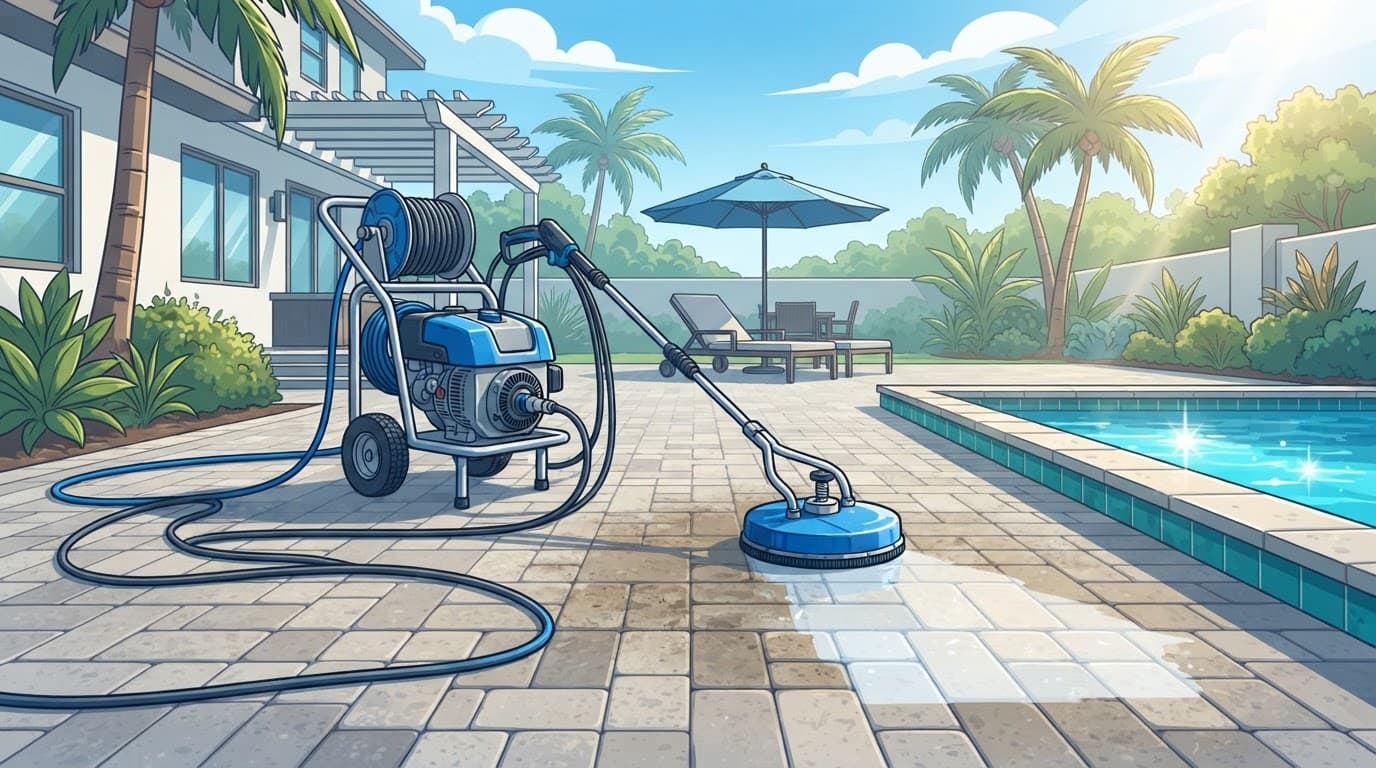
After the cleaner has time to loosen the oxidation, the surface can be rinsed with a measured spray. Flat sections may respond well to a rotating surface cleaner. Edges and cage posts require more care because water can push residue into joints or against the frame.
The rinse should remain controlled and moving. I avoid holding the spray in one spot. I also keep strong spray away from screens, door tracks, delicate trim, and open joints.
Some stains improve significantly after one service. Others leave a shadow because the residue has entered the pores or reacted with an old sealer. In that situation, cleaning may need to be followed by restoration work rather than repeated pressure. When heavy treatments are needed to successfully remove aluminum oxidation from surrounding materials, technicians might evaluate options like power tools with a specialized metal polish, or even high tech solutions like laser ablation. In certain cases, treating the affected areas requires mechanical abrasion, such as wet sanding with fine grit sandpaper. Following a methodical grit progression helps restore smooth textures without aiming for an overly shiny mirror finish, effectively breaking down the aluminum oxide layer.
When Paver Sealing Helps Prevent Future Stains
A protective sealer does not stop aluminum oxidation from forming on the cage. It can reduce how easily the residue absorbs into the pavers.
Unsealed brick and stone are open to water, minerals, dirt, and organic residue. Quality paver sealers act as clear protective coatings that boost overall corrosion resistance against future runoff. Fresh runoff has less opportunity to settle into the pores.
The surface must be cleaned properly before sealing. Pre-sealing prep requires stripping away any lingering aluminum oxide layer or pitting corrosion using light mechanical abrasion, wet sanding, or mild chemical cleaners. Applying sealer over oxidation, mildew, old residue, or trapped moisture can lock in the problem. Uneven sealer can also create dark patches or a blotchy appearance.
This is where driveway sealing experience can translate to pool decks and patios. The surface needs to be clean, dry, and stable before protective coatings are applied. Joints may also need fresh sand if previous cleaning or storms have removed too much.
While high-end frame restorations like laser ablation can restore cage metals to a like-new finish, deck sealing protects pavers so you do not need to constantly remove aluminum oxidation from the same stones. A sealed paver area still needs maintenance. Rinsing the pool deck after heavy storms can remove fresh residue before it dries. Sweeping leaves and debris away from the cage line also helps. If water repeatedly flows from one post onto the same section, that runoff should be addressed.
The best results usually come from combining cleaning, repairs, sealing, and simple maintenance instead of treating each stain as an isolated spot.
How to Reduce Oxidation Around a Pool Cage
You may not be able to prevent aluminum oxidation completely, but you can reduce recurring stains. Maintaining preventative maintenance routines for anodized aluminum structures and specialized aluminum alloys helps maintain high corrosion resistance over time.
Keep the cage frame and bottom rails clean so residue does not build up before the next storm. Check whether downspouts, pool overflow, or irrigation spray are directing extra water toward the pavers.
Sprinklers should not spray directly onto the cage or pool deck. Irrigation water can carry minerals and lawn treatments that add to the discoloration. Landscape beds should also drain away from the pavers instead of washing soil and fertilizer across the surface.
A gutter and downspout inspection can help when roof runoff is landing near the cage. Roof cleaning and exterior maintenance should be handled with care so cleaning solutions do not run onto the pool deck or landscaping.
Regular cleaning is easier when stains are still fresh. Waiting until the residue mixes with mildew, dirt, and old sealer usually makes the work more involved. To effectively remove aluminum oxidation before it causes permanent damage, consider applying protective coatings to preserve the natural aluminum oxide layer against surface corrosion and galvanic corrosion. When minor spots appear, you can use mild chemical cleaners or white vinegar, followed by a gentle metal polish or fine grit sandpaper for stubborn areas.
Homeowners in Fort Myers, Naples, Bonita Springs, Port Charlotte, and nearby communities can also schedule professional inspections before sealing. A qualified technician can identify whether the main issue is aluminum oxidation stains, mineral buildup, runoff, or a failing finish, and they can show you how to safely remove aluminum oxidation without damaging surrounding stone.
Should You Hire a Professional?
DIY cleaning can work for a small, fresh mark, but larger pool decks require more care. The risk is not only the stain. The wrong process can damage the paver surface, screen enclosure, plants, paint, or joint system. Handling specialized tasks like trying to remove aluminum oxidation often requires professional expertise, especially when dealing with delicate aluminum alloys or delicate stone surfaces.
Professional service is helpful when:
- The stains cover a large section of the pool deck.
- The pavers have old or uneven sealer.
- Joint sand is missing or washing out.
- The cage has heavy oxidation.
- The surface includes travertine or other delicate stone.
- Stains return after every rain.
- Water is collecting beneath the enclosure.
At Kingsway Paver Sealing & Pressure Cleaning, I look at the full area before recommending a solution. That may include paver cleaning, joint sanding, sealing, or a separate rinse for the cage and surrounding exterior. Our team uses controlled pressure and safe application methods rather than treating every surface the same way. When expert technicians step in, they bring the right chemical cleaners, protective coatings, and safety equipment to ensure proper corrosion resistance without harming your property.
The same care applies to nearby house washing and exterior cleaning. A strong rinse that works on one surface may be too aggressive for another.
If your pool deck has recurring oxidation stains, you can Get a Quote for professional cleaning, restoration, and sealing services.
Frequently Asked Questions
What causes the white chalky stains beneath my pool cage?
These stains are caused by weathering aluminum framing, where the protective aluminum oxide layer breaks down into a powdery residue. When rainwater washes this residue down onto your brick, travertine, or concrete pavers and evaporates, it leaves behind stubborn white or gray marks.
Can I use high-pressure washing to remove aluminum oxidation?
Using high pressure alone is generally not recommended because it can strip away joint sand, etch the paver surface, and push the residue deeper into the pores. A controlled cleaning process using proper chemical solutions and gentle rinsing works much better to safely eliminate the marks.
Does sealing the pavers prevent future oxidation stains?
Paver sealing will not stop oxidation from forming on the aluminum frame, but it acts as a protective barrier that keeps the chalky runoff from bonding directly into the stone. This makes future cleaning much easier and helps maintain a clean patio surface.
Conclusion
Aluminum oxidation stains beneath pool cages usually come from weathered aluminum, runoff, and porous pavers working together. The marks may look simple, but to remove aluminum oxidation safely, you need the right cleaner, controlled pressure, and a close look at the entire area.
I recommend treating the source as well as the stain. Clean the pavers, inspect the cage and drainage path for surface corrosion, protect the surface with protective coatings to improve corrosion resistance, and rinse fresh residue before it settles. With the right maintenance, your pool deck can stay cleaner, brighter, and easier to care for through Southwest Florida’s rainy seasons.