
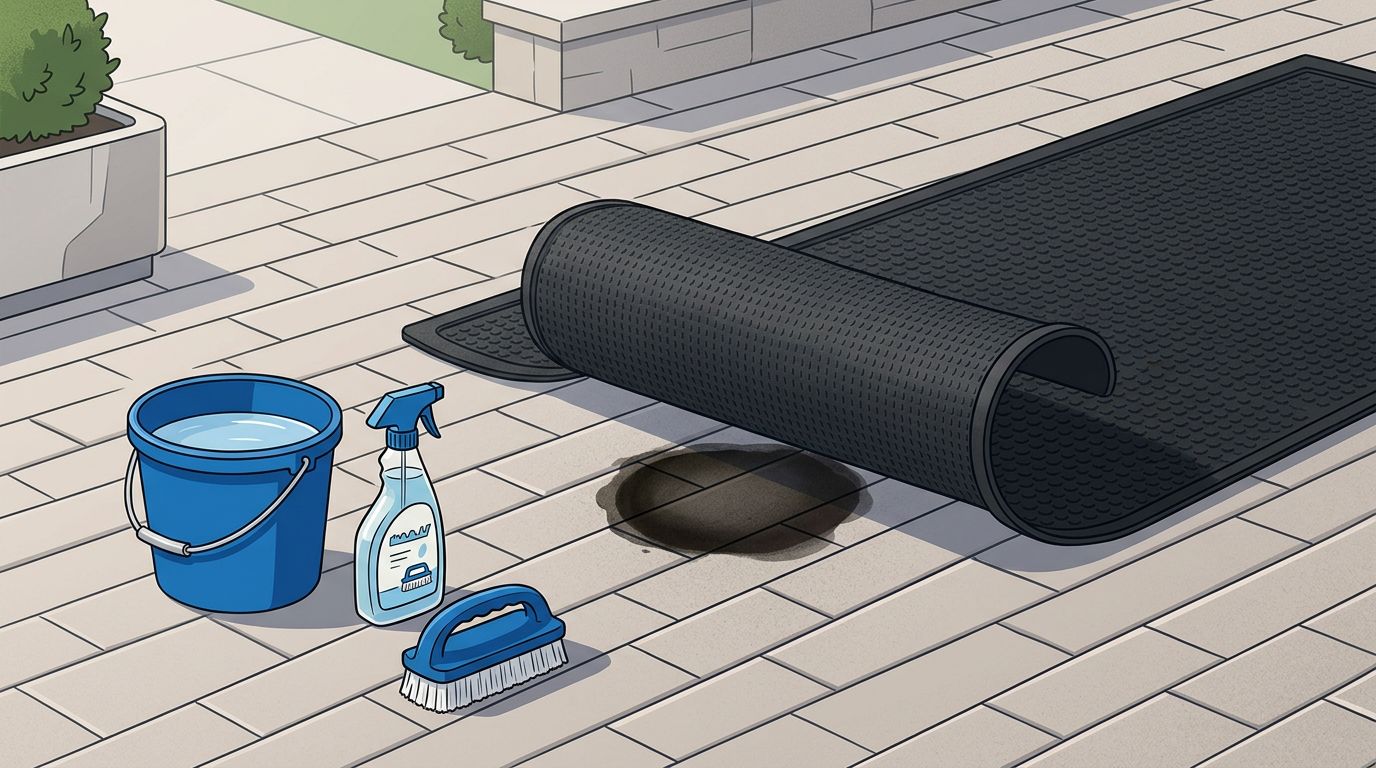
Rubber mat stains pavers in a way that can make a clean patio, lanai, or driveway look permanently marked. The dark outline may come from rubber oils, dye transfer, trapped moisture, or residue that has worked deep into a porous surface.
I always start by checking how deep the mark goes. A light transfer stain may respond to gentle cleaning, while a dark, rough, or faded area may involve damaged sealer or the paver itself. The safest repair depends on that first inspection.
Key Takeaways
- Rubber mats can leave dark stains on brick and concrete pavers due to trapped moisture, heat-softened rubber oils, or colored dyes.
- Always inspect the stain on a dry surface before cleaning to determine if the mark is surface residue or deep absorption.
- Start cleaning with the gentlest method possible, using mild soap or a masonry-safe cleaner with a soft nylon brush.
- Avoid aggressive tools like wire brushes, metal scrapers, torches, or excessive pressure that can permanently damage the paver face.
- Ensure pavers are completely clean and dry before applying any new sealer to avoid locking in discoloration.
Why Rubber Mats Leave Marks on Brick Pavers
Rubber mats protect surfaces from patio furniture, workout equipment, planters, grills, and outdoor storage. However, common items like a rubber backed coir mat can also trap moisture and hold oily material against porous brick. Mats featuring a nitrile rubber backing are particularly prone to this issue because Florida heat softens the residue and speeds up transfer into the paver surface.
A mat that stays in one place for months may leave a clean outline around the area it covered. That outline often becomes more visible after the mat is moved. Dirt and organic growth may also collect around the edges, creating a stain with a darker border.
Brick pavers are not sealed glass. Similar to concrete pavers and natural stone pavers, their small pores can absorb:
- Rubber oils and chemical additives
- Colored dyes from the mat backing
- Dirt trapped beneath the mat
- Moisture-related algae or mildew
- Old sealer softened by heat and humidity
Some stains sit on the surface. Others leave a shadow that remains after the loose residue is removed. Wet pavers can hide the true appearance for a short time, so I let the area dry before deciding whether the mark is gone.
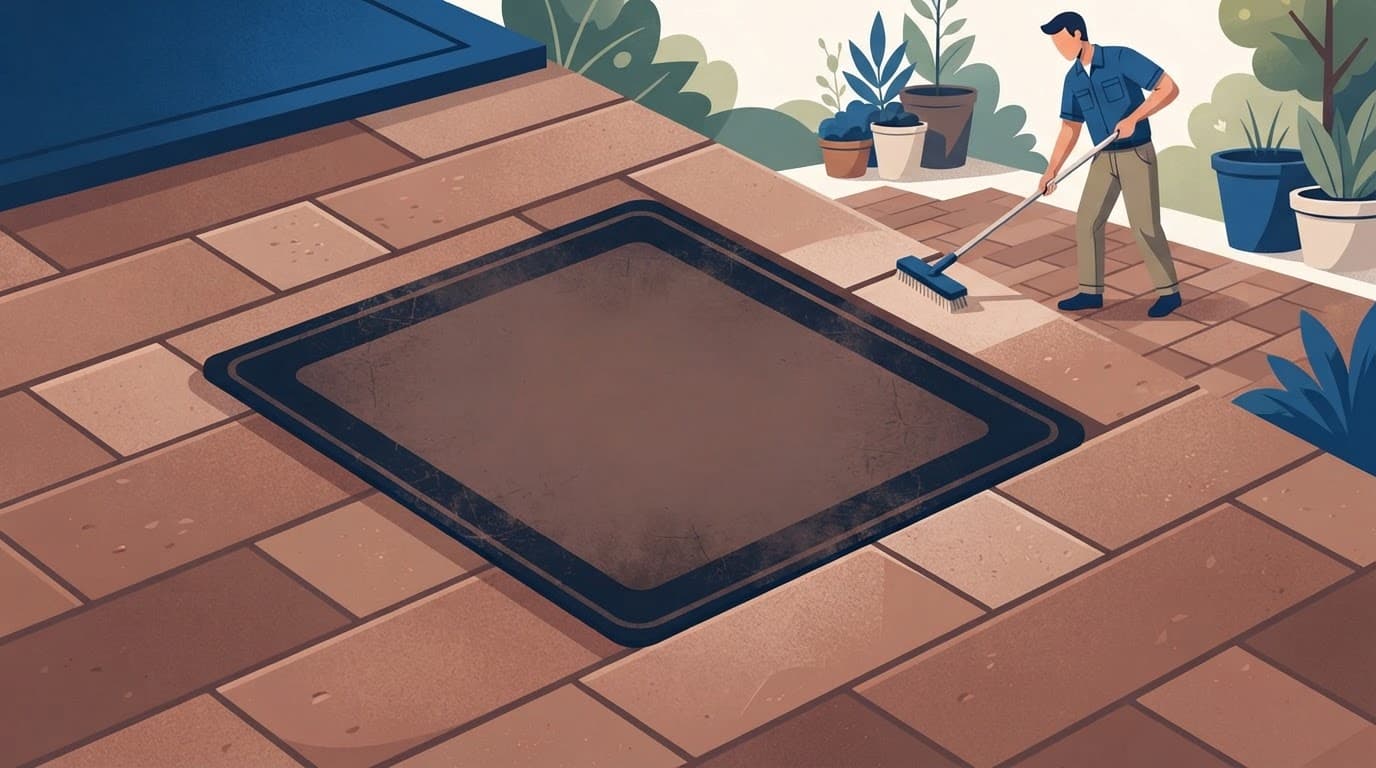
A stain that disappears while the brick is wet may return as the paver dries. Always inspect the surface under dry conditions.
Inspect the Stain Before Cleaning
Before applying a cleaner, remove the mat and any loose debris. Look at the texture, color, and edges of the mark. A flat dark film is different from a paver with a rough, bleached, or melted-looking surface.
I also check the surrounding joints. If the mat held water against the pavers, the area may have weeds, mildew, washed-out sand, or loose joint material. Cleaning only the center can leave a noticeable patch around the stain.
Use a small test area near the edge of the mark, and consider applying a test poultice to see how deep the discoloration goes. This helps show whether the stain is sitting on top or has moved into the brick. It also reduces the risk of creating a lighter or rougher spot in the middle of the patio.
A hardscape restoration professional may recommend one of several repair options depending on what the inspection shows:
| Condition | Suitable approach | Main concern |
|---|---|---|
| Loose dirt or light rubber-based residues | Mild cleaner and soft brushing | Avoid spreading the residue |
| Dark oily transfer | Masonry-safe degreaser and controlled rinsing | Test the product first |
| Mold or mildew around the mat | Soft wash treatment | Protect nearby surfaces |
| Damaged sealer or absorbed stain | Professional treatment or restoration | More cleaning may not remove it |
| Cracked, burned, or badly discolored paver | Individual paver replacement | New brick may vary slightly in color |
The takeaway is simple. Cleaning cannot reverse damage to the brick face. Proper stain removal can eliminate surface buildup, but it cannot rebuild a surface that has been etched, cracked, or permanently discolored.
How to Treat Rubber Mat Stains Pavers Safely
For a small, recent stain, start with the least aggressive method. Sweep away dry material using a soft brush. Do not begin by rubbing hard, because that can push oily residue across clean pavers.
Mix warm water with a small amount of mild dish soap. Apply the solution to the affected area and let it sit for several minutes. Keep the surface damp during this short dwell time, but don’t allow dirty water to run across a large section of the patio.
Use a soft or medium nylon brush. Work from the outside of the mark toward the center. Rinse the brush often so it doesn’t put the removed residue back onto the pavers.
For a heavier mark, use a masonry-safe solvent cleaner or a concrete degreaser. You can also test a tiny amount of mineral spirits on a hidden spot for stubborn oily transfer. Read the product directions and test it in an inconspicuous spot first. A cleaner that works on concrete may not be suitable for every brick, travertine surface, or existing sealer.
A careful cleaning process usually follows this order:
- Move the rubber mat and sweep away loose dirt, sand, and debris.
- Wet the surrounding pavers so they don’t absorb concentrated cleaner too quickly.
- Test the selected cleaner on a small area.
- Apply the professional cleaning solution to the stain and allow the recommended dwell time.
- Agitate with a nylon brush, keeping the residue contained.
- Rinse with controlled water pressure and inspect after drying.
Blotting or lifting residue is safer than dragging it across the surface. Avoid metal scrapers, wire brushes, and abrasive pads. These tools can scratch the brick face, remove joint sand, and leave a damaged area that looks worse than the original stain.
Don’t use a torch, heat gun, or boiling water. A second round of heat will not remove heat damage. Sudden temperature changes can cause cracking, spalling, or permanent discoloration.
When Pressure Washing Helps
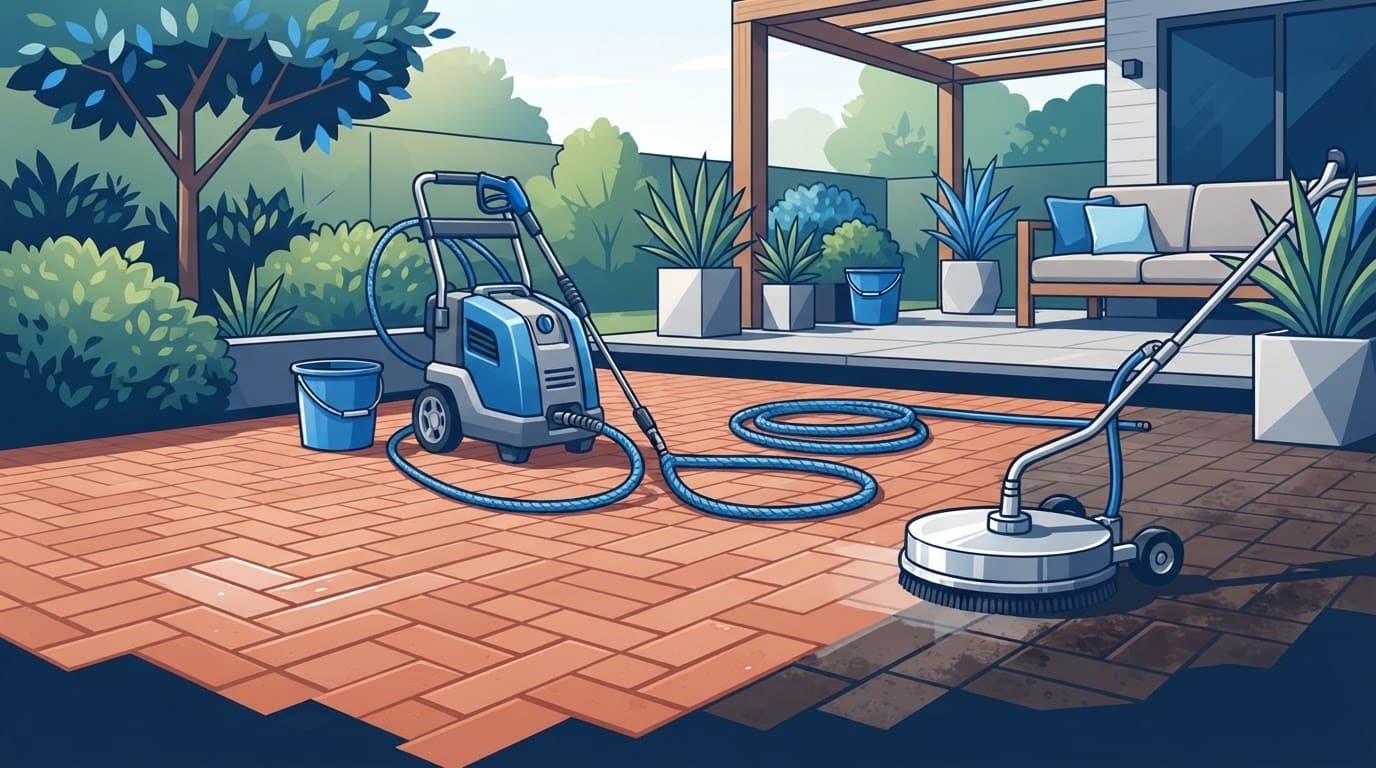
Pressure washing can remove loosened rubber residue, dirt, and mildew from textured pavers. It is useful when the stain covers a larger area or when brushing cannot reach the low spots in the brick surface.
High pressure alone is not the answer. Operating a pressure washer with a narrow nozzle held too close can cut lines into the paver. Excessive force may strip old sealer, remove joint sand, or create an uneven finish between cleaned and uncleaned sections, which sometimes happens when transitioning from standard brick to surrounding rubber pavers.
I prefer a controlled process that may include a chemical pre-treatment, a wide spray pattern, and a surface cleaner on flat areas. The final rinse should remove the loosened material without blasting the joints.
Keep the spray moving and avoid directing strong water at delicate edges, screens, walls, doors, or landscaping. Check the joints after rinsing. If too much sand has been removed, the pavers can shift more easily and weeds may enter the gaps.
A soft wash is more suitable when the main problem is mold, algae, or mildew around the mat. Soft wash cleaning uses a cleaning solution and lower pressure instead of relying on force, serving as a reliable method for routine surface maintenance. It is the same controlled approach I use for roof cleaning, but the product and application must match the surface.
When the Paver Needs Professional Treatment or Replacement
A rubber mat stain may remain after cleaning for several reasons. The rubber dye or oil may have absorbed into the pores. The mat may have damaged an existing sealer. In severe cases, the paver may have faded, etched, or changed texture.
Don’t keep escalating the pressure when a shadow remains. More force can remove the surrounding color and leave a visible cleaning halo. It may also damage joint sand and nearby pavers.
Individual paver replacement is often the cleanest option when one brick is badly discolored or physically damaged. Homeowners can also consider swapping out older units for rubber pavers if heavy floor protection is needed again. A replacement may not match perfectly at first, especially if the existing driveway has weathered for years. Blending several nearby pavers can create a more consistent appearance than replacing only one unit.
If the stain covers a broad patio, driveway, or interior concrete floors, the area may need full cleaning before any spot repair. Keep in mind that outdoor brick restoration requires different techniques than caring for an indoor acid-stained concrete floor. A larger restoration can include:
- Removing damaged or failed sealer
- Cleaning the complete paver surface
- Replacing or adding joint sand
- Re-leveling loose or uneven pavers
- Applying a new sealer after the surface dries
At Kingsway Paver Sealing & Pressure Cleaning, I look at the full surface instead of treating one dark spot in isolation. If the stain needs professional cleaning, restoration, or sealing, you can Get a Quote for your Fort Myers, Naples, Bonita Springs, Port Charlotte, or Sanibel Island property.
Seal Only After the Surface Is Clean and Dry
Never seal over rubber mat stains pavers have not fully released. Sealer can lock discoloration beneath the coating and make later treatment more difficult. It can also highlight the difference between the stained area and the surrounding brick.
After cleaning, let the pavers dry completely. The surface of your concrete pavers should be free of cleaner residue, oily film, loose sand, and standing moisture. Drying time depends on shade, humidity, airflow, and recent rain.
Once the pavers are clean and dry, sealing pavers can reduce water absorption and make future stains easier to clean. It can also improve color and create a more consistent appearance across an older patio or driveway.
The same rule applies to driveway sealing and patio sealing. Clean first, repair damaged areas, allow the surface to dry, then apply the right product evenly. Sealing is protection, not a substitute for stain removal.
Prevent New Mat Marks
The easiest rubber mat stain to remove is the one that never develops. Lift outdoor mats regularly and check for trapped water, dirt, and discoloration. This is especially important in Southwest Florida, where heat, rain, and humidity can keep the area underneath damp.
Choose mats designed for outdoor use with drainage openings. When outfitting your patio or concrete floors, look for a breathable entryway matting system that allows air circulation. Avoid leaving solid rubber backing on brick for long periods without inspection. Use furniture pads that don’t hold water against the pavers, and keep planters raised slightly when possible.
If a mat sits beside a pool, grill, or lanai seating area, incorporate checks into your daily cleaning routine and overall surface maintenance. Move the mat before pressure washing or sealing so the entire surface receives an even treatment.
A covered ash container also helps prevent burn marks from cigarettes and outdoor cooking debris. Small habits protect the finish and reduce the need for stain removal later.
Frequently Asked Questions
What causes rubber mats to stain pavers?
Rubber mats trap moisture, oils, and chemical additives against porous brick or concrete surfaces. In warm climates like Florida, heat softens the rubber backing, speeding up the transfer of dark residue and dyes into the paver.
Can I use a pressure washer to remove rubber mat stains?
Pressure washing can help remove loosened surface residue and mildew from textured pavers when done correctly. However, excessive water pressure or a narrow nozzle can strip joint sand, cut into the brick, and create an uneven finish.
How do I know if a paver needs to be replaced?
If the rubber mat has chemically etched, burned, or permanently altered the texture and color of the brick, cleaning may not fully restore it. Individual paver replacement is often the best solution for severely damaged units.
Conclusion
Rubber mat stains pavers for different reasons, so the first step is identifying whether the mark is surface residue, absorbed discoloration, damaged sealer, or damaged brick. Mild soap, a solvent cleaner, a masonry-safe cleaner, nylon brushing, and controlled rinsing are appropriate starting points for light marks on standard bricks or rubber pavers.
Avoid heat guns, torches, wire brushes, harsh acids, and excessive pressure. Clean the full area, replace severely damaged pavers when needed, and seal only after the brick is clean and completely dry. With the right process, proper stain removal improves many unsightly marks without damaging the pavers, joint sand, or surrounding property.