
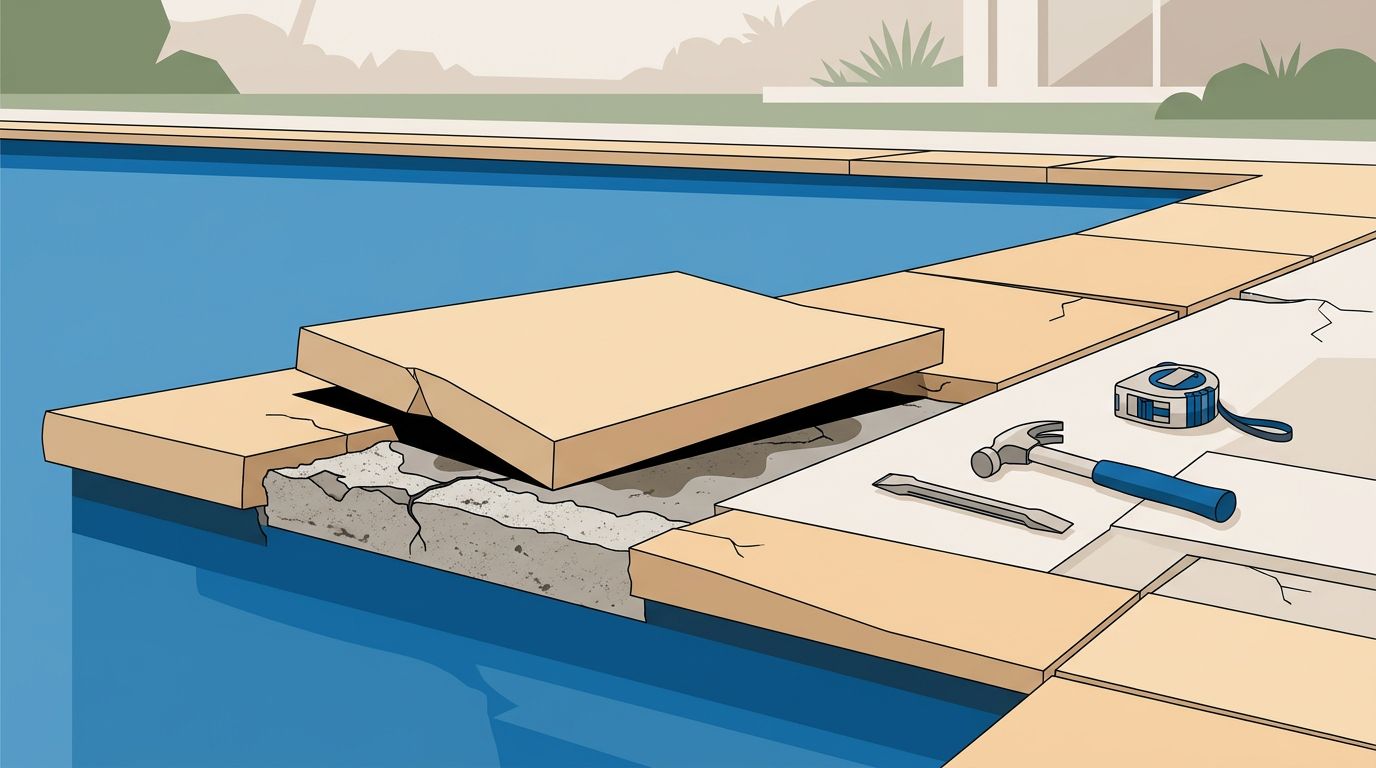
A loose pool coping stone can start as a small movement under your foot, then become a larger repair problem. If you’re dealing with loose travertine pool coping, don’t ignore it or simply push the stone back into place and hope it stays there.
Travertine pool coping sits at the edge of the pool, where water, foot traffic, chemicals, weather, and deck movement all meet. I inspect the stone, the joints, the bedding material, and the surrounding deck before recommending pool coping repair. The right solution depends on what caused the coping to move in the first place.
Key Takeaways
- Loose travertine pool coping is commonly caused by failed mortar, soil or deck movement, moisture infiltration, damaged joints, or problems beneath the stone.
- Movement, open or crumbling joints, uneven heights, and water collecting around the coping are signs that repair may be needed.
- A single undamaged stone with a stable base can often be lifted, cleaned, and reset, while cracked or badly damaged travertine usually needs replacement.
- Multiple loose stones may indicate a wider problem involving the base, bond beam, pool structure, drainage, or surrounding deck.
- Cleaning and sealing should wait until the coping repair has fully cured and the stone is stable; neither service can secure a loose coping stone.
Why Loose Travertine Pool Coping Happens
Loose travertine pool coping usually develops because the material beneath it has failed or shifted. The stone itself may still be in good condition. Removing and resetting it can solve the problem when the base remains stable and supports the coping’s structural integrity.
One common cause is mortar failure. Pool water, rain, cleaning chemicals, and years of temperature changes can weaken the adhesive bond between the travertine and its setting bed. Once that bond breaks, the stone may rock slightly or lift from one edge.
Soil movement can create another problem. In Southwest Florida, heavy rain can affect the soil around pool decks and patios. Poor drainage may allow water to collect below the coping, while water infiltration through open joints can wash fine material away from the supporting base. The result is a low spot, a hollow area, or a stone that no longer sits evenly.
The surrounding deck can also move. Travertine and other stone pavers may settle, shift, or separate when the base was not compacted correctly or when water enters through open joints. Even a small amount of movement can place stress on the pool edge.
Other causes include:
- Roots from nearby plants pushing against the deck or coping.
- Cracked concrete or a damaged bond beam beneath the stone.
- Failed expansion joints between the pool structure and surrounding deck.
- Heavy furniture, repeated impact, or concentrated foot traffic.
- Water entering through open joints and weakening the bedding material.
- Freeze-thaw cycles and other repeated temperature changes.
- Previous repairs made with the wrong adhesive or patch product.
A loose stone near a pool is not always caused by the travertine itself. That’s why I don’t recommend covering the movement with caulk, extra sand, or surface sealer. Those materials may hide the problem for a short time, but they don’t restore proper support or address the coping’s structural integrity.
How to Tell When Travertine Coping Needs Repair
The easiest sign is movement. If one or more coping stones rock when you step on them, they need attention. A stone that shifts under normal foot traffic can become a trip hazard and may damage the edges of nearby pieces.
Look closely at the mortar joints around the coping. Open gaps, crumbling mortar, missing joint material, and fresh cracks can show that the stone is no longer supported correctly. You may also notice that one end sits higher than the next stone or that the coping has pulled away from the pool edge.
Water can reveal additional problems. If water remains beneath or beside the coping after the deck dries, drainage may need to be checked. Dark staining, recurring organic growth, or washed-out material around the joint can also point to moisture moving where it should not.
Natural travertine, including tumbled travertine and silver travertine, contains holes, pits, and variations. These features are part of the stone and do not automatically mean the coping is damaged. I become more concerned when a hole is deep enough to catch a foot, collect water, or cause an edge to break, including along a bullnose edge.
A coping stone can look solid from above while having little support underneath. Movement is more important than appearance.
Homeowners often search for help after a stone has settled and created an uneven walking surface. A settled travertine decking discussion shows how quickly a small height difference can become a safety concern around a pool. Regular pool maintenance and preventive maintenance can help identify shifting coping before the problem becomes more extensive.
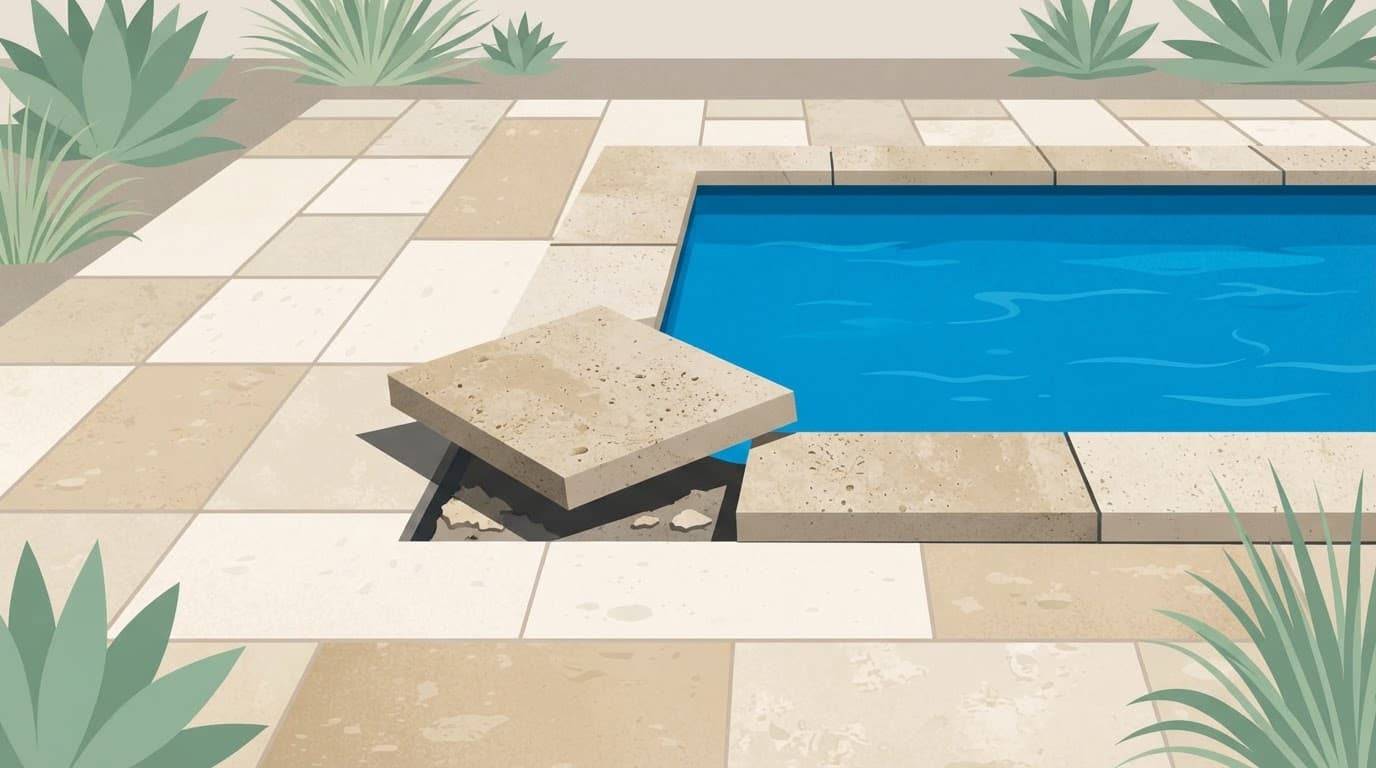
Loose Travertine Pool Coping Repair Options
The right pool coping repair should match the size and cause of the problem. One loose piece with a stable base needs a different approach than an entire pool edge that has shifted.
Resetting one loose coping stone
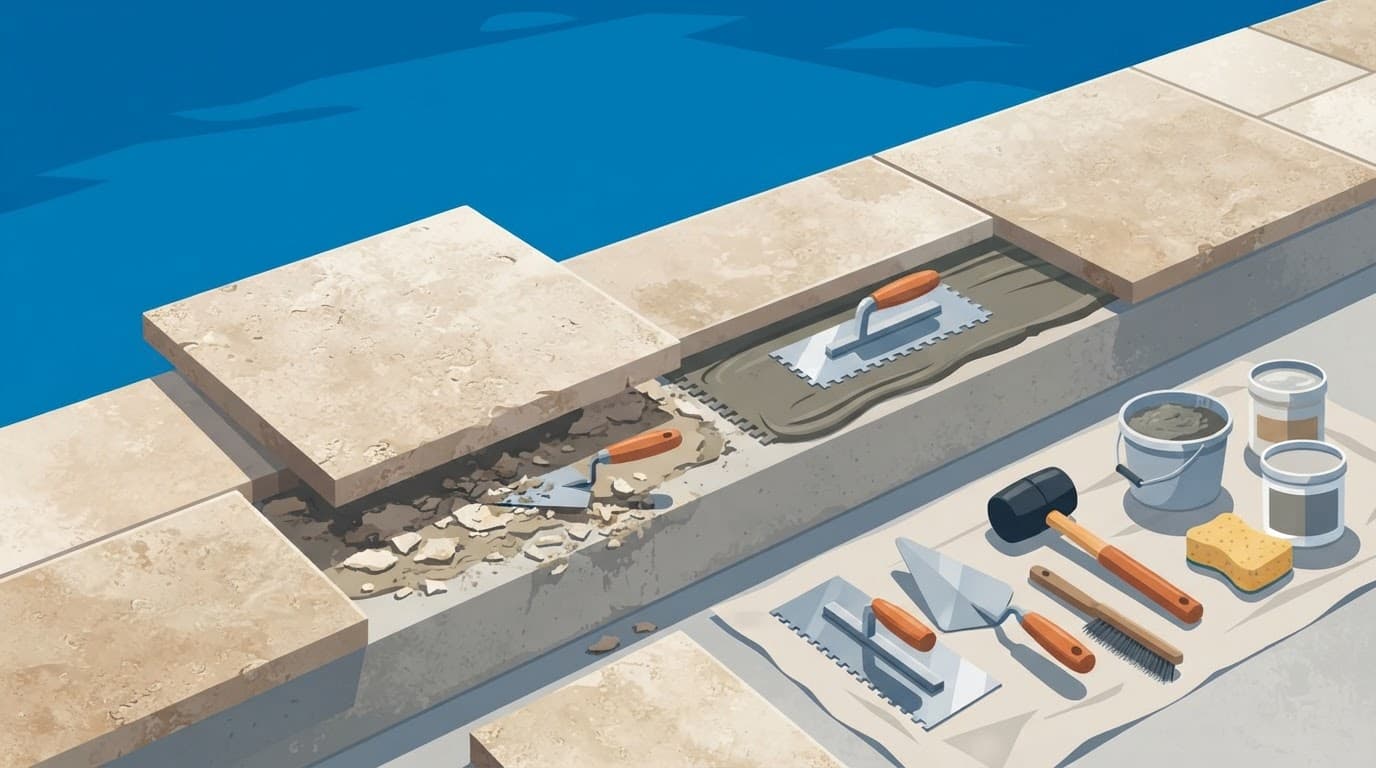
When one stone is loose but undamaged, a pool coping reset is often the most practical option. The stone must be lifted carefully so the surrounding coping does not crack. Old mortar, adhesive, dirt, and loose material need to be removed from both the stone and the base.
I inspect the exposed surface before replacing anything. If the base is solid, an exterior-rated setting material made for the application can be installed. Depending on the surface and product requirements, this may include thinset mortar with full mortar coverage, tile adhesive, or a compatible construction adhesive. The travertine is then placed back at the correct height and alignment.
The joint width matters. A repair that leaves a narrow gap on one side can put pressure on nearby stones. The repaired piece should follow the existing line of the pool edge, with the surface sitting level and secure.
The area also needs proper curing time. Walking on the stone or exposing it to heavy water movement too soon can weaken the repair before the setting material has bonded.
Replacing cracked or badly damaged travertine
Resetting will not fix a coping stone that is cracked through, badly chipped, or breaking along the edge. In that situation, pool coping replacement is safer and usually provides a cleaner result, especially when the damaged piece is natural stone coping with a shaped bullnose edge.
Matching travertine can take some care because natural stone varies in color, holes, and texture. I compare the replacement with nearby pieces before installation. A slightly different stone may be less noticeable than a patch, but the size, thickness, and edge shape still need to fit correctly.
The damaged piece should be removed without disturbing stable coping around it. Any underlying crack must be addressed before the new stone is installed. Otherwise, the replacement may loosen or crack for the same reason as the original.
Repairing the base or surrounding deck
Several loose stones usually indicate a wider issue. The deck may have settled, the bond beam or pool shell may have a crack, or water may be moving through the base. In other cases, a damaged concrete edge may be allowing the coping to shift. Replacing individual stones without correcting the cause often leads to repeated repairs.
A contractor may need to remove a larger section, correct the base, repair damaged concrete or masonry, and reinstall the coping. If the movement is at the joint between the pool shell and deck, the repair may need to preserve that joint instead of bonding everything into one rigid section.
This is also where drainage matters. Downspouts, deck slope, irrigation, and low areas should be checked. If water keeps collecting beside the pool, the coping can loosen again even after a careful reset.
Cleaning and Sealing After Coping Repairs
Repairing loose travertine should come before cleaning and sealing the full pool deck. Wait until the initial stone installation or repair has fully cured before applying a sealer. Sealing over movement, open joints, or trapped moisture can make later repairs more difficult.
Travertine is porous, so dirt, algae, mold, sunscreen residue, and mineral deposits can collect in the surface. Pool chemicals and splash-out may leave a white film or dull areas along the coping. Cleaning should remove the buildup without damaging the stone or washing out the joints.
This is where technique matters. Excessive pressure washing can etch travertine, remove joint sand, strip old sealer, or leave visible lines across the surface. If you already see stripes, my guide to pressure washer lines on pavers covers the likely causes and repair options. A narrow nozzle held too close can do more damage than the original stain.
I prefer a controlled cleaning process that includes:
- Inspecting the stone, coping joints, drainage paths, and nearby surfaces.
- Testing a small hidden area with the selected cleaner.
- Using a suitable spray pattern and controlled water pressure.
- Protecting screens, landscaping, furniture, and pool equipment.
- Rinsing thoroughly without directing force into delicate joints.
- Allowing the stone to dry before evaluating stains or applying sealer.
A soft wash may be appropriate for light organic buildup or surfaces that cannot handle aggressive force. Travertine still needs a compatible cleaning solution and a careful rinse. Strong chemicals are not automatically better, especially near pool water and natural stone.
Sealing can help reduce water and stain absorption, and a compatible waterproof sealant may provide added surface protection after the coping is fully cured. However, it won’t hold a loose coping stone in place. The surface must be clean, dry, and structurally sound first. If your property also needs roof cleaning, house washing, or driveway sealing, those services should be planned around the stone repair rather than used to cover it.
When to Call a Professional
A single loose coping stone may look like a simple weekend repair. The risk is hidden damage beneath the stone. Removing it can expose a cracked base, hollow bedding, water damage, a damaged bond beam, or movement along the pool structure.
I recommend professional help when:
- More than one of the coping stones has moved.
- The pool edge, bond beam, or surrounding structure is cracked or separating.
- The deck has settled or created a height difference.
- Water collects beneath the coping.
- Travertine is breaking, flaking, or badly chipped.
- The repair is next to pool plumbing, lights, or delicate finishes.
- You’re unsure which setting material is safe for the stone.
- The damage may require masonry work or other structural repairs.
DIY cleaning also deserves caution. A pressure washer can injure skin, damage screens, and remove more joint material than expected. If you use one, read the equipment instructions, wear eye protection, gloves, and sturdy footwear, clear the area, and test a small section first. Keep children and pets away from the work area.
At Kingsway Paver Sealing & Pressure Cleaning, I look at the full condition of the coping, bond beam, and nearby pavers before recommending cleaning, restoration, re-leveling, sealing, or other pool maintenance services. Homeowners in Fort Myers, Naples, Bonita Springs, Port Charlotte, Sanibel Island, and nearby areas can Get a Quote for professional advice and service.
Frequently Asked Questions
Can I simply glue a loose travertine coping stone back in place?
Simply adding adhesive, caulk, or sand may hide the movement without correcting the underlying problem. The stone should be removed, the base inspected and cleaned, and a compatible exterior-rated setting material used if the support is stable.
How do I know whether loose coping needs replacement?
A coping stone that is cracked through, badly chipped, or breaking along its edge generally needs to be replaced rather than reset. An undamaged stone may be reset when the base and surrounding structure are sound.
Why are several travertine coping stones becoming loose?
Several loose stones often point to deck settlement, poor drainage, water infiltration, a damaged bond beam, or movement at the pool structure and deck joint. Replacing individual pieces without correcting the cause can lead to repeated repairs.
Can sealing keep travertine pool coping from becoming loose?
Sealer can reduce water and stain absorption after the repair is complete, but it cannot hold a loose coping stone in place. The coping must be structurally secure, clean, dry, and fully cured before sealing.
When should I call a professional for loose pool coping?
Professional help is recommended when multiple stones have moved, the pool edge or deck is cracked, water collects beneath the coping, or the travertine is badly damaged. Hidden problems such as a cracked bond beam, hollow bedding, or structural movement may require more than a simple reset.
Conclusion
Loose travertine pool coping is usually a sign of failed support, deck movement, moisture, or a damaged joint. Resetting one stable stone can solve a small problem, while multiple loose pieces may require more extensive pool coping repair to restore the pool edge and protect the deck’s structural integrity.
Cleaning and sealing are helpful after the coping is secure, but neither service replaces structural repair. The best time to address movement is before the stone cracks, the joint opens wider, or someone trips on the pool edge. Properly repaired coping protects both the appearance and safety of your pool deck.