
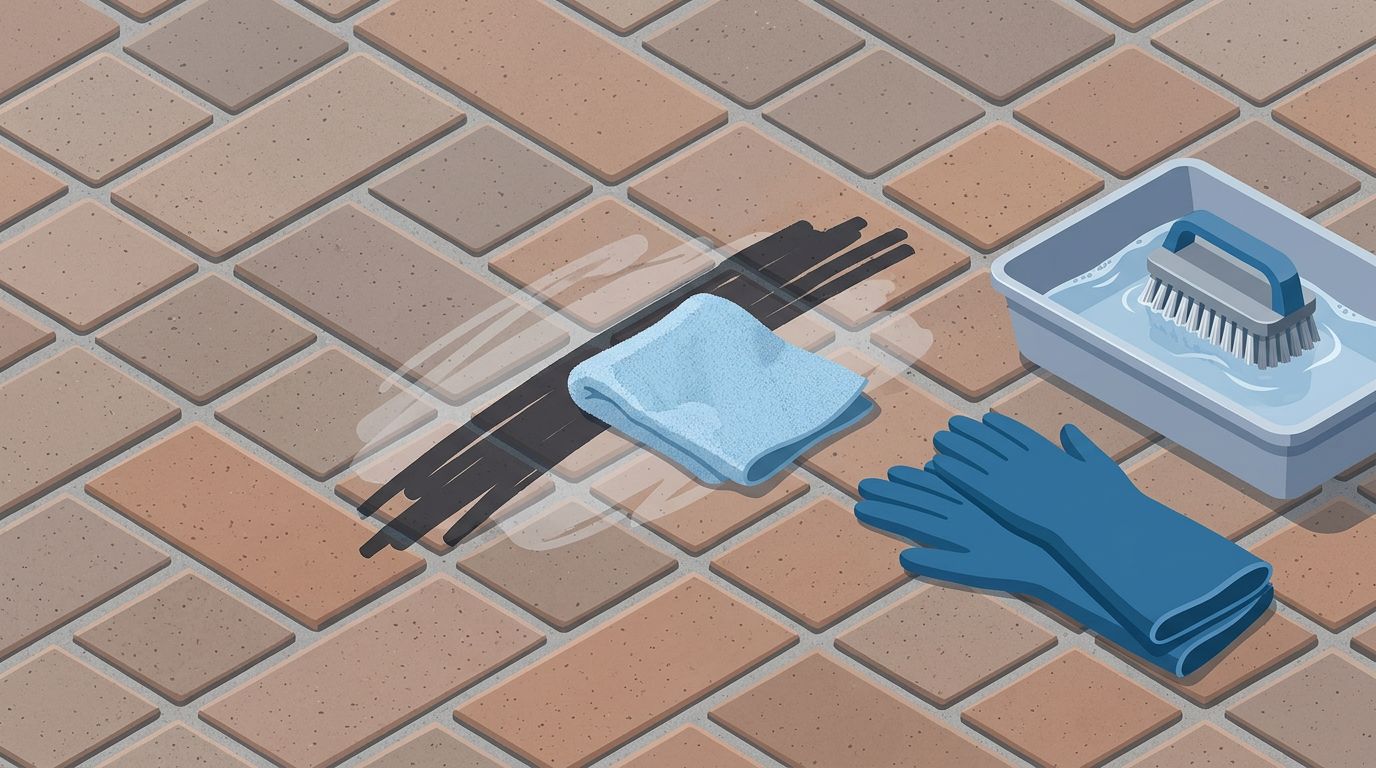
A search for “permanent marker brick pavers” often begins after a child, contractor, or vandal leaves a dark line on a clean driveway. Because brick pavers absorb liquids, the ink may travel beyond the surface.
I start with the mildest cleaning method and inspect the paver before using stronger products. Rubbing alcohol may lift a fresh mark, while baking soda can help with light residue. Older stains may require controlled pressure washing, careful abrasion, restoration, or replacement.
Key Takeaways
- Start with a small test area and the mildest method, such as soapy water, a soft brush, or rubbing alcohol applied to a cloth.
- Brick pavers are porous, so solvent-based marker ink can spread into the pores instead of lifting cleanly from the surface.
- Use acetone and other strong solvents sparingly, never pour them directly onto the paver, and protect nearby surfaces, people, and pets.
- Pressure washing can rinse away loosened residue, but excessive force may damage the brick face, strip sealer, or remove joint sand.
- If the stain has penetrated deeply or damaged the paver or sealer, restoration or replacement may provide a better result than repeated scrubbing. Never seal over a remaining marker stain.
Why Marker Stains Behave Differently on Brick Pavers
Brick and concrete pavers form a porous surface. Their small openings can absorb water, oils, dyes, and solvent-based ink. A marker line that looks thin on a dry paver may appear wider after rain or rinsing.
Marker formulas use dyes or pigments suspended in solvents. Some formulas contain xylene or similar ingredients. These liquids help the ink flow onto the surface, but they can also carry color farther into the pores.
The paver material matters. Clay brick, concrete pavers, and travertine have different absorption rates and textures. Unlike a vertical brick wall, a horizontal paver can retain moisture. Tumbled pavers also have rounded edges and uneven faces, which make them harder to scrub without creating a noticeable clean spot around the stain.
Sealer creates another concern. If the marker is sitting on top of a sealer, solvents may soften, cloud, or strip the coating. If the stain has passed through worn sealer, cleaning may leave a lighter ring around the original mark.
I let the area dry before deciding whether the stain is still present. Wet masonry can temporarily hide discoloration, which often returns after the paver dries.
A solvent can remove the visible ink and still leave a darker shadow inside the brick pores.
Acid is not my starting point for marker removal. White vinegar is not a reliable first treatment for solvent-based ink. Acidic products may also be unsuitable for some masonry, finishes, or sealers. A masonry cleaning discussion shows why different brick surfaces need different products and careful testing. Marker removal requires solvent control, not an aggressive chemical poured over the entire patio.
Gentle Cleaning for Marker Stains
My first choice is a small, controlled test area. Choose a section beside the mark or an inconspicuous paver. This shows whether the cleaner affects the brick color, finish, or existing sealer.
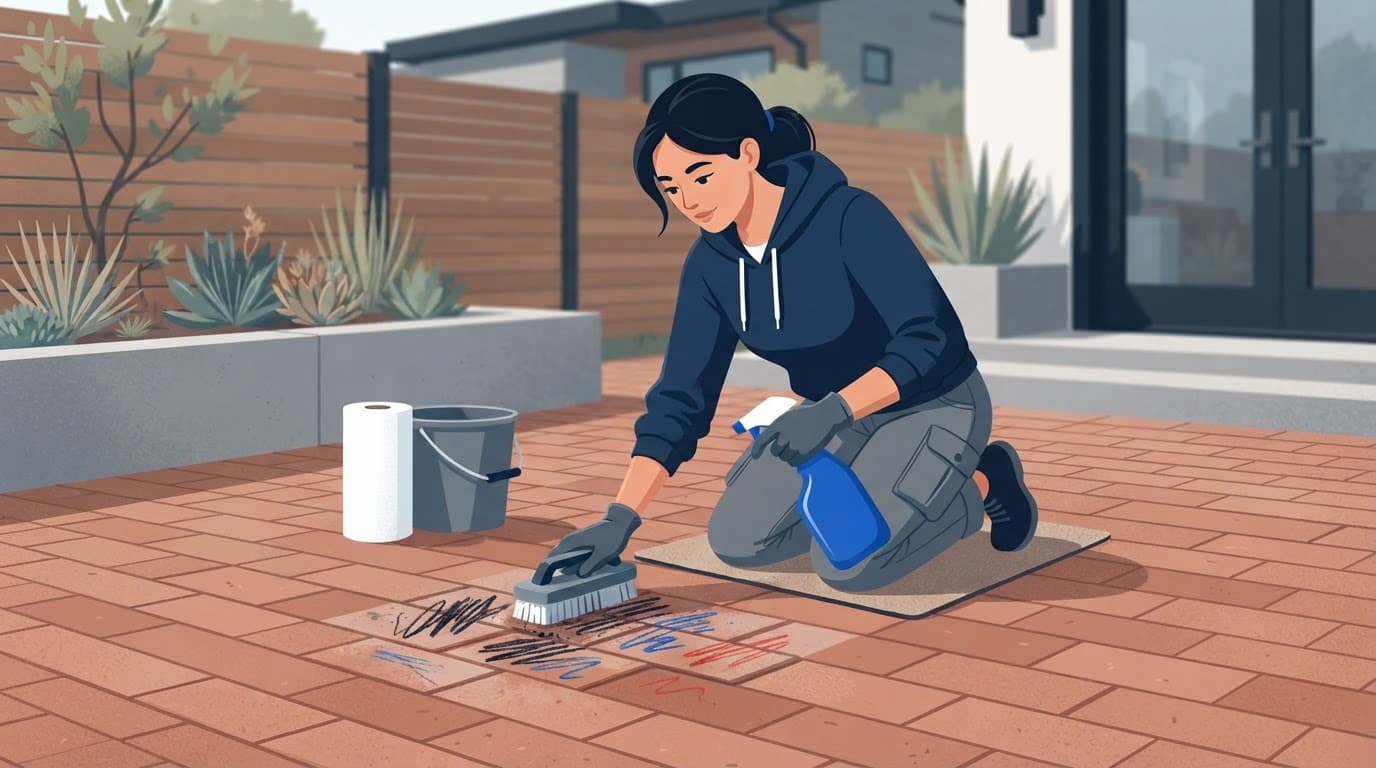
Start with these steps:
- Sweep away sand, leaves, and loose dirt with a soft brush. Do not scrub loose debris across the mark.
- Mix warm water with a small amount of dish soap to make soapy water. Apply it with a soft cloth or nylon brush.
- Rinse the test area with clean water, then allow it to dry before judging the result.
- If the mark remains, apply rubbing alcohol to a white cloth or cotton swab. Dab the ink instead of flooding the paver.
- Work from the outside of the mark toward the center. Turn the cloth often so you don’t spread ink back over the brick.
- Rinse with soapy water after the alcohol treatment, then let the surface dry completely.
Fresh, light sharpie stains are the most likely to respond to gentle treatment. Rubbing alcohol is often the most practical household solvent for these marks. I prefer plain isopropyl alcohol when available because it leaves less residue. Hand sanitizer may work because many formulas contain alcohol. However, hand sanitizer gels can leave conditioners or a film.
Older sharpie stains may remain visible after surface cleaning, especially when ink has entered the paver’s texture.
A paste made with baking soda is another reasonable option for light surface residue. Mix about three parts baking soda with one part water until it forms a thick paste. Spread the baking soda paste over the mark and let it sit briefly. Agitate gently with a soft or medium nylon brush, but don’t let the paste dry hard in the texture. Rinse away any remaining baking soda before the surface dries.
Avoid oily products such as wd 40 on masonry. They may darken the paver and complicate future sealing. Keep products separated, and never mix cleaners.
Three-percent hydrogen peroxide can be tested on light-colored brick or concrete pavers. It may help with discoloration, but it isn’t guaranteed to dissolve ink. Keep it away from other cleaners and rinse the area well.
A magic eraser is mildly abrasive. It can dull a sealed surface, change the texture of a smooth paver, or create a lighter patch. I use it only on a tiny test area, never as the first choice for an entire driveway.
Using Acetone and Other Solvents Carefully
Acetone, including some nail polish remover, can dissolve the ink faster than an alcohol-based cleaner. On porous masonry, this chemical solvent may liquefy the ink and carry it into nearby pores instead of lifting it away.
Nail polish remover is not always made with only the active solvent. Some formulations include oils, fragrances, or conditioners that can leave a hazy film. If acetone is tested, use a very small amount on a white cloth or cotton swab. Never pour it directly onto the paver.
Work in short applications. Dab the mark with a white cloth or cotton swab, then check the cloth. Stop if the surrounding area changes color or becomes glossy. Rinse with mild soap and water after the test. Use gloves and eye protection, and work with good ventilation. Keep solvents away from flames, pool equipment, painted surfaces, children, and pets.
I don’t recommend lacquer thinner for a typical homeowner spot-cleaning project. It is a stronger solvent that can damage sealers, discolor brick, and spread the stain. Mixing lacquer thinner with bleach or other cleaners can create dangerous fumes or unwanted reactions.
If the pavers have a decorative sealer, solvent testing becomes even more important. A marker stain on the coating may be easier to remove, but the coating may come off with it. A small patch repair can then look worse than the original line.
The safest approach for this stain is to use one product at a time. Apply it locally with a white cloth or cotton swab, stopping as soon as the surface or sealer changes.
Pressure Washing, Soft Wash, and Mechanical Removal
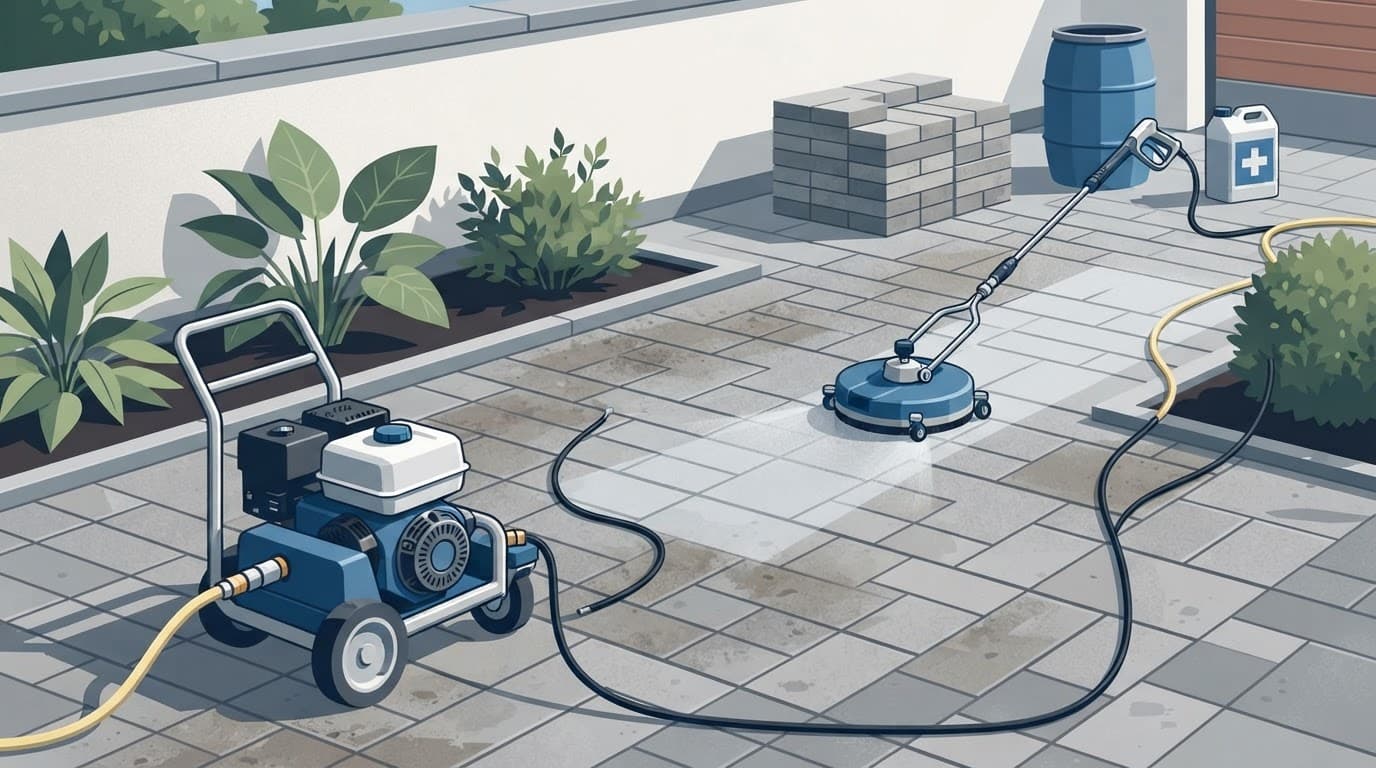
A pressure wash can rinse away loosened ink, residue, and dirt from textured brick pavers. It works best after a cleaner has softened the mark. Pressure washing alone usually won’t pull deep dye from the pores.
A narrow nozzle held too close can cut straight lines into the brick face. Excessive force can strip old sealer, remove joint sand, and leave an uneven section between cleaned and uncleaned pavers. Loose joint sand can allow pavers to shift and give weeds more room to grow.
My preferred process uses a wide spray pattern, measured distance, and controlled rinsing. On a larger flat area, a surface cleaner can help create an even finish. The operator should keep the equipment moving and avoid blasting directly into joints, edges, walls, screens, doors, and surrounding landscaping.
Steam cleaning is not my first choice for ink stains. Heat and moisture can soften sealer and spread dissolved ink. A soft wash is more appropriate for organic growth on exterior walls, including a brick wall or concrete wall. It may help prepare a nearby surface, but it usually won’t dissolve solvent-based ink on pavers by itself. This soft washing demonstration for concrete bricks shows the controlled treatment and rinse process used for masonry cleaning.
Mechanical removal is the final step before replacement. For most brick pavers, nylon brushing is safer than a wire brush. A wire brush can scratch clay brick, remove the face texture, and expose a different color underneath.
A dremel tool or angle grinder can remove a thin layer of badly stained material, but it requires steady control. The operator must blend the edges into the surrounding texture instead of creating a round, obvious depression. Dust, gouges, pitting, and an unmatched finish are common risks. I reserve power-tool abrasion for trained restoration work, not a quick homeowner experiment.
When Cleaning Is Not Enough
Some marks are more than surface stains. Ink may have reached deep into the paver, damaged the sealer, or changed the brick’s color. Cleaning can remove surface residue without restoring the original appearance.
If one paver is badly discolored, cracked, or gouged, replacing it may be cleaner than grinding down its face. A new paver may not match perfectly, especially after the surrounding installation has faded in the Florida sun. Blending several nearby pavers can create a more consistent result.
For several sharpie stains across a driveway or patio, cleaning each spot individually can leave a patchy finish. Treating the full section may provide a better restoration result. At Kingsway, I inspect the paver face, joints, drainage, and existing coating before recommending spot treatment, restoration, or replacement.
Never seal over a remaining marker stain. Sealer can trap discoloration under the coating and make future treatment harder. Clean the surface, rinse away all chemical residue and any remaining baking soda residue if that method was used, repair or replace damaged pavers, and let the installation dry fully before driveway sealing or paver sealing.
A protective sealer can help reduce future absorption, but it won’t repair damaged brick. Sealing belongs at the end of the process, not over the top of a problem.
If you want help deciding whether your pavers need cleaning, restoration, or replacement, you can Get a Quote from Kingsway Paver Sealing & Pressure Cleaning. I help homeowners in Fort Myers, Naples, Bonita Springs, Port Charlotte, Sanibel Island, and nearby Southwest Florida communities.
Frequently Asked Questions
What is the safest way to remove permanent marker from brick pavers?
Start by sweeping away loose debris and cleaning the area with warm water and dish soap. If the mark remains, dab rubbing alcohol onto a white cloth or cotton swab and test it on a small, inconspicuous area first.
Can I use acetone or nail polish remover on brick pavers?
Acetone may dissolve marker ink, but it can also spread the ink into porous brick or damage an existing sealer. Test only a very small amount with good ventilation, and never pour the product directly onto the paver.
Will pressure washing remove permanent marker from pavers?
Pressure washing may rinse away loosened ink and residue, but it usually will not remove dye that has entered the pores by itself. Use a wide spray pattern, maintain a safe distance, and avoid blasting joints or the paver surface too aggressively.
Should I use a wire brush or grinder on a stained paver?
A nylon brush is generally safer because wire brushes and power tools can scratch the brick, remove its face texture, or create an uneven depression. Mechanical removal is best reserved for trained restoration work when gentler cleaning has failed.
Should I seal the pavers after removing the marker?
Seal only after the stain and all cleaning residue have been removed, the surface has been repaired if necessary, and the installation is completely dry. Never seal over a remaining marker stain because the coating can trap the discoloration and make future treatment harder.
A Clean Paver Starts With the Right Method
Marker ink on brick pavers should be treated as a porous-masonry stain, not a mark on painted drywall. Begin with a mild test and a nylon brush. For fresh sharpie stains, rubbing alcohol may help, while stronger solvents require much more caution.
A mild test should come before pressure washing or abrasion. Pressure washing is useful when controlled and used after the residue has loosened. Abrasive tools and aggressive methods can permanently change the paver face.
The best result comes from stopping before cleaning causes new damage. If ink has reached the brick, or the sealer or paver is damaged, professional restoration may provide a cleaner, more even finish. Replacement can be cleaner than repeated scrubbing.