
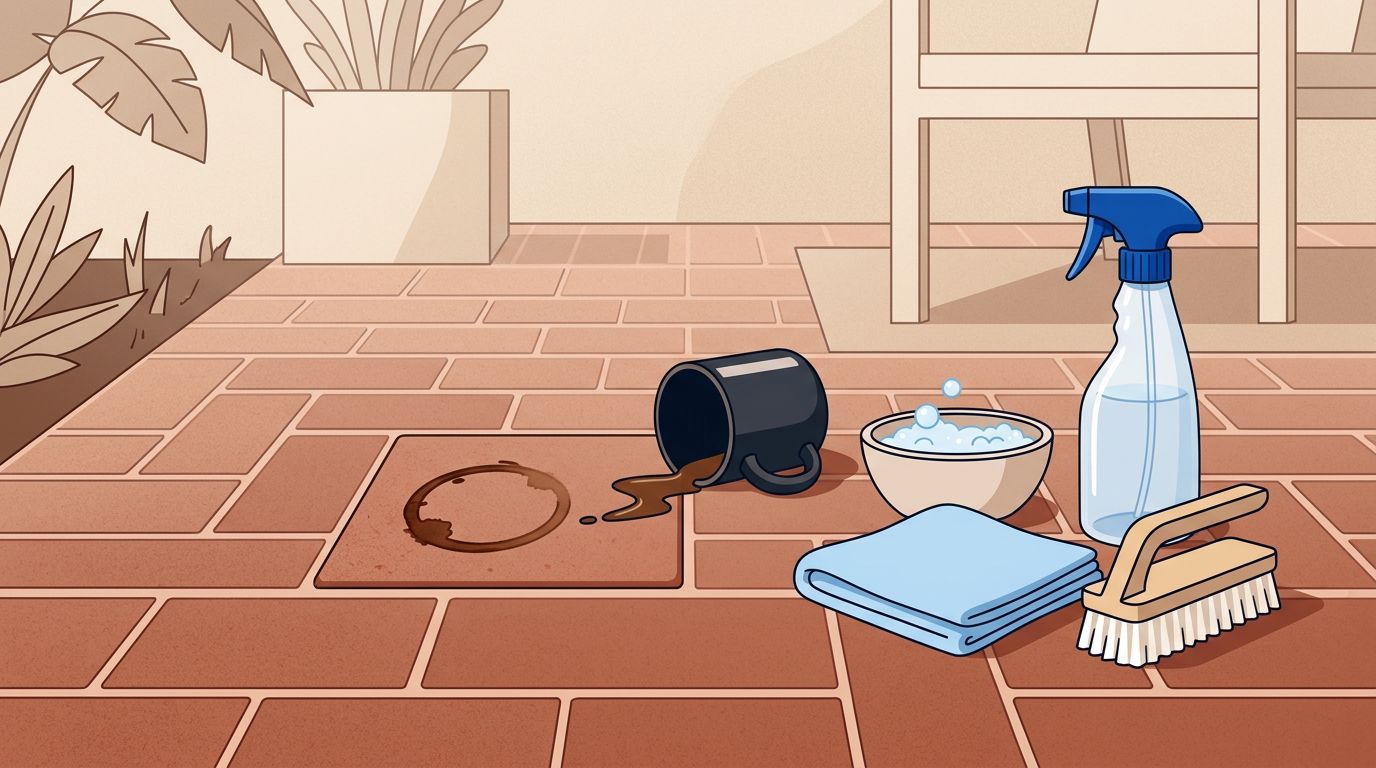
Coffee can leave a dark ring on patio pavers or driveway pavers within minutes. When coffee stains brick pavers, the liquid can soak into their porous surface, especially when cream, sugar, or rainwater spreads the spill.
I have found that the safest results come from starting mild and increasing cleaning strength only when needed. Quick blotting, the right brush, controlled rinsing, and patience protect both the paver face and the joint sand.
Key Takeaways
- Blot fresh coffee spills quickly, remove solid debris, and clean with mild dish soap and lukewarm water before using stronger products.
- Use a soft or medium nylon brush, controlled rinsing, and paver-safe cleaners to protect the brick face, sealer, and joint sand.
- Treat cream and sugar residue separately when needed, using kitty litter for fresh oily spots and a paver-safe degreaser for older grease marks.
- Avoid muriatic acid, wire brushes, boiling water, heat, mixed cleaners, and uncontrolled pressure washing, which can damage pavers or spread the stain.
- Do not seal until the stain is gone, all cleaner has been rinsed away, and the pavers are completely dry.
Why Coffee Stains Stay on Brick Pavers
Brick pavers are porous masonry, and concrete pavers can absorb coffee into their texture too. Coffee does not always remain on the surface, so a small mark may look larger after the paver gets wet. Dark coffee compounds can settle into the texture, while sugar leaves a sticky film that attracts dirt.
Cream can add oily residue. That changes the cleaning process because mild detergent or a paver-safe degreaser may be needed after the coffee color has been removed.
A sealer may slow absorption, but it does not make pavers stain-proof. Worn or uneven sealer can also make one part of a patio clean differently from another. I always let the area dry before judging the final result.
For general paver maintenance, Unilock’s stain removal guidance also recommends removing dry debris first, using a gentle cleaner, and rinsing carefully to protect the joints.
Safe First Response for Fresh Coffee Spills
Move quickly, but don’t reach for a pressure washer right away. High-pressure water can spread a fresh spill, push it farther into the brick, and remove joint sand before the coffee has been treated.
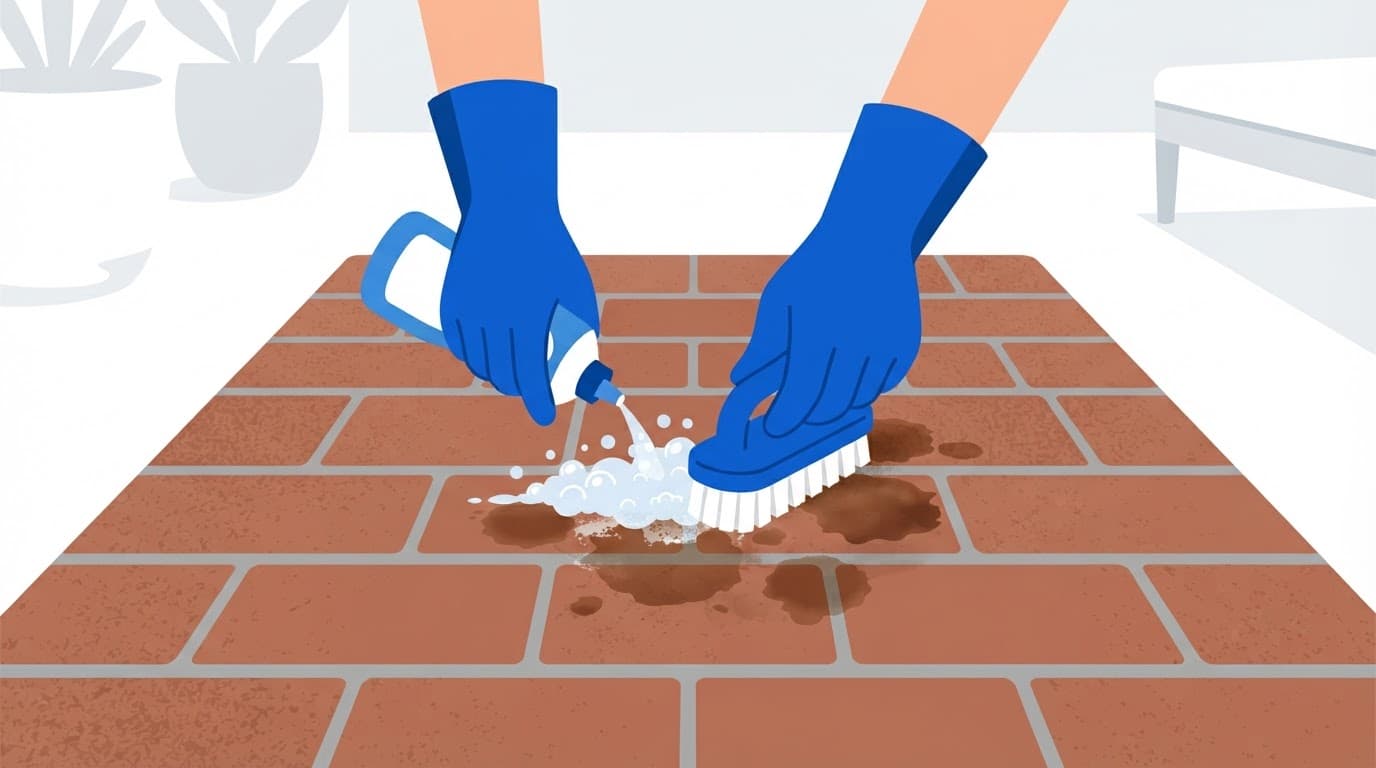
Use this order for a fresh spill:
- Pick up any coffee grounds or solid debris with a paper towel. Don’t grind them into the paver.
- Blot the liquid with clean towels. Work from the outside toward the center so the mark doesn’t spread.
- If cream or oily residue remains, cover it with kitty litter and sweep it away first. Then mix a few drops of dish soap into a bucket of lukewarm water, and apply it with a soft nylon brush or cloth.
- For a stubborn ring, make a loose paste with baking soda and water. Leave it on the spot for several minutes, then brush lightly.
- Rinse with clean water and remove the dirty runoff. Keep the cleaner off the joint sand.
Use lukewarm water rather than boiling water. Extreme heat can damage some sealers and may create unnecessary thermal stress in masonry. A stiff-bristled brush or wire brush can scratch the brick face and disturb the sand between pavers.
If the spill is on a sealed patio, test the soap and treatment in a hidden area first. The goal is to lift the coffee without creating a lighter patch around it.
How to Remove Set-In Coffee Stains Brick Pavers
Dried coffee stains need more time, not automatically stronger chemicals. Start by sweeping away leaves, grit, and loose sand. Then wet the stained paver and a small area around it with clean water.
I recommend testing a pH-neutral masonry cleaner or an oxygen-based cleaner labeled for brick or concrete pavers. Product directions matter because pavers vary in color, texture, age, and sealer type.
Apply the cleaner to a small test section as a controlled spot treatment. Keep it damp for the recommended dwell time, but don’t allow it to dry on the surface. Agitate with a soft or medium nylon brush, using short strokes instead of aggressive scrubbing.
Rinse thoroughly with a garden hose or controlled pressure washer. Allow the paver to dry fully before deciding whether another treatment is needed. A damp brick can hide a remaining shadow.
If a shadow remains after the first cleaning, repeat the same safe process once before changing products. Repeatedly switching between cleaners can create residue or chemical reactions, especially when one product has not been rinsed away completely.
Treating the full surrounding section can also produce a more even appearance. A single bright spot in an older patio may look like a patch, even when the coffee stain is gone.
Handling Cream, Sugar, Oil, and Food Spills
Coffee with cream can leave oil stains or an oily outline after the brown color disappears. For a fresh spot, spread kitty litter over it to absorb the residue. Sweep it away, then remove the remaining film with dish soap and lukewarm water.
An older grease mark may need a paver-safe degreaser. Read the label before using it on brick, concrete pavers, or sealed surfaces. Test the product first, and don’t let it dry near pool decks, landscaping, walls, or doors.
Sugar is easier to remove when treated early. A thorough rinse followed by mild soap usually handles the sticky residue. Wine, juice, and food spills need the same quick response. Blot first, clean second, and rinse thoroughly. Red wine stains on brick pavers need the exact same handling. A spilled mango drink on brick pavers responds to the same mild-first routine.
Avoid Harsh Acids and Common Cleaning Mistakes
Coffee is not the same as rust stains, so acid is rarely the right first choice. White vinegar may help with limited hard water deposits, but it can alter sensitive masonry or affect certain sealers. I don’t use it as my starting treatment for coffee on brick pavers.
Oxalic acid is more closely associated with rust removal. Bar Keepers Friend contains oxalic acid, but that doesn’t make it suitable for every paver. If rust, rather than coffee, is the actual problem, use only a rust remover labeled for the specific masonry surface. Wear gloves and protective glasses, test a hidden area, and rinse thoroughly.
Muriatic acid is a poor choice for coffee stains. It can etch masonry, lighten brick, damage concrete pavers, weaken cement-based joint material, and harm nearby plants or metal. It can also leave the surface looking worse after the original stain has faded.
Never mix cleaners. Don’t combine vinegar with bleach, acid products with other chemicals, or household cleaners without checking the labels. Keep children and pets away until the area has been rinsed and dried.
Avoid these methods:
- A torch or heat gun can crack, spall, or permanently discolor brick.
- A wire brush can scratch the surface and pull sand from the joints.
- Boiling water and concentrated laundry detergent can cause surface wear.
- Tar, petroleum solvents, and random degreasers can spread or deepen a dark mark.
- Sealing over a stain can trap the discoloration beneath the coating.
Can Pressure Washing Remove Coffee Stains Safely?
Yes, a pressure washer can help after a cleaner has loosened the coffee residue. It should provide a controlled rinse, not be the first step or a test of how much force the paver can take.
I use a wide spray pattern and the lowest effective pressure. On broad, flat areas, a surface cleaner can make surface cleaning more even than a narrow nozzle. Keep the spray moving, avoid holding it close to the brick, and stay careful around edges, walls, screens, doors, and landscaping.
Pre-wetting nearby pavers helps reduce uneven cleaning. After rinsing, inspect the joint sand. Excessive pressure can remove enough sand for weeds to enter, water to reach the base, and pavers to shift more easily.
A soft wash is often better for algae, mold, and other organic stains on delicate nearby surfaces. Roof cleaning solutions should not automatically be used on brick pavers. Paver materials, sealers, plants, and drainage paths require their own cleaning plan.
A general stained paver cleaning demonstration can help you understand the sequence, but equipment settings still need to match your actual surface.
Prepare Pavers for Sealing After Cleaning
Don’t seal until the coffee stain is removed, the cleaner is fully rinsed away, and the pavers are completely dry. Sealer won’t restore a damaged brick or erase deep discoloration. It can trap the mark and make future treatment harder.
Inspect the surface in daylight. Look for:
- Remaining brown shadows or oily patches.
- Damaged, rough, or pitted brick faces.
- Uneven old sealer around the cleaned area.
- Missing or loose joint sand.
- Pavers that rock or sit lower than nearby units.
A clean, dry installation may be ready for paver sealing once repairs are complete. Choose a sealer labeled for the relevant material, including brick, concrete pavers, or travertine. Follow the manufacturer’s preparation and curing directions. Driveway sealing needs more attention than a lightly used walkway because tires, oil, and water place more stress on the finish.
I prefer coating the complete section instead of treating one paver with a small patch. This creates a more consistent appearance and helps preserve curb appeal by avoiding an obvious bright patch. It also gives the entire surface similar protection against future spills, moisture, and Florida weather.
When Professional Cleaning Is the Better Choice
Call a professional contractor when the stain remains after careful cleaning, covers a large area, or appears alongside oil stains, rust stains, or organic stains. A dark mark that stays after the residue is gone may have absorbed into the brick rather than sitting on top.
I also recommend professional evaluation when the paver feels rough, shows pitting, or has a cracked or burned face. Cleaning cannot repair material damage. Replacing one severely damaged paver may look better than repeatedly scrubbing the surrounding installation.
At Kingsway Paver Sealing & Pressure Cleaning, I help homeowners in Fort Myers, Naples, Bonita Springs, Port Charlotte, Sanibel Island, and nearby Southwest Florida communities clean, restore, sand, and seal brick and travertine pavers. If you need help with coffee stains, pressure washing, or sealing, Get a Quote for your property.
Frequently Asked Questions
Can coffee stains be removed from brick pavers?
Yes, most fresh coffee stains can be reduced or removed by blotting quickly and cleaning with mild dish soap, lukewarm water, and a soft brush. Older stains may need a paver-safe masonry cleaner and more than one careful treatment.
Is baking soda safe for coffee stains on pavers?
Baking soda can help with a stubborn surface ring when mixed with water into a loose paste. Apply it briefly, brush lightly, and rinse completely without disturbing the joint sand.
Can I pressure wash coffee stains from brick pavers?
Pressure washing can help after a cleaner has loosened the residue, but it should be used as a controlled rinse rather than the first treatment. Use the lowest effective pressure, a wide spray pattern, and keep the spray moving to protect the brick and joint sand.
Should I use vinegar or muriatic acid on a coffee stain?
No, acid is rarely the right first choice for coffee stains, and muriatic acid can etch masonry, damage sealers, weaken joint material, and harm nearby plants or metal. Start with mild soap or a paver-safe cleaner labeled for brick or concrete pavers.
When should pavers be sealed after coffee stain removal?
Wait until the stain and oily residue are gone, all cleaner has been rinsed away, and the pavers are completely dry. Inspect the surface for damage, uneven old sealer, and missing joint sand before applying a compatible paver sealer.
Clean Coffee Spills Before They Set
The best way to handle coffee spills on brick pavers is to blot them quickly, use mild soap first, and rinse without disturbing the joints. Baking soda can help with a stubborn surface ring, while a paver-safe cleaner may be needed for an older mark.
Skip heat, wire brushes, muriatic acid, and uncontrolled pressure washing. After cleaning and drying, paver sealing can make future spills easier to manage. Prompt cleanup remains the best protection in a simple maintenance routine for a clean patio or driveway.