
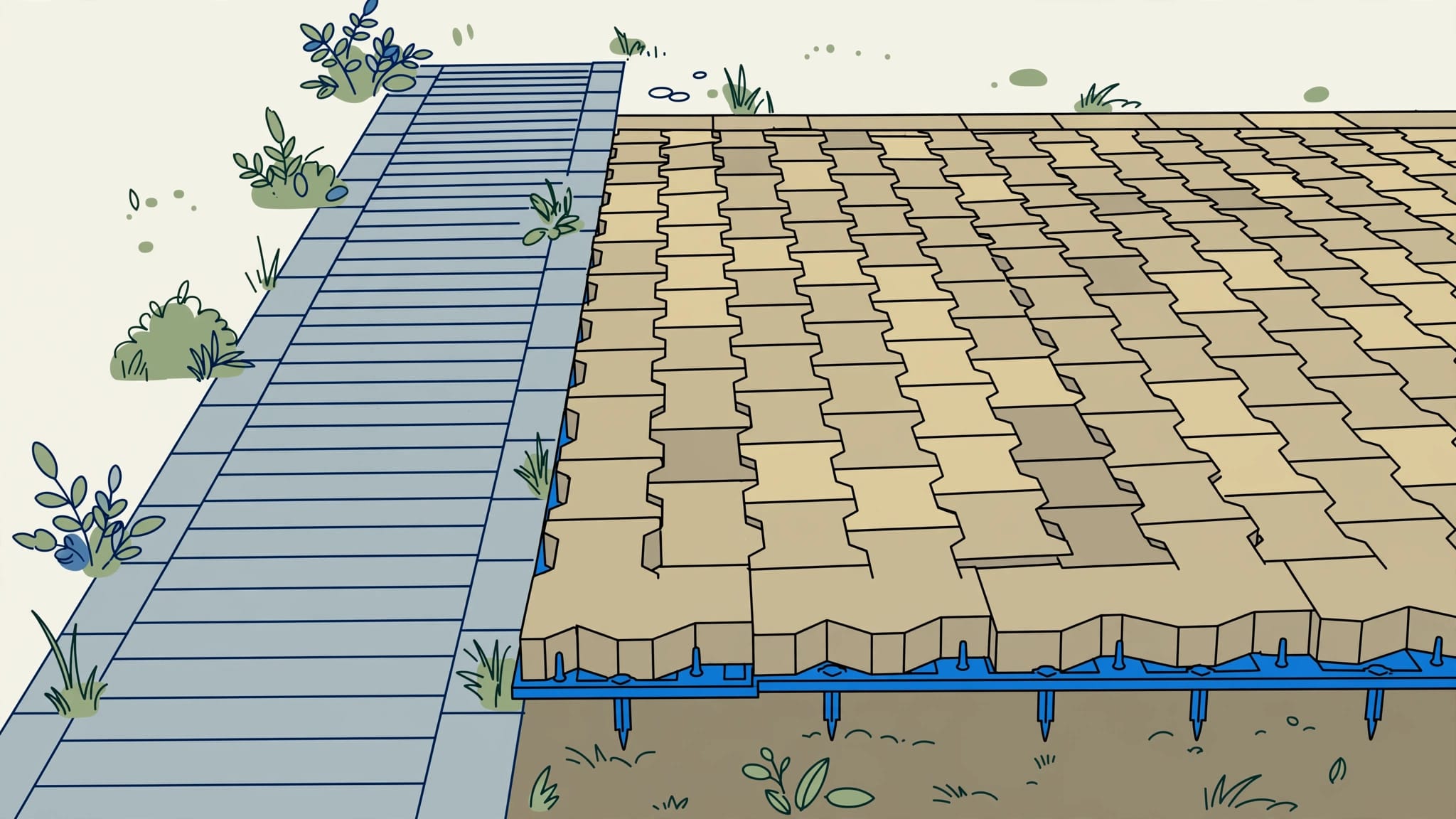
A patio built with interlocking concrete pavements can look level while its outside row starts moving. A restraint holds that border in place and helps keep adjoining pavers tightly fitted.
I recommend checking your edges before small gaps become a larger repair. Stable borders protect your investment, but they depend on proper support, secure installation, and maintained joints.
Start with what the restraint does beneath the finished surface.
Key Takeaways
- Paver edge restraints limit sideways movement and help keep the outside row aligned, but they need stable support and correct installation.
- Choose a restraint system for the paver type, base, drainage conditions, and expected foot or vehicle traffic. Follow the selected manufacturer’s instructions for support and anchoring.
- Widening joints, shifting rows, or rocking pavers can signal problems with the restraint, base, drainage, or joint material. Inspect and repair the cause before adding sand or sealer.
- Maintain compatible joint material and inspect borders after heavy rain, freeze-thaw cycles, and landscaping work to catch movement early.
What Paver Edge Restraints Hold Together
An edge restraint sits at the paving perimeter, limiting lateral movement and keeping the outer row aligned with your patio or walkway. This support helps joints stay stable and pavers maintain straight lines.
The Concrete Masonry & Hardscapes Association explains in its edge-restraint guidance that edge restraints hold interlocking concrete pavements tightly together and support consistent interlock. Choose a system that suits your paver installation, whether it uses precast concrete or natural stone pavers.
Joint material also matters. When bedding sand is missing, pavers can loosen or rub against each other. Open joints also give weeds and insects space to enter.
I check both parts together. A secure border needs properly maintained joints, and fresh sand can’t compensate for a failed restraint or unstable base.
Choosing an Edge Restraint System
I recommend choosing complete edge restraint systems, including their support and anchoring requirements, rather than buying edging based on appearance alone.
Compare Product Specifications
Plastic paver edging, metal paver edging, and a concrete edge restraint are options you may encounter. Metal options such as aluminum edging and steel edging differ in profile, finish, and fastening requirements. Check aluminum edging specifications for the recommended base and intended use. A concrete curb or precast concrete border may suit some layouts, but still needs proper support.
Ask your installer to identify the proposed product and show its installation instructions. Those instructions should address the supporting base, fastening method, and intended use, including whether it’s suitable for interlocking concrete pavements.
For natural stone pavers, confirm that the restraint detail matches the paving thickness and finished elevation. With natural stone pavers, low-profile edge restraints can provide a discreet perimeter, but still need dependable support.
Check whether the product is designed for a dense-graded base or a compacted aggregate base. Bedding sand isn’t a substitute for structural base support.
Match the Details to Your Property
A patio or walkway has different demands from an entrance exposed to vehicular traffic or heavy loads. I want the installer to account for actual traffic, nearby drainage, and the existing foundation.
If pavers sit over a concrete slab, request the specified fastening and drainage details before work begins. Don’t assume a detail intended for an aggregate base transfers directly to concrete.
At driveway entrances, turning tires and recurring border movement deserve closer inspection. Product selection should follow the site assessment, not replace it.
Installing Restraints With Proper Support
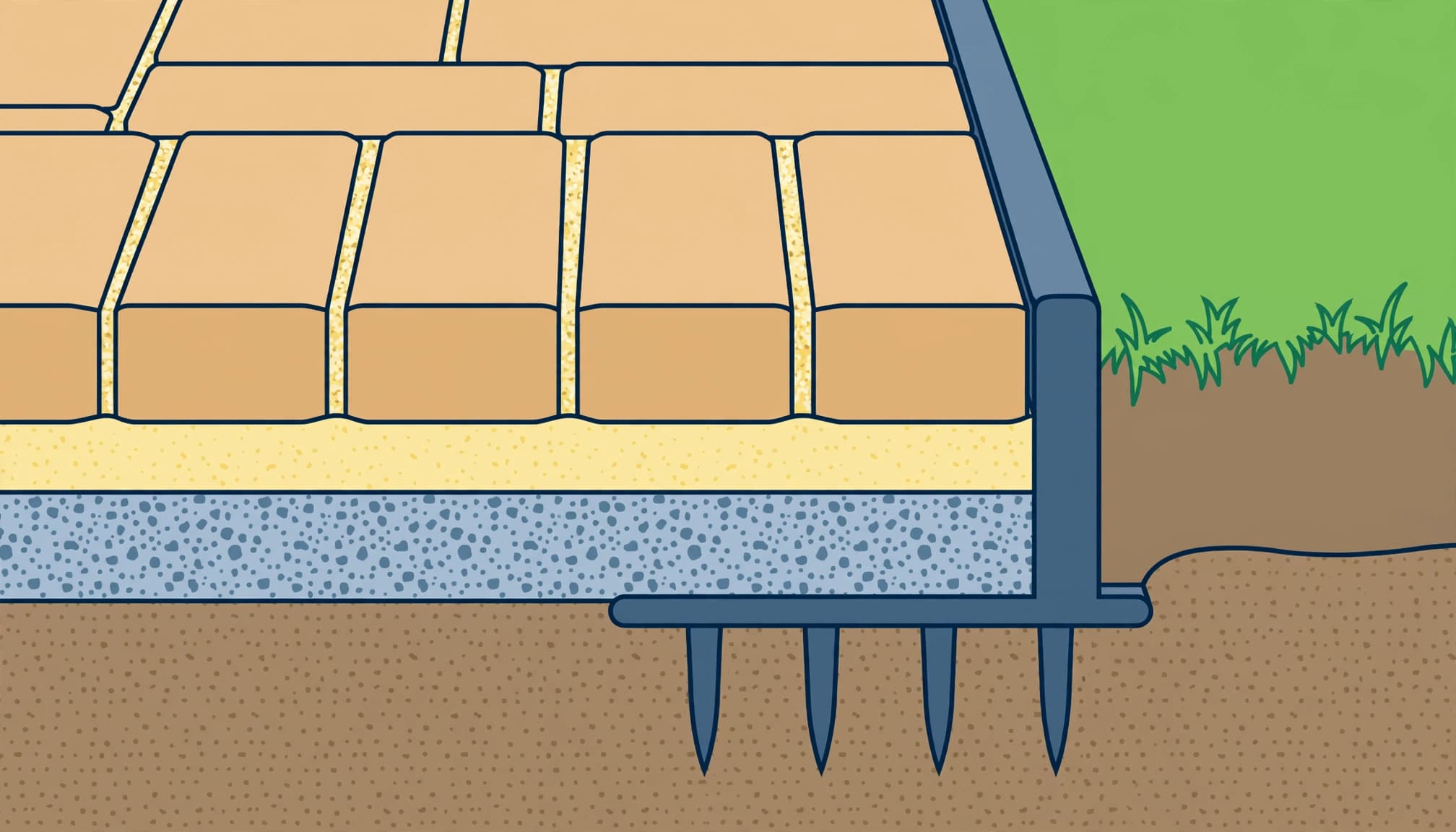
Edge restraints need stable support suited to the paver installation, expected vehicular traffic, and any heavy loads. Covering a weak edge with soil or mulch doesn’t fix the support underneath. Bedding sand sets paver height, but it can’t fill a deep support void.
Anchor Spiked Systems Into the Base
Some edge restraint systems use landscape spikes. For interlocking concrete pavements, CMHA’s guidance calls for spikes to anchor firmly into the compacted aggregate base, with good penetration into the aggregate.
Spike instructions don’t automatically apply to every restraint type, including precast concrete edging. The detail should suit the material, such as natural stone pavers, and the installed flexible base.
There’s no universal spike count that guarantees success. Follow the selected manufacturer’s requirements for spacing, spike type, and installation details.
I also recommend asking the installer to show the anchoring before covering the edge. Confirm that specified spikes reach the compacted aggregate base. Don’t assume bedding sand is suitable support.
Check Permeable Systems Separately
Permeable paving needs its own installation details because the joints and supporting layers are part of the drainage system. An open-grade base should be evaluated against the restraint manufacturer’s requirements.
CMHA directs readers to its permeable-pavement construction note for guidance on these systems.
I don’t automatically recommend ordinary joint sand, polymeric sand, or standard coatings for permeable pavers. Use the specified jointing aggregate and approved maintenance products. Keeping the openings functional protects the installation, even when the border looks secure.
Repair Moving Edges Before Filling Gaps
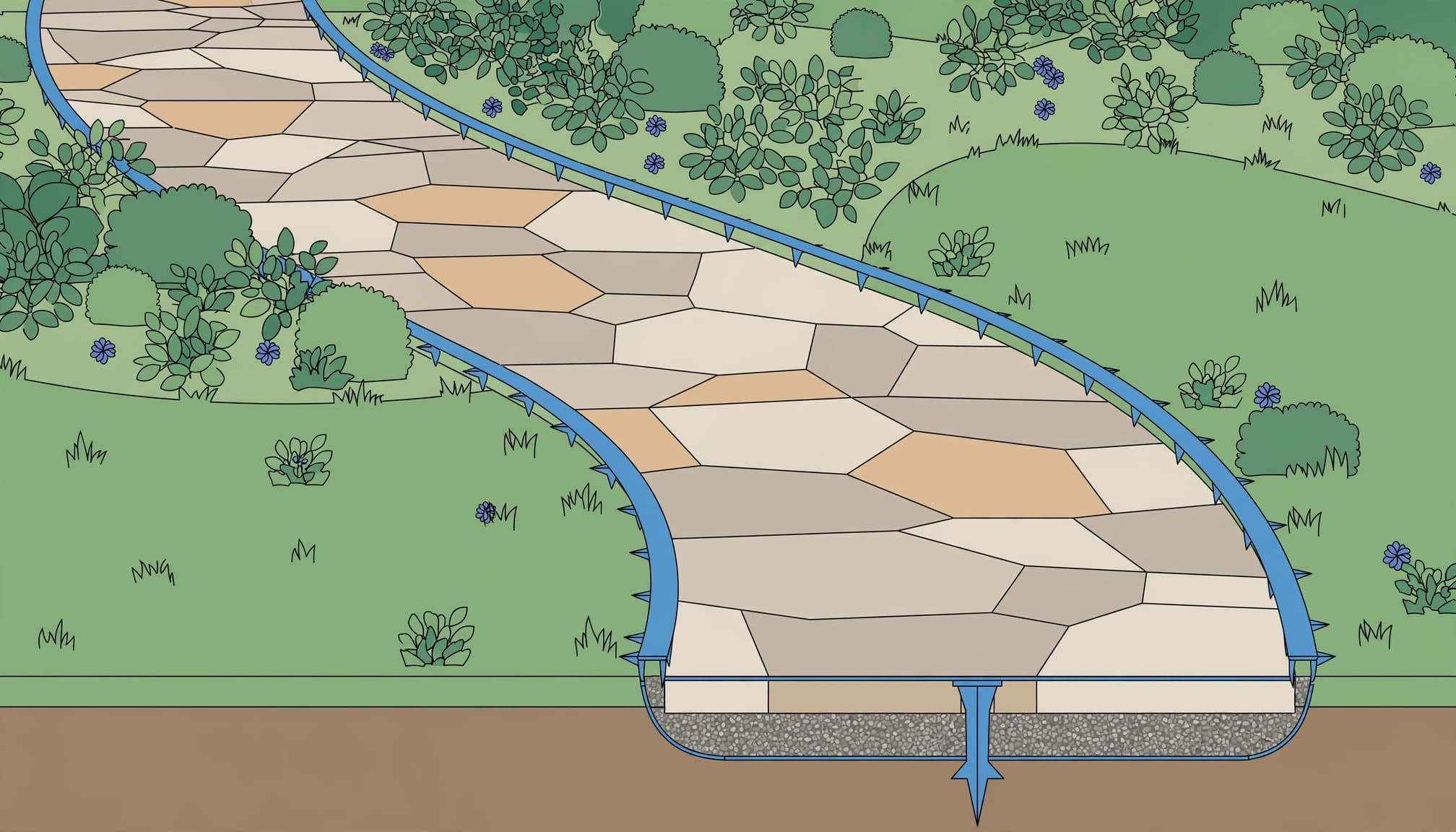
Watch for widening joints, an outside row that shifts out of alignment, or pavers that rock under normal foot traffic. These signs call for inspecting the border, base, drainage, and water paths.
One loose unit doesn’t prove the restraint has failed. Several moving rows in interlocking concrete pavements or natural stone pavers warrant a broader inspection. Check the restraint, base, drainage, and joint stability rather than simply adding sand.
When the edge has lost support, I recommend a repair sequence that addresses the cause:
- Lift affected pavers and inspect the bedding sand, base, and edge restraints.
- Correct drainage problems and replace unsuitable or missing base material in compacted layers to restore support and protect structural integrity.
- Repair or replace the restraint, including precast concrete edging where specified, using the selected system’s installation requirements.
- Reset the pavers, check height and joint spacing, and restore compatible joint sand.
For vehicle entrances, repairing paver edge spreading requires support beneath the border that can handle vehicular traffic and heavy loads.
I also check downspouts. Repeated washout may require correcting runoff-related erosion before the repaired edge can stay stable.
Maintain the Joints and Document Repairs
I recommend inspecting patio and walkway borders, including the edge restraints, after heavy rain, freeze-thaw cycles, or nearby landscaping work. Compare photos taken from the same locations to spot new movement or changes in straight lines.
After repairs, photograph consistent joints, stable edges, and corrected drainage conditions. If polymeric sand is used, record the product, color, application date, and weather. Follow its preparation, watering, and curing instructions.
Pressure washing can expose dirt-covered problems, but aggressive cleaning can remove joint sand. Inspect the joints afterward.
If roof cleaning or a soft wash is scheduled nearby, ask how runoff will be managed around the pavers.
Driveway sealing can help protect a compatible surface and simplify cleaning. It doesn’t rebuild missing support or secure a loose border. I recommend completing structural repairs before scheduling surface protection.
Frequently Asked Questions
What does a paver edge restraint do?
An edge restraint sits at the paving perimeter and limits lateral movement, helping keep the outer row aligned. It also supports consistent interlock and helps joints stay stable.
Can I use bedding sand to support an edge restraint?
No. Bedding sand helps set paver height, but it isn’t a substitute for a stable structural base. Follow the restraint system’s instructions for its required support and anchoring.
How can I tell if a paver edge needs repair?
Look for widening joints, an outside row shifting out of alignment, or pavers that rock under normal foot traffic. Inspect the restraint, base, drainage, and joints before deciding what needs repair.
Should I add sand when pavers start moving?
Adding sand alone may not fix movement caused by a failed restraint, unstable base, or drainage problem. Address the cause first, then reset the pavers and restore compatible joint material.
Protect the Border Before Problems Spread
Paver edge restraints help preserve the borders of patios and walkways built with interlocking concrete pavements. Their performance depends on sound support, correct anchoring, and suitable joint material.
I recommend addressing movement before covering it with fresh sand or sealer. Repair the cause first, then maintain the finished surface.
Once repairs are complete, Get a Quote for sealing or pressure cleaning to keep your outdoor areas clean and cared for.