
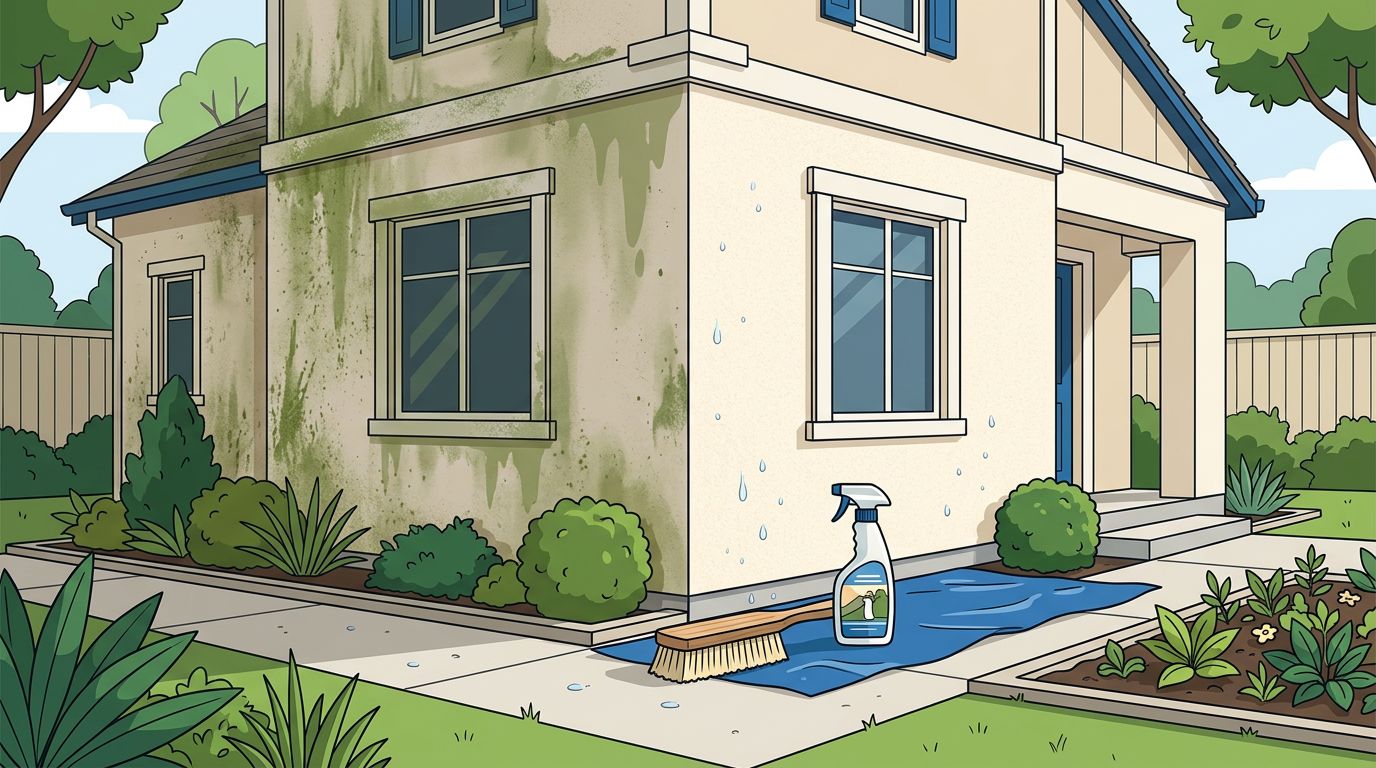
Green algae can make clean stucco walls look old, dirty, and poorly maintained. The wrong cleaning method can create a bigger problem by stripping paint, eroding the stucco finish, or forcing water behind the stucco.
When I clean algae stucco, I don’t begin with a power wash. I inspect the surface and protect nearby landscaping. I choose a compatible cleaning solution and use the lightest method on the porous stucco surface.
Painted and unpainted stucco need different care, and the same inspection-first approach can help homeowners clean stucco siding safely. The steps below help you remove algae without trading green stains for damaged paint.
Key Takeaways
- Inspect stucco for cracks, soft spots, peeling paint, and failed caulk before applying water or cleaning solution.
- Test a compatible cleaner on a hidden area first, and use a controlled soft wash rather than aggressive scrubbing or power washing.
- For painted stucco, a mild bleach solution, light brushing, and a 15- to 20-minute damp dwell time can remove algae without stripping the coating.
- Never mix bleach with vinegar, ammonia, TSP, or other cleaning products, and protect nearby plants, windows, metal, and painted surfaces.
- Prevent algae from returning by improving airflow, redirecting sprinklers, maintaining gutters, and inspecting shaded or damp walls regularly.
Inspect Stucco Before Applying Water
Before any stucco cleaning, inspect the stucco walls carefully. The stucco surface is porous, so water can enter through cracks, holes, failed caulk, and damaged areas around windows or doors. A small surface crack may not look serious, but rinsing can push moisture behind the coating.
Walk around the wall in good daylight. Look for:
- Hairline cracks that continue across the wall
- Open holes, chipped areas, or soft spots
- Loose or peeling paint
- Dark marks around windows, trim, gutters, and downspouts
- Stucco that stays damp after nearby areas have dried
- Cracks that widen near corners or control joints
Repair cracks with an exterior stucco repair product or compatible sealant before washing. Follow the product directions and allow the repair to cure fully. Minor damage may need stucco patching, but soft spots, bulges, or widespread cracking require more attention. If the wall feels soft, bulges outward, or shows widespread cracking, cleaning should wait until the exterior stucco receives a proper inspection.
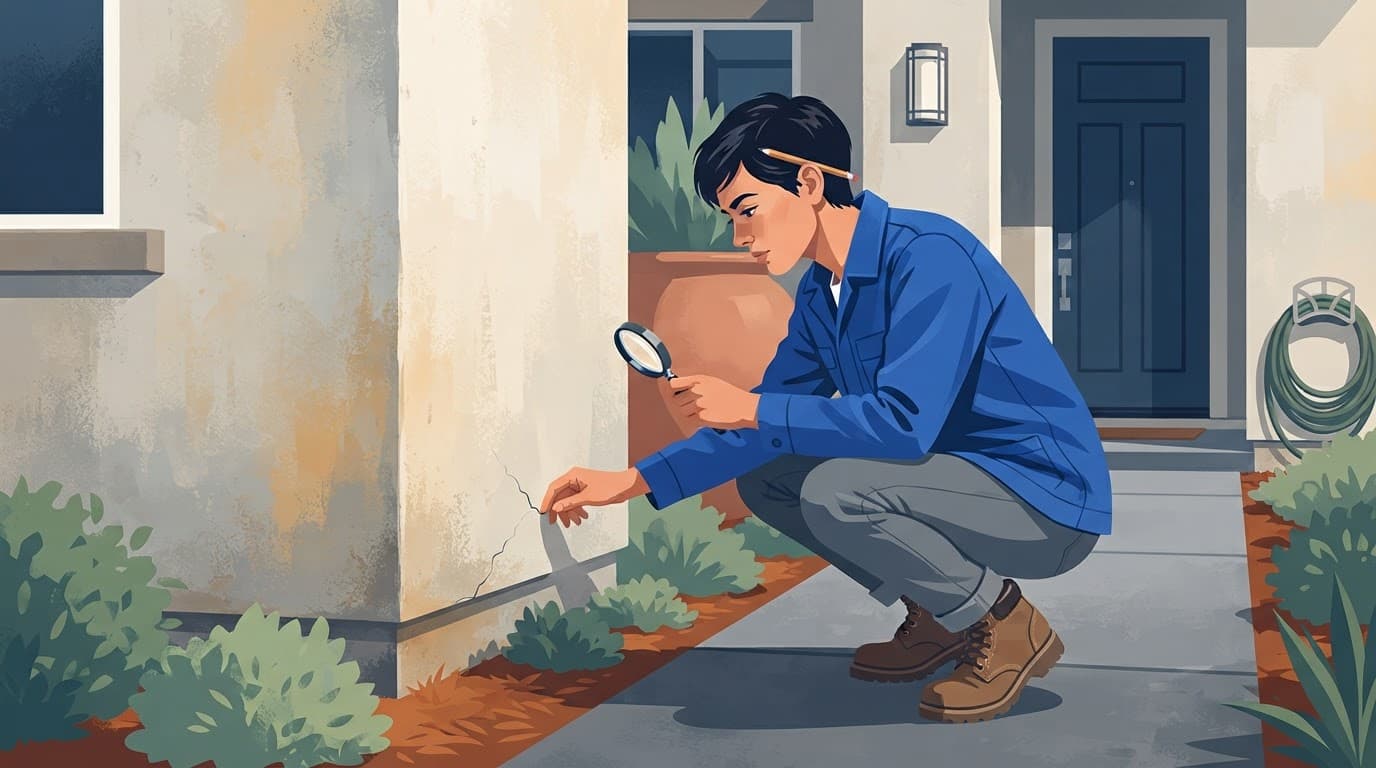
A clean-looking wall isn’t necessarily a sound wall. Water entering through a crack can cause more trouble than the algae on the surface.
I also check where the water will go. Cover delicate plants, outdoor furniture, light fixtures, and nearby painted surfaces. Wet landscaping before applying the cleaning solution, then rinse it again after the job. Keep the solution away from windows, unprotected metal, pool equipment, and nearby pavers, especially if you recently had driveway sealing completed.
Choose a Safe Cleaning Solution for Painted Stucco
For stucco cleaning, the right cleaning solution kills mold and algae instead of only pushing the green film around. I always test a hidden section first, because paint color, stucco texture, age, and previous repairs can change the result.
For painted stucco, I start with a mild bleach solution:
- Mix 1/2 cup of regular, unscented household bleach with 1 gallon of cool water.
- Use a pump sprayer or a low-pressure garden sprayer.
- Apply enough mixture to keep the surface wet, but don’t flood the wall.
- Follow the bleach label and coating manufacturer’s instructions if they provide a different ratio.
Never mix bleach with vinegar, ammonia, TSP, or another cleaning product. Wear gloves, eye protection, long sleeves, and shoes that won’t absorb the mixture.
For sound, unpainted stucco, a stronger mixture may be appropriate, but I don’t automatically use it. Some stucco finish materials contain limestone, cement, or other ingredients that react poorly to strong chemicals. A professional exterior cleaner or product label should confirm the material is suitable.
Homemade and Commercial Cleaner Options
Borax is a milder homemade option for light growth. Mix 1/2 cup of borax with 1 gallon of warm water, allow it to dissolve, and test it before treating the full wall. It may need more brushing or a second application than a bleach-based cleaner.
Vinegar can help with light surface buildup, but I don’t use it as my first choice on cement-based stucco. If the finish manufacturer allows it, dilute 1 part white vinegar with 3 parts water and test a small area. Vinegar is acidic and may affect delicate or weathered masonry finishes.
Trisodium phosphate (TSP) can remove heavy dirt and residue, but it isn’t my first choice for painted stucco because it can dull some coatings. If the product label permits use on your finish, mix 1/4 cup of TSP with 1 gallon of warm water, or follow the instructions on the package. Use it separately from bleach.
Products such as Simple Green Oxy Solve and Wet and Forget can be convenient commercial cleaners. Read the Simple Green label for stucco compatibility, and check the Wet and Forget label before use. A Simple Green formula marketed for siding isn’t automatically suitable for every painted or unpainted stucco application. If you select Simple Green, follow its listed dilution and test the product before broad application.
How to Clean Painted Stucco Without Damaging Paint
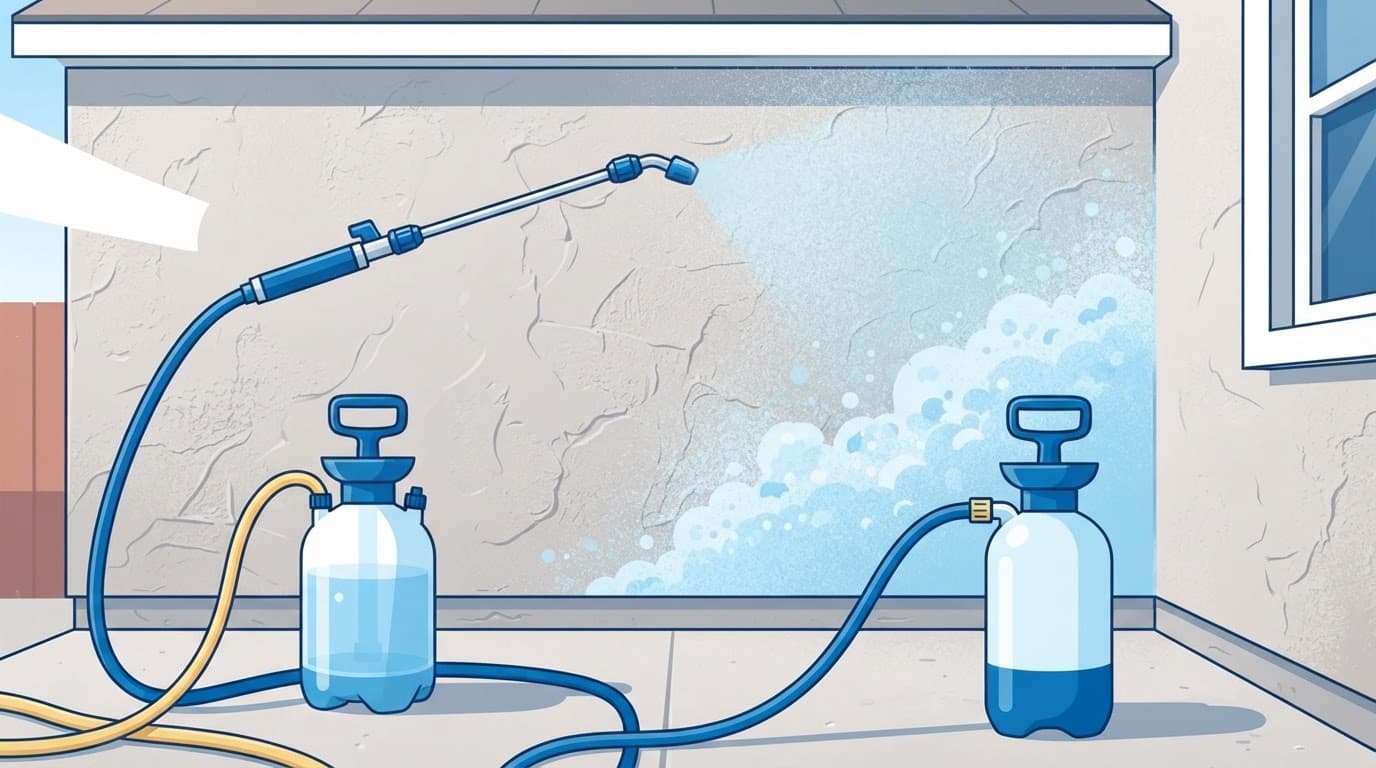
I use a soft wash process for most painted stucco walls. The chemical does the main work, so low pressure and light brushing are safer than a power wash.
- Choose a cool, calm day. Avoid strong sun and wind. Direct sunlight can dry the cleaner before it has time to work, while wind can carry it onto plants or neighboring surfaces.
- Remove loose debris first. Sweep away leaves, cobwebs, dirt, and loose green algae with a soft broom or brush. Don’t start by scrubbing hard, because dry grit can scratch painted areas.
- Protect and pre-wet the surroundings. Close windows and doors. Wet plants, grass, and nearby masonry with clean water before applying the cleaner.
- Rinse the stucco lightly. Use a garden hose with a gentle spray. Start at the top and work downward, or follow the cleaner’s directions. The goal is to remove loose dirt without forcing water into cracks.
- Apply the cleaning solution evenly. A pump sprayer provides better control than a pressure washer. I usually work in manageable sections and apply from the lower portion upward to reduce dirty streaks.
- Allow the cleaning solution to dwell for 15 to 20 minutes. Keep the stucco surface damp during this time. If it begins to dry, lightly mist it with more solution or water. Never allow bleach or a bleach solution to dry on painted stucco.
- Scrub only where needed. Use a soft-bristle brush for stubborn areas. A medium nylon brush may work on durable unpainted stucco, but I avoid wire brushes, abrasive pads, and stiff metal tools.
- Rinse from top to bottom with a garden hose and plenty of clean water. To rinse thoroughly, keep the spray moving and direct runoff away from doors, windows, plants, and pool areas.
A 15-minute dwell is a practical starting point for a small test section. Many product labels specify 15 to 20 minutes, but the simple green label controls dwell time if you use that product. More dwell time doesn’t mean better results if the solution dries or damages the painted coating.
If green staining remains after one careful treatment, let the surface dry and inspect it again. A second light application may help. Repeated scrubbing and stronger chemicals can remove the paint before they remove the underlying problem.
Use a Power Wash Only With Strict Limits
Can you safely use a pressure washer on stucco? Sometimes, but painted exterior stucco usually doesn’t need one. A garden hose rinse is safer after algae has been treated chemically, so a power wash is usually unnecessary.
Pressure washing can chip a fragile stucco finish, remove paint, expose the substrate, and force water into cracks. A narrow spray can also leave visible lines across the wall. Lowe’s low-pressure guidance for washing stucco recommends washing carefully and using low pressure when pressure washing is necessary.
If a pressure washer must be used, I keep the pressure below 500 PSI for fragile or painted stucco, unless manufacturer guidance indicates otherwise. I use a wide fan tip, start well away from the wall, and keep the wand moving. I test an inconspicuous area first and never use a zero-degree tip, turbo nozzle, or concentrated spray on painted stucco.
A power wash can remove loosened growth. It cannot strengthen weak stucco or repair cracks and damaged joints.
For large walls, upper stories, widespread black staining, or a stucco exterior with unknown coatings, professional soft wash service is usually safer than guessing with a rental machine. If you want to compare the motion and distance used during manual cleaning, this stucco cleaning demonstration provides a useful visual reference.
Stucco Maintenance: Prevent Green Algae From Returning
Algae grows faster where moisture remains on the wall. After cleaning, look for the conditions that caused the buildup.
Trim branches that block airflow and sunlight, making it easier to clean stucco siding. Keep sprinklers from spraying the stucco. Clean gutters so overflowing water doesn’t run down the wall. Check downspouts and splash areas for repeated moisture on the stucco exterior.
In Southwest Florida, I recommend inspecting exterior stucco at least twice a year. Shaded walls, lanai areas, and walls near vegetation may need cleaning every 6 to 12 months. A light maintenance wash is easier on the paint than waiting until thick algae and black stains cover the entire surface. If you use Simple Green or Wet and Forget, choose one labeled for the surface and follow its directions.
At Kingsway Paver Sealing & Pressure Cleaning, I help homeowners in Fort Myers, Naples, Bonita Springs, Port Charlotte, Sanibel Island, and nearby communities clean and maintain exterior surfaces. If the wall needs more than a small DIY treatment, you can Get a Quote for professional house washing and soft wash service.
Frequently Asked Questions
Can I use bleach to clean algae from painted stucco?
A mild solution of 1/2 cup of regular, unscented household bleach per gallon of cool water can be suitable for painted stucco. Test it in an inconspicuous area first, follow the product and coating instructions, and never allow the solution to dry on the paint.
Is pressure washing safe for stucco?
Pressure washing can chip stucco, remove paint, and force water through cracks, so a garden hose rinse is usually safer. If pressure washing is necessary, use a wide fan tip, keep the pressure below 500 PSI for fragile or painted stucco unless the manufacturer says otherwise, and test the method first.
How long should cleaner stay on stucco?
A 15- to 20-minute dwell time is a practical starting point for a small test section. Keep the surface damp and follow the cleaner’s label, since allowing bleach or another solution to dry can damage painted stucco.
Can I use vinegar or TSP on stucco?
Vinegar and TSP may help with certain types of buildup, but neither should be used automatically on painted or cement-based stucco. Check the finish and product directions, test a small area, and use them separately from bleach.
How can I keep algae from returning to stucco?
Trim vegetation, improve airflow and sunlight, redirect sprinklers, and keep gutters and downspouts from sending water down the wall. Shaded or damp walls may need a light maintenance wash every 6 to 12 months, especially in humid areas.
Keep Stucco Clean Without Stripping the Finish
The safest way to clean algae stucco starts with checking for cracks. Use a tested cleaning solution, allow controlled dwell time without drying, and rinse painted walls gently.
Skip wire brushes, concentrated chemicals, and aggressive tools. A careful process protects the paint, limits water intrusion, and keeps your exterior clean without costly repairs.