
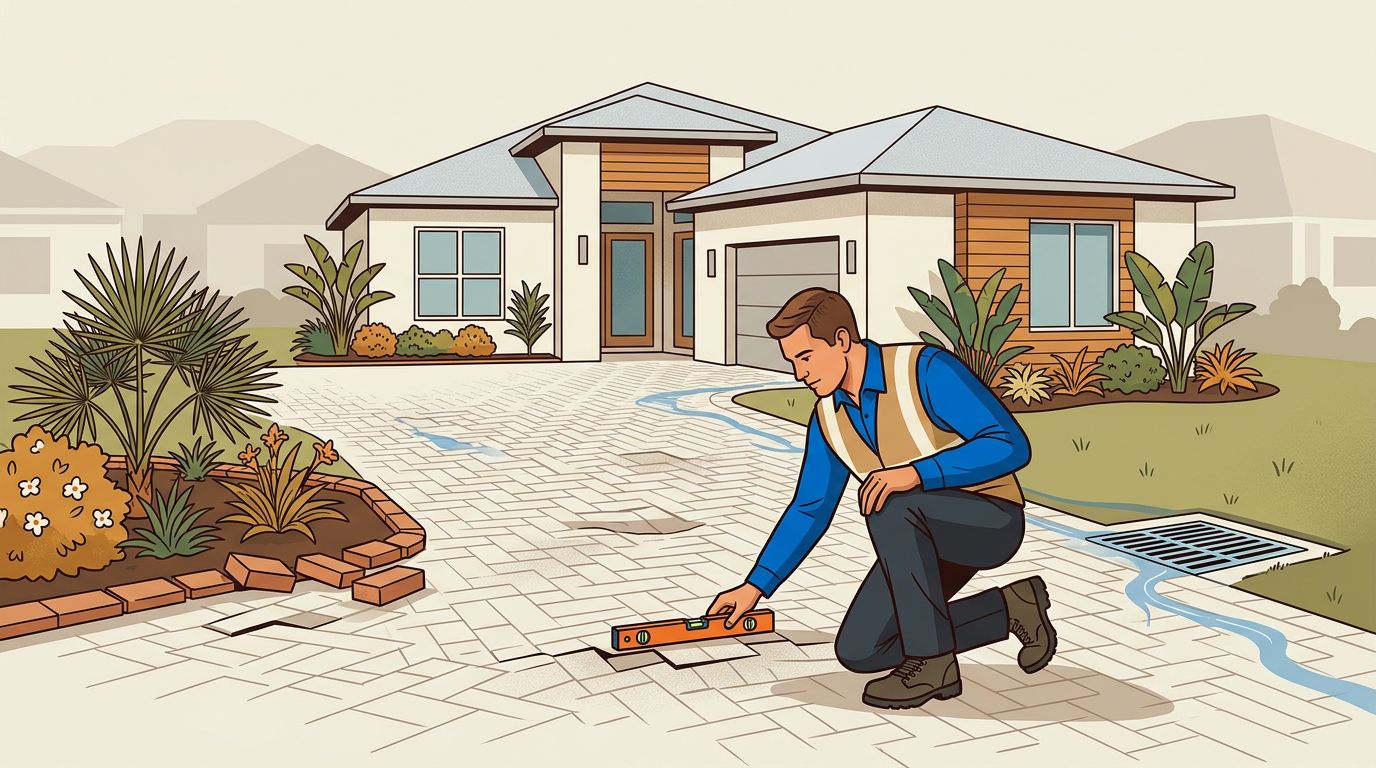
Fresh pavers can make a Florida home look well cared for, but curb appeal isn’t evidence of sound construction. A proper paver driveway inspection can uncover settlement, drainage trouble, loose edging, and permit problems before closing. Unresolved settlement or drainage defects may affect negotiations and the home’s property value.
I look past color and curb appeal. The real questions are simple: Are the pavers stable, and does rainwater move away from the home? Was the work approved, inspected, and built on a solid base? A licensed contractor should review the condition; an adjoining asphalt apron from an asphalt paving company doesn’t automatically validate the paver base.
Why the Driveway Deserves a Close Look
A driveway takes daily traffic, heavy rain, intense sun, and moisture during Florida’s wet season. When the base was poorly prepared, early drainage issues may look minor. A few low pavers can later become a wide settled section, standing water, or structural damage near the garage.
The driveway also connects to sidewalks, street aprons, culverts, drainage pipes, and public rights-of-way. A change that looks like private landscaping may involve county or city rules.
Surface signs of trouble
Walk the entire driveway instead of checking only the area closest to the front door. Look for:
- Pavers that rock, sink, tilt, or sit higher than the surrounding surface.
- Cracked, chipped, or missing pavers.
- Wide joints, missing sand, weeds, and gaps along the edges.
- Tire depressions, patchy repairs, and uneven color.
- Water stains or low spots where rain appears to collect.
- A driveway edge that is spreading into the lawn or mulch.
Keep paver defects separate from problems on an adjoining asphalt apron or public road. An asphalt paving company can evaluate potholes, failed patches, or cracking on asphalt surfaces. This inspection focuses on the interlocking pavers.
A clean surface can hide these problems. If the pavers were recently pressure washed, inspect again after rain and after the surface dries completely.
Florida conditions affect performance
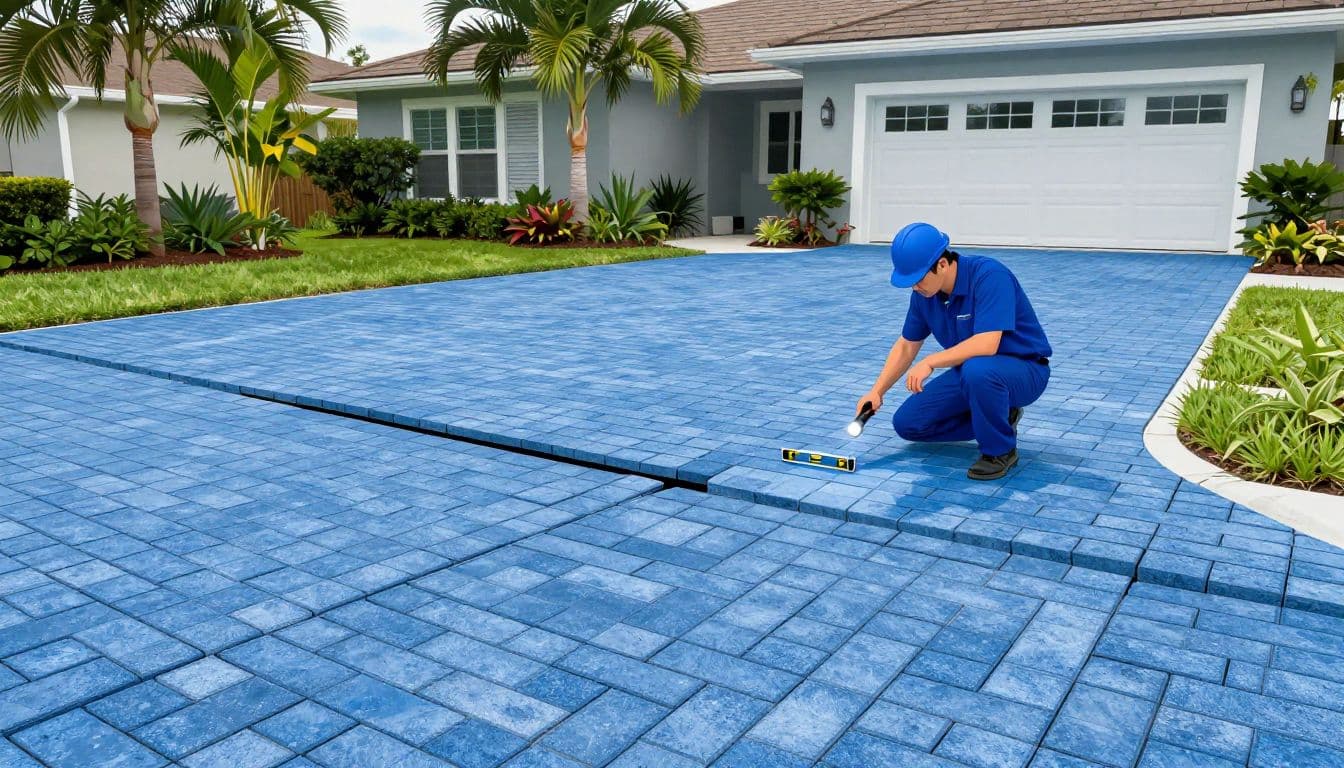
Southwest Florida properties deal with rain events, sandy soil, tree roots, irrigation overspray, and elevation changes across sloped front yards. Runoff may move toward retaining walls, nearby pool decks, or other grade transitions. These conditions don’t automatically mean the driveway is defective; they do make drainage and compaction worth checking carefully. Major grade work or drainage modifications may require a grading permit, while exterior paving or widening may require HOA approval.
I also look at where roof runoff and gutter discharge land. Water repeatedly flowing across one section can wash out joint sand and weaken the base. A driveway can look fine during a dry showing and show a low spot after one heavy storm.
What to Check During a Paver Driveway Inspection
A home inspector can evaluate visible conditions, but buyers should request a focused driveway and drainage review. The inspection should cover the pavers, joints, edges, slope, surrounding grade, and available permit records.
Check the pavers and joints
Stable pavers should sit firmly without rocking under normal foot traffic. Uneven sections may point to base preparation problems, water movement, or previous repairs. A single damaged unit is usually easier to address than a broad area that has shifted. Broad movement may indicate a problem below the bedding layer, where a licensed contractor can assess the cause.
Joint sand also matters. The sand helps hold interlocking pavers together and limits water entering the base. Missing sand doesn’t always mean major damage, but it can allow weeds, insects, and erosion to create a bigger repair later.
Be cautious with a driveway that has a blotchy finish. It may reflect surface wear, worn or stripped sealer, mineral residue, or surface etching rather than ordinary dirt. Cleaning may improve residue, but it cannot restore a paver face that has been permanently cut or worn.
Check edges, aprons, and transitions
Edge restraints keep the driveway from spreading outward. Check the borders beside grass, beds, sidewalks, and walls for movement or separation. If the outer pavers are loose, the problem can continue inward as vehicles turn near the edge.
The driveway apron deserves attention too. This is where the private driveway connects to the street or road. Check for broken pavers, standing water, an altered curb, a blocked culvert, or work that extends into a public right-of-way. If the property also has asphalt surfaces, an asphalt paving company may need to evaluate those areas separately from the pavers.
Shared hardscape projects may include transitions to pool decks. Commercial paving or multifamily work may follow a different scope, so don’t assume it matches a single-family residential installation.
A permit inspection checks compliance with approved work. A home inspection checks whether the driveway is a sound part of the property you’re buying. A focused driveway review examines details that a general inspection may not cover. You need all three questions answered.
Base Preparation and Drainage Matter Most
The surface is the part you can see. The base is where many expensive driveway problems begin.
Look for evidence of proper base work
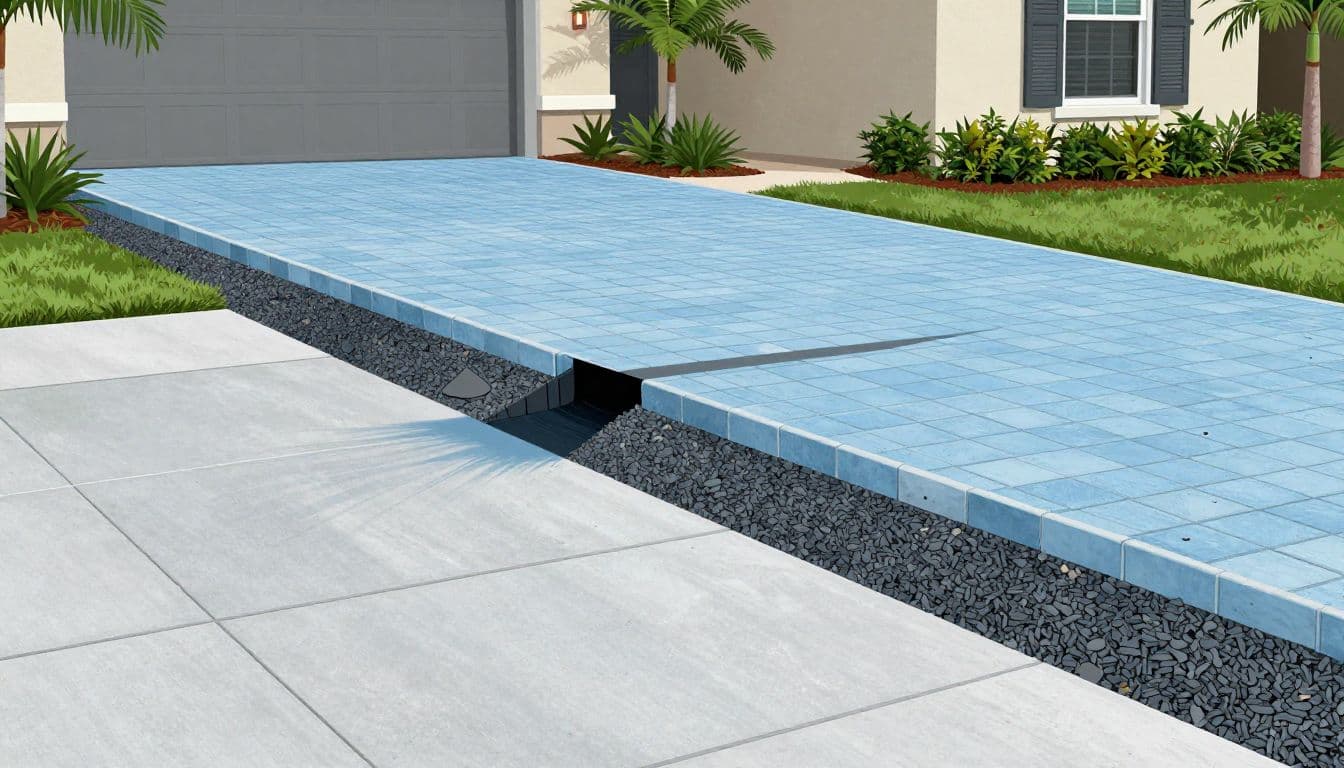
Many paver driveways use roughly 6 to 7 inches of compacted base material. Correct depth depends on soil, traffic, drainage, and the approved site plan. I don’t treat a general measurement as a substitute for project documents.
A stable installation normally includes prepared soil, compacted aggregate, a bedding layer, pavers, joint sand, and secure edge restraints. You may not be able to see every layer after completion. Settlement patterns, rocking pavers, and repeated low spots can reveal what happened below.
People often ask about a pre-pour inspection. That term generally applies to poured concrete. For pavers, the comparable checkpoint is a base or finish-limerock inspection before the surface is completed.
If concealed compaction or drainage defects require invasive testing, ask a licensed contractor to investigate them. An asphalt paving company can assess adjacent asphalt work or an asphalt road or apron connection. That assessment doesn’t prove the paver base was installed correctly.
Follow the water
The driveway should guide water away from the home, garage, and neighboring structures. A common drainage benchmark is a slope of about 2 percent away from buildings, unless the approved plans call for something different.
Look for water moving toward the garage, pooling beside the foundation, or collecting where the driveway meets the sidewalk. These drainage issues may also appear as washed-out joints. Check whether downspouts discharge directly onto the pavers, and inspect any culvert or drainage pipe near the road.
Pay attention to transitions near retaining walls, pool decks, and other hardscape. Elevation changes can redirect runoff toward the home or a neighboring property. New swales, altered front-yard grades, or drainage-related work may require a grading permit.
Lee County’s administrative code addresses residential driveway connections and front-yard drainage modifications. It also requires permits for culvert pipes and other drainage structures in county-maintained rights-of-way or easements.
Local requirements may also involve the applicable stormwater code, so don’t assume one statewide rule applies everywhere.
Permit Rules Depend on the Florida Jurisdiction
There isn’t one simple statewide answer for every paver driveway. The city, county, road authority, right-of-way status, scope of work, and HOA documents can all affect the requirements. Residential assumptions may not apply to commercial paving or multifamily work.
Some local permitting portals may classify certain work under a building permit. A grading permit may apply when a project changes drainage, grades, or elevations. Buyers should verify the site plan, driveway area in square feet, and any elevation changes shown in the application or supporting plans. HOA approval is separate from city or county authorization.
Lee County and Fort Myers
For residential work, Lee County requires a Residential Driveway Permit for projects such as installing a driveway for a new or existing home, upgrading an existing driveway, improving the right-of-way, or adding another residential driveway. The county’s driveway request worksheet gives buyers a useful starting point for checking the permit trail.
Fort Myers handles work in its right-of-way separately. The city checklist identifies driveway entrances and aprons as examples of work that may require a separate right-of-way permit. A property inside the city should be checked with Fort Myers, even if the mailing address also says Fort Myers.
Inspect any connected asphalt surface for settlement, cracking, or potholes. If an asphalt paving company handled the apron or road connection, its identity doesn’t determine which authority governs the work. If work appears unpermitted or nonconforming, ask the appropriate office about available records and possible code enforcement follow-up.
Orange County and Winter Park
Orange County’s guidance says pavers require a zoning permit, and a permit is required when pavers are placed for a driveway, walkway, or concrete pad. The county’s Residential Pavers information explains the paving application process and supporting submission.
Winter Park has its own permitting process. Its building and permitting services page includes online applications and inspection scheduling. The town’s driveway application also lists a $100 re-inspection fee when a failed worksite isn’t repaired to town standards.
| Location | What to verify before closing |
|---|---|
| Lee County | Residential driveway permit, drainage or culvert approvals, and inspection results |
| Fort Myers | City permit plus separate right-of-way approval for entrances or aprons |
| Orange County | Zoning permit and completed paving application |
| Winter Park | Local driveway approval, inspection record, and possible re-inspection charges |
Permit rules can change, and city boundaries aren’t always obvious. Confirm the governing jurisdiction before relying on a seller’s statement that “the county approved it.”
Records Buyers Should Request
Ask the seller or listing agent for the permit number, approved plans, site plan, property survey, paving application, grading permit for drainage or elevation changes, contractor invoice naming the licensed contractor, warranty information, final inspection result, and HOA approval. If the jurisdiction issues a certificate of completion, request it separately because it isn’t interchangeable with every inspection record. Together, these records show what was authorized, how the driveway was built, who performed the work, and what coverage remains. They also distinguish an issued permit, a passed inspection, and a completed project record.
If an adjoining asphalt apron was included, the invoice may identify the asphalt paving company that performed that portion.
The site plan or survey is especially helpful when the driveway was widened. It can show the driveway’s area in square feet and verify its dimensions. It may also reveal whether the work crossed an easement, changed front-yard drainage, affected nearby retaining walls, or moved closer to a property line.
Check the inspection trail
Lee County uses several driveway inspection stages, including stakeout or evaluation, culvert, form, finish limerock, and final inspection. The county’s administrative code explains the permit framework for driveway and right-of-way work.
The permit, approved plans, and manufacturers’ specifications should be available at the job site during inspections. Lee County also states that an issued permit must pass at least one inspection within 180 days or it can expire.
If records are missing, ask the local building or permitting office whether the permit was finalized. Also ask whether code enforcement has open cases or unresolved violations tied to the driveway. The Fort Myers building and inspections page provides the city’s online portal and inspection information.
A completed driveway isn’t the same as a finalized permit. Check the record, not only the finished surface.
HOA approval is separate from government approval. Confirm architectural approval, color restrictions, border rules, setback limits, and driveway expansion requirements with the association.
How to Handle Problems Before Closing
Small defects don’t always justify walking away from a home. They do need a clear repair plan and a realistic estimate.
Separate cosmetic wear from structural repair
Light dirt, mildew, faded color, and worn sealer are maintenance concerns. A professional cleaning may improve the appearance. Missing joint sand, loose edges, rocking pavers, and settlement require more attention.
A licensed contractor may need to lift a section, correct the base, and improve drainage. The work may also include resetting pavers, replacing damaged units, and re-sanding joints.
If an asphalt apron or connected area also needs work, have an asphalt paving company price those asphalt surfaces separately. Potholes in adjacent asphalt shouldn’t be hidden inside a paver repair estimate.
Driveway sealing belongs after cleaning and repairs. Sealer can improve appearance and reduce absorption, but it won’t stabilize a sinking base.
Don’t accept a promise to “wash and seal it” when the driveway has movement or ponding. Get the cause identified first.
Put the repair responsibility in writing
If the driveway has a permit issue or a substantial defect, ask for one of these outcomes:
- The seller completes the repair with a licensed contractor before closing.
- The seller obtains missing permits, final inspections, and HOA approval when required.
- The purchase agreement includes a documented repair credit.
- The buyer receives written estimates and accepts the condition knowingly.
A documented repair plan or credit can protect the buyer’s financial position and the home’s property value. Local fees may be modest compared with reworking a failed base. Lee County lists a $25 failed-inspection fee when required permit documents aren’t kept accessible at the site. The larger cost usually comes from correcting construction, drainage, or right-of-way work.
If prior asphalt work affects the driveway, assign responsibility and request a related quote from an asphalt paving company before closing.
If you want a local condition review or an estimate for cleaning, re-sanding, re-leveling, or sealing after the purchase, you can Get a Quote for your property.
Protecting the Driveway After Purchase
Once repairs are complete, make pavement care part of your routine by clearing leaves, dirt, and standing water. Check low areas, runoff, and joint sand on your maintenance schedule after heavy rain, replacing sand before pavers shift.
Use pressure washing carefully, since a narrow nozzle can etch the paver face, strip sealer, and remove joint sand. I prefer a controlled process with a suitable cleaner, a wide spray pattern, steady movement, and a thorough rinse.
A soft wash suits nearby stucco or organic growth, while roof and gutter care helps reduce dirty runoff. Neither service fixes settled pavers; asphalt surfaces need an asphalt paving company, while sealcoating schedules don’t apply to paver sealing.
Frequently Asked Questions
What does a paver driveway inspection include?
A focused inspection reviews paver stability, joint sand, edge restraints, settlement, drainage, surrounding grades, and visible transitions. It may also include checking permit records, site plans, inspection results, and HOA approval.
Can a home inspection identify driveway problems?
A home inspector can document visible driveway conditions, but a focused driveway review may identify details a general inspection does not cover. A licensed contractor should evaluate suspected base failure, major settlement, or drainage defects.
Do paver driveways require permits in Florida?
Permit requirements depend on the city or county, the road authority, the right-of-way, the project scope, and any changes to drainage or grade. Buyers should verify the applicable driveway, zoning, grading, culvert, right-of-way, and HOA approvals before closing.
Should driveway repairs be completed before closing?
Small cosmetic issues may be manageable after purchase, but settlement, ponding, loose edges, and missing permits deserve a written repair plan. Ask the seller to complete the work, obtain required approvals, or provide a documented credit supported by licensed contractor estimates.
Conclusion
A thorough driveway review should cover paver movement, joint sand, edge restraints, drainage, base preparation, permits, and association requirements. The strongest buying decision comes from comparing the surface condition with construction records.
A small stain or faded sealer is usually manageable. Settlement, ponding, missing permits, and right-of-way problems deserve written repair details before closing. Look below the surface, check the paperwork, and make sure the driveway is part of a sound home purchase.