
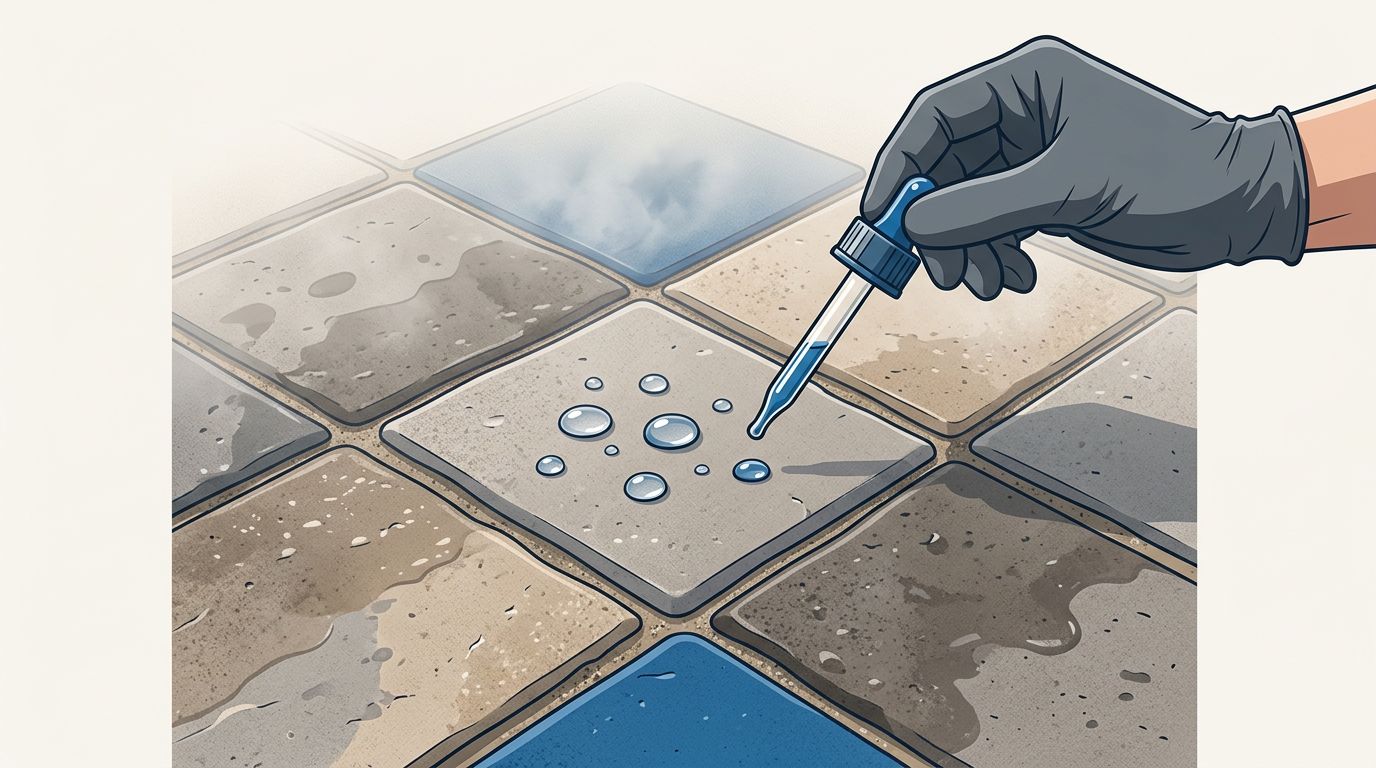
Water beading on pavers offers a quick first check of water repellency, but it isn’t proof of complete protection. Round, clear droplets suggest the surface is shedding water. Quick darkening may indicate worn, uneven, or dirty sealer, and beads don’t reveal its age.
I inspect more than the beads before recommending paver sealing, since penetrating sealers and film-forming products behave differently. Paver type, moisture, joint sand, efflorescence, old sealer, and goals such as color enhancement all affect the result. Start with the water test, then check what’s happening below the surface.
Key Takeaways
- Water beading is a useful first check for water repellency, but it does not confirm the sealer’s age, coverage, or overall condition.
- Penetrating and topical sealers behave differently, so paver material, desired appearance, moisture, joint sand, and existing coatings must be considered before recoating.
- Fast darkening, uneven absorption, haze, peeling, and dull patches can indicate worn protection, contamination, efflorescence, or a failing film.
- Clean, dry pavers and stable joint sand are essential before sealing. Use a compatible product, follow the manufacturer’s application limits, and test a hidden area before proceeding.
What Beading Tells You About Water Repellency
Water forms a bead when the surface resists absorption. This usually means a hydrophobic treatment is still active. Penetrating sealers can reduce absorption inside the pores, even when droplets don’t remain perfectly round.
That doesn’t give you an exact sealer age or guarantee complete protection. A paver can bead in one area and absorb water in another because of uneven application, traffic, sun exposure, or contamination.
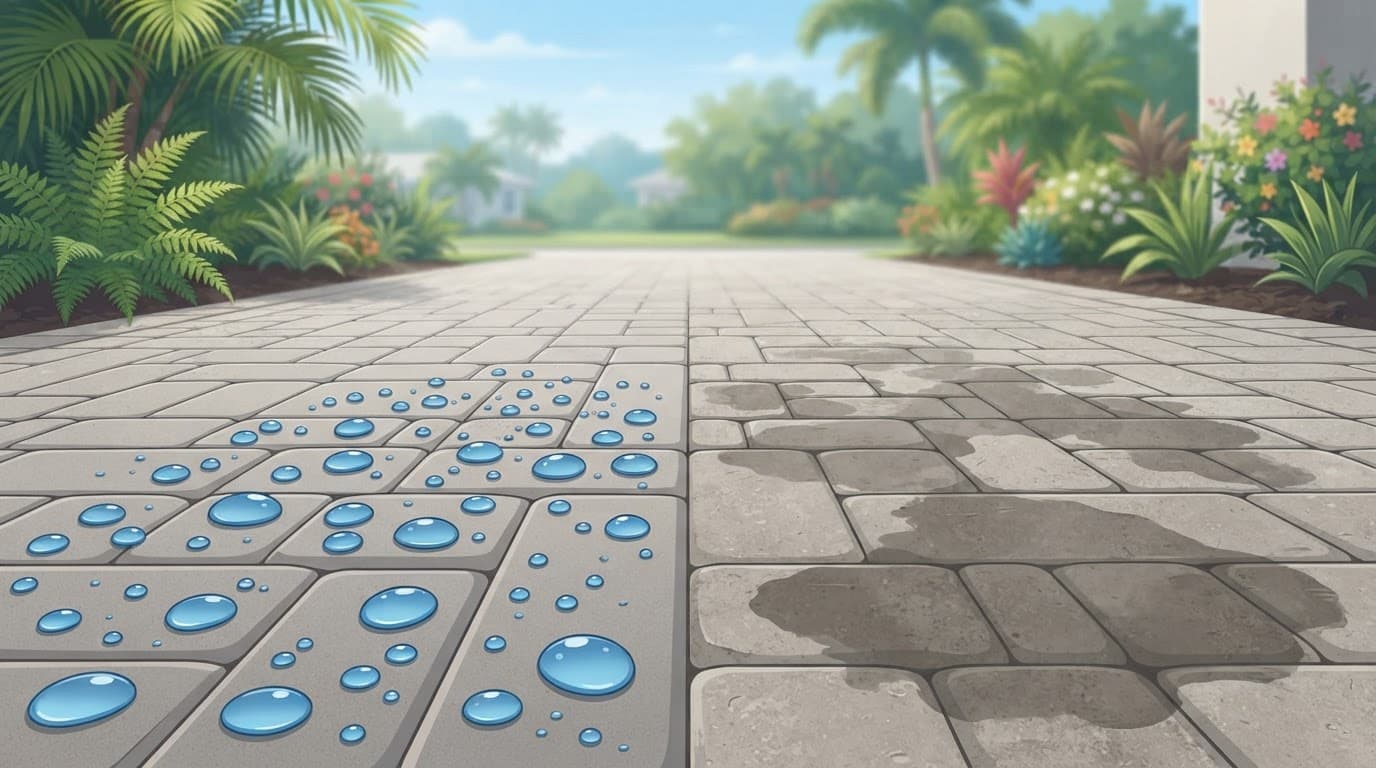
Beads show water repellency, not the whole sealer condition
I look for consistent behavior across several pavers. Healthy water repellency usually produces similar droplets on clean areas. A patchy pattern can point to an uneven coat, worn traffic lanes, or sections that were missed during application.
The paver’s density also matters. Dense concrete pavers may hold beads longer than porous brick or natural stone. Travertine can absorb some moisture even when a compatible treatment is working properly.
A bead test tells me about water repellency, not the complete condition of the sealer.
A simple water test gives useful information
Test only after the surface is clean and dry. Choose a hidden area or an inconspicuous edge, then place a few drops of water on several pavers. Watch the droplets for roughly 10 to 15 minutes.
If the drops remain rounded, repellency is present in that area. If the surface darkens quickly, water is entering the pores. If some areas bead while others darken, the sealer may be uneven or partly worn.
Don’t perform the test on hot pavers, immediately after rain, or over dirt and algae. An overheated surface can make droplets evaporate or behave inconsistently. Check the surface temperature, then test on a moderate, dry surface.
Penetrating and Topical Sealers Behave Differently
The type of sealer determines what water beading means. Penetrating sealers work inside the paver pores. Topical sealers sit closer to the surface and create a protective film.
Neither type is automatically right for every driveway, patio, pool deck, or lanai. The paver material, desired appearance, drainage, traffic, and previous coating all need to be considered.
Penetrating sealers protect without creating a heavy film
Penetrating sealers soak into porous concrete pavers, brick, or stone and reduce water absorption inside the material. For travertine and other porous stone, natural stone sealers should match the material’s porosity and manufacturer instructions. Silane and siloxane products are common examples of this approach. A silane and siloxane polymer blend is designed to enter the surface and provide water repellency without a thick glossy layer.
These products usually keep a more natural appearance and offer limited color enhancement. They’re less likely to peel because there isn’t a heavy surface film to separate. However, they may not provide the wet look or rich color many homeowners want.
Water beading may also be less dramatic on highly porous pavers. Penetrating sealers can still provide gradual, pore-level protection without creating a surface film.
Topical sealers leave a visible protective coating
Topical sealers, including many acrylic sealers, are common surface-coating options that form a film over the pavers. They can deepen color for noticeable color enhancement, add a wet look, and create gloss. When approved for the installation, they may also support joint sand stabilization.
The film must bond to a clean, dry surface. Moisture, efflorescence, dust, contamination, or too much product can cause cloudiness, peeling, blushing, or a sticky finish. Its UV resistance and long-term durability depend on the formulation. A product such as Euclid’s pure acrylic film sealer shows how acrylic coatings can provide a clear protective surface.
A topical sealer may still bead water while the film is beginning to fail underneath. Look for flaking, dull patches, tire marks, and color changes instead of relying on droplets alone. On pool decks or frequently wet surfaces, check the film texture, finish, and product instructions for slip resistance.
Signs Your Paver Sealer Is Worn or Failing
Water absorption is one warning sign, but it isn’t the only one. I also check the finish, joints, paver color, and high-use areas for a loss of the original color enhancement.
Driveways often wear first in tire paths. Pool decks may show faster changes where sunscreen, salt, and standing water affect the coating. Shaded areas can collect algae and dirt that hide the original sealer condition.
Uneven absorption usually points to uneven protection
Walk across the area after it has dried. Look for sections that appear darker after rain, especially around edges, low spots, and heavy-use paths. These locations often lose protection before the rest of the installation.
A dull patch doesn’t always mean the sealer is gone. It could be residue, mineral deposits, or a section that was cleaned differently. I test the area after washing rather than assuming the finish needs another coat.
A glossy patch beside a dull patch can also mean too much sealer was applied in one area. Recoating without correcting that difference usually makes the pattern more noticeable.
White spots and haze need a separate diagnosis
White spots, cloudiness, and a milky appearance commonly come from trapped moisture, efflorescence, or a coating that was applied over contamination. Efflorescence is a mineral deposit that can migrate out of concrete and appear as a white powder or haze.
Sealing over it can trap the deposit beneath the film. Water may continue moving through the paver and create more cloudy areas later. A failed coat may need compatible stripping, cleaning, and drying before any new product is applied.
Don’t use boiling water, a torch, or aggressive abrasion to correct the finish. Heat can crack or discolor pavers, while harsh cleaning can etch brick and natural stone.
Preparation Comes Before Another Coat
A new coat can’t correct a dirty or wet surface, so paver sealing starts with proper preparation. It locks existing problems in place and can make future restoration more expensive.
I inspect the pavers, joints, drainage path, and low areas before cleaning. Loose units, damaged edges, standing water, and contaminated sand should be addressed before sealing begins.
Efflorescence cleaning is mandatory
Efflorescence cleaning removes mineral deposits that interfere with adhesion and appearance. It also helps reveal whether a white area is surface residue or a deeper problem under an old coating.
Use an efflorescence cleaner compatible with the paver material. Products suitable for brick or concrete may damage travertine or other natural stone. Test every product in a small hidden area first, then rinse away all residue thoroughly.
After cleaning, allow the surface to dry completely. In Southwest Florida, high humidity and afternoon rain can extend drying time. A surface that feels dry on top may still hold moisture in the joints.
Contaminated joint sand should be removed carefully
Old sand can contain dirt, algae, organic material, or remnants of a failed sealer. I remove loose material carefully, using joint sand replacement where it can’t be salvaged.
Fresh polymeric sand is swept into clean joints and activated according to the product directions. The joints need the correct amount of water. Too little may leave the sand weak, while too much can wash binder onto the paver faces.
Pressure washing is useful during preparation, but high pressure alone isn’t a repair method. Adjust the nozzle, pressure, and distance to protect the surface. A narrow nozzle held too close can etch the paver and remove sound joint material.
Applying Sealer Without Creating New Problems
Good paver sealing depends on the product, weather, surface condition, and equipment. I follow the technical data sheet instead of applying the same way to every property.
A product designed for concrete pavers may not be suitable for travertine. A pool deck may need a different finish and slip resistance than a decorative walkway.
Spray-and-back-roll keeps the coat even
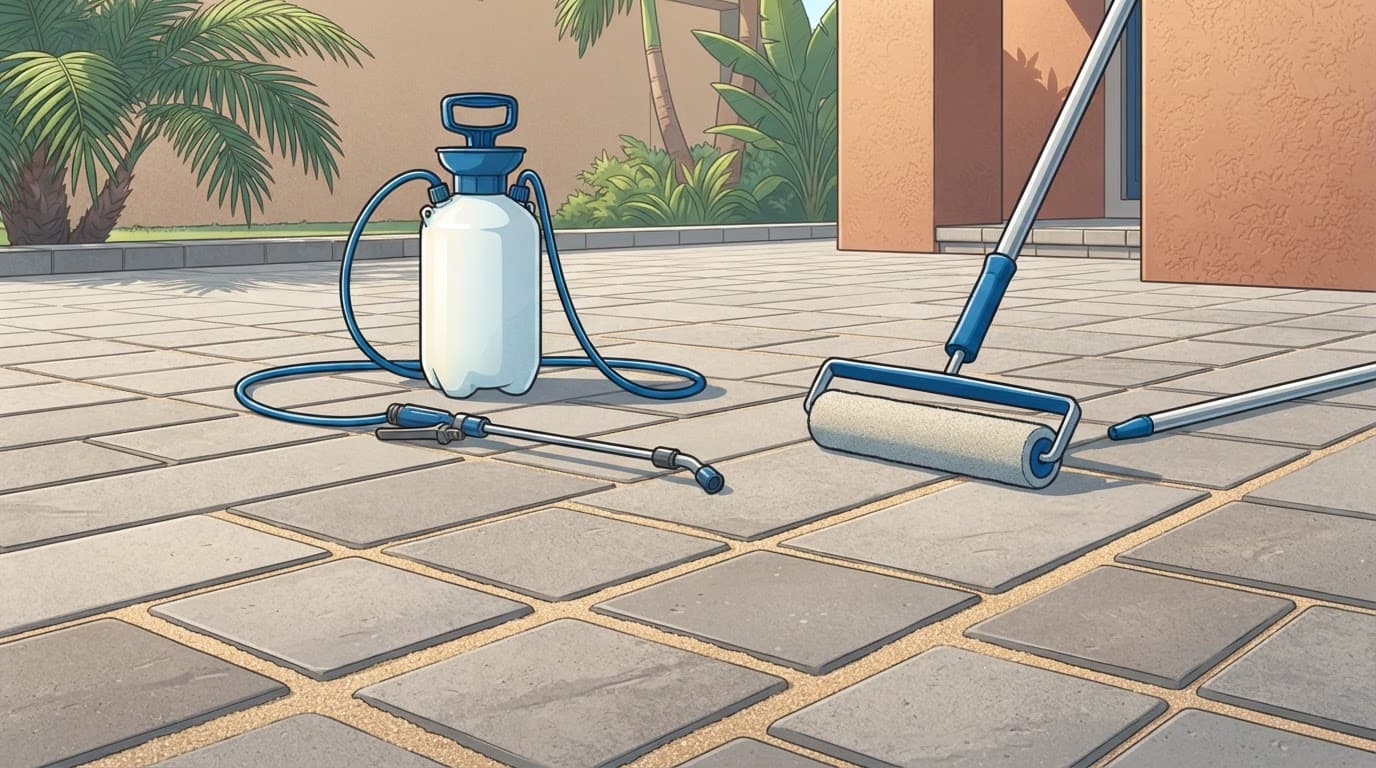
For many paver sealers, a controlled spray application followed by light back-rolling gives better coverage than heavy rolling alone. This roller application evens the film without flooding joints or creating overlap marks.
Heavy roller pressure can pull joint sand out of the gaps. It can also leave lines, thick edges, and visible overlap marks. I keep the application light and uniform, especially around borders and low spots.
Professional equipment may include:
- A pressure washer with the correct nozzle and pressure for the paver material.
- A paver-safe cleaner and a separate efflorescence cleaner when needed.
- A stiff broom, blower, and equipment for removing loose joint debris.
- Fresh polymeric sand for open or contaminated joints.
- A pump sprayer, compatible roller, and clean mixing containers.
- Chemical-resistant gloves, eye protection, proper footwear, and the safety equipment listed on the product’s SDS.
The area should be protected from foot traffic, vehicles, irrigation, and rain for the time stated by the manufacturer. Follow the manufacturer’s limits for surface temperature, humidity, cure time, and moisture.
Water-based and solvent-based products have different tradeoffs
Solvent-based sealers, including many acrylic sealers, often deepen color and create a stronger wet look or gloss. They can have stronger odors and may require careful ventilation, suitable weather, and strict fire-safety practices.
Polyurethane sealers are another film-forming option, but compatibility with the paver material and exterior use must be verified before application.
Water-based sealers usually have easier cleanup and lower odor. Their appearance and moisture sensitivity vary by formula. Some are made for a natural finish, while others produce a visible film. A water-based outdoor sealer for patios and pool decks is one example of a product with its own specific application requirements.
Choose a wet look sealer or high gloss sealer for the desired color enhancement, but remember that wet-look and gloss levels vary by product.
Don’t choose based only on the words “water-based” or “solvent-based.” Check the product’s surface compatibility, coverage instructions, recoat window, cure time, slip resistance guidance, UV resistance, and moisture limits. A paver acrylic technical sheet can help you compare solids and VOC information before work begins.
When to Reseal New and Existing Pavers
The right timing protects the appearance and performance of the finished project. Sealing too soon is a common cause of haze and poor adhesion.
Florida weather makes timing more important. Rain, irrigation, humidity, shaded areas, and surface temperature can keep moisture below the surface longer than expected. Both temperature and moisture must fall within the sealer manufacturer’s limits.
Newly installed concrete pavers need cure time
Don’t seal concrete pavers a few days after installation unless the paver and sealer manufacturers clearly allow it. Many systems call for roughly 30 days or more, while some require longer curing and drying time.
New installations can continue releasing moisture and efflorescence after they look finished. I wait until the installation has had enough time to cure, the polymeric sand joints are stable, and the surface passes a moisture check.
The manufacturer’s instructions control because paver composition, joint material, and sealer chemistry differ. If the installer supplied product information, keep it available before scheduling the work.
Existing sealer should be identified before testing or recoating
A contractor can inspect the finish, perform a small hidden-area test, and use a product-approved solvent test when needed. Visual clues aren’t enough. A glossy finish may be a solvent-based acrylic, but appearance alone can’t confirm the chemistry.
Never pour acetone, xylene, or another solvent across a visible section. These materials can soften a coating, discolor pavers, create fumes, or damage nearby surfaces. Testing should be controlled and based on the suspected product.
If the old coating is unknown and has failed, removing or stabilizing its film may be safer than applying a different sealer over it. The same rule applies to driveway sealing, patio work, and small repairs. Compatibility comes before appearance.
If your pavers are absorbing water unevenly, showing haze, or losing joint sand, I can inspect the surface before recommending cleaning, restoration, sanding, or paver sealing. Homeowners in Fort Myers, Cape Coral, Bonita Springs, Naples, Port Charlotte, and Sanibel Island can Get a Quote for the property.
The rest of your exterior may need care too, but roof cleaning and a soft wash use different methods than paver restoration. Chemicals and runoff should be managed separately so the hardscape receives the right treatment.
Frequently Asked Questions
Does water beading prove that pavers are fully protected?
No. Beading shows that the tested area has some water repellency, but it does not confirm uniform coverage or the complete condition of the sealer. Test several clean, dry areas and inspect for haze, peeling, dull patches, and uneven absorption.
Why do some pavers bead water while others darken?
Patchy beading can result from uneven sealer application, traffic, sun exposure, contamination, or different paver densities. It may indicate that some sections are worn or were missed, but the surface should be cleaned and retested before deciding to reseal.
Can I apply a new sealer over an old one that still beads water?
Not without checking compatibility and the condition of the existing coating. A topical film may still bead while it is beginning to fail, and applying a different product over it can cause cloudiness, peeling, or poor adhesion.
How long should new pavers wait before sealing?
Many concrete paver systems need roughly 30 days or more, while some require longer curing and drying time. Follow the paver and sealer manufacturer’s instructions, and confirm that the pavers and polymeric sand joints have cured and passed a moisture check.
What should be done before resealing pavers?
Remove dirt, algae, efflorescence, loose joint material, and remnants of failed sealer before applying another coat. The surface and joints must dry completely, and any cleaner or sealer should be tested in a hidden area for material compatibility.
Conclusion: Test Before You Reseal
The bead test is a useful first clue. Consistent beads show water repellency, while fast darkening, patchy absorption, haze, and peeling call for closer inspection.
The best results come from proper efflorescence cleaning, clean polymeric sand, complete drying, compatible sealer, and controlled application. Choose a product that provides the desired color enhancement and water repellency. I don’t seal over stains, moisture, or a failed coating because those problems remain underneath.
Before another coat, test a clean section and inspect the full installation during paver sealing. A careful inspection costs less than correcting pavers sealed over the wrong condition.