
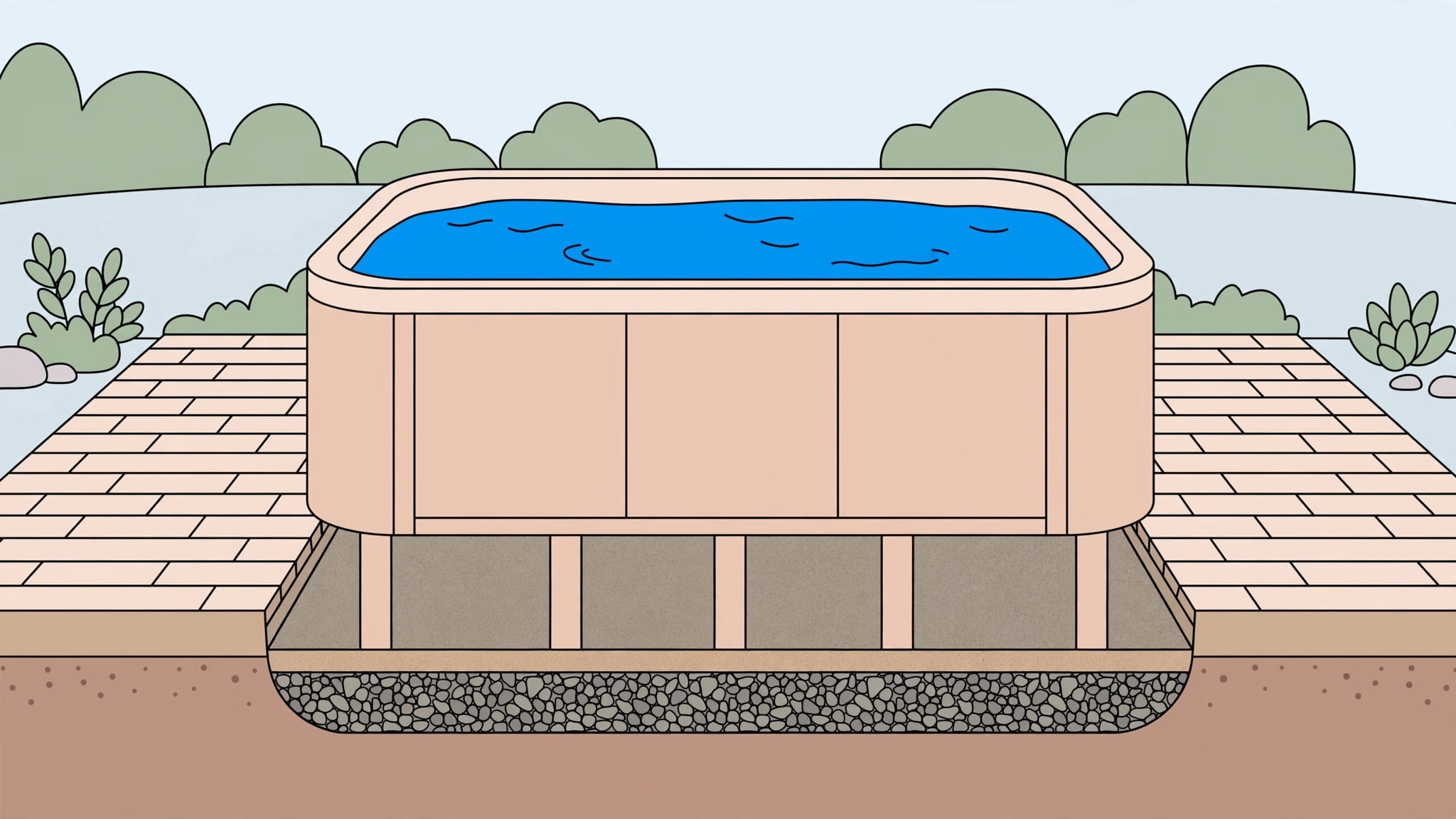
A well-built patio can support a filled hot tub if its soil and compacted aggregate layer provide firm, level support. Pavers over weak soil or an unsuitable foundation may not safely support the load.
I recommend checking the hot tub base before cleaning, sealing, or delivery. A patio that looks good can still have weak support underneath. Start with the tub’s weight and how that weight reaches the ground.
Are Pavers Strong Enough for a Filled Hot Tub?
Filled weight and frame support
A filled spa can weigh roughly 3,000 to 5,000 pounds, and some portable spas reach 6,000 pounds. Water, equipment, and occupants all affect the installation load.
Brock PaverBase estimates that about 75 percent of hot tubs carry weight through a frame. That concentrates pressure along the hot tub frame.
For a rough load check, add occupants’ weight to the manufacturer’s filled weight, then divide by the spa’s footprint in square feet. Treat the average pounds per square foot as a screening estimate, since it doesn’t show concentrated loads.
Bullfrog’s installation requirements call for support beneath the spa’s entire footprint without dips or voids. Check the manufacturer’s requirements to protect the manufacturer warranty. Structural damage from an inadequate foundation or improper leveling can void it.
Don’t improvise a wood frame or 2×4 frame, or assume either will distribute the load safely. Follow the manufacturer’s support requirements.
Paver strength and lightweight panels
Brock cites an 8,000-psi compressive-strength specification for driveway pavers and notes that many patio pavers have no required strength specification. That number describes material strength, not the weight a completed patio can safely carry.
Brock PaverBase panels are about 0.68 inch thick and may compress slightly beneath concentrated frame loads. I wouldn’t treat panels as a substitute for a foundation suited to the tub’s support arrangement.
Build a Stable, Level Paver Base
Rebuild weak support before setting pavers
Soft soil, washed-out aggregate, settlement, and rocking or uneven pavers need attention before the tub arrives. Standing water is another sign of a problem. Delay tub placement until these issues are corrected.
Lift affected pavers, remove failed material, and rebuild the aggregate foundation in compacted layers. A plate compactor helps establish firm support. Required depth depends on the filled hot tub’s load, soil conditions, compaction, and water movement.
Where specified, geotextile separates weak native soil from aggregate. A thin bedding course sets paver height, but it isn’t structural fill.
A Pennsylvania installer reported warranty requirements of 8 inches of compacted foundation plus a 1-inch leveling layer for the brands they sold. That’s a local report, not a universal specification. Follow the approved foundation design for your site.
Paver base panels, a leveling base, or an ezpad need approval for your specific tub and site. These products don’t replace a suitable foundation or guarantee capacity.
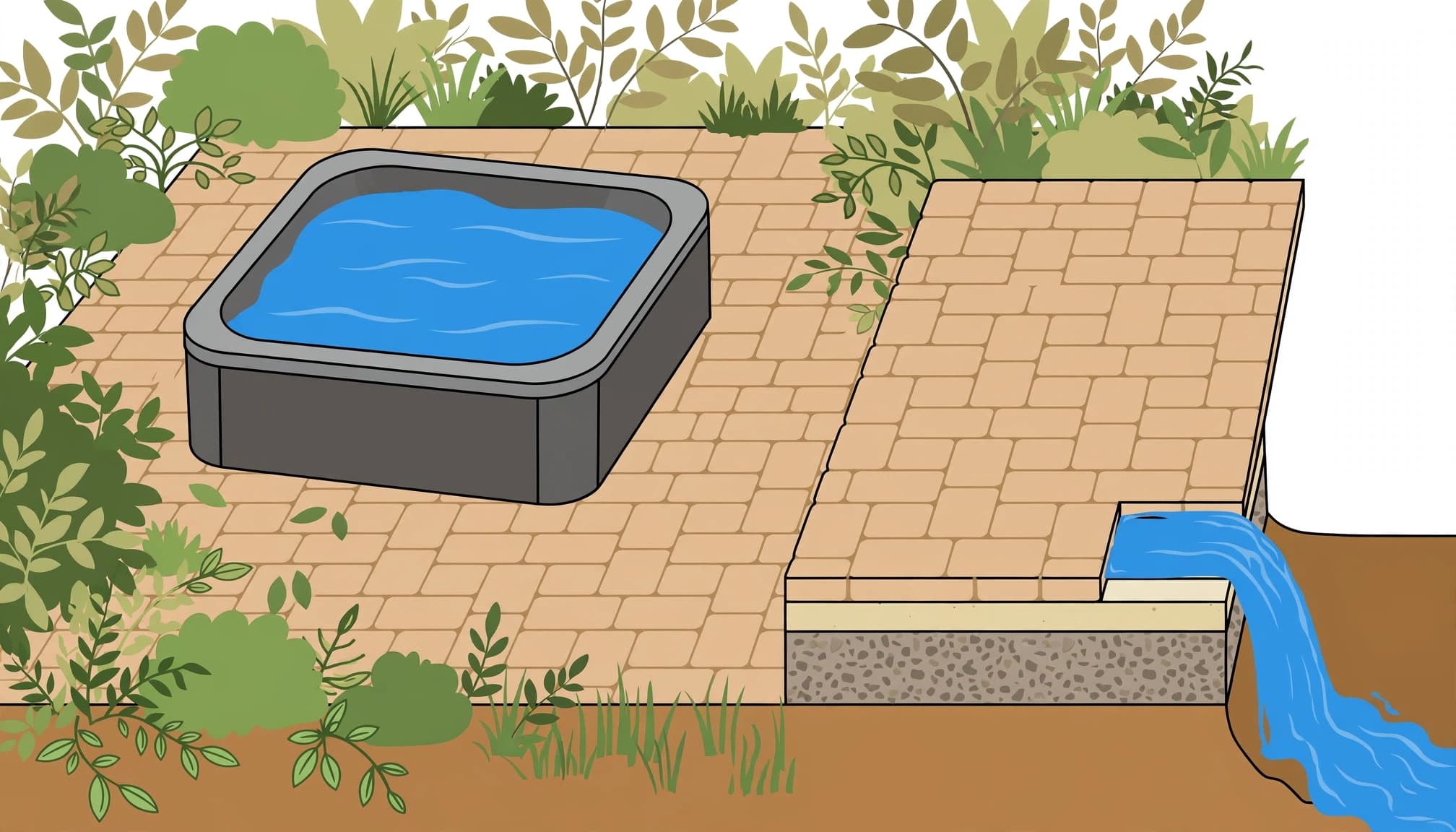
Keep the tub level while draining the surroundings
The tub footprint needs level support, while surrounding paving needs a planned water path. Hydropool’s hot tub leveling guidance addresses foundation preparation and suitable materials.
Bullfrog allows no more than 1/2 inch of slope over an 8-foot run. A 1.5-inch drop over that distance exceeds its limit. Don’t correct it with improvised shims.
Our guide to testing paver patio slope covers water-flow measurements. Repair loose edge restraints before resetting pavers. Standing water encourages algae and can promote rot where wooden framing stays wet. In colder climates, freeze-thaw movement also affects stability.
A Real DIY Patio Example and Its Cost
Living Rich on Less documented a 2016 DIY project covering approximately 13 by 13 feet. The homeowner leveled the area, added an approximately 1-inch bedding layer, installed paver base panels, and laid Newline English Cobble patio stones.
The project included a $600 used hot tub. The reported total was about $2,500 for the tub, patio, and landscaping.
Polymeric sand filled the joints and was wetted with a hose to activate it. These historical details don’t establish whether the same base assembly suits another tub. The finished appearance doesn’t establish load capacity or warranty compliance.
Pavers, Concrete, or Gravel?
A concrete slab or properly specified concrete pad provides a continuous foundation, while individual pavers can be lifted for repairs. Bullfrog specifies reinforced concrete at least 4 inches thick when concrete is used. That’s brand-specific guidance; a concrete base must still meet the tub’s requirements and suit the site.
Pavers don’t automatically need a concrete slab underneath them. They need a foundation assembly approved for the tub and suitable for the site.
Some models allow gravel, and Bullfrog lists pea gravel and crushed rock among its recommended foundation materials. When approved for the tub and site, these materials can form a gravel base or stone base.
Consult a qualified contractor or structural professional if the filled load, soil, compaction, drainage, or patio condition leaves capacity uncertain. Get an assessment if the patio has widespread settlement, repeated washout, or unknown support.
Protect the Surface After Structural Repairs
Cleaning and sealing belong after foundation repairs, drainage correction, and joint restoration. Pressure washing removes surface buildup, but it can’t rebuild missing support.
Our comparison of polymeric and regular joint sand explains why joint material must suit the installation. Polymeric sand helps stabilize compatible joints when properly activated, but it can’t support pavers over a failed foundation.
Patio and driveway sealing should follow repairs and drying. Keep leaves and mulch clear of the cabinet edges and drainage routes.
Key Takeaways
- Paver strength matters, but soil, compaction, and weight distribution determine foundation performance.
- Keep the tub footprint level and direct runoff around it.
- Repair settlement and loose borders before cleaning or sealing.
- Manufacturer foundation requirements govern warranty compliance.
Frequently Asked Questions
How much water-level difference is acceptable?
There isn’t one acceptable water level difference for every hot tub; follow the manufacturer’s specifications for your model. Bullfrog’s limit is 1/2 inch over 8 feet. Owner reports of larger differences don’t establish a safe tolerance for another model.
Will a hot tub make pavers sink or crack?
It can when concentrated loads exceed the support provided underneath. Soft soil, poor compaction, erosion, and spreading edges increase the risk. Adding joint material or sealer won’t correct those conditions.
Put Reliable Support First
A hot tub can sit on pavers when the complete foundation provides stable, level support. I recommend correcting drainage and settlement before protecting the finished surface.
Once your pavers are stable, Get a Quote for cleaning or sealing. Proper surface care helps protect the patio after the support work is complete.