
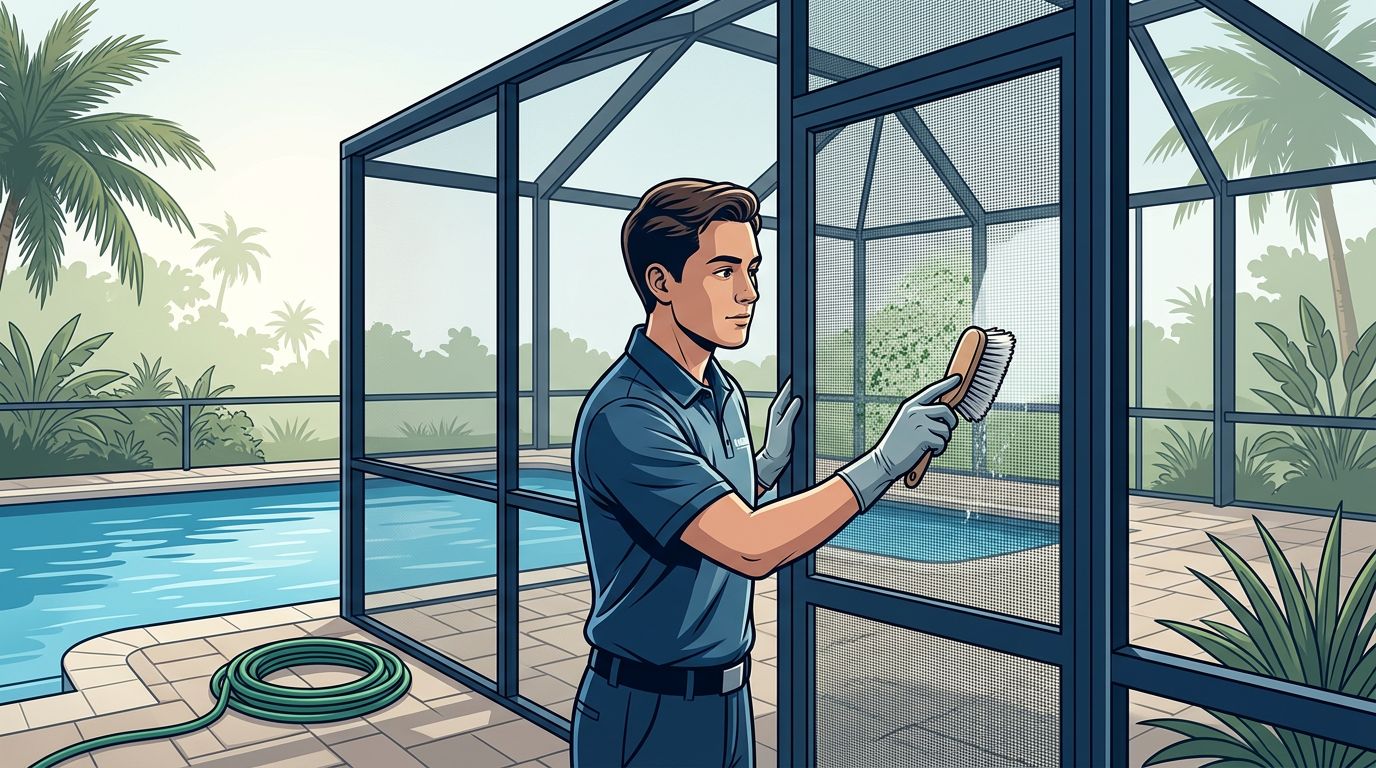
Florida humidity can turn a clean pool cage into a green, spotted mess quickly. Green algae, mold and mildew spread across damp screens and shaded surfaces.
For a safer approach, I use a soft-bristle brush and garden hose, not a high-pressure washer. Those shortcuts can stretch fiberglass, damage screen mesh and coatings, loosen spline, corrode the aluminum frame, and send dirty runoff toward your pool or plants. The safe method is simple: remove dry debris, brush lightly, rinse gently, and inspect after everything dries.
The Safest Way to Clean Mildew Lanai Screens
The safest method is hand washing with a soft-bristle brush and a garden hose. I work in small sections so the cleaning solution never dries on the mesh.
Gather the Right Tools
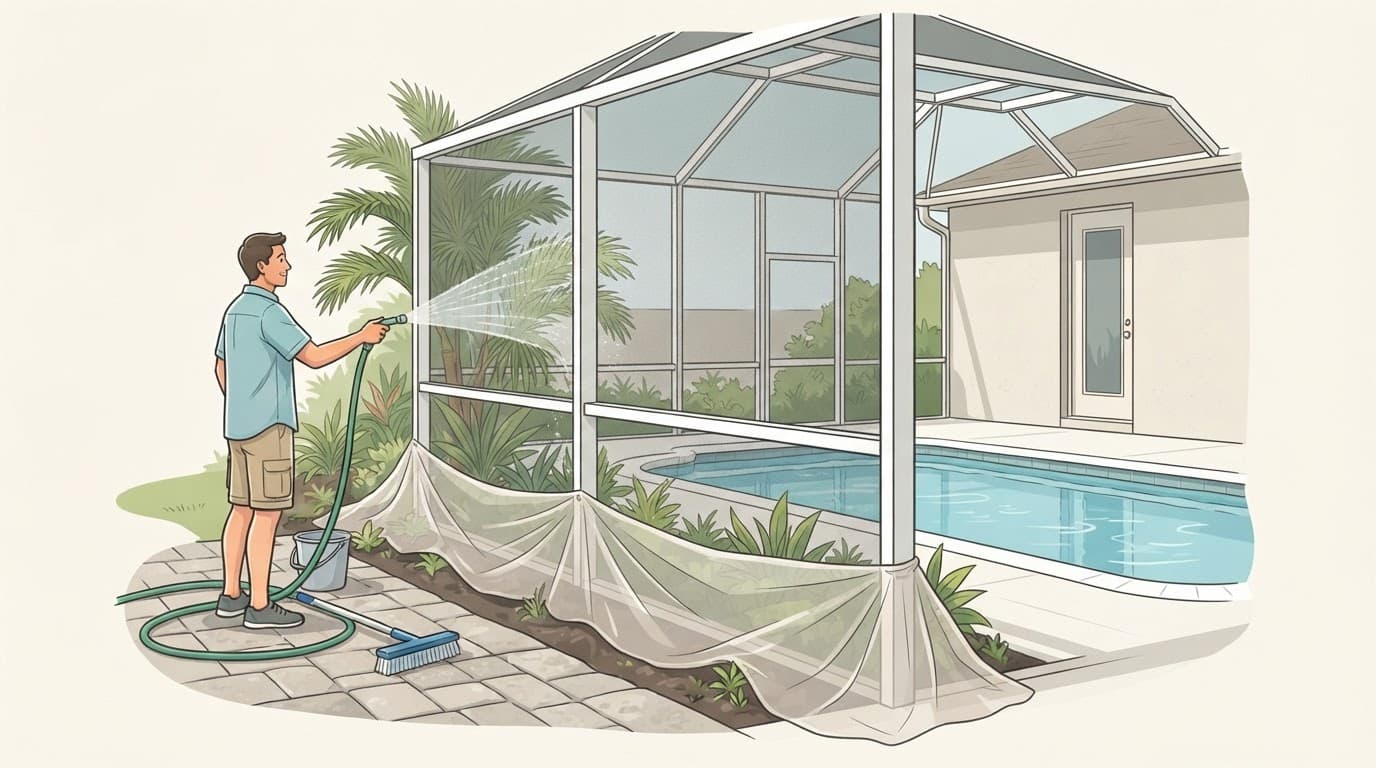
Before starting, I gather a soft-bristle brush, microfiber cloths, a bucket, mild dish soap, white vinegar, a garden hose with a shower setting, gloves, and eye protection. A telescoping handle helps reach high panels without leaning a ladder against the enclosure.
I don’t use wire tools, metal scrapers, abrasive brushes, or stiff power nozzles. These tools can scratch the aluminum frame, catch the mesh, or push debris into the spline.
Match the Solution to the Screen
Fiberglass screen mesh is flexible and common on pool enclosures. Solar screen is heavier and may have a protective coating, so I use lighter brushing and test every cleaner in a hidden corner first.
For pollen and ordinary grime, mix warm water with a small amount of mild dish soap. For established mildew, a 50/50 mixture of white vinegar and warm water can help. Apply it with a cloth or soft brush, let it sit for five to ten minutes, and keep it wet. Vinegar is acidic, so rinse the frame and screen well.
The EPA’s mold cleanup guidance supports detergent and water as a starting point for many hard surfaces. I follow that mild approach before considering a commercial cleaner. If you choose one, the label should state that screens, fiberglass, and an aluminum frame are suitable materials.
A Gentle Step-by-Step Lanai Screen Cleaning Process
Cleaning one screen mesh section at a time gives better control than spraying the entire cage. Keep the cleaning solution wet as you work, especially in the Florida sun.
Remove Dry Debris First
- Close doors, remove furniture, and switch off the pool autofill. Move toys and cushions away from the work area.
- Use a soft-bristle brush or microfiber duster to lift loose pollen, cobwebs, and dry mildew from the screen mesh. Removing pollen buildup before wetting prevents smearing. Brush from the top down without pressing hard.
- Pre-wet nearby plants and cover delicate leaves. Direct runoff away from the pool, drains, and planted beds.
- Starting at the top, give the screen panels a low-pressure rinse from a garden hose. Do not use a concentrated jet.
Dry brushing matters because wet pollen and mildew can smear across the screen. Removing loose debris first also reduces the amount of cleaner needed.
Wash, Rinse, and Let It Dry
Apply the cleaning solution to a small section, then use the soft-bristle brush with light, overlapping strokes. Clean the aluminum frame, corners, and lower tracks separately because organic buildup collects in these areas.
For mildew, give the prepared vinegar mixture five to ten minutes of contact time, but never allow it to dry. Rinse from the top down with a garden hose until there are no suds or vinegar smell, then rinse thoroughly. Use clean water on plant leaves and the surrounding deck.
Keep pool water chemistry in mind. A small amount of diluted soap is still unwanted contamination, and vinegar can affect water balance. Prevention is better than trying to correct the pool afterward.
Allow the enclosure to air-dry fully, then inspect it in daylight, including the aluminum frame. Wet screen surfaces can hide stains and make a panel look cleaner than it is. If dark spots remain after drying, repeat the mild treatment once. Don’t keep scrubbing harder.
Why Bleach and a High-Pressure Washer Can Damage Screens
Mildew can look stubborn, but stronger is not always safer. Screen mesh is thin and flexible, while the aluminum frame and spline can react badly to harsh runoff.
Keep Undiluted Bleach Away
Undiluted bleach can fade or weaken screen fibers, discolor the aluminum frame, damage vinyl spline, burn plants, and disturb pool chemistry. It may remove the green color while residue remains in the textured frame or tracks.
I don’t mix bleach with vinegar, ammonia, dish soap, or any other cleaner. The CDC’s mold cleanup recommendations also warn against mixing bleach with other cleaners and call for protective gear when bleach is used. For a lanai, soap or a tested vinegar solution is usually the safer first choice.
Use Equipment Only on Suitable Surfaces
Never aim a high-pressure washer directly at screen mesh, spline, seams, doors, or loose frame edges. Anything above about 500 PSI is too aggressive for most screen work, and a weakened panel can lose its structural integrity when the nozzle is close.
The controlled cleaning I use for pavers is different from the light touch needed here. Choosing the gentler method can help prevent premature damage. A soft wash may suit nearby stucco or a wall, but chemical spray still needs to stay off the screen.
If screen panels have full-surface staining, the frame is corroded, or the enclosure is too high to reach safely, professional cleaning is the better choice. A trained technician can check loose panels, damaged spline, and corroded framing, then handle repair needs that threaten structural integrity.
Routine Maintenance Helps Prevent New Mildew
A clean lanai stays cleaner when moisture, pollen, and organic debris don’t sit on the screen for months. During wet weather, I recommend a light monthly rinse with a garden hose. Every three to six months, use a soft-bristle brush for light washing that reduces moisture and debris, helping prevent mold.
Check the Causes Around the Cage
Trim branches and vines that touch the enclosure, since they can encourage organic growth. Clear gutters and roof edges so dirty water doesn’t run onto the upper panels. If mildew returns in the same area, check for blocked drainage, shade, or constant roof runoff. Roof cleaning may be needed before another lanai wash.
If mildew keeps returning on the upper panels, inspect the roof edge and gutter discharge before using a stronger cleaner.
Repair Loose or Torn Panels Early
Cleaning won’t fix torn screen mesh, stretched solar screen, popped spline, or a bent aluminum frame. I inspect the screen panels before washing because water pressure can turn a small defect into a full panel replacement.
For a large pool screen enclosure or pool cage, Kingsway can inspect the mesh, frame, deck, and runoff path. Homeowners in Fort Myers, Naples, Bonita Springs, Port Charlotte, and Sanibel Island can Get a Quote. This approach protects nearby pavers during professional cleaning or driveway sealing, while keeping your outdoor living space usable.
Frequently Asked Questions
Can I use bleach to clean mildew from lanai screens?
I avoid undiluted bleach because it can weaken screen fibers, discolor aluminum, damage spline, harm plants, and disturb pool chemistry. Mild dish soap or a tested vinegar solution is a safer first choice.
Is a pressure washer safe for lanai screen mesh?
No, direct high pressure can stretch or tear fiberglass, damage coatings, loosen spline, and force water into frame edges. I use a garden hose with a shower setting and rinse gently from the top down.
How long should vinegar sit on mildew?
Let a 50/50 mixture of white vinegar and warm water sit for five to ten minutes while keeping the screen wet. Rinse the mesh, frame, tracks, plants, and nearby surfaces thoroughly so no vinegar residue remains.
How often should I clean lanai screens?
During wet weather, a light monthly rinse helps remove pollen and organic debris before mildew spreads. Every three to six months, use a soft-bristle brush for a more complete wash and inspect for torn mesh, loose spline, or corroded framing.
Conclusion
You can clean mildew lanai screens safely without harsh chemicals or direct high pressure. Start dry, test diluted white vinegar or mild soap, protect plants and pool water, rinse gently, and assess the result only after the mesh and frame are completely dry.
When screens are torn, loose, corroded, or difficult to reach, professional cleaning and repair can prevent a small maintenance job from becoming a larger enclosure problem. This careful approach protects the mesh, frame, pool, plants, and surrounding property throughout the work.