
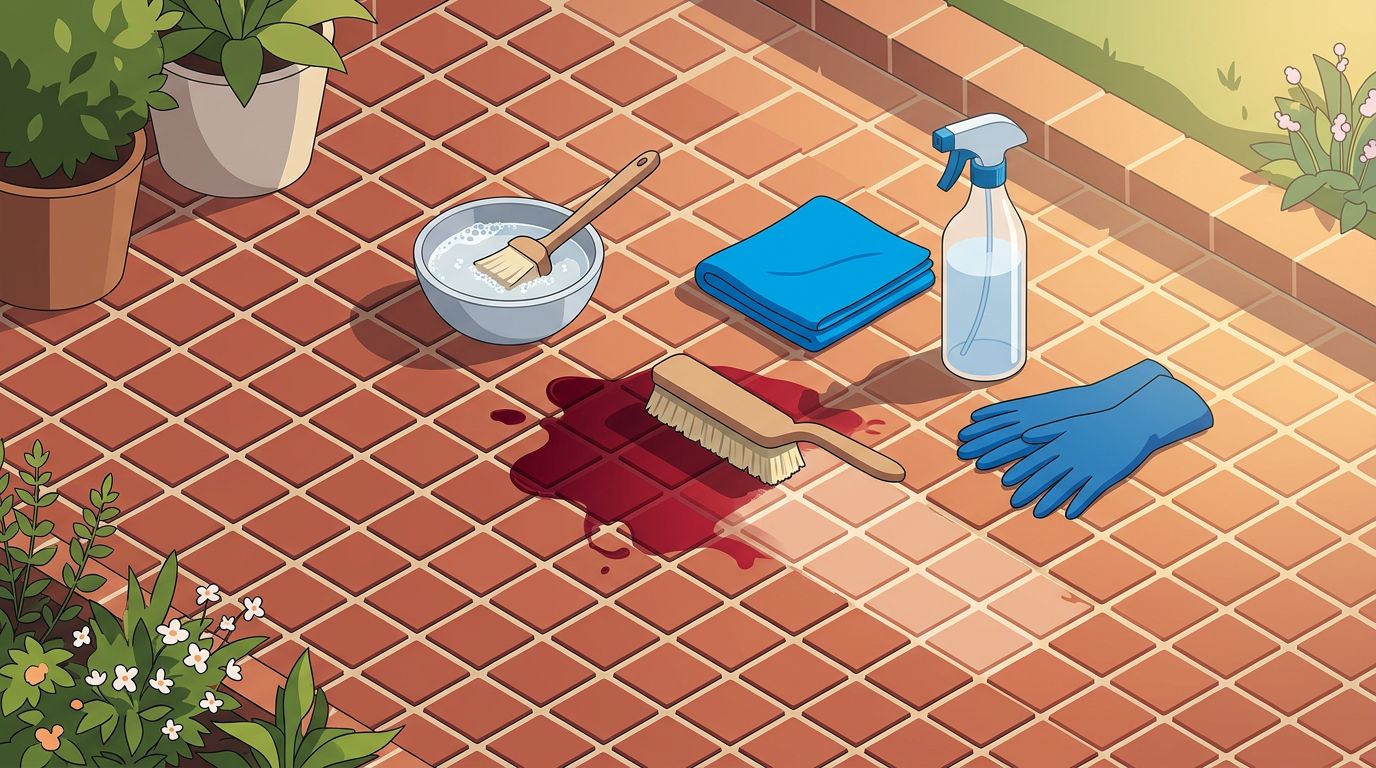
Effective red wine stain removal starts with quick action, light pressure, and the right cleaner for your paver material. A spilled glass of wine can leave a bright red mark on an otherwise clean patio in seconds.
Guides for white clothes, a carpet stain, or upholstery may suggest an enzyme detergent before using a washing machine. Pavers need a different approach because brick, concrete, and travertine absorb liquids differently. I identify the surface first, then loosen the mark without damaging the joints, sealer, or surrounding landscaping.
Key Takeaways
- Blot fresh red wine spills immediately, then rinse with cold water and use mild dish soap before trying a stronger cleaner.
- Choose a product for the specific paver material, and test oxygen-based cleaners, hydrogen peroxide, or organic stain removers in an inconspicuous area first.
- Avoid table salt, heat, aggressive scrubbing, vinegar, ammonia, and unapproved bleach products, especially on sealed pavers or travertine.
- Use pressure washing only as a controlled escalation, since excessive pressure can damage sealer, brick, joints, nearby surfaces, and landscaping.
- Don’t seal pavers until the stain and all cleaning residue are gone and the surface has dried completely.
Why Red Wine Stains Hold Onto Pavers
Wine contains pigments and tannins that can settle into the small pores and texture of outdoor pavers. Unlike white clothes, pavers can absorb a spill below the visible surface. Unsealed brick and concrete are especially absorbent, and Florida heat can dry a spill quickly, leaving a darker ring.
Sealed pavers are easier to clean because the protective coating gives the wine less room to soak in. However, an old or poorly maintained sealer may be uneven. One section can repel liquid while another section absorbs it immediately.
The surface material also matters:
| Paver surface | Safest starting point |
|---|---|
| Brick pavers | Cold water, mild dish soap, soft nylon brush |
| Concrete pavers | Mild soap, water, and a paver-compatible cleaner |
| Travertine pavers | Stone-safe cleaner and gentle rinsing |
| Sealed pavers | Blotting, mild soap, and a small test area first |
Belgard’s paver care guidance describes wine as an organic stain, separate from oil-based residue. That distinction helps you choose a stain remover or cleaning agent labeled for organic masonry stains and the specific paver material. Avoid an ammonia-based product unless the paver and product manufacturers approve it.
A stain that looks small on the surface may have spread below the top layer of a porous paver.
How to Clean a Fresh Red Wine Spill on Pavers
Fresh stains are much easier to remove than older ones. Blotting is the first pre-treat step, so remove as much liquid as possible before it spreads across more pavers.
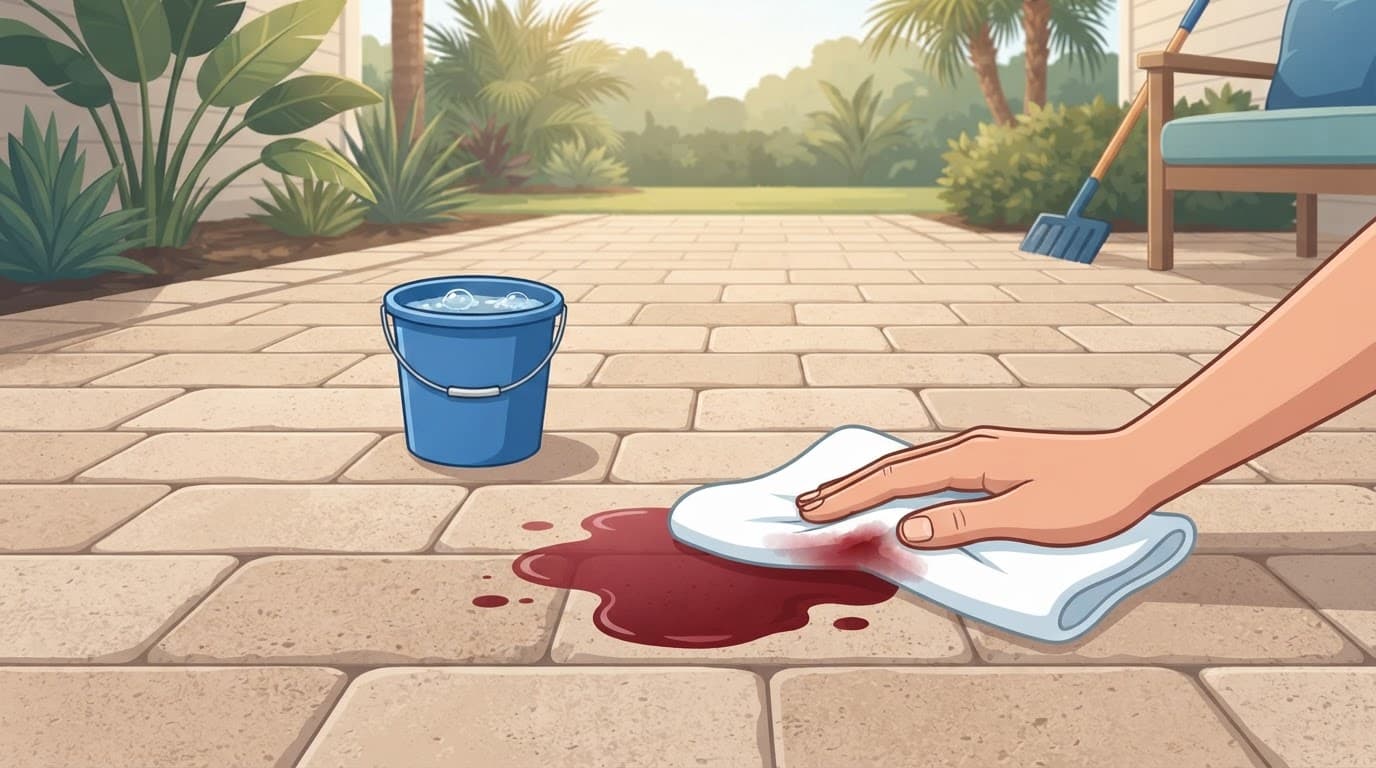
Use this process for most brick and concrete paver spills:
- Remove broken glass or solid debris first. Pick up the material carefully so it doesn’t scratch the paver while you clean.
- Blot the wine with a clean absorbent cloth. Press straight down and lift the cloth. Don’t rub back and forth, since rubbing spreads the pigment and works it farther into the pores.
- Rinse with cold water. Clean water is sufficient, so don’t delay blotting while searching for sparkling water. Use a gentle hose flow and work from the outside edge toward the center. A strong spray can push wine into nearby joints or splash it across clean pavers.
- Mix a mild cleaning solution. Add a small amount of dish soap to a bucket of water. Apply the solution to the stain and let it sit for several minutes without allowing it to dry. Never add ammonia to this solution or mix the solution with another cleaner.
- Agitate gently with a soft nylon brush. Follow the texture of the brick or concrete. Avoid wire brushes, abrasive pads, and stiff scrubbing tools that can scratch the surface or remove sealer.
- Rinse thoroughly and check the area after it dries. A wet paver can make a remaining shadow difficult to see. Repeat the mild soap treatment before moving to a stronger stain remover.
Don’t pour boiling water over the spill. Heat can help set certain stains and may create problems for sealers, surrounding plants, or natural stone. Warm water is acceptable for some paver cleaners, but I follow the product label rather than guessing.
If wine reaches a wall, screen frame, painted trim, or nearby furniture, rinse those materials separately. The best cleaner for a brick paver may not be safe for painted or finished surfaces.
Removing Dried Red Wine Stains from Pavers
Dried stains require more patience. The wine has already lost moisture, while the pigment and tannins may remain in the pores. Trying to remove the mark in one aggressive pass can create a larger problem than the original stain.
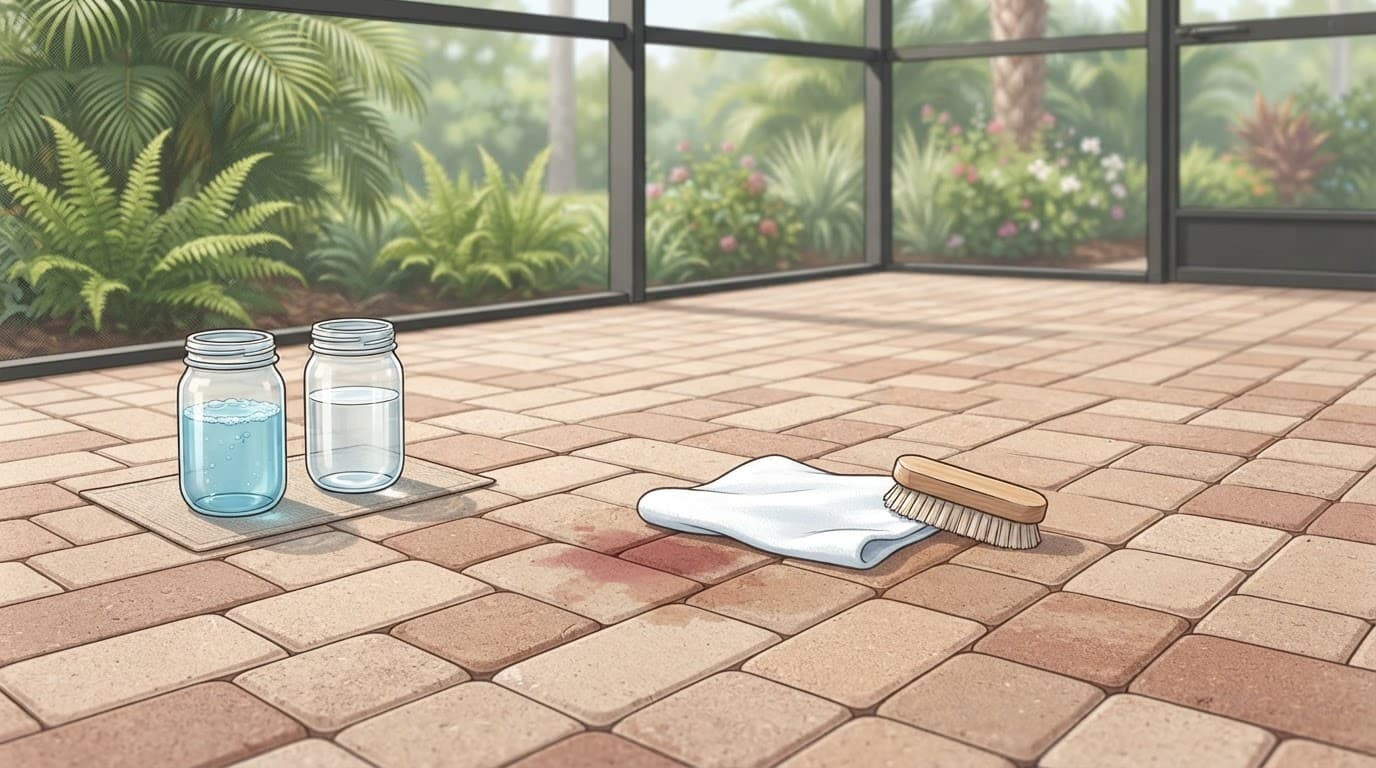
For dried stains, start by sweeping away dirt and lightly rinsing the area to pre-treat it. Then apply a cleaner suited to the specific paver material. Techniseal’s organic stain remover is formulated for outdoor marks, including wine, dead leaves, and mildew. Follow its label for application, dwell time, protective equipment, and rinsing.
For compatible brick or concrete pavers, an oxygen-based cleaner may also help. Products such as OxiClean use oxygen-releasing ingredients, commonly associated with sodium percarbonate, to loosen organic discoloration. I test the product first on an inconspicuous paver for colorfastness, watching for changes in color or the sealer. Never mix it with vinegar, chlorine bleach, ammonia, or another stain remover.
For a small, stubborn mark, ordinary 3% hydrogen peroxide may be an option after checking the paver manufacturer’s instructions. Apply it to a small test area, watch for color change, and rinse it away after a short dwell time. Never combine this treatment with ammonia or another chemical. It can lighten colored surfaces or affect certain sealers.
Travertine needs extra care because it is natural stone and can react poorly to acidic cleaners. Never start with white vinegar, lemon juice, strong acids, or a random solvent. Use a cleaner labeled for natural stone, keep the brush soft, and rinse completely.
If the stain remains after two careful treatments, stop escalating the chemicals. Professional treatment, color correction, or replacement may be necessary. Replacing one damaged paver can be cleaner and less expensive than damaging a larger section while chasing a stubborn spot.
Salt, White Wine, and Other Common Stain Advice
Table salt is often recommended for red wine on fabric because it can absorb some moisture before the mark spreads. Pavers are different, and advice for white clothes doesn’t automatically apply to porous masonry. Salt won’t pull absorbed pigment from brick or concrete, and it may settle into joints or leave gritty residue behind.
For this reason, I don’t use table salt as a primary paver cleaner. Baking soda has the same limitation, and neither reliably removes pigment from porous masonry. Sodium percarbonate is a different cleaning agent, not an interchangeable version of baking soda.
White wine won’t neutralize the mark; its added liquid and acidity can spread it. Sparkling water may dilute a very fresh spill, but it isn’t a substitute for blotting and rinsing. Club soda is similar, and sparkling water still isn’t a substitute for rinsing with clean water.
An enzyme detergent is designed for some food and protein residues on fabric fibers or upholstery. Wine discoloration is mainly pigment, so I don’t treat an enzyme detergent as a default paver product or first choice. Concentrated laundry detergent can also leave a film that attracts dirt.
Never scrub aggressively. Rubbing pushes the mark across a wider area and may force it deeper into textured surfaces. It can also create a clean-looking patch surrounded by a dull, scratched section.
Clorox provides concrete patio cleaning guidance, but bleach instructions for a plain concrete slab shouldn’t automatically be used on sealed brick, colored pavers, or travertine. Don’t substitute an ammonia-based product or general stain remover for a surface-compatible cleaner. Always account for the surface, sealer, joints, plants, and drainage path.
When Pressure Washing Is the Safer Choice
Pressure washing may help when red wine stains cover several pavers, reach deep into textured brick, or remain after a compatible product has loosened the residue. It should be a controlled escalation, not the first response to every spill.
High pressure can:
- Strip or discolor an existing sealer.
- Remove joint sand between interlocking pavers.
- Etch lines into brick or concrete.
- Spread loosened wine across clean areas.
- Damage nearby screens, trim, doors, or plants.
I prefer a wide spray pattern, measured pressure, and a moving nozzle. On larger flat areas, a surface cleaner can produce a more even result than a narrow wand tip. The stain remover should loosen the residue first. The machine then provides a controlled rinse.
A wine spill doesn’t need the same treatment as roof cleaning. A soft wash can suit algae and organic growth on delicate exterior surfaces, but it isn’t automatically right for wine residue. Paver stains require a product selected for masonry and the type of discoloration.
At Kingsway Paver Sealing & Pressure Cleaning, I inspect the paver surface, joints, sealer, drainage, and nearby materials before choosing a method. Homeowners in Fort Myers, Naples, Bonita Springs, Port Charlotte, Sanibel Island, and nearby Southwest Florida communities can Get a Quote for professional cleaning and restoration help.
Protecting Pavers After Stain Removal
Don’t seal over a remaining red mark. Sealer can trap discoloration beneath the coating and make later treatment more difficult. Clean and rinse the area, then let it dry completely before applying sealer.
Rinse away all product residue, including any residue from an ammonia-based cleaner used previously, before sealing. Use only a compatible cleaner for the paver material.
Once the pavers are clean, driveway sealing or patio sealing can reduce absorption and make future spills easier to address. Sealing won’t make brick or concrete completely stain-proof, but it can limit wine, food, dirt, and moisture from entering the pores.
A few simple habits also help:
- Keep absorbent towels near outdoor dining areas.
- Rinse spills before they dry in direct sun.
- Use trays under drink tables and patio furniture.
- Sweep leaves and dirt away from the joints.
- Have the whole section cleaned if the surface already looks uneven.
The FAQ below covers new and set-in marks, material-safe products, pressure washing, and when to call a professional.
Frequently Asked Questions
What should I do immediately after spilling red wine on pavers?
Blot the spill with a clean absorbent cloth, pressing straight down instead of rubbing. Rinse with cold water, apply mild dish soap, gently brush the area, and rinse again.
Can I use table salt or sparkling water to remove red wine from pavers?
Table salt won’t reliably pull absorbed pigment from porous brick or concrete and may leave residue in the joints. Sparkling water may dilute a fresh spill, but it doesn’t replace blotting and rinsing with clean water.
What is the safest cleaner for a dried red wine stain?
Start with a cleaner labeled for the specific paver material and test it in an inconspicuous area. An oxygen-based cleaner or 3% hydrogen peroxide may help on compatible brick or concrete, while travertine requires a natural-stone-safe product.
Can I pressure wash a red wine stain from pavers?
Pressure washing can help with widespread or stubborn stains after a compatible cleaner has loosened the residue. Use measured pressure and a wide spray pattern because excessive pressure can strip sealer, remove joint sand, etch pavers, or spread the stain.
When should I call a professional for red wine stain removal?
Contact a professional if the stain remains after two careful treatments or if the pavers are sealed, natural stone, heavily textured, or surrounded by delicate materials. Professional treatment, color correction, or replacing one damaged paver may be safer than escalating chemicals or pressure.
Conclusion
Effective red wine stain removal on pavers differs from treating white clothes, so act quickly and use methods suited to the hard surface. Blot fresh spills, use cold water and mild dish soap first, avoid table salt and heat, and test stronger cleaners before applying them broadly.
If dried stains remain, don’t trade one mark for etched brick, stripped sealer, or missing joint sand. Safe cleaning protects both the appearance and the structure of your paver installation.