
A crack in a beautiful patio or pool deck can get your attention fast. Travertine paver cracks may look small at first, but the right choice between repair and replacement depends on the cause.
Travertine pavers are made from durable natural stone. Cracks can result from base settlement, water washout, excessive loads, ground movement, or poor installation. I always recommend evaluating the visible crack with the bedding layer, drainage, and surrounding pavers before choosing a filler or replacement.
Key Takeaways
- Travertine paver cracks usually result from base settlement, water washout, ground movement, excessive loads, or poor installation rather than weak stone.
- Repair a crack only when the paver is level, stable, dry, and properly supported; filler cannot correct movement, settlement, or a failed base.
- Replace an isolated cracked paver when the surrounding installation is solid, but reset or rebuild the affected area when multiple pavers are loose, sunken, or cracked.
- Correct drainage, maintain joint material, and use gentle cleaning methods to help prevent more damage. Loose or cracked pool coping, standing water, and repeating cracks require professional evaluation.
Do Travertine Paver Cracks Mean the Stone Is Weak?
Not usually. Travertine pavers hold up well under normal residential foot traffic when they’re the right thickness and installed on a stable base. A pool deck, lanai, walkway, and patio should handle daily use without constant cracking.
The issue is often support underneath the stone, including beneath travertine coping. Loose coping needs attention because it affects pool-edge safety, and even strong pavers can crack when they lose support in one area.
Foot Traffic Is Rarely the Problem
Regular walking, patio furniture, and normal pool activity shouldn’t crack quality stone under a sound installation, even with heavy foot traffic. A dropped heavy object or vehicle can create concentrated stress, but an edge chip differs from a crack through the full paver.
If several stones crack in the same part of the patio, I look for settlement, loose bedding material, or washout. Ground movement from changing soil or the underlying grade can also affect that area.
Vehicles Need a Different Installation
Travertine made for a pool deck isn’t automatically suitable for a driveway or service area. Vehicle weight puts far more stress on the stone and base than foot traffic.
Thin pavers can crack under cars, golf carts, delivery vehicles, or dumpsters. A driveway needs the correct paver thickness, a properly compacted base, a design suited to vehicle loads, and good edge restraint. Skipping compaction, adequate thickness, or edge restraint is poor installation and can lead to costly repairs later.
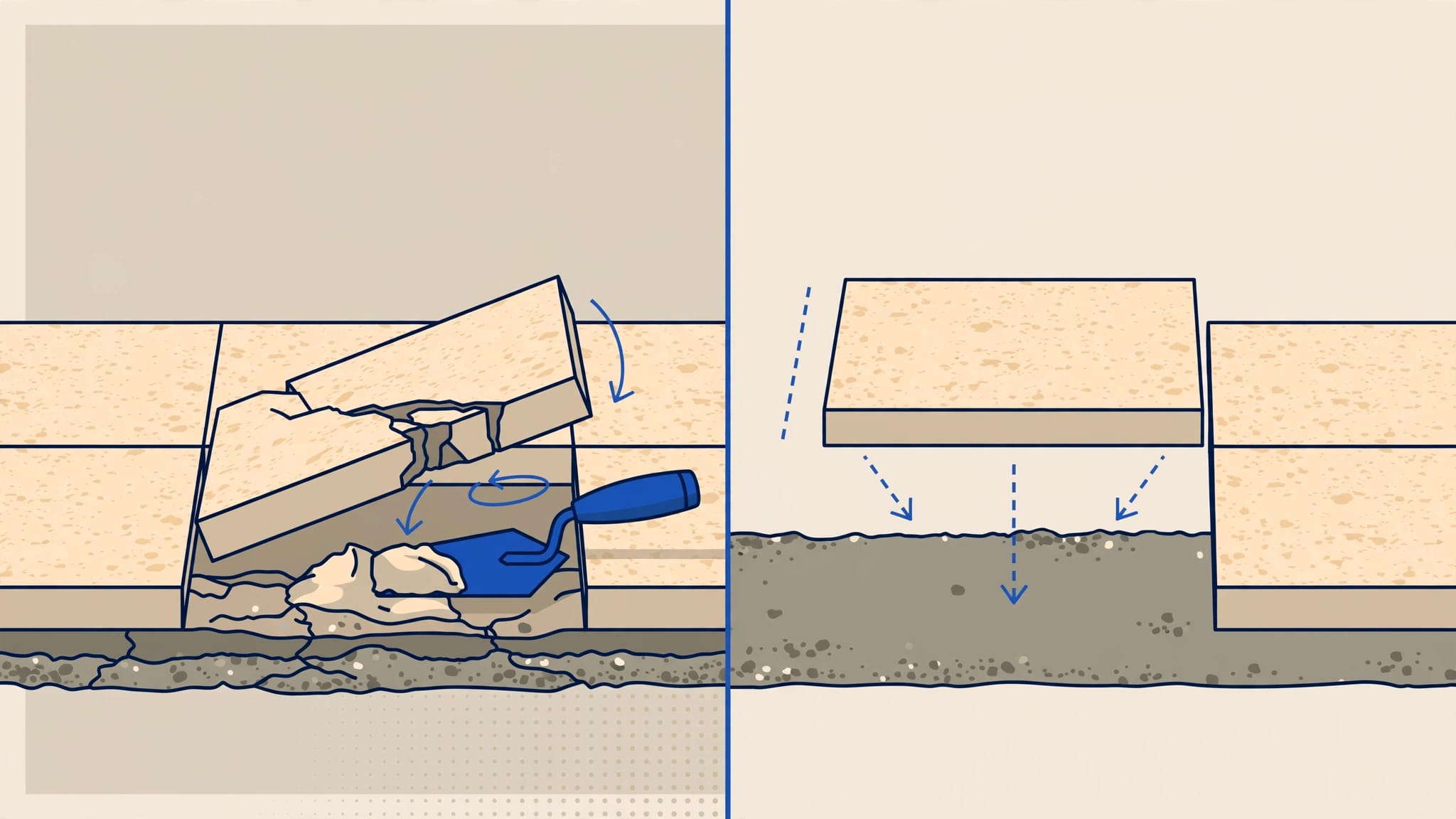
A crack through one stable paver may be a replacement job. Cracks beside sunken or rocking pavers point to structural movement and a base problem first.
Identify the Type of Damage Before Repairing It
I don’t recommend filling a crack before checking whether the stone is stable. A cosmetic repair won’t last if the paver moves every time someone walks across it.
Photograph the crack before cleaning it. Then inspect the damage on a dry, clean surface.
Use a natural stone cleaner if dirt or algae hide the full crack line, and let the area dry completely. Avoid a stone cleaner that leaves residue or obscures the damage.
Check whether the paver rocks under light pressure. Compare the height of both sides, then inspect open joints, low spots, and gaps around the stone. Watch whether water reaches the bedding layer after rain or pool use.
Hairline Cracks, Chips, and Open Breaks
A hairline crack may be a surface issue. It can happen when stone gets hit, when an edge is unsupported, or when old filler fails. Small chips around a corner may also be repairable if the paver is flat and solid.
A wider crack, an open break, or a separated piece is more serious. A paver broken into multiple sections may have a full-depth fracture. If one side sits higher than the other, don’t treat it as a simple cosmetic repair.
Check for these warning signs:
- The paver rocks when you step on it.
- Nearby joints are opening, washing out, or filling with loose sand.
- Several cracks follow the same line across the patio.
- Water sits in one area after rain or pool use.
- The travertine coping along the pool is loose, separating, or cracked.
Those signs usually mean structural movement, not ordinary wear.
Check the Surrounding Pavers
Press gently on the damaged stone and nearby pieces. You shouldn’t feel movement. Look for low spots, missing joint material, or a gap where water can reach the base.
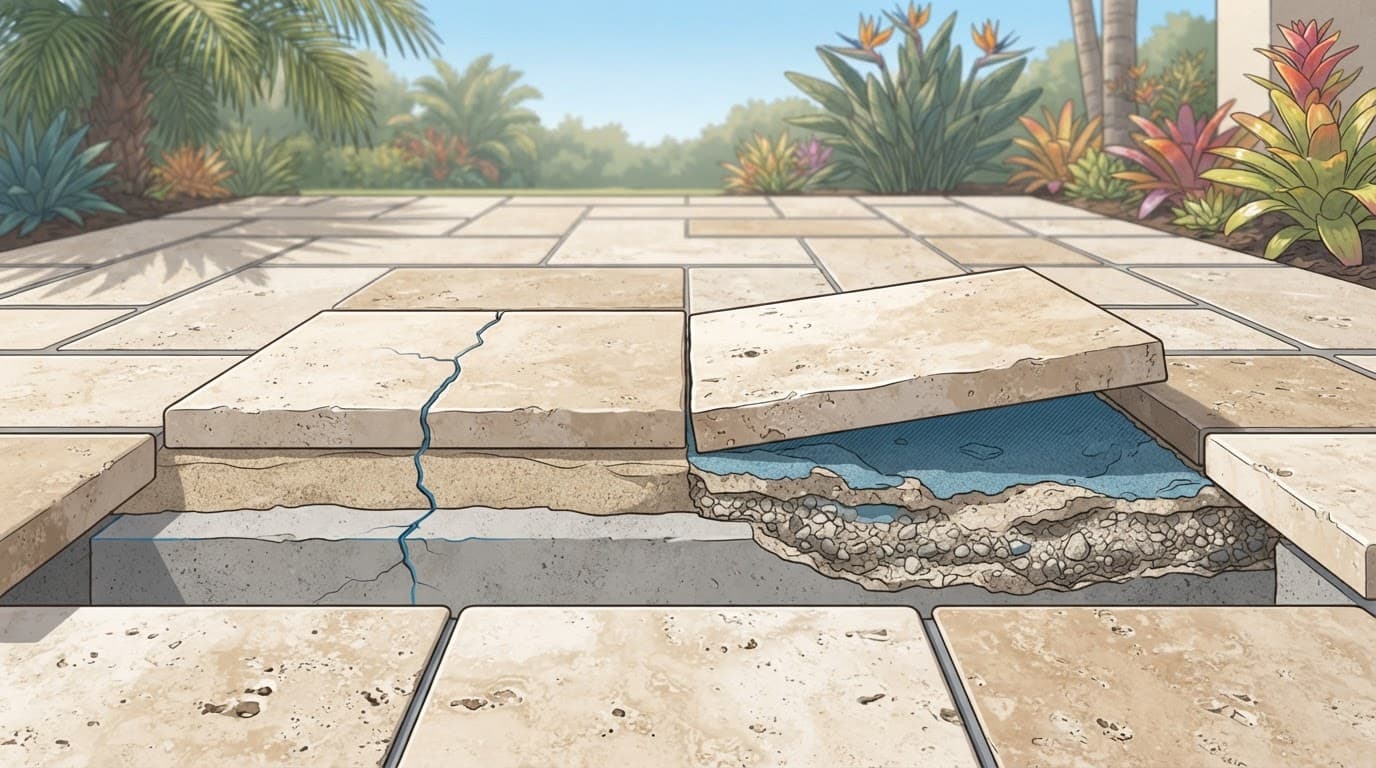
With a concrete base, a crack in the slab can telegraph through the travertine. This is why installers use a crack isolation membrane in appropriate slab applications. The membrane can help manage minor, compatible slab movement, but it can’t correct heaving, settlement, or a severely cracked slab.
Base Preparation and Drainage Prevent Most Cracks
A travertine paver is only as stable as the material below it. A properly compacted aggregate subbase spreads weight and keeps individual stones from shifting. Inspect that support before choosing repair or replacement.
In Southwest Florida, heavy rain is often the bigger concern. Water can move sand, soften soil, and wash out the subbase, leaving pavers without enough support.
Watch Where Water Travels
After a hard rain, walk the area once it is safe and look for standing water. Check whether downspouts discharge onto the pavers, roof-valley runoff reaches the deck, or water drains under the patio edge.
Redirect downspouts and correct runoff paths, especially near low spots. Concentrated water can erode the base under one section of a hardscape over time.
I also look at joint sand, since open joints can let more water into the installation and contribute to erosion. Polymeric sand can reduce joint migration when suitable for the project and installed correctly. It won’t compensate for a failed base or poor drainage.
Cold Weather and Structural Movement
Freeze-thaw cycles are a serious concern in colder states. Water can enter a crack or pore, then freeze and expand, widening the damage. Flexible setting materials may be needed for cold-weather installations, as outlined in this travertine installation guidance.
Florida homeowners don’t face long freezing seasons, but heat, rain, ground movement, and shifting concrete still matter. For properties in areas with winter freezes, stone selection and proper drainage make a major difference in how travertine performs in hot and cold climates, according to this overview of travertine in changing temperatures.
Repair Small, Stable Cracks the Right Way
A small crack is usually a repair candidate only when the paver is level, firmly supported, dry, and free of ongoing movement. Cleaning can reveal the full crack and its loose edges. Filler cannot correct settlement or replace missing support.
The goal is to improve the appearance and keep debris from collecting in the damaged area. It is not a fix for a paver that has lost support.
Clean the Stone Before Using Filler
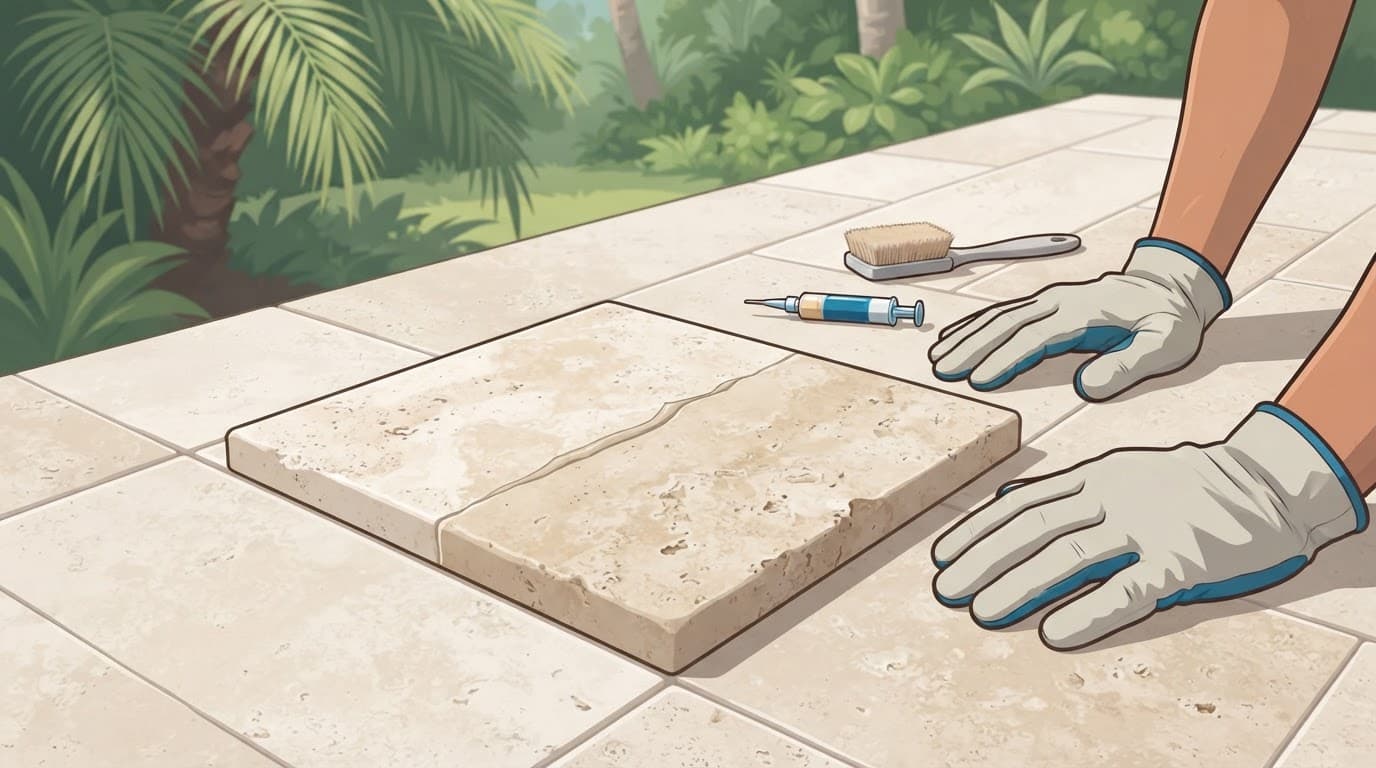
Start by removing furniture, leaves, dirt, and loose pieces from the cracked area. Use a soft brush and a pH-neutral cleaner. The Natural Stone Institute’s care guidance recommends neutral cleaners, stone soap, or mild dishwashing liquid with warm water.
Rinse thoroughly and allow the travertine to dry completely. Filler applied over moisture, dust, algae, or old sealer may fail early.
Avoid acidic or abrasive products, even if marketed as a stone cleaner or travertine cleaner, because they can etch porous natural stone. Harsh degreasers, wire brushes, and high heat can also discolor the surface.
Stone Epoxy or Color-Matched Caulk?
For a narrow, stable crack in the face of a paver, a quality exterior-rated stone epoxy is usually the better choice. It cures hard and can be tinted to match the stone.
An exterior-rated resin filler is an equivalent option when its materials are compatible, and it can also be tinted. A color match epoxy can reduce contrast, but it won’t eliminate the repair’s visibility.
Color-matched caulk is more flexible. It belongs at appropriate movement joints or material transitions, not across a broken paver.
For a small repair, I use this basic process:
- Clean the crack and remove all loose material.
- Let the paver and crack dry fully before applying filler.
- Apply the compatible filler in thin layers.
- Keep the repair level with the surrounding stone.
- Let it cure as directed before walking on it or sealing the area.
Even a careful repair may remain visible up close. If the break is wide, full-depth, unstable, or visually prominent, replacement is often the cleaner option.
Replacement Options for Damaged Travertine Pavers
Replacing one cracked travertine paver is often straightforward when the surrounding installation is stable. The challenge is finding a close match among travertine pavers, including size, thickness, color, finish, and edge profile.
Travertine varies naturally. Pavers from the same product line can still differ in tone, pores, and veining. Check stored material from the original project first. Before installation, compare available replacement travertine pavers in the actual outdoor light.
Replace One Paver When the Base Is Solid
A single replacement makes sense when the damage is isolated. The surrounding pavers should be level, firm, and properly jointed.
The damaged stone is removed carefully to avoid chipping its neighbors. The bedding is corrected, the subbase is checked and re-compacted, and the new paver is reset at the proper elevation so water drains correctly.
Never install a replacement over uneven sand or an unresolved drainage problem. Doing so can cause the same damage to return.
Reset or Rebuild When Multiple Pavers Have Moved
If several pavers are cracked, loose, or sunken, replacing only the visible broken ones may waste money. A localized travertine restoration may be better, with the affected area lifted, the base corrected, and the pavers cleaned, re-sanded, and reset.
Pool-edge coping deserves extra care. A loose or cracked coping stone can affect safety around the pool edge. It shouldn’t be held in place with random caulk or adhesive without checking the support beneath it.
A helpful breakdown of cracked, chipped, and sunken stone conditions is available in this guide to travertine paver repairs.
Clean and Seal Travertine Without Causing More Damage
Cleaning matters after the cause of a crack has been corrected, but it needs control. Excessive pressure can etch softer natural stone, remove joint sand, and strip old sealer in uneven patches.
I never treat a pressure washer like a tool for blasting away every problem. Use a wide spray pattern, proper distance, and a test area first. For delicate surfaces or organic buildup, choose a compatible travertine cleaner and low-pressure soft wash.
If runoff affects a patio, walkway, or pool deck, correct the drainage source first. Redirect the water or repair failed drainage before cleaning, since stain removal won’t repair settlement or a washed-out base.
After cleaning and repairs, a sealer can help reduce staining. It can also make maintenance easier, but it can’t stabilize a moving paver, rebuild a washed-out base, or hide a broken stone. Sealing travertine should follow complete cleaning, drying, and repair.
When Professional Help Is the Better Choice
DIY repair is reasonable for a small, stable crack. It is not the best choice when pavers move, drainage fails, several units are damaged, or pool-edge stones are loose.
I recommend an inspection for repeating cracks, rocking or sunken pavers, missing joint material, standing water, failed drainage, multiple damaged units, or a cracked slab. Loose travertine coping around a pool also needs expert evaluation, not random adhesive or caulk. A qualified contractor should assess the travertine pavers, joints, bedding, subbase, drainage path, concrete base where applicable, and nearby roof or gutter runoff. That assessment helps determine whether to repair, reset, or replace the damaged area.
Professional travertine restoration may combine cleaning, joint repair, base correction, paver resetting, and sealing. Consult a qualified travertine hardscaping professional for a clear recommendation. Get a Quote for an assessment.
Frequently Asked Questions
Should I repair or replace a cracked travertine paver?
Repair may be appropriate for a small, stable, hairline crack in a level and well-supported paver. Replace the stone when the crack is wide, full-depth, unstable, or visually prominent.
Why do travertine pavers crack?
Common causes include base settlement, water washout, poor drainage, ground movement, excessive vehicle loads, and poor installation. Cracks in several nearby pavers usually point to a support or drainage problem rather than normal foot traffic.
Can I use epoxy on a travertine paver crack?
A quality exterior-rated stone epoxy can work for a narrow, stable crack after the stone is cleaned and completely dried. It will improve the appearance, but it cannot stabilize a moving paver or repair missing support beneath it.
When should I call a professional for travertine paver cracks?
Professional help is recommended when pavers rock, sink, or crack repeatedly, when several units are damaged, or when standing water and failed drainage are present. Loose or cracked travertine coping around a pool also needs expert evaluation for safety and proper support.
Protect the Patio Before a Small Crack Spreads
Most damage starts with a support or water problem, not normal use. A small repair can look good and last when travertine pavers are dry, stable, and properly supported.
Check drainage after heavy rain, maintain sound joints, and clean natural stone gently. The best repair is one that corrects the cause, including support, drainage, and movement, rather than hiding visible damage. Sealing travertine should come after the surface is clean, dry, stable, and properly repaired.