
That washed-out patio look does not happen by accident. I see it all the time in Florida, where a driveway built with brick pavers or a pool deck featuring travertine pavers that had rich color just a few summers ago now looks pale, dry, and uneven.
The sun gets most of the blame, and it should. But heat, rain, salt, and worn-out sealer usually tag along. That is why faded brick travertine shows up so often on homes near the coast and inland.
Once you see how those forces work together, the color loss makes a lot more sense.
Key Takeaways
- The Sun is Only Part of the Story: While Florida’s intense UV rays are the primary culprit, fading is accelerated by a combination of extreme heat, humidity, salt, and the breakdown of protective sealers.
- Surface Damage Varies by Material: Brick pavers typically fade due to surface wear and pigment loss, while travertine often looks washed out because its color-enhancing sealer wears down and the stone’s natural pores become etched or dull.
- Early Warning Signs: Look for flat color when dry, uneven texture, or eroding joint sand as early indicators that your protective sealer has failed, rather than waiting for the surface to look completely bleached.
- Proactive Restoration: Professional cleaning and re-sealing can restore depth and protection to your hardscapes, but it is vital to avoid aggressive pressure washing that can erode the stone further.
Florida’s sun doesn’t work alone
Florida sunlight is hard on exterior surfaces because it never takes much of a break. Whether it is a pool deck or an outdoor patio, pavers sit in direct sunlight for long stretches, and they do it month after month, not only in peak summer.
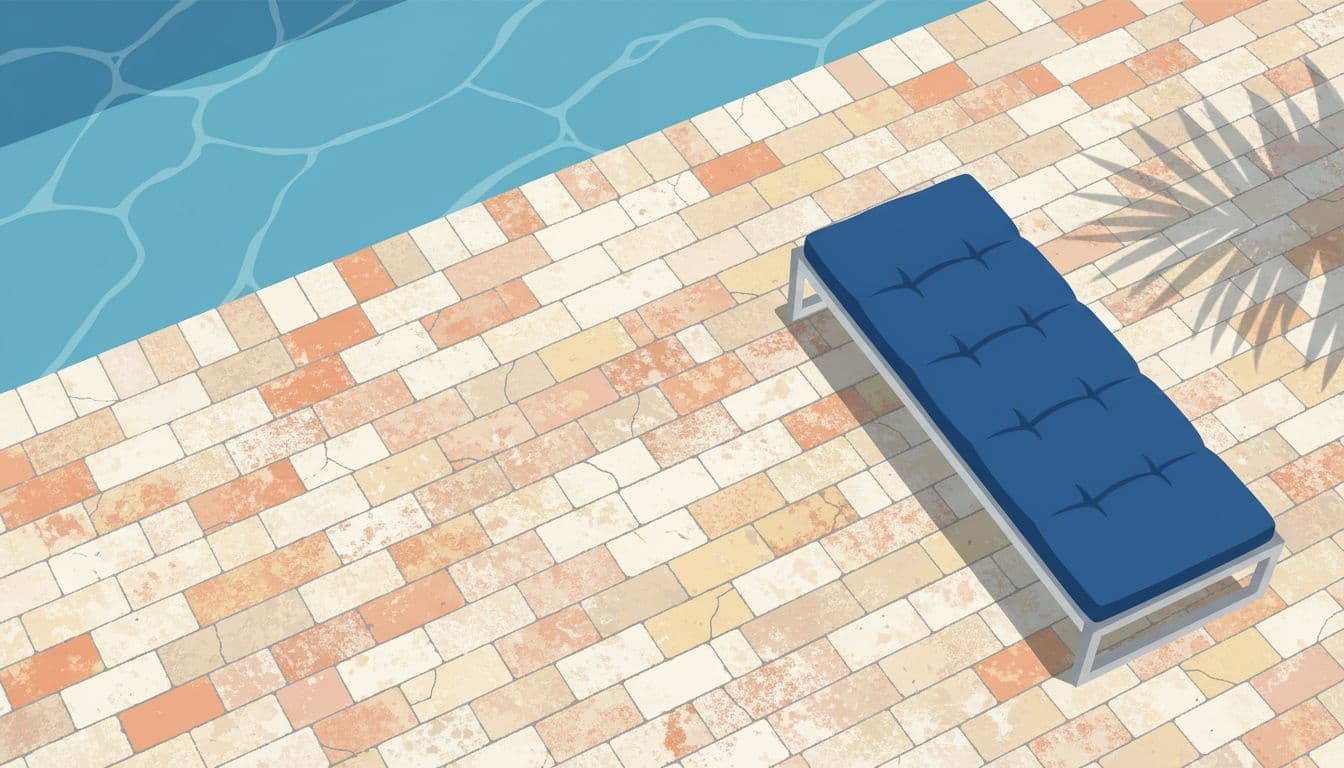
That matters because sun exposure does more than warm the surface. Consistent UV exposure breaks down sealers, weakens color enhancers, and dries out the finish that gives brick, travertine, and concrete pavers their depth. When that finish thins out, the surface starts looking chalky, flat, or dusty. Homeowners call that fading, and they are right, even when the material itself is not bleaching the way fabric would.
Heat makes it worse. A paver surface can get much hotter than the air around it. This heat, combined with direct sunlight, triggers oxidation, which further degrades the aesthetic quality of the stone. Then a rainstorm rolls through, the stone cools off, water gets pulled into pores, and the next sunny stretch bakes it again. I think of it like repeatedly wetting and drying a sponge left on a windowsill; it does not stay fresh looking for long.
Florida also adds moisture, salt, and mineral heavy water into the mix. Pool splash out, sprinklers, and humid air all leave traces behind. Over time, those traces, along with a common condition known as efflorescence, can create a pale film or dull layer that makes materials look even more faded. So yes, the sun is the headline, but the full story involves UV rays, heat, oxidation, and constant weather swings wearing down the surface from the outside in.
Brick and travertine fade in different ways
Brick pavers and travertine do not lose color the same way. They may end up with a similar washed out look, but the path to that appearance is quite different.
With many clay pavers, the first thing I notice is a loss of richness at the surface. Because these are manufactured, the color pigment can start to look dry as the face wears down, the color turns patchy, and the high traffic spots go flat first. On some surfaces, older sealer breaks down and leaves an uneven finish. On others, the top layer simply wears enough that the color no longer reads the same from a distance.
Travertine is different. It is a natural stone, so homeowners often expect it to hold its color forever. Much like limestone pavers, the stone itself can stay structurally sound and still look faded. Why? Because travertine often loses its warmth when the color enhancer sealer wears off, the surface gets lightly etched, or the pores collect residue that mutes the natural variation of the natural stone.
Here is the quick side by side view I use when I inspect a faded surface:
| Surface | What the sun and heat wear down first | What you notice first | How it usually looks |
|---|---|---|---|
| Brick pavers | Surface finish, pigments, old sealer | Patchy color, dull face, lighter traffic lanes | Dry and uneven |
| Travertine | Color enhancer sealer, top finish, pore clarity | Flat tone, less contrast, chalky patches | Pale and washed out |
The big takeaway is simple. Brick often looks faded because the top face has lost depth. Travertine often looks faded because the finish and natural contrast have gone missing. In both cases, homeowners end up staring at the same problem, a hardscape that looks tired before its time.
That difference matters when it is time to fix it. What wakes up brick may not be the right move for travertine, especially around pools where it is vital to maintain a slip resistant surface that remains safe for bare feet.
Why some areas lose color faster than others
If you have ever wondered why one corner of the patio still looks good while the rest looks worn out, there is a reason. Sun exposure is rarely even.
South-facing and west-facing areas usually take the worst hit. Pool decks get extra glare from the water. Driveways deal with tire traffic, engine heat, and oil drips on top of full sun. Walkways near landscaping may stay damp longer, which sets up another round of moisture and heat stress the next day. In these areas, you might also notice that the joint sand between your pavers starts to wash away, or that the polymeric sand used for stability has begun to degrade, leaving the edges of your brick or travertine vulnerable.
I can often trace the sun path across a surface by the color change alone. The spots under furniture may stay deeper in tone. The open center fades faster. The area near a downspout may look lighter from mineral buildup, while the deck edge near the pool looks flat from salt and chemical splash-out.
If one section looks pale and another still has depth, the surface is showing you where the weather hits hardest.
Shade can be deceptive too. A shaded area may stay darker, not because it is healthier, but because it holds moisture and creates a breeding ground for mold and mildew. Then the bright area beside it looks even more faded by comparison. I have seen homeowners attempt pressure washing on one side, only to step back and think the other side suddenly faded overnight. It did not. The contrast finally became obvious. It is important to note that while cleaning is necessary, aggressive pressure washing can sometimes cause surface erosion, which further strips the color from your stone or brick.
This is also why faded brick and travertine do not improve with a quick rinse. If the issue is a worn finish, UV exposure, or surface etching, water will not bring the color back. It may look better for an hour, then dry right back to that dull, thirsty look.
How I slow the damage and bring color back
The first step in effective paver restoration is never guessing. I need to determine whether I am looking at organic dirt, mineral haze, old sealer failure, or true surface wear. These issues can look identical from ten feet away, but they require entirely different treatment plans when inspected up close.
A professional cleaning is always the priority. This process often includes removing mildew, lifting stubborn residue from sprinklers or salt water pools, and stripping away old, failing sealers that have turned cloudy. If you skip this preparation, a new finish will simply lock those problems in place, making your exterior surfaces look worse instead of better.
Once the area is clean and dry, sealing pavers is usually what makes the most significant visual impact. A high-quality water-based seal does not work like paint, as it does not cover up damage with an opaque layer. Instead, it restores natural depth, minimizes water intrusion, and slows the next round of UV wear. For travertine pavers, which have a naturally porous surface, the right product provides deep protection to help maintain long-term structural integrity without making the deck slippery. On brick surfaces like Chicago brick or textured tumbled pavers, the right finish helps colors read as rich and vibrant again.
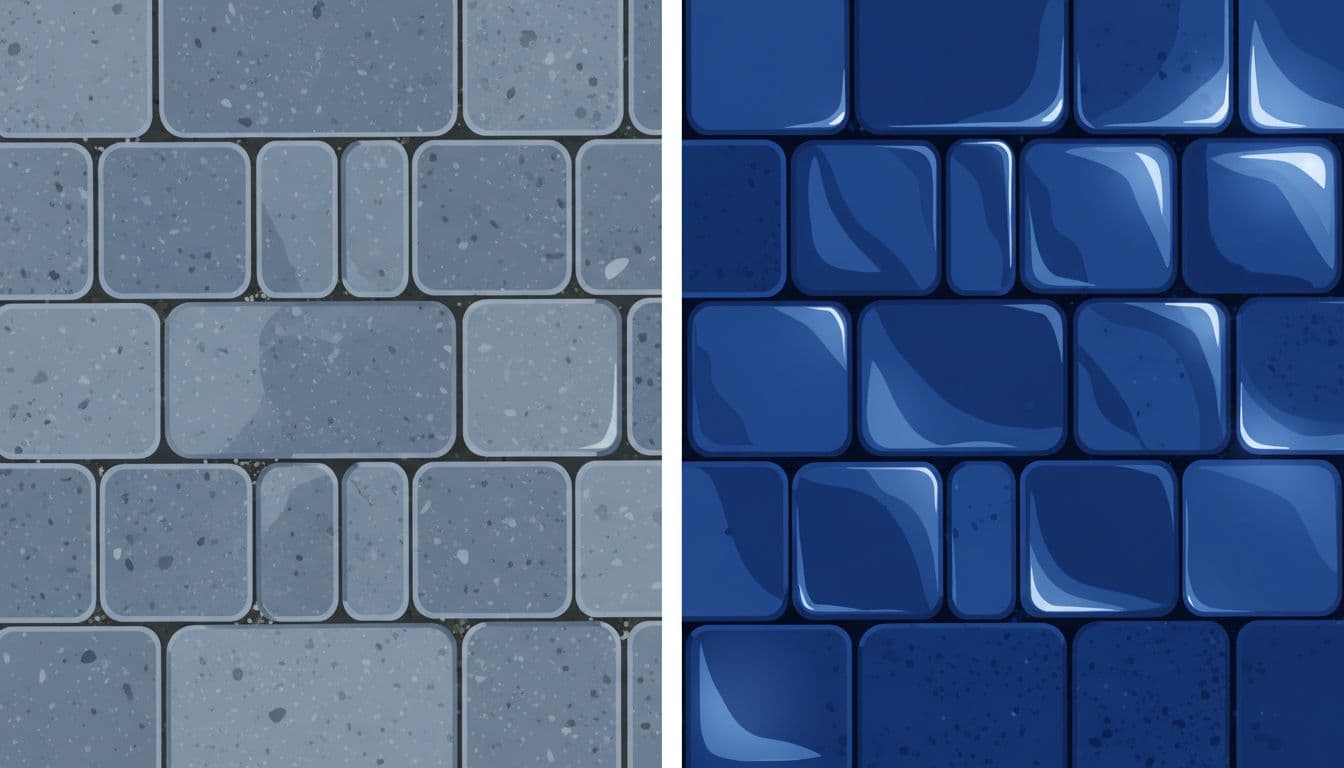
I also advise homeowners not to wait until their surfaces look completely spent. Subtle signs often appear early. The color may start to look flat after rain dries, joints begin losing sand, or the deck feels rougher under bare feet. These are clear warnings that your protective layer is thinning out.
If your patio, driveway, or pool deck is beginning to show that faded brick and travertine look, Get a Quote and have the area professionally evaluated before the wear accelerates. Catching these issues early is always more cost-effective than attempting to restore a surface that has been baking unprotected under the harsh sun for years.
Maintenance does not have to be constant, but it does need to be timely. In Florida, the process of sealing pavers is a matter of timing that matters more than most homeowners realize.
Frequently Asked Questions
Why does my pool deck look faded even though I just cleaned it?
If your pavers appear dull or chalky shortly after cleaning, it is likely because the protective sealer has fully worn off or was not properly maintained. Water or standard cleaning only removes surface dirt, but it cannot restore the deep, vibrant color that requires a high-quality sealant to bring out the material’s natural contrast.
Can I use the same sealing products for both brick and travertine?
While both materials benefit from professional sealing, the products used are often different because the surfaces have distinct needs. Travertine requires specialized, breathable sealers that preserve its natural texture and slip resistance, whereas brick pavers may require different formulations to stabilize pigments and prevent patchiness.
Will pressure washing bring back the color of my pavers?
No, aggressive pressure washing can actually do more harm than good by stripping away the remaining protective finish and potentially causing surface erosion. If your pavers have lost their color due to UV damage or sealant failure, cleaning is only the first step; you must apply a professional-grade sealer to restore the visual depth.
Why does one side of my patio look worse than the other?
Fading is rarely uniform because sun exposure changes throughout the day based on the orientation of your home. Areas facing south or west, or those subjected to constant pool splash-out and moisture, will naturally degrade faster than shaded or protected sections, leading to the uneven, patchy appearance you see.
Conclusion
Florida sun fades pavers because it keeps working, day after day, on the part of the surface you actually see. Add heat, rain, salt, and worn-out sealer, and the color starts dropping fast. While our climate does not experience the harsh freeze-and-thaw cycle common in the north, the relentless combination of UV exposure and organic growth is equally damaging to your hardscapes.
What looks like simple fading is often a mix of UV damage, finish loss, and surface buildup. The good news is that color loss often starts at the surface, which means it can often be cleaned, restored, and protected before the hardscape looks far older than it is. Ultimately, sealing pavers remains your best defense for preserving the vibrant look of your patio or driveway.
If your brick or travertine already looks pale by noon and patchy by sunset, the weather has been winning for a while.