
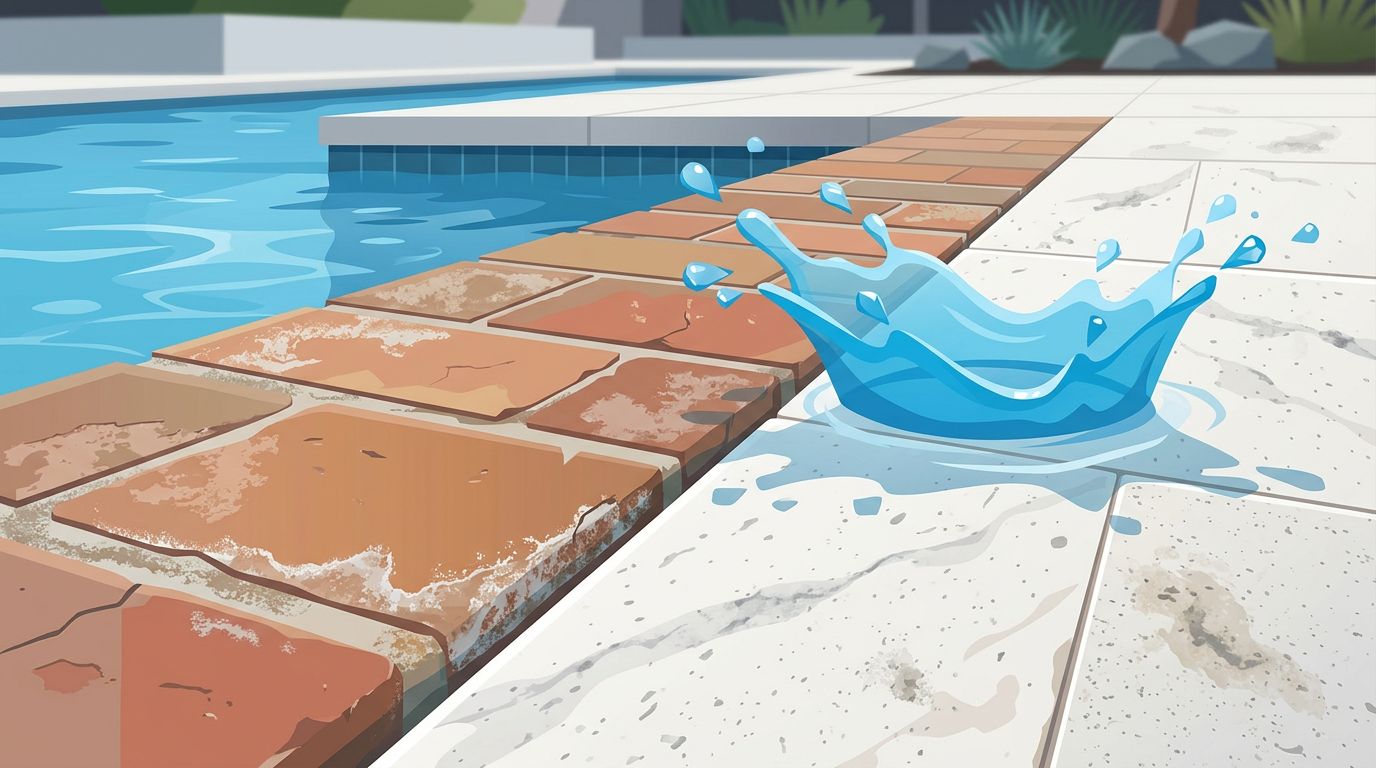
A pool deck can look solid for years, then start aging all at once. I see it happen around the waterline first, where pool splash on brick and travertine keeps hitting the same few feet of surface day after day.
If your pavers look dull, gritty, or lighter in patches, the problem may not be bad material. It is often the result of water, sun, and chemistry performing slow, persistent damage to your travertine pool deck. Maintaining a durable pool decking surface requires understanding these environmental factors early on, because what starts as minor wear will not stay small for long.
Key Takeaways
- The Splash Zone Cycle: Constant exposure to pool water, salt, chlorine, and minerals leads to a destructive cycle of wetting, evaporation, and residue buildup that accelerates surface erosion.
- Material Vulnerability: Brick and travertine have porous compositions that make them susceptible to fading, etching, and mineral deposits when moisture and chemicals penetrate the surface.
- Early Warning Signs: Watch for visual cues like chalky brick, dull or pitted travertine, and thinning joint sand, all of which indicate that the material’s protective finish is failing.
- Proactive Protection: Consistent maintenance, including proper cleaning techniques and high-quality sealing, is essential to lock pavers together and prevent long-term structural degradation.
Why pool water hits pavers harder than most homeowners expect
When I look at a worn pool deck, I do not just see water. I see a cycle.
Pool water splashes out, sits on the surface, then evaporates. What gets left behind matters. Chlorine, salt, minerals, sunscreen, body oils, and fine dirt do not vanish with the water. They stay on the brick or travertine pavers and keep working on the surface.
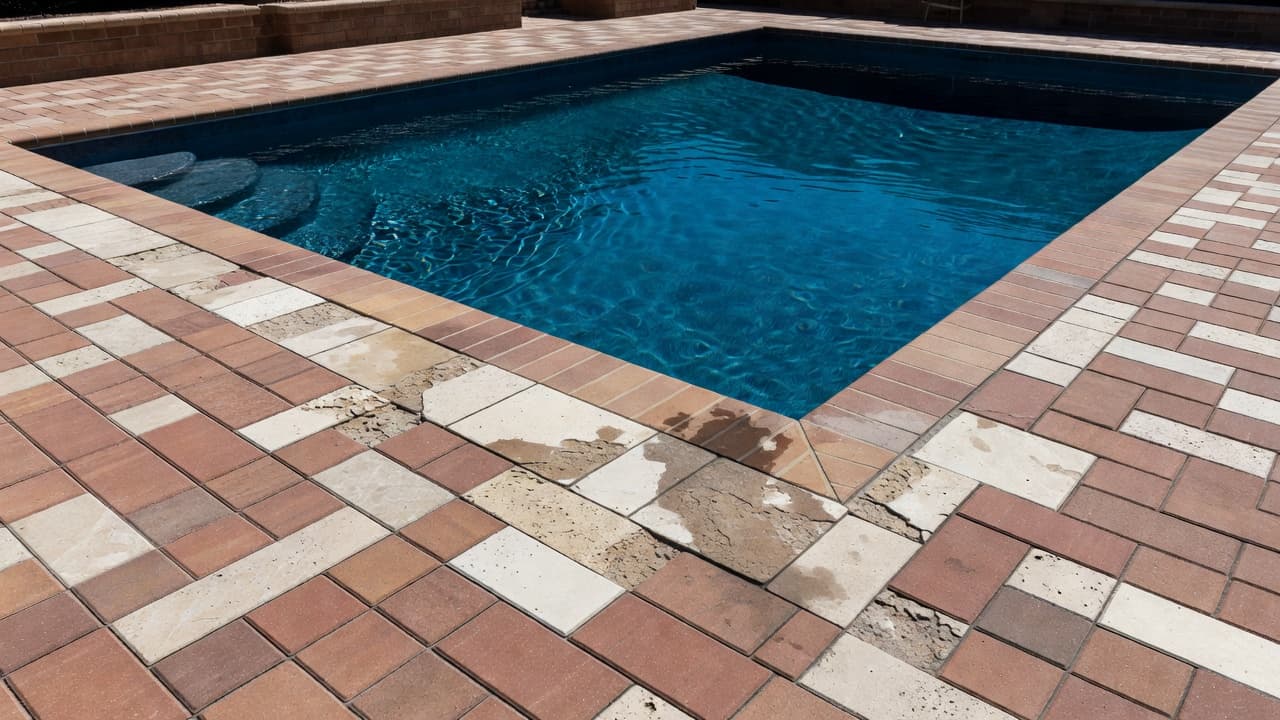
Brick is porous, so it absorbs moisture easily. Travertine is a type of natural stone often chosen for an outdoor pool area because it offers excellent heat resistance and remains cool underfoot. However, it is not invincible. It features natural voids and a softer composition than many people realize. That means both materials react to repeated wetting, especially in hot weather.
The sun makes the problem worse. In Southwest Florida, a deck can go from soaked to bone-dry very fast. That constant wet-dry shift puts stress on the surface and the joints between pavers. Add heavy foot traffic, lounge chairs, and weekend activity, and the splash zone starts wearing down much faster than the rest of the deck.
A saltwater pool does not get a free pass, either. While the water often feels gentler on skin, it still leaves a chemical residue behind. When salt crystals dry on the surface, they can roughen the stone, fade the color, and penetrate the joints over time.
A pool deck rarely fails all at once. It fades, loosens, and roughens a little at a time.
That is why this kind of damage sneaks up on homeowners. The deck still functions, so the warning signs get ignored. Then, just one season later, the surface feels significantly older than the house around it.
What brick and travertine damage usually looks like
The wear pattern tells the story. I can often spot the splash line before I know anything about the pool.
On a red brick border, the first clues are usually color change and texture loss. The pavers may look chalky, pale, or blotchy. Sometimes I see white mineral deposits, which people confuse with dirt. Joint sand can thin out near the pool coping, and once that sand starts leaving, the pavers have less support.
Travertine shows damage a little differently. These natural stone tiles may lose their smooth feel and start looking dry or etched. Filled travertine can lose filler in small spots, while the edges soften and pits open up. In bad cases, the surface starts holding more dirt because the finish is no longer tight. If you have a lighter variety like silver travertine, you will notice that this etching quickly ruins the aesthetic appeal, making the surface look dull and worn rather than polished.
This quick comparison helps make the pattern easier to spot.
| Material | Early warning signs | Later-stage problems |
|---|---|---|
| Brick | Fading, chalky film, joint sand loss | Surface wear, movement, stained pores |
| Travertine | Dull finish, light etching, opened pits | Edge wear, filler loss, deeper staining |
The big takeaway is simple. Brick often shows wear through absorption and fading. Travertine often shows wear through surface breakdown.
A lot of homeowners assume the deck only needs cleaning. Sometimes that is true, but often it is not. If the stone tiles or bricks have already lost joint sand, taken on residue, or started breaking down at the face, cleaning alone will not reset the clock.
I also watch the pool coping and the first few rows of pavers around the water. Those areas take the most abuse. Kids jump in the same corner, people climb out at the same step, and water constantly drips from towels, feet, and pool floats. The deck remembers all of it.
Why the splash zone breaks down faster than the rest of the pool deck
Not every square foot around a pool ages the same. That is what makes splash damage easy to miss.
The traffic path to the deep end may stay in decent shape. The shaded corner near the screen door may look fine. But the band right next to the pool often gets hit every single day, even when nobody notices it happening.
That zone deals with four problems at once. It gets water, heat, chemical residue, and friction. Each one alone is manageable. Together, they wear on the surface like sandpaper used a little at a time.
I also see damage speed up when old sealer starts failing unevenly. One patch still repels water, while the next patch absorbs it due to the porous texture of the stone. That creates a spotted look and inconsistent wear, especially on a travertine pool deck.
Cleaning habits can add to the problem. A lot of people reach for high-powered pressure washing because it looks fast. Used the wrong way, it strips joint sand, opens up the natural stone, and pushes water deeper into the outdoor pool area where it should not go. That is why I never treat brick and travertine like plain concrete.
Here are a few signs I tell homeowners not to ignore:
- Water darkens the same pavers much longer than the surrounding deck.
- Sand keeps showing up in the pool or along the edge.
- Bare feet catch on rough spots that were not there before.
- The surface feels more slippery, compromising the safety of your slip-resistant surface, even after it looks clean.
Once you notice two or three of those at the same time, the deck is asking for attention. Waiting usually means the repair gets bigger, not smaller.
How I protect brick and travertine before splash damage gets expensive
The best approach to preservation is through consistent routine maintenance, starting with the right kind of cleaning rather than the harshest one.
For pool decks, I ensure the surface is clean enough to remove residue without tearing the material apart. That may include controlled pressure washing, but I always use the right tip, maintain a safe distance, and manage expectations. On nearby surfaces affected by organic growth, a soft wash approach often makes more sense. While travertine is a popular and durable choice for an indoor kitchen backsplash, it faces much harsher conditions outdoors. The goal is always to clean with control instead of blasting everything in sight.
Once the surface is clean, I examine the joints and the overall water drainage. If sand is low, it needs attention before sealing. This re-sanding phase is a vital part of the installation process because joint sand is not just cosmetic; it helps lock the pavers together to reduce movement. If you skip this, the sealer will not solve the structural problem.
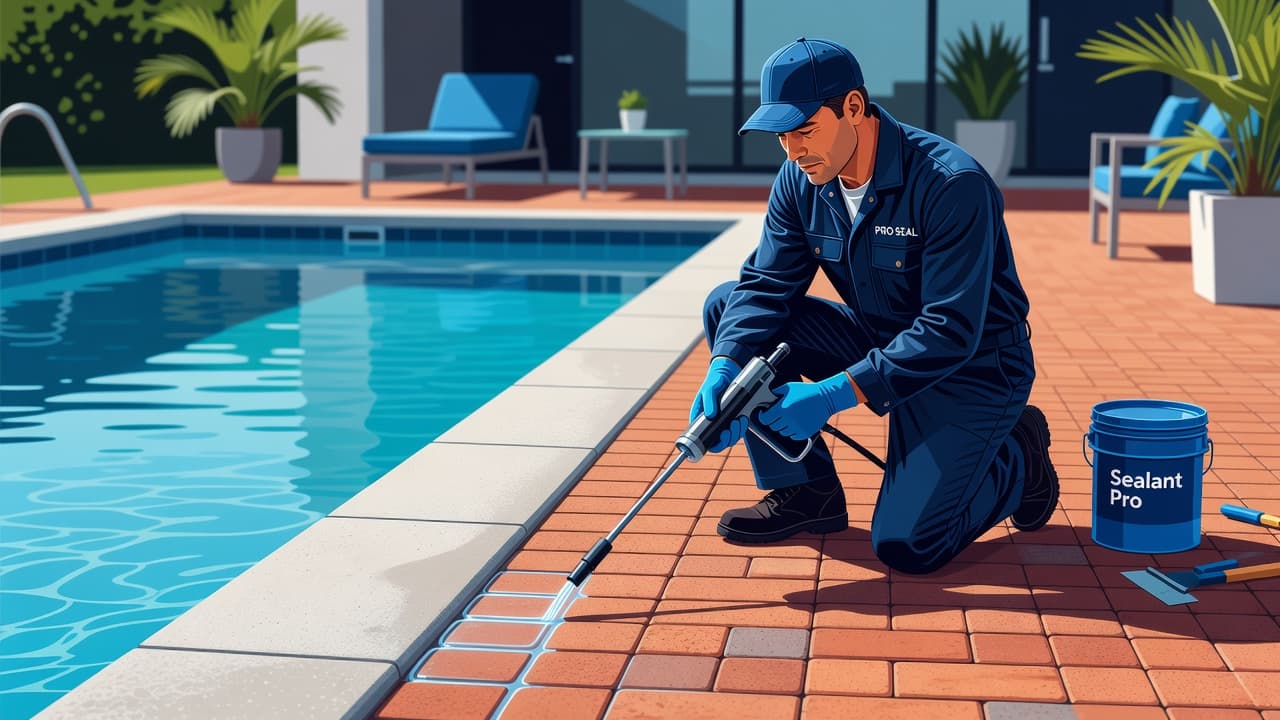
After the joints are stabilized, paver sealing becomes the final barrier. Applying high-quality, weather-resistant coatings helps slow water absorption, reduce staining, and make routine cleanup much easier. It does not make the deck bulletproof, but it gives brick and travertine a fighting chance against daily splash. Around pools, I want that protection refreshed before the surface looks tired, not after.
This is the same logic I use for other exterior care. Homeowners understand the value of roof cleaning before black streaks get out of hand. They understand driveway sealing before pavers fade and weeds move in. Pool decks deserve the same mindset because they endure constant weather punishment, topped with the harsh effects of chlorinated or salt water.
If your pool deck already looks worn, it is smart to deal with it early. You can Get a Quote for sealing or pressure cleaning before minor splash wear turns into joint loss, surface damage, and a significantly larger restoration job.
When I think a homeowner should stop waiting and call for help
Some pool deck problems are still simple. Others are already past the do-it-yourself stage.
If pavers are rocking underfoot, the issue is not only surface wear. If a travertine pool deck has missing filler in multiple areas, or if the edges of honed and beveled stone tiles start to degrade, that usually means the deck needs more than a quick rinse. If brick keeps showing white residue soon after cleaning, water is still moving through the surface and bringing minerals with it.
I also get concerned when a deck looks clean for two days, then goes dark and blotchy again. That often points to deeper absorption, uneven sealer failure, or trapped contamination in the pores.
A professional should know when to clean lightly, when to re-sand, and when sealing is worth it. They should also understand the limits of natural stone restoration, including when pressure washing will help and when it will strip out the stability your pavers need. That is the difference between simple maintenance and accidental damage.
Pool decks are expensive to replace, and ignoring these warning signs is the fastest way to turn a routine cleaning into a full pool remodel. Most homeowners do not need a complete redo. They need the surface cleaned correctly, protected at the right time, and inspected before splash damage spreads.
Frequently Asked Questions
Can I use a pressure washer to clean my travertine deck?
While cleaning is necessary, high-pressure washing can damage natural stone by stripping away protective finishes and washing out joint sand. It is best to use controlled, low-pressure techniques or soft washing methods to avoid etching the surface or compromising the stability of the pavers.
Why does my pool deck look dull even after I clean it?
If your deck looks dull shortly after cleaning, the porous surface has likely lost its protective sealer, allowing deep-seated contaminants and minerals to remain trapped inside. When the stone or brick becomes too porous, it absorbs water and residue rather than repelling them, resulting in a perpetually blotchy or faded appearance.
How often should I seal my brick or travertine pool deck?
There is no one-size-fits-all timeline, but you should refresh your sealer before the deck begins to show obvious signs of wear, such as increased absorption or loose joint sand. Applying a high-quality, weather-resistant sealer proactively ensures a barrier remains intact, preventing splash damage from turning into costly structural repairs.
Is salt water more damaging to pavers than chlorine?
Both can be damaging, but salt water leaves behind crystals that can physically roughen the stone surface and accelerate the breakdown of joint integrity. Even if the water feels gentle on your skin, the salt residue acts as a persistent abrasive that necessitates regular, careful rinsing and consistent sealing.
Final thoughts
Pool water looks harmless because it arrives a few drops at a time. That is exactly why it wins. Small, repeated splashes are what wear down brick and travertine long before most homeowners expect it.
If I could give one piece of advice, it would be this: do not wait for obvious failure. When the surface starts fading, roughening, or losing sand, professional protection matters more than scrubbing harder. By taking a proactive approach to maintenance, you can ensure your pool deck remains durable pool decking for years to come. Ultimately, a properly sealed surface creates a weather-resistant barrier that keeps your patio looking its best despite constant exposure to pool water.