
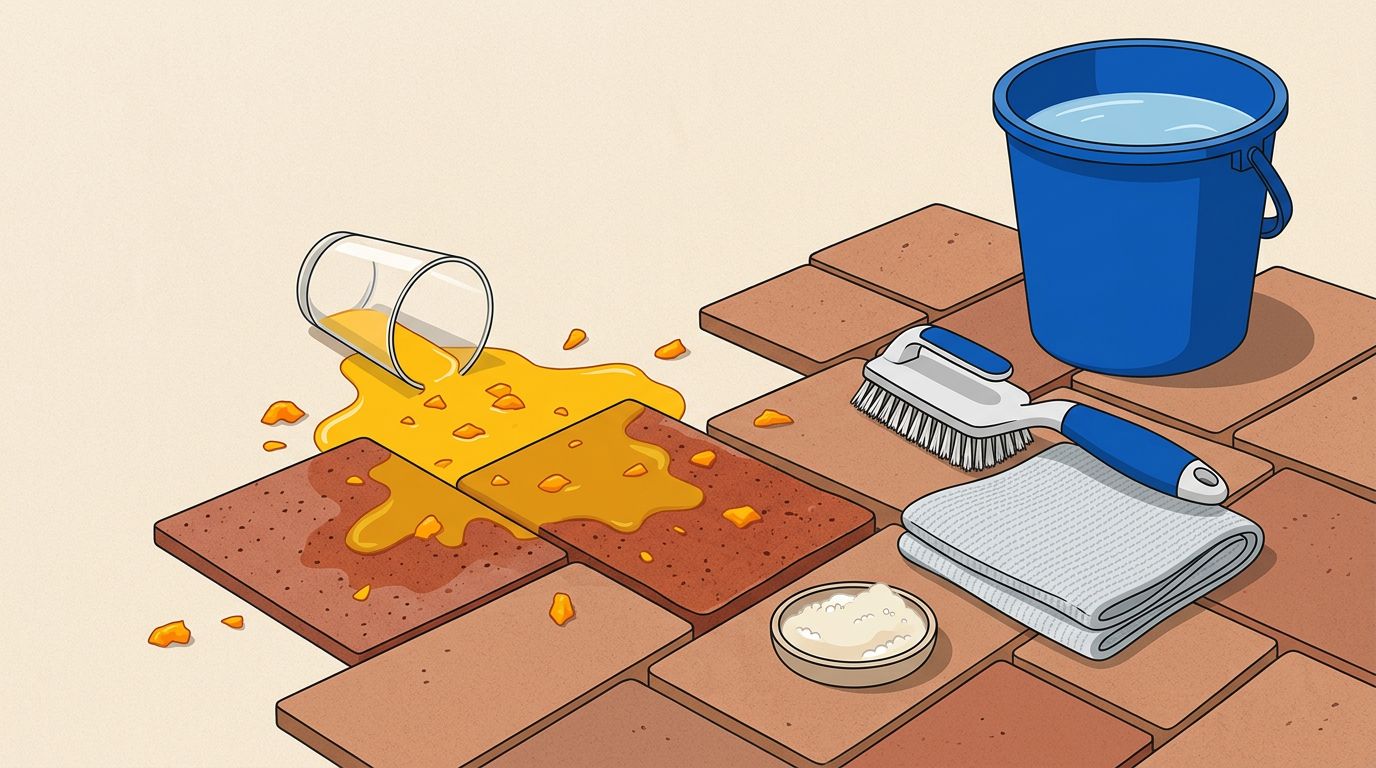
A tipped glass of mango juice can leave a sticky yellow-orange mark on a clean patio, lanai, or driveway. Its sugar, pulp, and natural color can settle into porous pavers and attract more dirt.
I start with the mildest cleaning method and inspect the pavers again after they dry. This protects the brick face and sealer, while aggressive rinsing can disturb the joint sand. This approach also helps you remove oil stains from pavers when mango smoothies contain cream, coconut milk, or another oily ingredient.
Key Takeaways
- Start with the mildest method: lift loose pulp, blot fresh juice, rinse with lukewarm water, and use mild dish detergent.
- Scrub with a nylon brush and let the pavers dry completely before deciding whether a stain remains.
- Mango smoothies containing oil may require absorbent material, a paver-safe degreaser, or a poultice to remove oil stains from pavers.
- Use pressure washing only as a controlled rinse, since excessive pressure can damage the paver face and remove joint sand.
- Treat rust separately, avoid casual use of vinegar or bleach, and seal pavers only after the stain is gone and the surface is fully dry.
Why Mango Juice Leaves a Mark on Porous Pavers
Most fresh mango spills are manageable because the juice is water-based. Mango is one of several organic stains that can darken as residue dries. The residue may include a tacky sugar film, fruit pigments, trapped pulp, or smoothie oil that soaks into pores.
Brick pavers and concrete pavers have small pores, and their surface porosity holds moisture, sugar, and other residue. Textured surfaces can also trap mango pulp in low spots. Rain may spread the stain into nearby joints, while foot traffic presses the remaining material farther into the paver.
Natural stone pavers, including travertine, need more care. Acidic cleaners and aggressive scrubbing can dull or etch the stone. A masonry-labeled enzymatic cleaners may help with fruit residue. Spot-test any product on an inconspicuous area, especially on travertine.
| Stain condition | Best starting method | Main concern |
|---|---|---|
| Fresh mango juice | Blotting, lukewarm water, and mild detergent | Spreading the spill |
| Dried sugar or pulp | Plastic scraper, detergent, and nylon brush for delicate or sealed surfaces; one stiff-bristled brush only for durable brick or concrete | Scratching the surface |
| Mango smoothie with oil | Use absorbent materials such as kitty litter or another clean powder, then a degreaser | Oil soaking into the pores |
| Orange mark with rust | Rust-specific treatment | Chlorine bleach can worsen rust |
The main point is simple: remove the sticky material before using stronger stain treatments. Fat-containing drinks need a different sequence, so remove oil stains from pavers by absorbing the oil before applying a degreaser. This is the safest way to remove oil stains from pavers, since aggressive washing can drive fat deeper into the pores. Blasting the area too early can spread the residue and wash out the surrounding joints.
When mango juice stains brick pavers, start gently
Before cleaning, remove nearby furniture, toys, and other items, then follow this controlled paver stain removal process. Wear gloves and eye protection as basic protective gear. Keep children and pets away until the pavers are rinsed and dry.
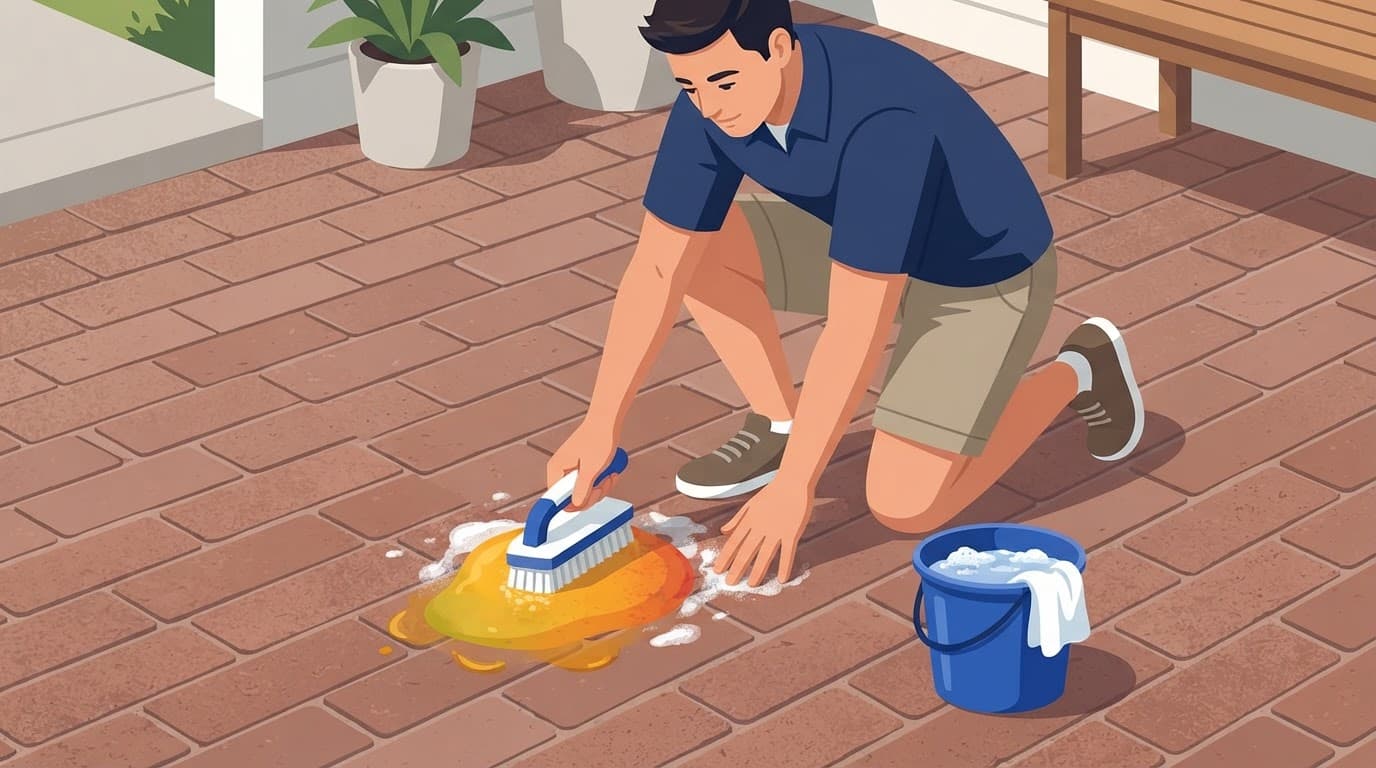
- Lift loose material first. Use a soft broom for dirt and a plastic scraper for dried mango pulp. Hold the scraper nearly flat, and don’t use a metal blade.
- Blot a fresh spill. Press clean towels onto the juice instead of rubbing it across the paver. Replace the towels as they become saturated.
- Rinse with lukewarm water. A bucket or garden hose with a gentle flow is enough for the first rinse. Avoid boiling water, which can damage sealers and create unnecessary thermal stress.
- Mix a mild detergent solution. Add a small amount of liquid dish soap to lukewarm water. This is also the safest starting point to remove oil stains from pavers after a creamy or oily mango drink. Apply it to the stain and let it sit for several minutes so the soap can loosen the sugar film.
- Agitate with a nylon brush. Use a soft or medium nylon brush, working across the paver surface. On sound, unsealed brick only, a stiff-bristled brush may be used carefully. Avoid a wire brush and avoid grinding hard into the joints.
- Rinse the area thoroughly. Move the dirty water away from clean pavers and nearby walls. Don’t allow the residue to dry around doors, screens, pool equipment, or landscaping.
- Let the pavers dry completely. A wet paver can hide a remaining shadow. Don’t decide whether you can remove oil stains from pavers until the surface is completely dry. Check the area after several hours or the next day before deciding whether another treatment is needed.
If fruit residue remains after the mild detergent stage, some enzymatic cleaners labeled for masonry may help. Follow the product label and spot-test first.
For a light remaining mark, I may use a baking soda paste made with water. Apply a thin layer, leave it for about 10 to 15 minutes, then scrub lightly and rinse. Baking soda can help absorb residue, but it shouldn’t be worked into natural stone or a delicate sealer without a spot test.
I don’t begin with white vinegar. Its acidity may affect cement-based pavers, natural stone, or an existing sealer. I also don’t use a bleach solution casually or mix it with other cleaners. Strong household products can create a second problem while you are trying to remove the first one.
Removing a stubborn mango shadow or oily residue
If the stain remains after the surface dries, inspect it before deciding how to remove oil stains from pavers. A sticky or dull film usually suggests mango sugar or pulp and needs more detergent. A darker, translucent patch suggests fat and resembles grease spots, especially if the drink contained coconut milk, dairy, cream, or other ingredients.
For fresh oil mixed with mango pulp, cover the area with baking soda, kitty litter, or other clean absorbent materials. Leave it for at least 30 minutes. A larger spill may benefit from several hours or an overnight dwell time. Remove the saturated material gently, replacing the kitty litter if necessary. Then, to remove oil stains from pavers, wash with a water-based degreaser labeled for brick or concrete.
Heavy-duty driveway stains need paver-safe alkaline commercial degreasers labeled for brick or concrete pavers, not a random solvent from the garage. To remove oil stains from pavers safely, follow the product label, test first, and protect nearby plants. After the product dwells, use a stiff-bristled brush only on durable masonry. Avoid it on travertine, delicate sealers, and joint areas.
A deep oil stain may need the poultice method. A poultice uses an absorbent powder mixed with an appropriate cleaning agent until it forms a thick paste. I spread it over and slightly beyond the stain, cover it according to the product directions, and allow it to remain in place for roughly 24 to 48 hours.
As the poultice dries, it draws oil and dissolved residue out of the paver and into the absorbent material. Remove it carefully, dispose of the contaminated material properly, and rinse the area without pushing oil into the surrounding joints. Never mix poultice ingredients with bleach, acids, or other cleaners.
If the dark mark is deep motor oil rather than mango, repeated dish soap may not be enough. To remove oil stains from pavers when motor oil persists, use a commercial degreaser or professional poultice treatment. Flipping a stained paver is possible in some installations, but I don’t treat it as the first repair. The underside may have a different texture or color, and lifting one paver can disturb the surrounding joints. Replacing a badly discolored unit often produces a cleaner result.
Can a pressure washer clean the stain safely?
Yes, controlled pressure washing can help, but high pressure should not be the first step. To remove oil stains from pavers, detergent or degreaser must loosen oily residue before the machine rinses it away.
I prefer a wide spray pattern, steady wand movement, and enough distance to avoid cutting lines into the brick. A surface cleaner can help produce an even result across flat driveways with driveway pavers. Finish with a garden hose or controlled rinse, keeping strong streams away from the joints.
Excessive pressure can strip old sealer, etch the paver face, and remove polymeric sand. Once too much joint sand is gone, pavers can shift, weeds can enter the gaps, and water can wash into the base.
A soft wash can be useful for algae, mildew, and other organic stains around the patio. It uses low pressure with a suitable cleaning solution, similar to the care used during roof cleaning. Mango juice still needs detergent and brushing because low pressure alone won’t remove a dried sugar film.
Pressure washing should be the controlled rinse after the stain has been loosened, not a substitute for the treatment sequence used to remove oil stains from pavers.
Treating rust and overlapping stains
Mango stains sometimes appear beside fertilizer marks, metal furniture legs, irrigation deposits, or other orange discoloration. Treating the wrong stain can waste time and damage the surface.
Never use a bleach solution on rust stains. Bleach can oxidize iron and make the orange or brown discoloration darker and harder to remove. It doesn’t dissolve iron oxide the way a rust-specific treatment can.
If rust is present, finish the organic and oily cleaning first. Complete the steps to remove oil stains from pavers before treating rust. Then use a product labeled for rust removal on brick or concrete, following the label exactly. Oxalic acid products may work on some masonry, but they require careful handling and aren’t suitable for every paver or stone surface. Keep acids away from plants, metal, pool equipment, and nearby finishes.
Don’t start a second chemical treatment before you finish trying to remove oil stains from pavers. Rinse between treatments and allow the area to dry before judging the result. If the paver feels rough, pitted, bleached, or damaged after cleaning, the issue may be chemical or physical damage rather than a removable stain.
Seal clean pavers after the stain is gone
Sealing pavers can make future spills easier to clean, but sealer won’t remove oil stains from pavers or hide an existing oily shadow. Applying sealer over a mango mark can trap that discoloration beneath the coating and make the repair more difficult.
I clean the full section, not only the stained paver. A small cleaned patch can look obvious beside dirty or weathered pavers. The surface also needs to be completely dry before sealing. If cleaning removed joint sand, the joints may need re-sanding before the sealer is applied.
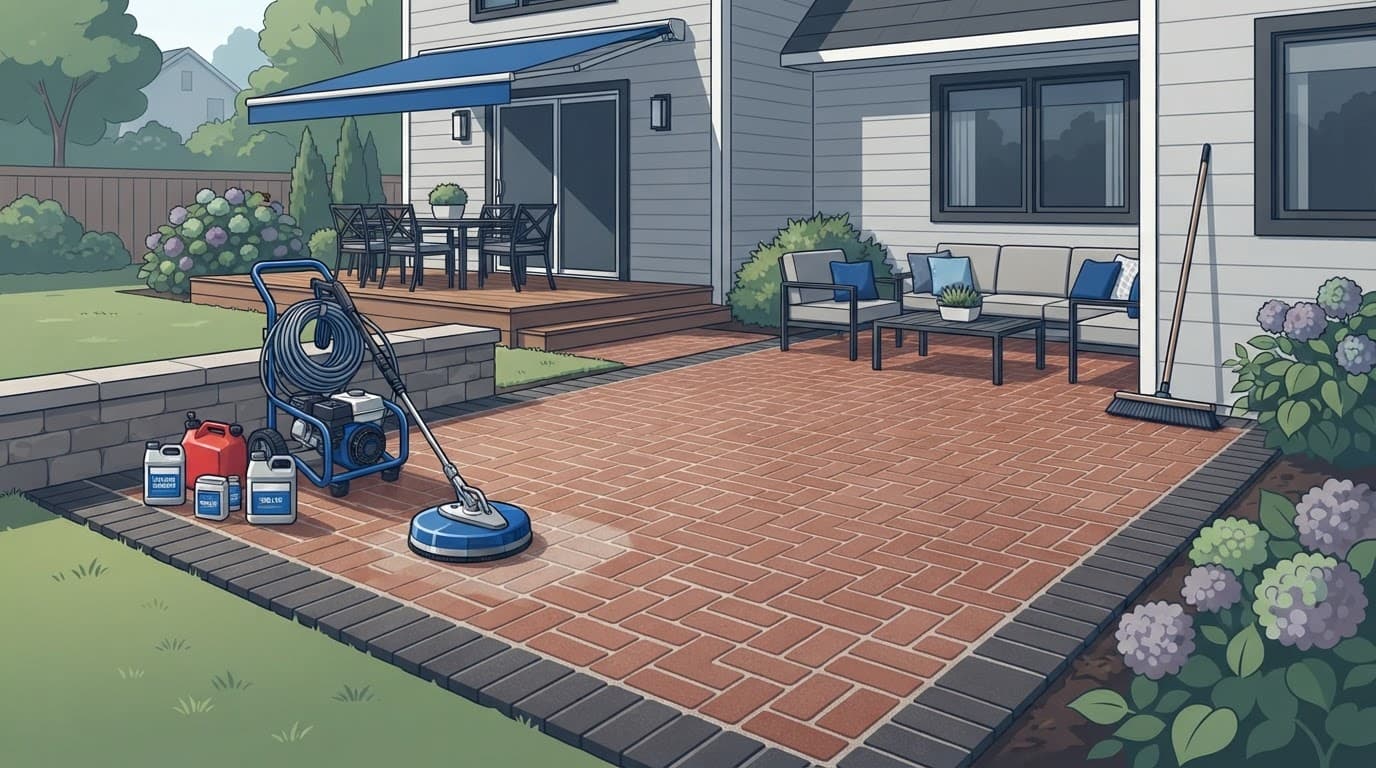
Driveway sealing and patio sealing help reduce the absorption of future spills, dirt, and moisture. They don’t replace routine cleaning, especially in Southwest Florida, where humidity, rain, mold, and strong sun affect exterior surfaces.
At Kingsway Paver Sealing & Pressure Cleaning, I inspect the pavers, joints, drainage, and existing coating before determining how to remove oil stains from pavers. I then recommend cleaning, restoration, re-sanding, sealing, or replacement as needed. Homeowners in Fort Myers, Naples, Bonita Springs, Port Charlotte, Sanibel Island, and nearby areas can Get a Quote for an inspection and professional paver cleaning, re-sanding, sealing, or replacement service.
Keep mango spills from becoming permanent marks
Blot fruit juice or oily smoothies as soon as they spill, especially on unsealed pavers. Quick action helps remove oil stains from pavers before creamy residue dries under the Florida sun.
Keep outdoor drinks on a table instead of directly over patio pavers, and use trays under coolers and serving containers. Clean greasy or sticky spots early to help remove oil stains from pavers before rain and foot traffic spread them. Regular paver cleaning also removes dirt that clings to sugary residue and organic stains. The same blot-first response applies to other outdoor drinks, such as coffee stains on brick pavers and red wine stains on brick pavers.
The safest maintenance plan is consistent and simple: remove spills quickly, use mild detergent first on organic stains, and protect the joints. Seal only after the surface is clean and dry, and use only paver-safe, label-approved enzymatic cleaners when needed.
Frequently Asked Questions
Can mango juice permanently stain brick pavers?
Fresh mango juice is usually manageable because it is water-based, but sugar, pulp, and natural pigments can settle into porous pavers. Prompt blotting and mild detergent cleaning reduce the chance of a lasting mark.
How do I remove oil stains from pavers after a mango smoothie spills?
First cover fresh oily residue with baking soda, kitty litter, or another clean absorbent material for at least 30 minutes. After removing it, use a degreaser labeled for brick or concrete pavers and follow the product directions.
Can I use a pressure washer on mango juice stains?
Yes, but use pressure washing only after detergent or degreaser has loosened the residue. Choose a wide spray pattern, keep the wand moving, and avoid excessive pressure that can strip sealer or remove joint sand.
Should I use vinegar or bleach on mango stains?
Vinegar may affect cement-based pavers, natural stone, or existing sealer, so it is not the preferred starting treatment. Avoid using bleach casually, especially on nearby rust, and never mix cleaning products.
When should I seal the pavers after cleaning?
Seal only after the stain is gone and the pavers are completely clean and dry. If cleaning removed joint sand, re-sand the joints before applying a suitable paver sealer.
Clean pavers without creating a new problem
When mango juice stains brick pavers, safe paver stain removal usually starts with blotting, lukewarm water, dish soap, and a nylon brush. Baking soda can help with light fruit residue, while oily mixtures may need an absorbent, degreaser, or poultice to remove oil stains from pavers.
Pressure washing has a place, but uncontrolled force can damage brick and remove joint sand. Treat rust separately, using oxalic acid only when appropriate, and never use a bleach solution or seal over an untreated stain. With the right cleaning order, you can remove oil stains from pavers while protecting the original installation.