
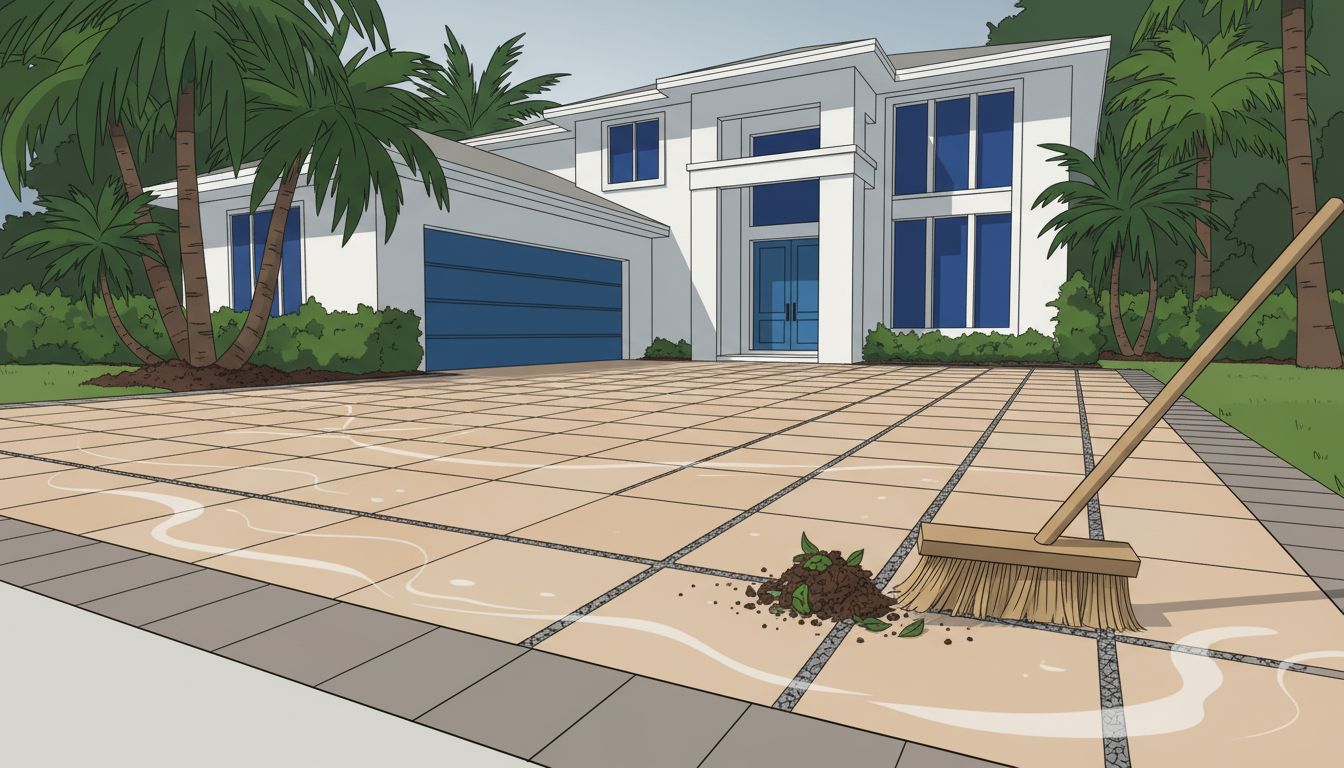
Florida rain does not clean a permeable driveway. It can move soil, mulch, leaf debris, and tire grit into the joints, causing sediment accumulation.
That is why good permeable paver maintenance protects the drainage path as carefully as the visible pavers. Open joints support surface infiltration, so I recommend routine maintenance through regular inspections and careful surface cleaning. With the right approach, your driveway can keep surface infiltration working, manage stormwater runoff, and maintain its color and appearance over time.
Key Takeaways
- Inspect permeable paver driveways after major storms and at least twice a year for ponding, sediment, weeds, loose jointing stone, and shifted pavers.
- Remove leaves, mulch, soil, tire grit, and other debris before they become compacted and restrict surface infiltration.
- Use gentle sweeping or professional vacuum cleaning, and treat pressure washing as a controlled professional method rather than the first response to clogged joints.
- When routine cleaning no longer restores drainage, restorative maintenance may require deeper cleaning, vacuum recovery, infiltration testing, and replacement of jointing aggregates.
- Avoid ordinary sand, unapproved sealers, and deicing products that can clog the open joints or damage the permeable paver system.
How Permeable Pavers Drain Water
Permeable interlocking concrete pavements use open joints filled with small, clean jointing aggregates. Unlike porous asphalt’s continuous porous surface, these systems drain through openings between individual pavers. Rainwater passes through the jointing stone, moves into the bedding layer and aggregate base, then supports surface infiltration as it reaches the soil or an underdrain system.
Pervious concrete also uses connected voids, but its surface and maintenance needs differ from pavers. Guidance for porous asphalt isn’t automatically interchangeable with paver systems.
This design helps reduce stormwater runoff, but the joints must remain open. Fine sediment, decaying leaves, mulch, soil, and tire grit can collect in the upper portion of those openings. These particles can reduce surface infiltration and restrict drainage.
Florida properties face a few added challenges:
- Heavy summer rain can cause sediment deposition when it washes soil across the driveway.
- Palm debris and leaves break down into fine organic material.
- Nearby landscaping can spread mulch into the openings, causing clogging.
- Tire traffic adds grit and can contribute to sediment accumulation.
- Mold and algae can grow in shaded, damp areas.
Routine maintenance helps keep these drainage paths open and supports reliable drainage.
Surface ponding after ordinary rain is a warning sign. A short-lived puddle during a severe storm may not mean the entire system has failed, but repeated ponding in the same area deserves inspection. The CMHA permeable pavement maintenance guide explains how surface cleaning helps restore surface infiltration when sediment begins blocking the pavement.
Permeable Paver Maintenance Schedule for Florida Driveways
A driveway beneath mature trees or beside a landscaped bed usually needs more attention than an open driveway with little surrounding vegetation. I recommend routine maintenance with a quick visual check after major rain and a more complete inspection twice each year. These checks can reveal changes in surface infiltration before drainage problems become obvious.
| Maintenance task | Recommended timing | What to check |
|---|---|---|
| Visual inspection | After major storms and twice yearly | Ponding, weeds, loose stones, shifted pavers, and sediment |
| Light surface cleaning | At least once yearly | Leaves, dirt, tire grit, and organic debris |
| Restorative maintenance, such as deeper cleaning | When drainage slows or ponding persists, not automatically yearly | Blocked joints and compacted surface sediment |
| Infiltration testing | At installation and when ponding continues | Measured surface infiltration rate |
| Replacement of jointing aggregates | After deep cleaning, washout, or loss of jointing stone | Low or empty paver joints |
Cleaning before the heaviest rainy season helps preserve surface infiltration by removing material before it is pushed deeper into the system. Another inspection after storm season can identify washed-out jointing stone, eroded edges, or debris buildup.
For a villa, HOA, or commercial property, a written maintenance plan and log help organize routine maintenance. Our HOA paver maintenance checklist lays out the regular inspection and cleaning tasks that keep shared pavers in consistent shape. Record the cleaning date, ponding locations, repairs, and drainage changes, and note whether formal testing under ASTM C1781 is needed when problems recur. Small problems are easier to correct when the log shows where they started.
Inspect the Surface Before Cleaning
I always inspect the driveway before choosing a cleaning method. This first step in routine maintenance can reveal whether surface infiltration is working properly. A dirty surface and a damaged system can look similar, but they need different repairs.
Look closely at the following areas:
- Paver joints that look full of dust, soil, or black organic matter
- Low spots where water remains after nearby surfaces dry, suggesting reduced surface infiltration
- Weeds growing through missing jointing stone
- Pavers that rock, sink, or sit higher than neighboring units
- Edges where soil or mulch is washing onto the driveway
- Downspouts that discharge directly onto the permeable surface
- Drain inlets covered by leaves or sediment
A low spot may indicate localized surface ponding rather than a system-wide issue. A short-lived puddle during an extreme storm isn’t conclusive by itself.
A simple garden hose test can show whether water disappears quickly or begins to spread across the surface. It offers a practical indication of surface infiltration and can help locate problem areas. It isn’t a formal infiltration test.
For a measured result, ASTM C1781 is the recognized method for testing surface infiltration on permeable unit pavement systems. A professional places a test ring on the pavers, adds a measured amount of water, and records the infiltration rate. Testing several areas can show whether the issue is isolated or widespread. Comparing surface infiltration at each location helps explain differences in the infiltration rate. The ASCE evaluation of infiltration testing procedures provides additional technical information about this testing process.
The CMHA guide uses an infiltration rate below 20 inches per hour in consistently ponded areas as a trigger for immediate surface cleaning. Your installer may have a different performance target, so the original system documents should be reviewed first.
Clean the Driveway Without Clogging the Joints
Routine maintenance removes loose debris before it becomes compacted sediment and helps protect surface infiltration. For a small residential driveway, begin by removing leaves, pine needles, palm debris, and loose dirt with a broom or blower. Direct the debris away from the joints and collect it instead of pushing it toward the street or a drainage inlet.
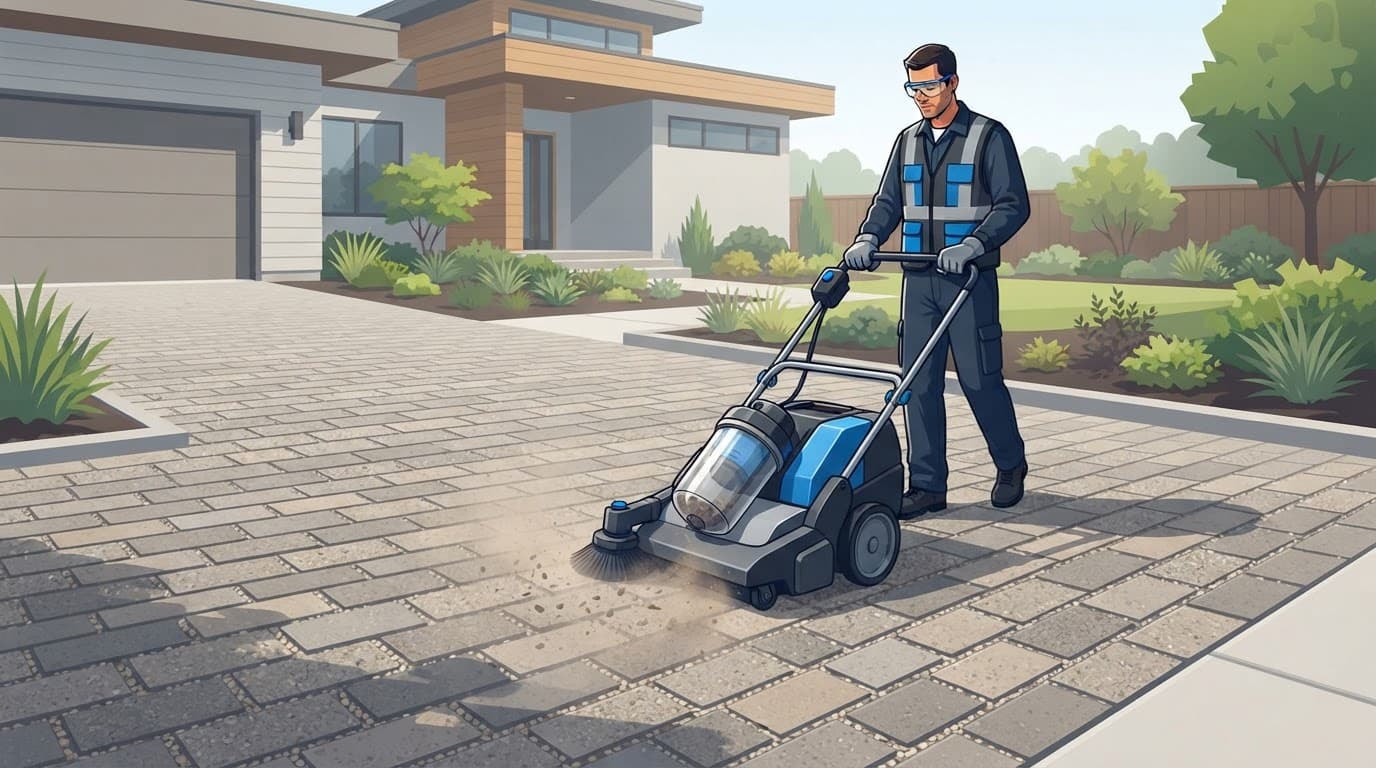
A stiff broom can loosen surface material, but aggressive scrubbing may remove jointing aggregates. Use gentle strokes to protect the joint stone. I avoid using a hose to push dirty water across the driveway. It can carry fine sediment into clean joints, reduce surface infiltration, and create a larger blockage.
Larger driveways benefit from vacuum sweeping. A mechanical sweeper may suit loose surface debris, while regenerative air sweepers use high pressure air to lift material and recover jointing stone.
When routine cleaning no longer restores drainage, restorative maintenance may be appropriate. Vacuum sweeping should precede more aggressive corrective methods, such as a true vacuum truck or high pressure air and vacuum system. The Washington Stormwater Center’s permeable pavement operations guidance covers equipment and maintenance concerns for larger systems.
After cleaning, check whether surface infiltration is even across the driveway. Ask a professional to measure the infiltration rate if drainage remains slow.
Is Pressure Washing Safe?
A standard pressure washer can damage a permeable driveway when used without proper control. For some systems, high pressure air offers a more controlled alternative to water pressure. High pressure may:
- Remove too much jointing aggregate
- Drive fine sediment farther into the pavement
- Strip sealer unevenly
- Etch the paver face
- Create visible cleaning lines
- Wash debris into drains or landscaping
Pressure washing may still be part of professional cleaning, but it should not be the first response to clogged joints. I prefer testing a small area, using the widest practical spray pattern, keeping the nozzle at a safe distance, and using the lowest effective pressure. The operator should keep the wand moving and avoid aiming directly into open paver joints.
A surface cleaner may be appropriate on some flat areas when the equipment and pressure are matched to the paver. The removed water and sediment still need to be managed, and the joints may need fresh aggregate afterward.
Organic growth on nearby walls, siding, or roofs should be handled separately. A soft wash used for roof cleaning should not be allowed to carry concentrated cleaning solution and loosened debris onto a permeable driveway.
Use Restorative Maintenance for Severe Clogging
Regular cleaning handles loose dirt and surface debris. Restorative maintenance is needed when ordinary cleaning no longer restores surface infiltration, or when severe clogging leaves the openings packed with sediment.
Restorative maintenance usually includes deeper vacuuming, vacuum sweeping, and high pressure air cleaning with vacuum recovery. Contractors use high pressure air carefully around the openings, remove clogged joint material, and inspect the exposed paver surface. The goal is to reopen the drainage path and restore surface infiltration without disturbing the base below.
After deep cleaning, jointing aggregates must be replaced correctly. Use the clean, angular jointing stone specified for the system. Do not automatically fill the openings with ordinary sand or polymeric sand. Those materials may restrict water movement unless the pavement manufacturer specifically approves them.
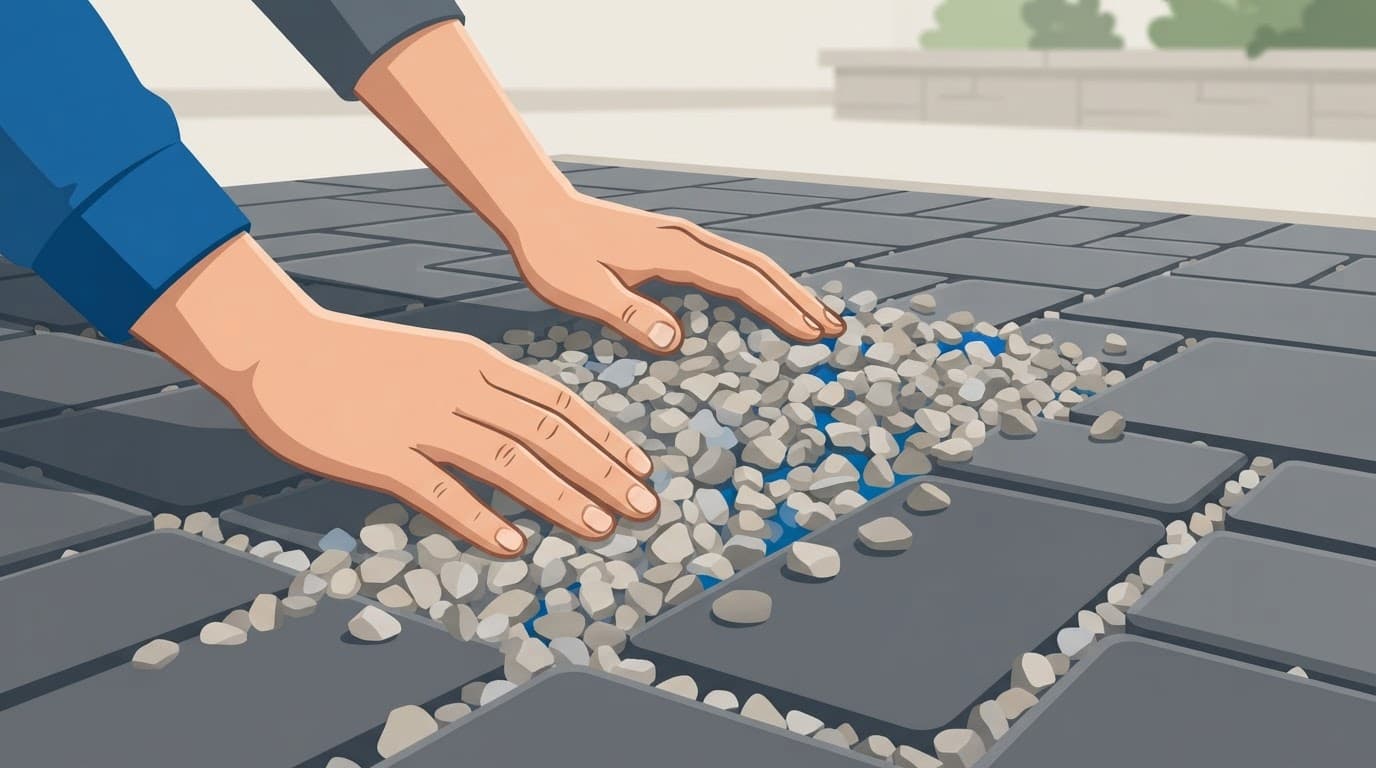
The replacement jointing aggregates should be swept into the openings in several passes. Use the specified jointing stone, and keep excess material out of drains, edge restraints, and nearby planting beds. Low openings may need more than one application because the stone settles during cleaning and normal traffic.
After the work, verify surface infiltration by observing how quickly water drains. If drainage remains uncertain, request an infiltration rate check.
If pavers rock or sink, adding stone to the joints will not correct the problem. The affected units may need to be lifted, the aggregate base repaired, and the pavers reset. Broken or badly damaged units should be replaced before any sealing work.
Handle Stains, Weeds, and Sealing Carefully
Permeable pavers can collect oil, fertilizer, palm berry stains, algae, and rust. Let the surface dry before judging the damage. Wet pavers can hide discoloration or make a stain look larger than it is.
For oil, I use an absorbent material and a paver-safe degreaser after testing a small area. Efflorescence, a white powdery deposit, can often be dry-brushed after the surface dries. Harsh acids and strong household cleaners can fade the paver or damage nearby plants, so confirm material compatibility before using them.
Weed growth usually indicates missing or contaminated jointing aggregates. Pulling weeds carefully and replacing the affected jointing stone is safer than blasting the joints with a narrow spray tip. Don’t scrape out every joint across the driveway unless you’re prepared to refill the openings.
Driveway sealing requires extra caution on a permeable system. A standard coating can bridge the joints or reduce surface infiltration. If the original installer approved sealing, consider only sealers approved by the manufacturer for permeable systems, and hire an experienced contractor who understands how the system drains. Joint stabilization products also require system approval because they may restrict infiltration. I would never seal over heavy sediment, stains, or wet pavers. Cleaning and repairs come first.
If your driveway is ponding, losing joint material, or showing heavy Florida staining, you can Get a Quote for an inspection and cleaning recommendation.
Prepare for Rare Freezes and Heavy Storms
Snow is uncommon in Southwest Florida, but winter maintenance still matters during cold snaps. Snow removal is rarely needed locally, and sand should never be spread for traction because it can enter the open drainage path and reduce surface infiltration.
If freezing conditions require deicers, use sodium chloride or calcium chloride sparingly, and only when the paver manufacturer allows it. I avoid magnesium chloride unless the product is approved for the specific concrete paver system, since some products can damage concrete surfaces or leave residue that enters the openings. Remove excess residue after the weather improves.
After a tropical storm, clear leaves and branches by hand or with a blower. Check for joint washout, missing jointing stone, shifted pavers, and sediment deposition from storm flows that can reduce surface infiltration. Do not sweep storm debris into the openings, and arrange restorative maintenance for significant washout, exposed base material, or shifted pavers.
Frequently Asked Questions
How often should a permeable paver driveway be maintained?
Inspect the driveway after major storms and complete a more thorough inspection twice a year. Light surface cleaning should be performed at least once a year, with additional cleaning for driveways near trees, mulch, or landscaped beds.
Can I pressure wash permeable pavers?
Pressure washing can damage pavers, remove jointing aggregates, or force sediment deeper into the openings when used incorrectly. If it is necessary, test a small area first and use the lowest effective pressure, a wide spray pattern, and controlled technique.
What should I use to refill permeable paver joints?
Use the clean, angular jointing stone specified for the pavement system. Ordinary sand or polymeric sand may restrict water movement unless the manufacturer specifically approves it.
How do I know when restorative maintenance is needed?
Restorative maintenance may be appropriate when routine cleaning no longer restores drainage, ponding persists, or the joints are packed with sediment. A professional can use deeper vacuum cleaning, high pressure air with recovery, and infiltration testing to evaluate the system.
Should I seal a permeable paver driveway?
Do not apply a standard sealer without confirming that it is approved for the specific permeable system. Some coatings and joint stabilization products can bridge the joints or reduce surface infiltration, so cleaning and repairs should be completed first.
Keep the Drainage Path Working
A permeable driveway needs more than occasional cosmetic cleaning. It needs open joints, clean aggregate, stable pavers, and clear drainage paths to maintain surface infiltration.
Inspect twice a year, clean before sediment becomes compacted, and use pressure washing only with careful control. When routine cleaning no longer restores drainage, restorative maintenance and joint aggregate replacement can protect the system better than repeated blasting.
Florida weather will continue bringing rain, humidity, organic debris, and strong sun. With regular permeable paver maintenance, your driveway can stay cleaner, drain better, and maintain its curb appeal for years.