
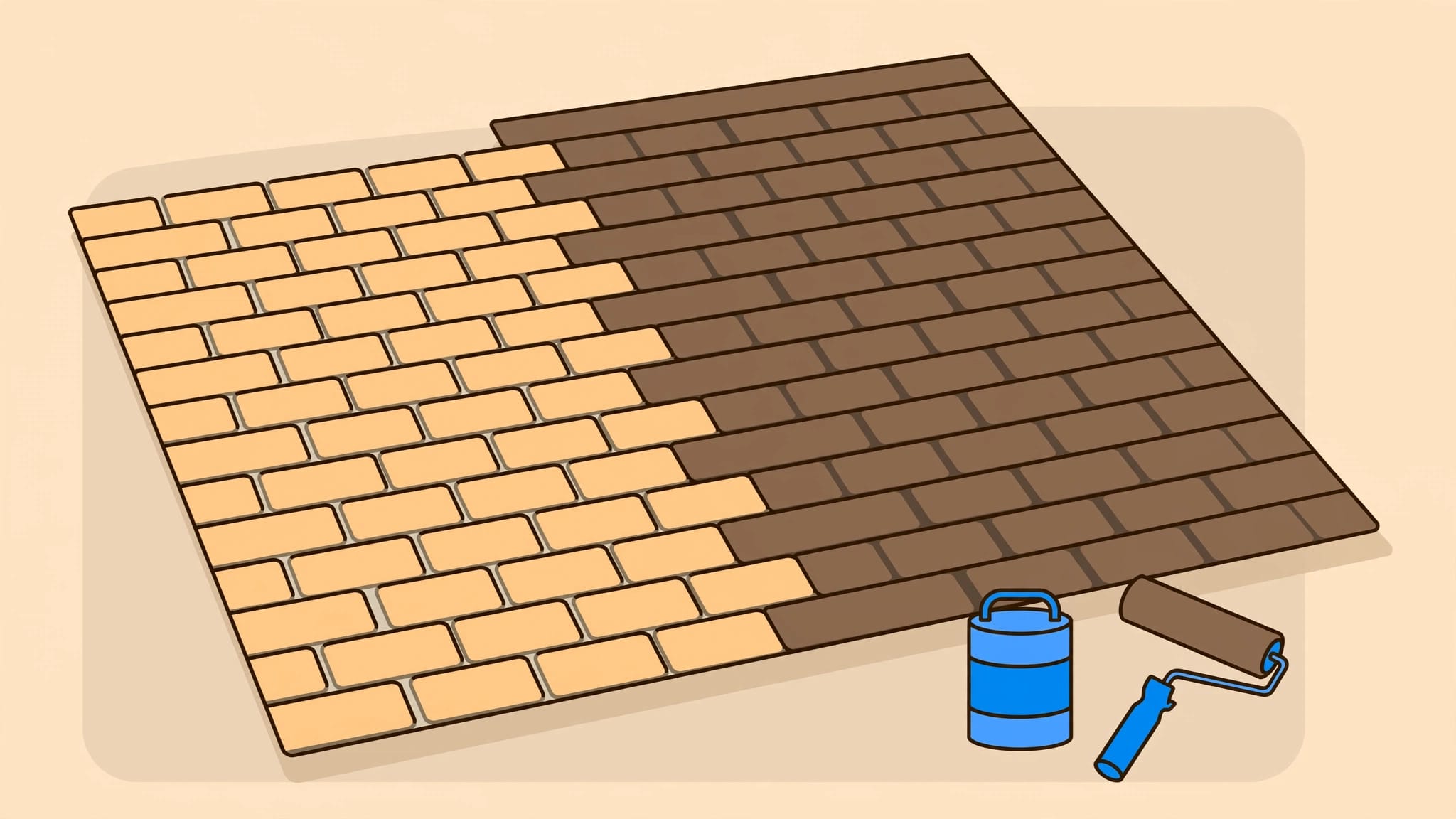
Buying too little sealer for brick pavers can leave your patio unfinished, while applying too much can leave an uneven finish. I estimate paver sealer coverage by checking the measured area, exact product, and paver condition.
Use the container rate or technical data sheet as your starting point. Surface condition affects how far a gallon goes. Your joints, existing coating, and required application method all matter.
I start with an accurate measurement, then confirm the product’s coverage instructions before calculating gallons.
Key Takeaways
- Measure the actual paved area, including any borders or steps you plan to seal.
- Use the exact product’s technical data sheet, rather than another homeowner’s coverage estimate.
- Check whether the stated coverage applies to each coat or the complete application.
- Porous pavers and joints that need saturation can increase product consumption.
- Confirm preparation, coating compatibility, and application requirements before buying your sealer.
I recommend keeping those details together when comparing materials or requesting professional service. A clear estimate protects your budget and helps avoid unnecessary product buildup.
Measure Your Paver Area Before Buying
Measure the area that will receive sealer, not the overall dimensions of the yard. Leave out planting beds, pools, and other unsealed spaces.
For a rectangular section, multiply its length by width in feet:
Length × width = square feet
Break an irregular driveway or patio into smaller rectangles and triangles. A triangle’s area is half its base multiplied by its height. Add the sections together, then subtract any openings.
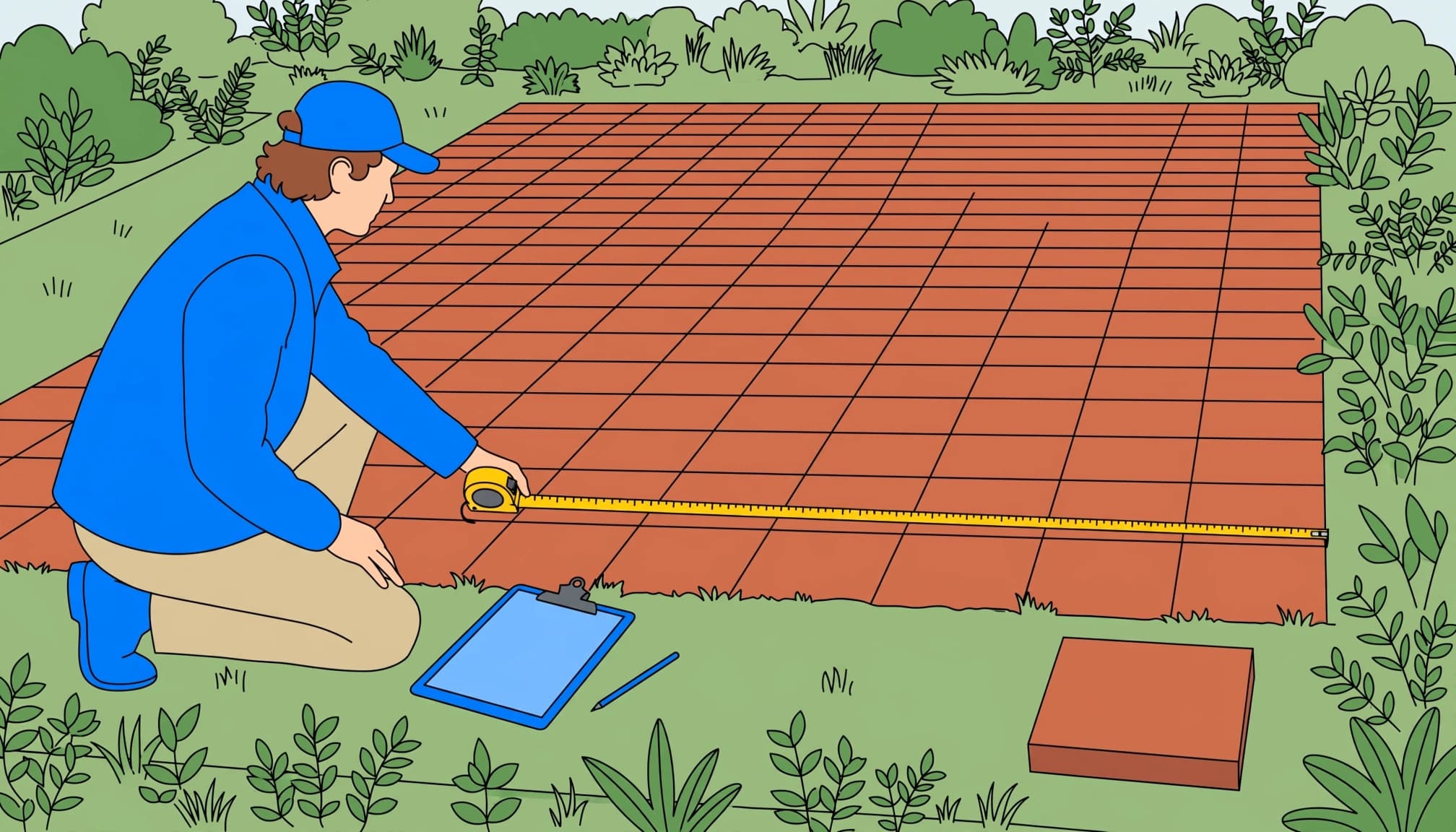
Include paved borders, landings, and step faces if they’re part of the sealing plan. Measure vertical faces separately, since they add surface area beyond the patio footprint.
Accurate measurements also make future maintenance estimates easier. Keep a simple sketch with your dimensions, and note which areas use different paver materials.
Why Paver Sealer Coverage Changes
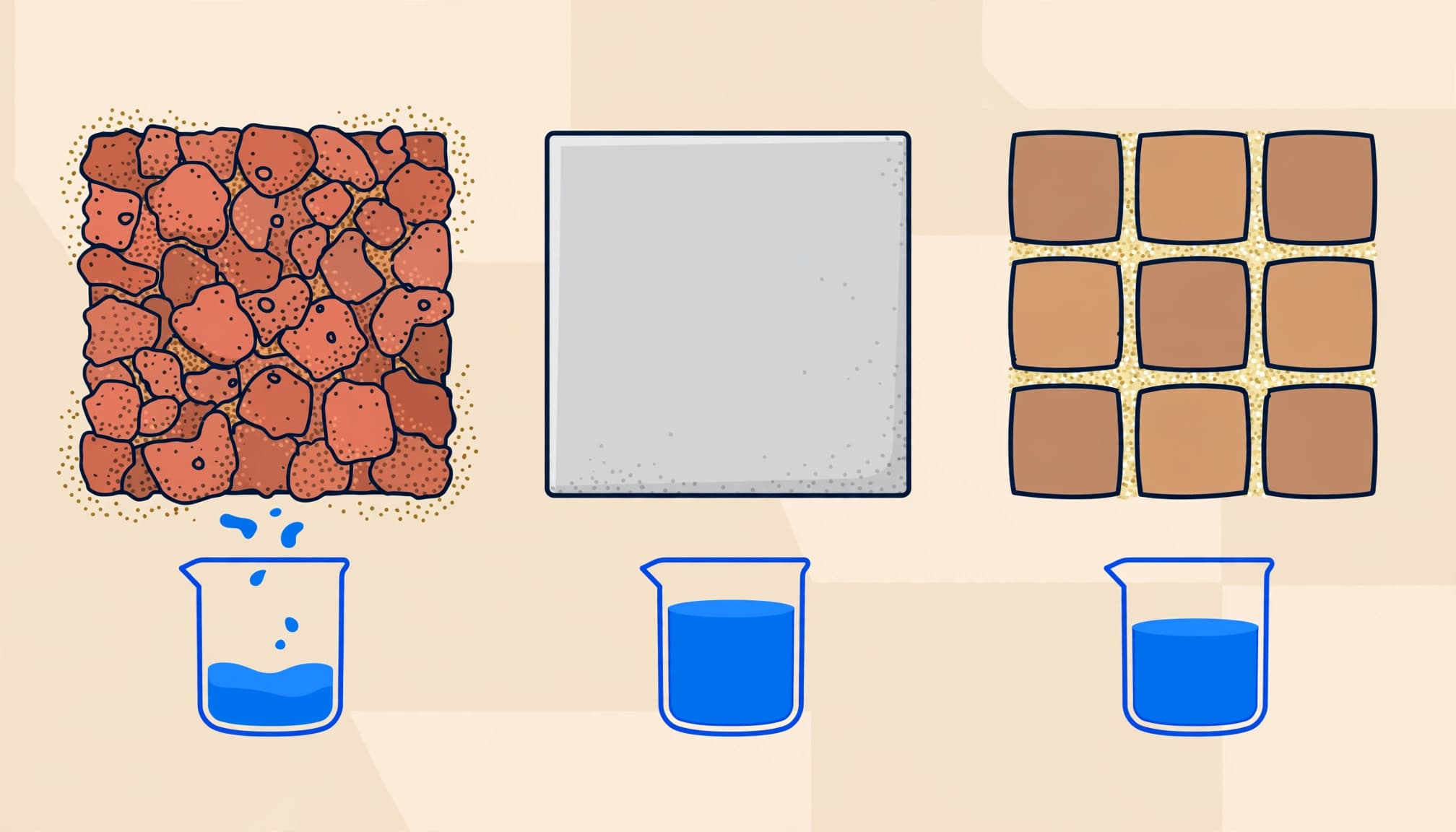
Coverage depends on how much liquid the paver faces and joints absorb. Two patios with the same square footage can require different quantities.
Surface porosity and texture
I inspect the paver face for surface porosity before choosing a coverage rate. Rough, absorbent surfaces may take more product than dense ones, but texture alone doesn’t prove porosity.
I also check for freeze thaw damage, which can affect the surface condition but doesn’t justify a fixed coverage adjustment.
| Surface condition | What to check | Estimating approach |
|---|---|---|
| Rough concrete pavers | Open pores and exposed aggregate | Check the lower end of the approved coverage range |
| Dense or smooth pavers | Absorption and existing treatment | Confirm coverage with a prepared test area |
| Clay brick pavers | Product approval and absorption | Use clay-specific directions |
| Natural stone | Stone type and coating compatibility | Confirm suitability before estimating |
A product approved for concrete pavers isn’t automatically suitable for travertine. I also consider slip resistance on pool decks and traffic demands during driveway sealing.
Sealer type and joint size
A penetrating paver sealer enters the pores, while a film forming sealer leaves a protective coating on the surface. Topical sealer products, including some acrylic sealers, may have different application needs.
A wet look paver sealer can also differ from other finishes, so follow its product directions. A joint stabilizing sealer needs enough material to treat the joints as directed.
Wider joints can increase consumption. Product chemistry and solids content also affect the application.
The retailer’s paver sealer coverage calculator gives a broad planning range of 80 to 200 square feet per gallon per coat. Treat it as an estimate, not a product guarantee or substitute for product instructions.
Read Coverage Rates Without Double Counting
Product instructions set the rate
Check the exact product name, approved surfaces, coverage range, and application method in its technical data sheet. Brands such as Techniseal, Alliance Gator, and SEK Surebond sell different products with different requirements.
For a concrete-paver example, Gator Seal Wet Look specifications list approximately 175 square feet per gallon (U.S.). The manufacturer also says coverage varies with joint size and porosity.
That rate applies to this product only. I wouldn’t transfer it to another sealer simply because both promise a wet-look finish.
A water based paver sealer and a solvent based paver sealer can have different formulas, but the category alone doesn’t establish coverage or durability. A wet look paver sealer may differ in finish from a natural look product, but appearance doesn’t establish coverage. Compare actual formulas, approved uses, and technical directions for acrylic sealers and a joint stabilizing sealer, too. Neither category guarantees that you’ll need fewer gallons.
Coat count changes the total
Before multiplying anything, confirm whether the coverage figure means per coat or the complete treatment.
If the manufacturer gives separate coverage rates for the first and second coats, calculate each coat separately. Add those quantities together.
If coverage already includes the complete application, multiplying by two would overstate your needs.
Don’t assume every project needs two coats. Follow the selected product’s coat count and timing. I also avoid assuming that a wet on wet method applies to every sealer.
Ask the supplier to clarify unclear wording before purchasing. That short conversation can prevent a costly estimating mistake.
Calculate Gallons and Round Up Carefully
Once the area and coverage basis are confirmed, use this formula:
Required gallons = square feet ÷ square feet per gallon
These calculations use 175 as a planning rate, not a universal rate for every wet look paver sealer or surface.
| Paved area | Calculation | Calculated gallons |
|---|---|---|
| 500 square feet | 500 ÷ 175 | 2.86 |
| 1,000 square feet | 1,000 ÷ 175 | 5.71 |
| 1,500 square feet | 1,500 ÷ 175 | 8.57 |
Use the row that matches your measured area, then check the technical data sheet for the product’s coverage and application requirements. Follow its directions for two coats or a wet on wet application, if specified. Any joint treatment must follow the selected product’s instructions, especially for a joint stabilizing sealer.
Round your purchasing quantity up to available container sizes. If your calculation requires 5.71 gallons, a single five-gallon pail isn’t enough at that rate.
A 10% allowance can cover minor waste or irregular edges. It’s a purchasing choice, not a porosity rule.
Don’t apply leftover sealer just because you bought it. Keep the application within the specified rate.
Also check whether coverage refers to concentrated product or ready-to-apply material. For products requiring mixing or dilution, follow the stated ratio and calculate the usable yield.
Prepare the Surface Before Confirming Quantity
Clean the pavers and inspect the joints
Surface preparation affects whether your coverage estimate is useful. Address dirt, stains, failing coatings, and missing joint material before sealing.
The Concrete Masonry & Hardscapes Association’s cleaning and sealing guidance recommends treating individual stains before cleaning the pavement for dirt and efflorescence.
I use pressure washing with a pressure and nozzle suited to the material. Test a small area first, since aggressive pressure washing can damage paver faces or remove joint sand.
Joint material must also match the installation. SEK’s PolySweep product guidance distinguishes its standard product from a wide-joint formula. For polymeric sand, confirm joint dimensions and installation requirements rather than choosing by appearance alone.
Check drying conditions and test coverage
A surface that looks dry doesn’t prove the joints and pores are ready. Check shaded areas, irrigation exposure, drainage, and the forecast, and inspect for efflorescence.
Allowing 24 to 48 hours after cleaning is only a starting point. The required drying time depends on product instructions and actual moisture conditions.
Where the manufacturer permits it, apply a measured quantity to a measured, prepared test area. Divide the area by the gallons used to check actual yield.
Use the required application method during testing. If the property has different materials or conditions, test those areas separately before finalizing the purchase.
Apply Evenly and Keep the Estimate Clear
Follow the technical data sheet, since the application method and coat requirements affect how much sealer you need. Some acrylic sealers require wet on wet application or two coats, so confirm the directions before estimating.
Light back-rolling after spraying can help distribute some products evenly. Avoid heavy rolling, which can disturb joint sand or leave overlap marks.
Work in manageable sections and maintain a wet edge where required. Plan an exit so you don’t step across freshly treated pavers.
If consumption differs sharply from your calculation, pause and check the coverage rate, surface, joints, and equipment. Don’t force a gallon to cover its advertised maximum.
Coverage is a material-planning figure, not a guarantee of a finished result.
Frequently Asked Questions
How long should newly installed pavers wait before sealing?
There isn’t one waiting period for every installation. I check the paver manufacturer’s guidance, the selected sealer, and the joint material requirements.
New concrete pavers, clay pavers, and polymeric sand systems can have different restrictions. Installation age alone doesn’t establish readiness. The surface must also meet the product’s preparation and moisture requirements.
Confirm those requirements before booking work or buying materials.
Can water-based sealer go over an older solvent-based finish?
Don’t assume the products are compatible based on those descriptions alone. I identify the existing coating and check the proposed sealer’s recoating requirements.
An unknown, peeling, cloudy, or uneven finish needs assessment before another application. Some surfaces need more preparation than a routine clean and recoat.
A compatibility check also matters for coverage. Previously treated pavers may accept product differently than bare pavers, so the old estimate may no longer apply.
A Reliable Estimate Starts With the Surface
Estimate sealer for brick pavers using the measured area, exact product coverage rate, and required number of coats. Account for the prepared surface, since its condition can affect how much sealer is needed.
The goal is even, product-approved coverage on clean, stable pavers. Buying extra doesn’t mean applying extra.