
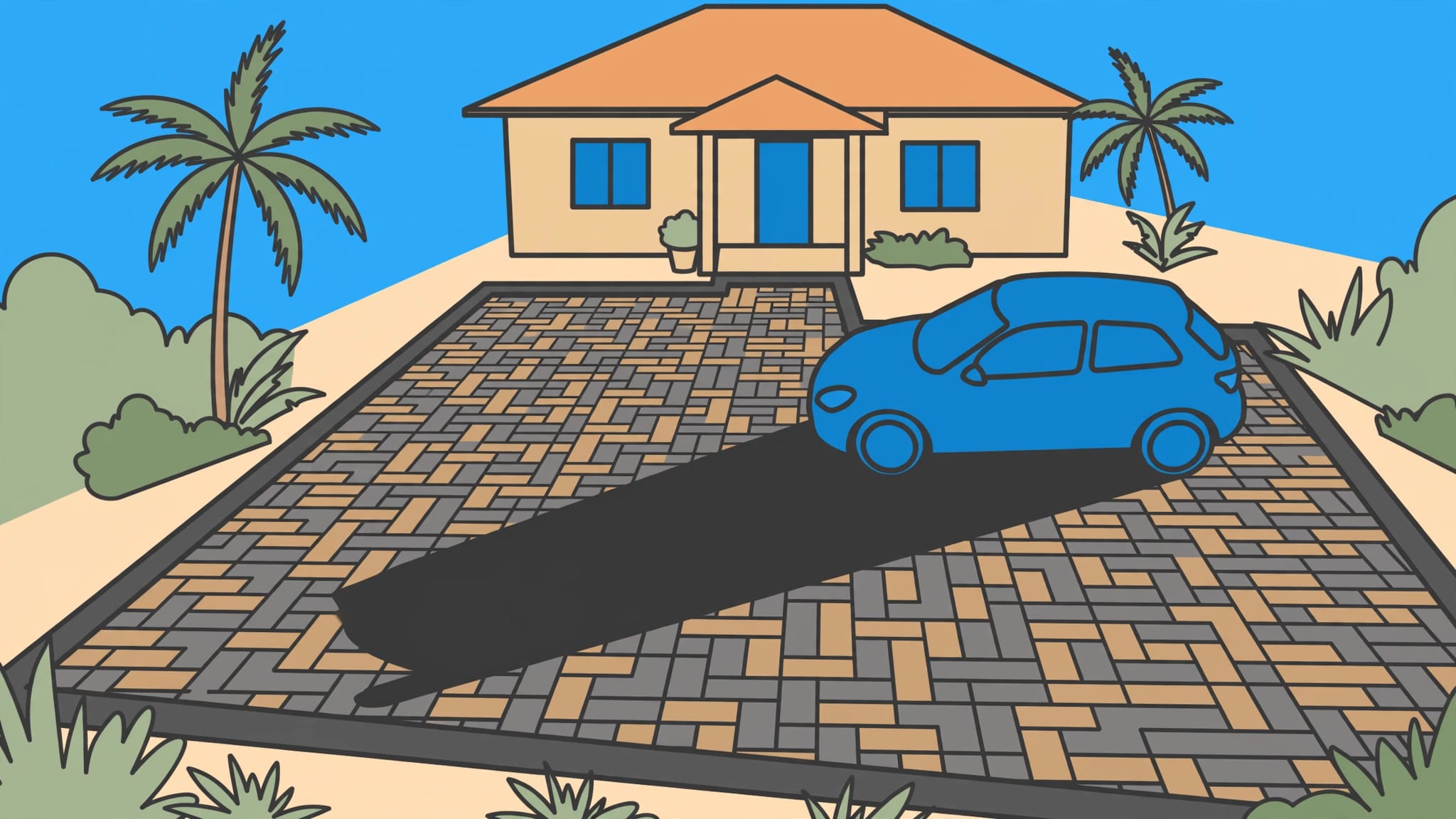
For a sun-exposed Florida driveway, I recommend medium gray or blended earth-tone pavers with a charcoal or dark brown border. This blend balances appearance, surface heat, and everyday stain visibility.
The goal is a forgiving surface that complements your home without showing every tire turn or oil drip. Start with the color blend, then consider how Florida sunlight changes its appearance.
Key Takeaways
- Medium grays, browns, and earth-tone blends hide tire marks and oil spots better than very light colors.
- Lighter pavers generally stay cooler, while dark borders provide contrast without covering the entire driveway.
- Compare several samples outside in sun and shade, and choose a vehicle-rated paving system before settling on color.
Driveway Paver Colors That Handle Daily Use
These paver color combinations provide a practical starting point for Florida homes, with different benefits for appearance and upkeep.
Medium Gray With Charcoal
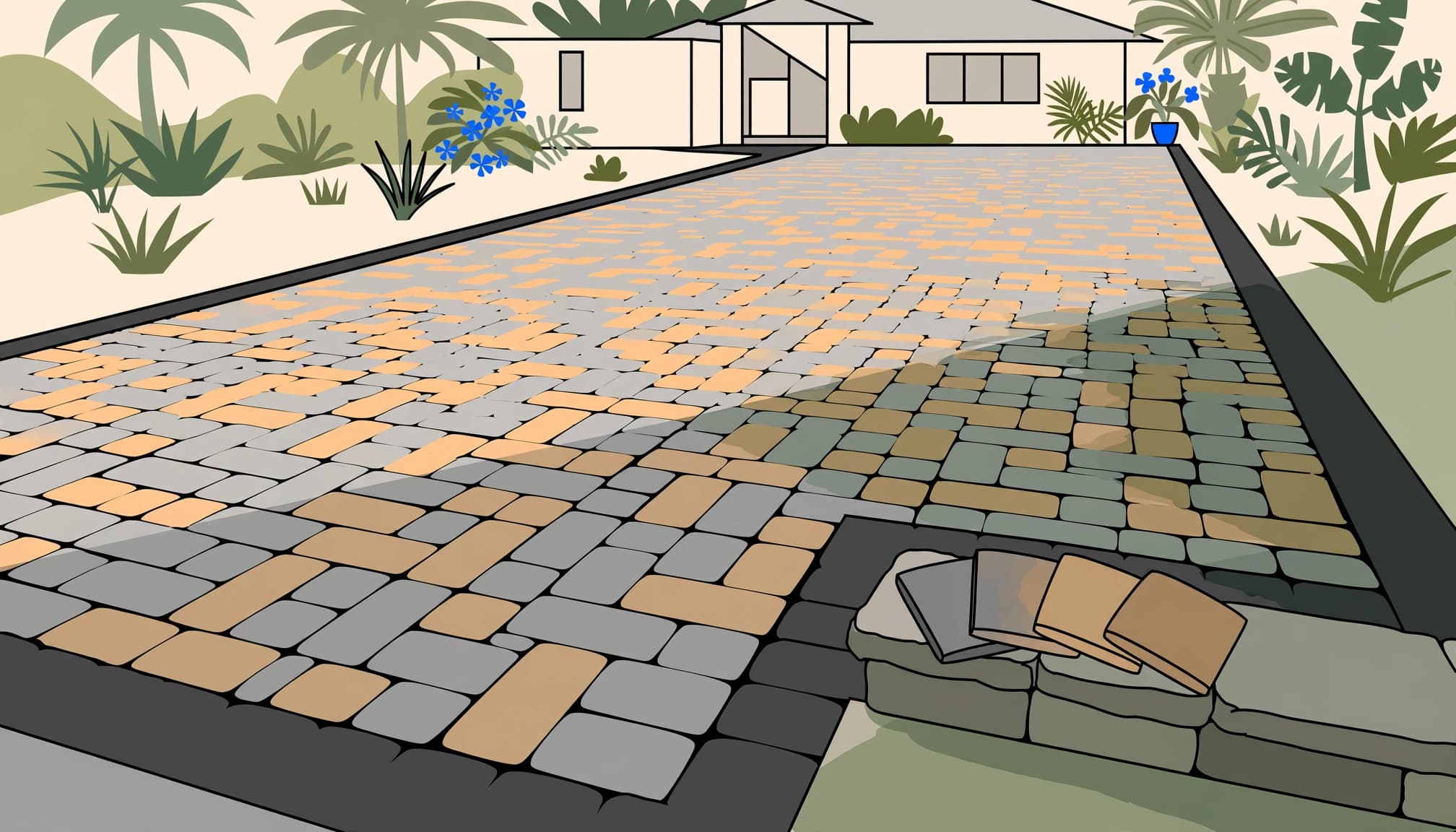
Medium gray with a charcoal border works well with white stucco, contemporary homes, and dark window frames. It provides contrast without the heat load of an entirely dark-colored driveway.
For a dark gray and light-gray combination, I prefer the lighter gray across the main surface. Keep the darkest shade concentrated along the edges or in a simple geometric band.
Sandy Beige With Chocolate Brown
Sandy beige and chocolate brown suit warm stucco, brick accents, and natural landscaping. A blended beige surface is more forgiving than a nearly white one.
Tan pavers with a charcoal border provide another structured option. Chocolate brown creates a warmer finish, while the darker trim gives the same tan field a sharper outline.
Blended Tan, Gray, and Brown
Multi-tone earth blends combine tan, gray, and brown to suggest sandstone, limestone, or weathered granite. Their variation helps disguise dirt and dust, along with minor surface marks.
This is my practical choice when the house already has several exterior finishes. A dark brown or charcoal border keeps the blended surface looking organized rather than busy.
Light Sand With Ivory
Light sand and ivory create a clean, coastal appearance and work especially well around pool decks and patios. They reflect more sunlight than dark shades.
On a driveway, however, these colors reveal tire marks and oil more readily. I’d use a slightly deeper sand blend for the parking area and reserve ivory for smaller accents.
Balance Surface Heat With Everyday Appearance
Color affects comfort, but it doesn’t provide a guaranteed surface temperature. Material, texture, shade, and moisture also matter.
Keep Dark Colors in Smaller Areas
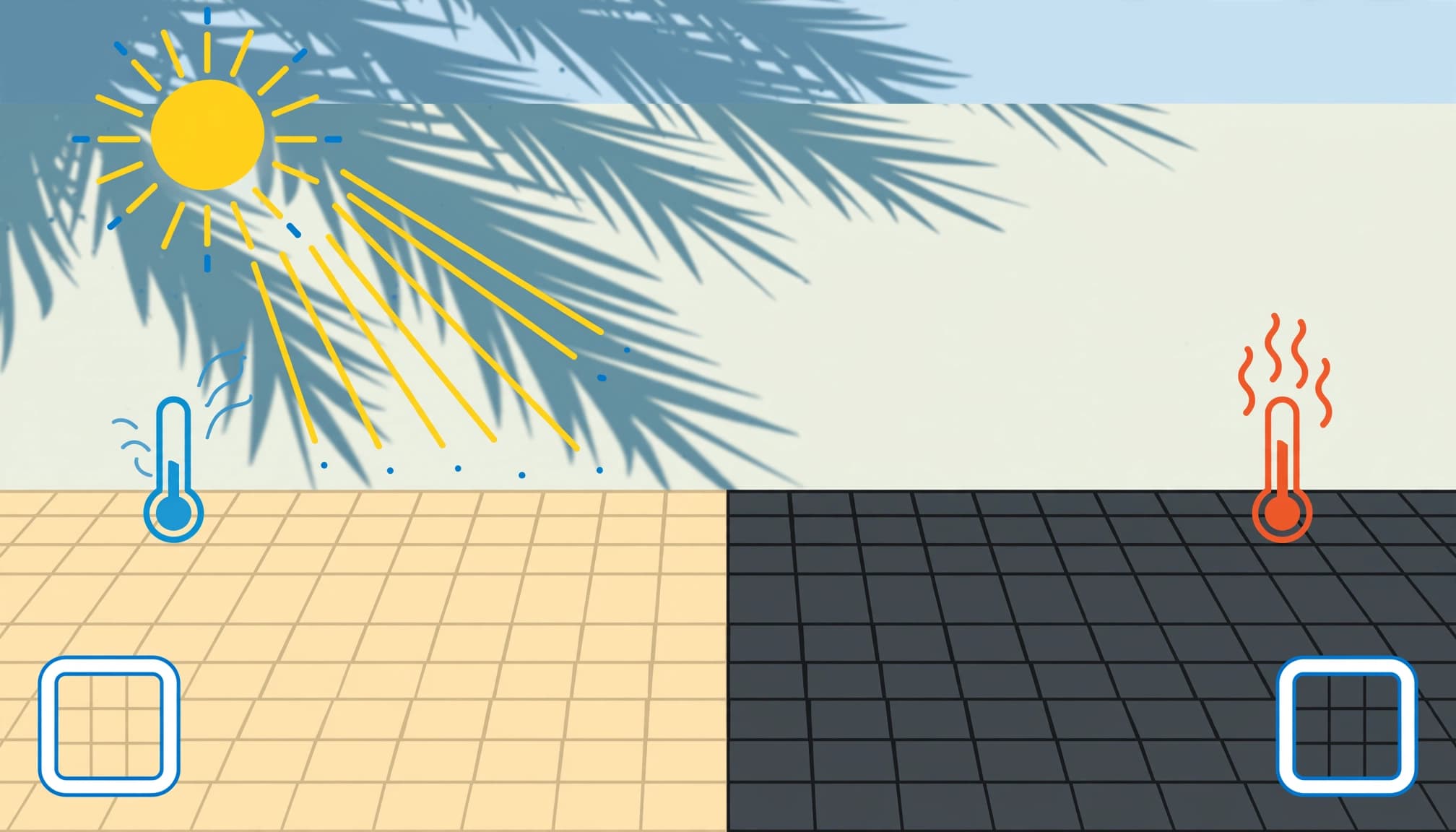
Dark pavers absorb more sunlight and generally become hotter than light-colored pavers under similar conditions. A charcoal driveway can look attractive, but the heat deserves attention near walkways and barefoot routes.
I prefer using dark colors for borders, soldier courses, and geometric bands. A soldier course is a row of pavers arranged along an edge. It adds definition without making the whole driveway dark.
Avoid Choosing by Coolness Alone
Lighter pavers reflect more sunlight and generally stay cooler underfoot. However, pale cream or ivory also makes dark vehicle residue easier to see.
For an uncovered driveway in Fort Myers or Cape Coral, a medium-light gray or tan blend is a useful compromise. You get a lighter overall surface without the demanding appearance of solid white. Even light pavers can become uncomfortable in direct summer sun.
Match the House, Then Compare Samples Outside
I recommend coordinating paver colors with permanent home exterior features before considering furniture, planters, or other items that may change.
Use the Roof and Exterior Undertones
Warm browns, tans, and muted terracotta generally suit brick and earthy facades. Cooler gray blends work well with modern architecture and many white homes.
A slight contrast usually looks better than trying to match stucco exactly. Two materials rarely hold an identical appearance through changing light.
Start with the roof, stone accents, garage door, and exterior walls. Choose a paver blend that ties the hardscape to those finishes without adding another competing color. Landscape designers can also coordinate the blend with the planting palette. A warm gray can bridge beige walls and darker trim.
Judge More Than One Sample
Nicolock’s paver color options include 28 blends spanning warm earth tones, cool grays, and bold charcoals. Granite City, Marble, and Westchester are examples of its named blends.
Names and screen images aren’t enough. Place several physical samples beside your home, including options for the driveway, patio, and proposed border.
View them in morning light, direct afternoon sunlight, and shade. Also compare dry and wet appearances. Wet samples can suggest greater color depth, but they don’t reproduce every sealer finish.
Understand What Fading Claims Actually Mean
Florida weather changes how a driveway looks over time. Pigment durability and the condition of the visible surface are separate issues.
Look Beyond Surface-Applied Color
Surface-dyed pavers can lose their colored layer as it wears, exposing a different-looking surface underneath. Pigment distributed through the paver provides color beyond that thin outer layer.
Nicolock says its Paver-Shield technology distributes iron oxide pigment throughout the entire paver and guarantees those pigments won’t fade. Its residential Paver-Shield warranty is described as fully transferable and lifetime.
Those are Nicolock’s product claims. They don’t mean a driveway will remain free of dirt, mineral deposits, stains, or coating problems.
Separate Color Loss From Surface Buildup
A pale driveway hasn’t always lost its original pigment. Mineral deposits, efflorescence, surface wear, and deteriorating sealer can all reduce its visible color depth.
South-facing and west-facing areas often receive stronger sun exposure, while shaded sections can stay damp and develop dark organic buildup. That creates uneven appearance across one driveway.
I recommend identifying the cause before adding another sealer coat. A coating won’t correct every white film, dark patch, or worn surface, and the wrong treatment can make the appearance worse.
Choose a Vehicle-Rated Paving System First
Choose vehicle-rated driveway pavers before deciding on color. Not all concrete pavers or porcelain pavers are rated for vehicles, and a pedestrian product doesn’t become vehicle-ready because it looks substantial.
For ordinary residential traffic, vehicle-rated concrete pavers around 60 mm thick are a common starting point. The CMHA residential driveway specification calls for at least 2 3/8-inch (60 mm) units with a maximum 4:1 length-to-thickness ratio.
RVs, heavy trucks, and frequent heavy loading generally call for stronger assemblies, often using 80 mm pavers. Thickness alone doesn’t establish suitability. Soil, drainage, paver dimensions, and compacted support also affect performance.
I put the complete installation ahead of appearance because sealing cannot stabilize weak ground. The layout matters too. My guide to driveway paver pattern options explains how patterns, borders, and vehicle use fit together.
A charcoal border is a design feature. It doesn’t replace the structural edge restraint that keeps the driveway from spreading.
Protect the Color Without Creating Finish Problems
Driveway sealing can improve color depth and help resist staining, but the product and preparation must suit the surface. I recommend choosing the finish alongside the paver color.
A color-enhancing sealer can make tan, brown, and charcoal noticeably richer. If you want a soft, natural appearance, a strong wet-look finish may change the result more than expected. Gloss also shouldn’t take priority over traction.
The benefits of sealing pavers depend on proper preparation and compatible products. Excess coating, trapped moisture, and deteriorating sealer can leave a driveway cloudy, yellowed, or uneven.
Professional pressure washing should clean the surface without eroding the paver face or removing joint material. Nearby roof cleaning or soft wash work also requires controlled runoff to protect finished paving.
At Kingsway, I recommend protecting the surface you have rather than using repeated coating applications to cover an unresolved problem. A clean, stable driveway provides the right starting point.
Common Questions About Driveway Color
Which Colors Hide Tire Marks and Oil Best?
Mid-tone gray, brown, and blended earth tones generally disguise everyday vehicle marks better than pale solid colors. Multi-tone pavers also interrupt the outline of small stains.
However, hiding a stain doesn’t stop it from soaking into a porous surface. Oil still needs attention, even when it blends into the driveway.
An entirely charcoal surface isn’t automatically easier to maintain. Pale dust and mineral deposits can contrast strongly against it.
Can Faded Pavers Be Restored Instead of Replaced?
Cleaning and suitable sealing can improve the appearance of pavers affected by buildup or worn coatings. They cannot replace missing material or reverse every type of surface damage.
My Florida paver restoration guide covers the difference between cleaning, repairs, and final protection. I recommend addressing the actual surface condition before deciding that a different paver color is necessary.
Restoration can deepen existing tones, but it isn’t a reliable way to turn one original color blend into another.
Choose a Forgiving Blend and Protect It Properly
For most sun-exposed Florida driveways, I recommend a medium-tone blend with a restrained charcoal or dark brown border. It offers practical stain camouflage without making the entire surface dark.
Compare samples beside your home and start with a vehicle-rated installation. Proper care will help preserve the appearance you chose.
For professional cleaning, restoration, or sealing, Get a Quote from Kingsway Paver Sealing.