
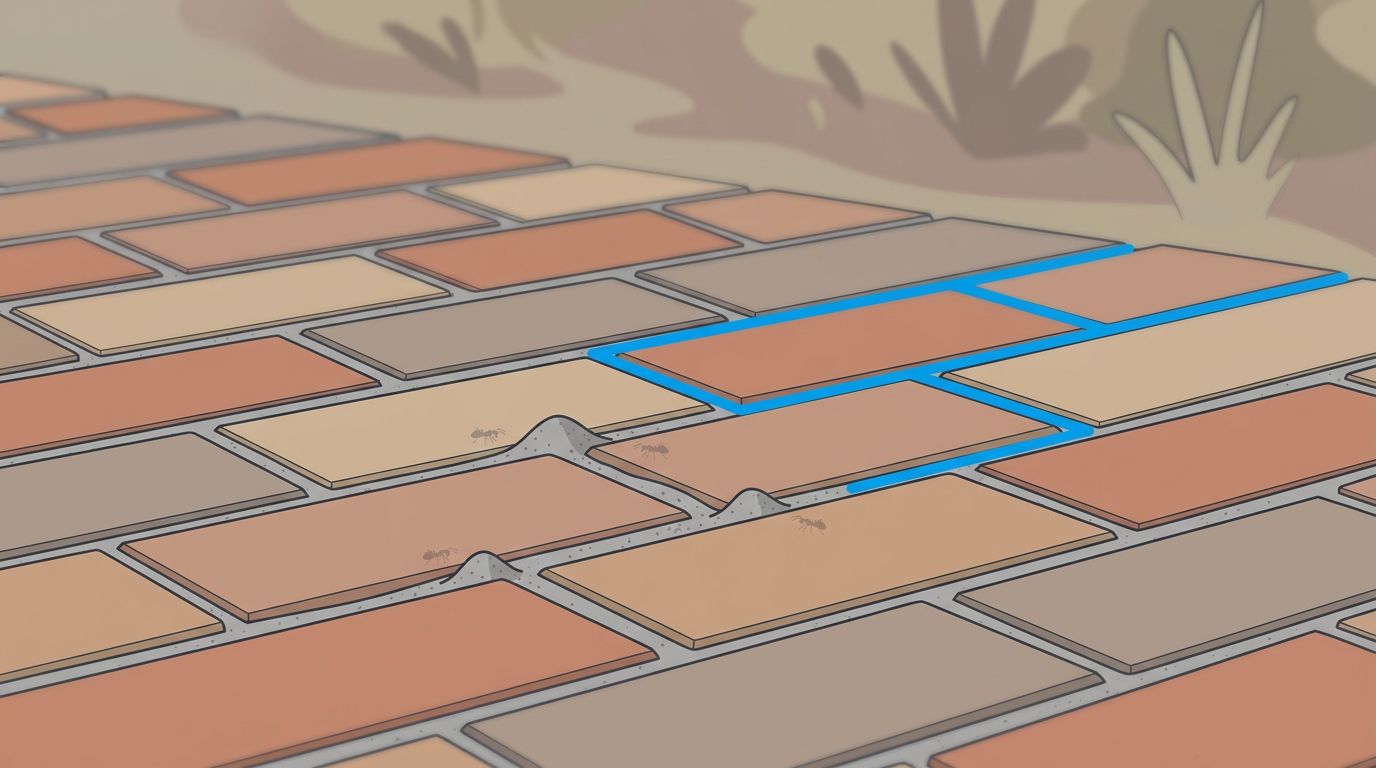
Those little dirt mounds do not show up by accident. When I spot ant hills in brick joints, I do not just see a messy surface. I recognize the work of pavement ants that are tunneling underneath your pavers and pushing your joint sand back up to the surface.
These piles are common sights on driveways and walkways, but they act as a major red flag for homeowners. The mound might seem small, but the underlying issue is significant. If you know what these hills mean, you can address the root cause before the joints become hollow, the sand washes away, and your pavers start looking tired or uneven.
Key Takeaways
- Ant mounds appearing between brick joints are primarily composed of joint sand excavated by pavement ants, signaling a breach in your paver surface.
- These infestations suggest that joint sand is loose, worn down, or improperly sealed, making it easy for insects to tunnel beneath the pavers.
- Ignoring these piles can lead to structural instability, as the loss of sand undermines the bedding layer and promotes water infiltration or paver shifting.
- Effective maintenance requires addressing the insect colony first, then refilling joints with polymeric or resin-based compounds to create a more resilient, permanent barrier.
Those tiny piles are usually your joint sand
Most of the time, the hill is not soil hauled in from somewhere else. It is actually sand from the joints. Pavement ants often seek out dry, protected spaces, and the paver joints between bricks provide the ideal environment for their needs. These insects dig below the surface to build an underground colony, moving fine materials to the surface and leaving a neat little pile behind.
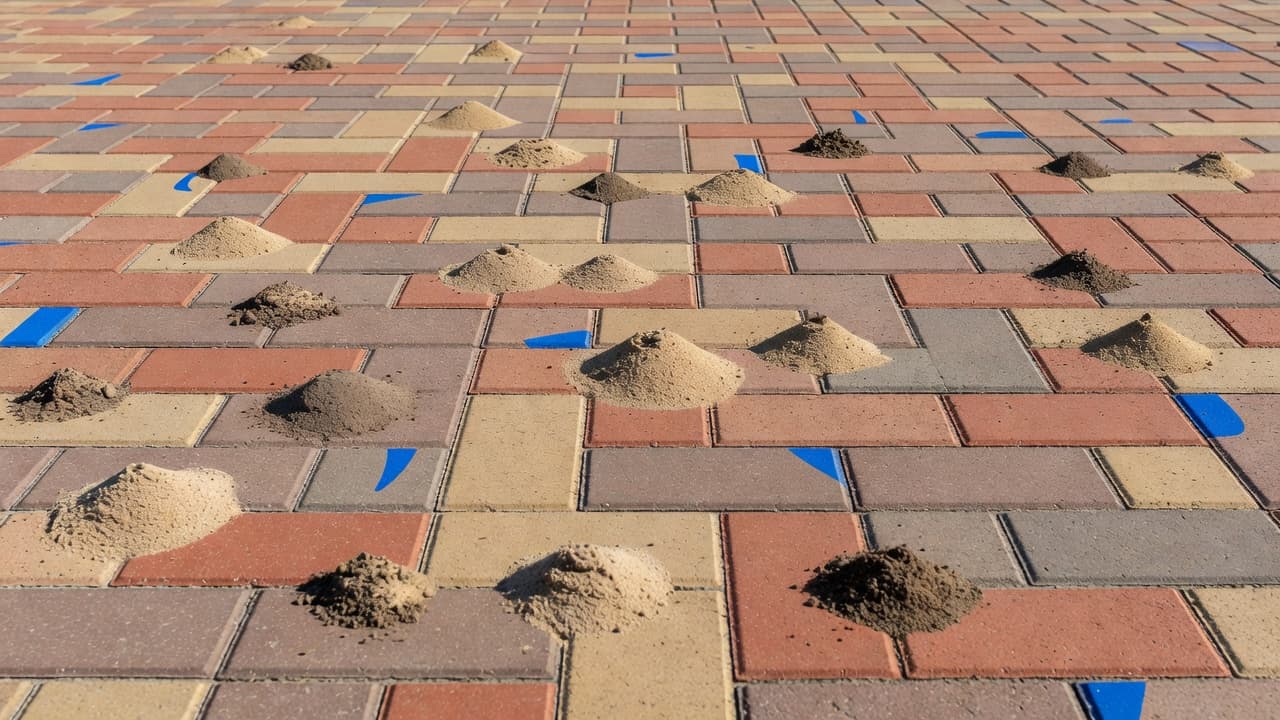
When I inspect pavers, I usually see the same pattern. The ant mounds show up where the sand is already loose, where a sealer has worn down, or where the surface stays warm and dry. A brick driveway can feel solid underfoot, but the joints are still the weak spot if they are not full and stable.
This is why ant hills between brick joints matter more than they look. The ants are not eating the brick; they are simply taking advantage of a gap that already suits them by excavating fine materials. The pile on top is often less about aggressive behavior and more about the presence of open, easy to move joint sand.
Why this can turn into a paver problem
One or two ant hills may not mean your driveway is failing, but a steady stream of them indicates a true ant infestation. Every time these pavement ants push sand out of the cracks and crevices, they leave less material behind to lock the stones together. Over time, this tunneling can reach and disrupt the bedding layer, which destabilizes the entire surface. Once the structural sand is gone, it becomes much easier for water to infiltrate the base, weeds to sprout, and edges to loosen.
If ants can move the joint sand, rain and runoff can move it too.
I also look at what happens after a storm or after routine sweeping. If the piles return quickly, an active underground colony is clearly present. When ants continually navigate through these cracks and crevices, they speed up wear that would have eventually occurred anyway. If the joints already look shallow, the nest is simply accelerating the decline of your hardscape.
Homeowners often notice this during other exterior cleanup jobs. Maybe you scheduled pressure washing and the open joints suddenly became obvious. Maybe you were focused on roof cleaning or a soft wash for the house, and then saw the pavers looking rough by comparison. Different surfaces often share the same lesson, which is that small maintenance gaps tend to show up together.
What I check before I blame the ants alone
I do not like treating the pile and calling it done. I want to know why that spot was attractive to pests in the first place. Was the joint sand washed down too far? Did old sealer wear off? Does that section get strong sun all day and stay bone-dry? Or is water draining under the edge and leaving gaps behind?
Location tells me a lot. If I see ant hills near borders, control joints, or spots where the pavers meet concrete slabs, I start thinking about movement and washout. I also pay close attention to the area around building foundations and nearby concrete slabs, as these spots often create the perfect microclimate for colony activity. If I see them scattered across the whole field, the sand may be low everywhere. When the surface has weeds, fading color, and loose-feeling joints, the ants are usually just one symptom, not the whole problem.
Furthermore, if the joints are not properly sealed, ants may easily excavate the finer materials within the open graded base. This creates hollow areas beneath the pavers that lead to shifting or sinking. Timing matters too. Right after heavy rain, you may see fresh mounds because the nest was disturbed. During dry stretches, ants often settle in because the joints are easier to work with. Either way, the message is the same: the pavers need attention below the surface rather than just another quick sweep.
How I fix the cause, not only the hill
Sweeping away the displaced soil helps for about five minutes. If the nest stays active and the joints stay open, the pile comes back. I start with the ant issue, then I deal with the paver system itself. That usually means cleaning, choosing a better joint fill, and deciding whether driveway sealing makes sense for the age and condition of the surface.
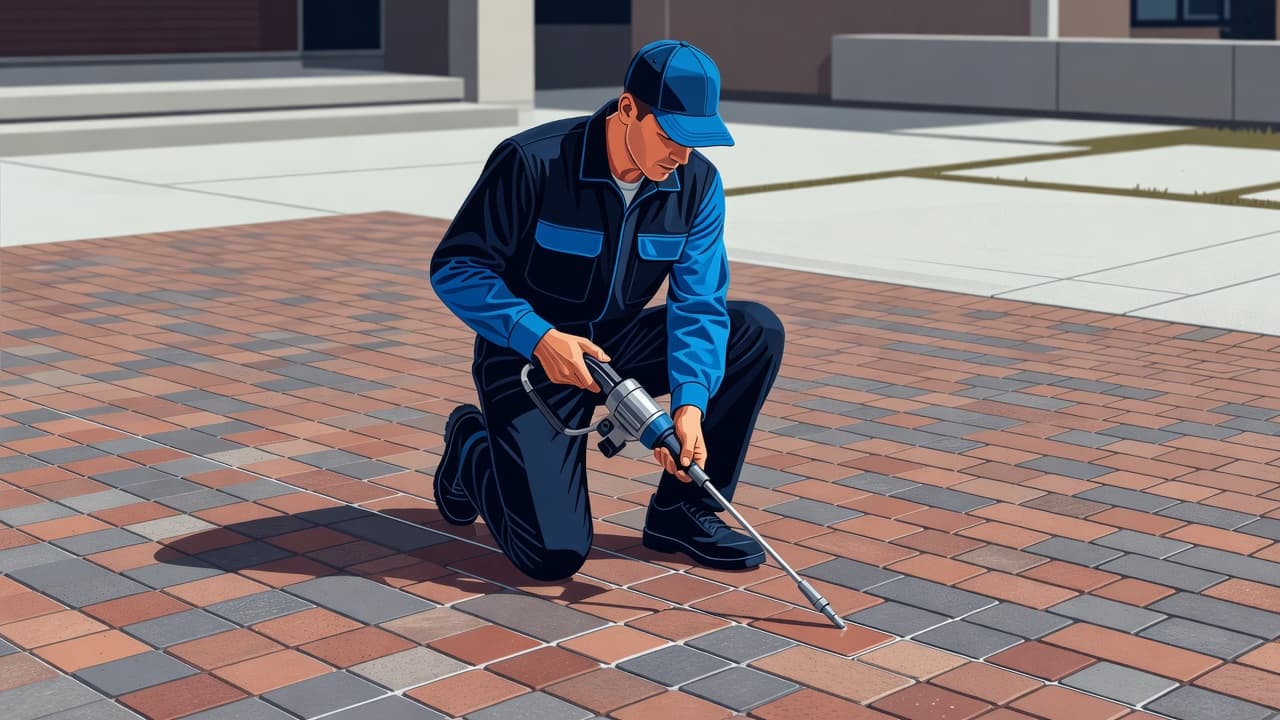
To eliminate the colony, you can try pouring boiling water directly into the opening, or apply a targeted insect killer if the infestation is localized. For persistent problems that refuse to go away, I recommend consulting a pest control professional. Once the ants are addressed, a good cleaning shows how much sand is missing. I suggest replacing old sand with polymeric sand or a resin-based jointing compound, which helps tighten the field and resists future tunneling. Sealing the surface can also help lock that sand in place and make the joints less inviting. While it will not stop every insect forever, it removes the easy access ants prefer.
I would not lump paver care in with every exterior service, because the fix is different. Still, homeowners who already maintain their driveways and walkways often choose to handle the pavers at the same time because the wear is easy to see once everything is clean. If your surfaces need that kind of reset, Get a Quote for sealing or pressure cleaning services before the joints open up more.
Frequently Asked Questions
Can I just sweep away the ant hills to solve the problem?
No, sweeping the sand away is only a temporary cosmetic fix. If you do not eliminate the underlying ant colony and secure the joints, the ants will simply push more sand out and rebuild the mound within days.
Why do pavement ants prefer my driveway joints over other areas?
These ants seek out dry, protected, and stable environments. Paver joints that are not properly sealed provide an ideal microclimate where the ants can easily dig and move material without interference from the surface.
Should I use polymeric sand to stop the ants?
Yes, using polymeric or resin-based sand is a highly effective way to prevent future tunneling. Unlike standard sand, these materials harden once activated, creating a tighter seal that makes it much more difficult for ants to excavate.
How do I know if the ant problem has damaged my driveway’s foundation?
If you notice your pavers starting to look uneven, shift when walked upon, or sink in specific areas, the structural bedding layer may be compromised. While minor mounds are a warning, these physical changes indicate that the tunneling has reached the base and requires professional repair.
Conclusion
When I spot little ant mounds in brick joints, I read them as a warning rather than a random nuisance. These pavement ants typically signal that they have found loose, dry joint sand and started tunneling in areas where the surface has become vulnerable. It is a common issue found in many outdoor paved areas, but it is one you can manage effectively.
Catch it early, and the fix is usually simple. Deal with the insects, restore the joint sand, and protect the surface if sealing is the right next step. Those tiny piles may look harmless, but they are often the first honest signal that your driveway or patio needs professional attention.