
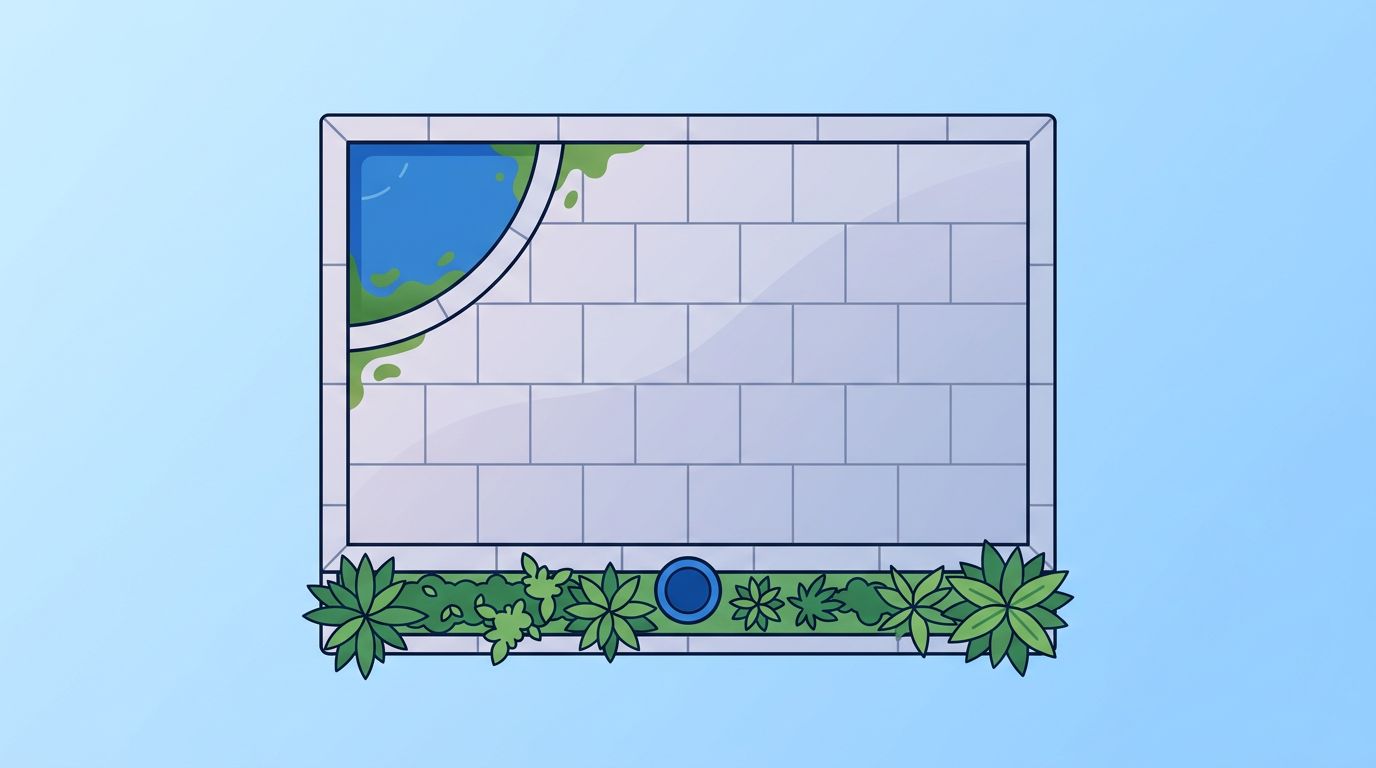
A patio shouldn’t stay wet long after the rain stops. When it does, I start looking for patio drainage problems before they turn into loose pavers, slippery growth, or water creeping toward the house.
I’ve seen small issues turn into expensive surface repairs because they looked harmless at first. A damp corner, a green film, or one sunken spot might feel minor, but they often signal that unmanaged water runoff is starting to undermine your hardscape. None of these issues feel urgent until they keep getting worse.
If your patio has been acting a little off, these are the signs I pay attention to first.
Key Takeaways
- Early Detection is Critical: Small signs like localized puddles, persistent damp patches, or recurring algae growth are early indicators that water is not draining properly.
- Look Beyond the Surface: Drainage issues often stem from external sources like overflowing gutters, roof runoff, or improper grading around the patio perimeter rather than the hardscape itself.
- Understand the Escalation: Ignoring minor moisture issues leads to structural damage, such as washed-out joint sand, shifting or sinking pavers, and potential foundation concerns near your home.
- Cleaning Isn’t a Cure: While pressure washing removes surface grime and moss, it does not fix underlying slope or grading problems; if the growth returns quickly, the water issue remains.
When water stays on the patio too long
The clearest warning is standing water. If I see puddles sitting in the same place after a storm, that patio is telling me something.
A healthy patio drains or dries at a pretty even pace. One wet patch that lingers for hours means the surface probably has grading issues, lacks a proper slope, has blocked surface drains, or features compacted joints that no longer move water the way they should.
If one corner dries last every single time, I don’t call that a quirk. I call that the start of a repair bill.
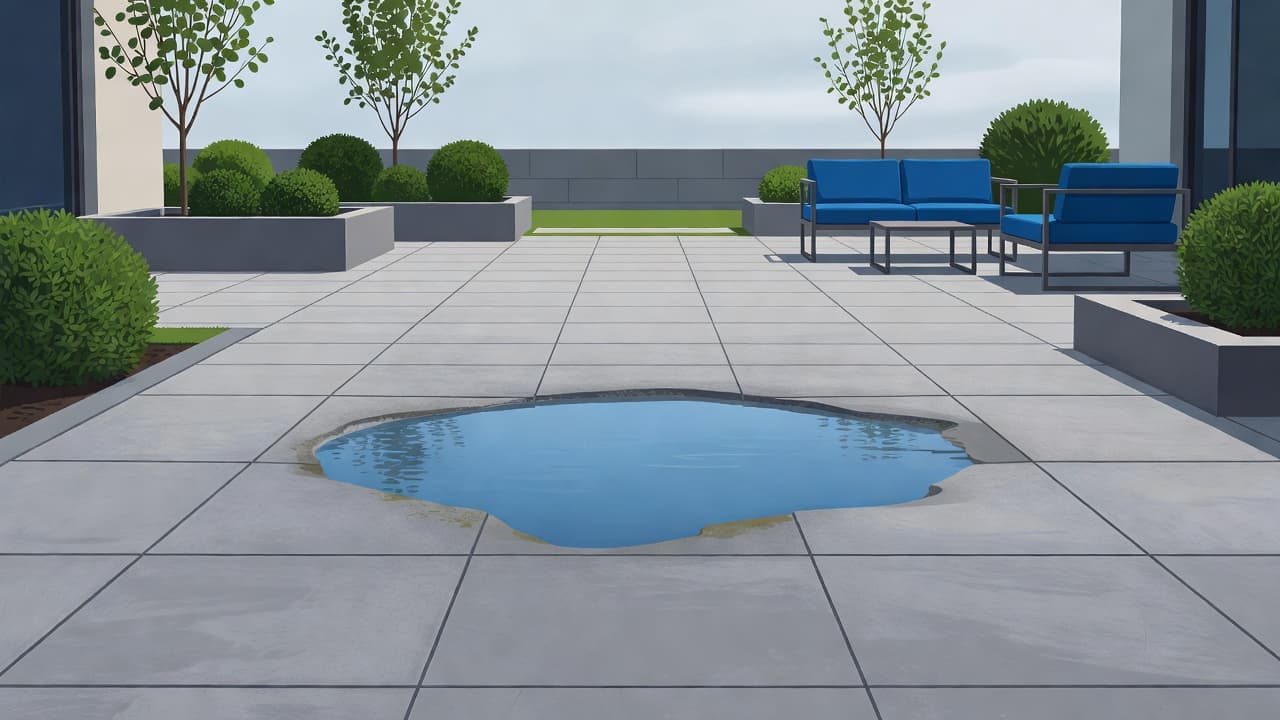
I also watch for the less obvious version of pooling. Maybe you don’t get a full puddle, but the surface stays dark and damp long after the rest has dried. That still points to water collecting below the surface or moving too slowly across it.
Rain isn’t the only test. I like to notice what happens after sprinklers run or after I hose the area down. If the same section gets soggy every time, the problem is built into the layout.
A few other clues tend to show up with lingering water:
- Dirt gathers in one area because runoff keeps dropping it there.
- Leaves and debris settle into the same low spot.
- Mosquitoes hover nearby because standing water keeps hanging around.
- Furniture feet sink slightly into soft joints or washed-out bedding.
None of those signs prove the full cause on their own. Still, when they happen together, I start thinking about slope and runoff right away.
Water is patient. It doesn’t need one giant storm to do damage. It only needs the same bad path over and over again.
Slime, stains, and washed-out joints usually mean moisture is hanging around
A patio does not need visible puddles to have a drainage issue. Sometimes the surface tells the story through stains and growth instead.
Green film, moss, and algae love spots that stay damp. If one strip of pavers keeps turning into slippery surfaces while the rest looks normal, I do not treat that as a cleaning problem alone. I treat it as a moisture problem first.
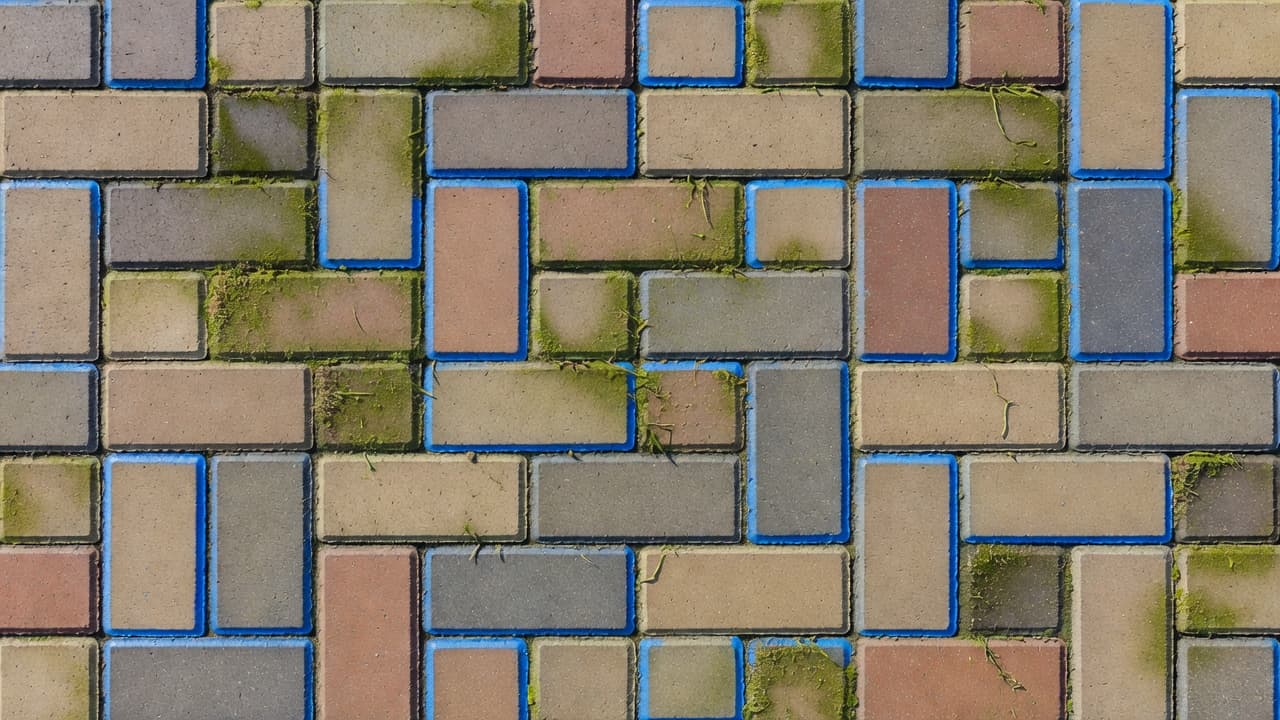
That slippery layer is more than ugly. It makes the patio hazardous, especially around pools, grills, and doorways. I have seen homeowners blame shade alone, but shade plus trapped moisture is usually the real combo.
Then there are the white, chalky marks. On a concrete patio or a paver patio, that residue can show up when water moves through the material and leaves minerals behind. One patch of it might be minor. Repeated staining in the same zone usually means too much moisture is passing through or sitting there.
The joints matter too. On paver patios, I check whether the polymeric sand is disappearing. Heavy runoff can wash it out little by little. When that happens, water gets deeper into the system, weeds move in faster, and the surface starts losing stability.
I also pay attention to smell. A damp, musty odor near the patio is easy to dismiss, but it often shows up when organic debris stays wet in joints, drains, or nearby planting beds.
Cleaning helps me see the surface more clearly, but cleaning alone is not the cure. Pressure washing can strip away algae, mud, and grime, which is useful. It shows me what the patio is doing underneath. If the same growth returns fast, I know the drainage issue is still there.
In other words, when the patio keeps growing slime like a petri dish, the water problem has not been fixed. Ignoring this persistent moisture is risky, as it does not just damage the surface aesthetics; it can eventually lead to foundation damage.
Loose pavers and sinking spots are later-stage warnings
Once drainage issues persist, the patio starts to move. That is when the problem becomes harder to ignore.
I look for loose pavers that rock underfoot, sinking pavers that disrupt the level surface, and sections that feel hollow. These issues often arise after water has washed out the sand and softened the underlying base material. Whether the patio was built on a compact gravel base or a layer of crushed stone, moisture that lingers for too long will eventually compromise the structural integrity of these layers.
A patio should feel solid. If it feels spongy, uneven, or slightly sunken, I assume water has been working underneath it for a while.
Sometimes the movement is subtle at first. A chair wobbles on one corner. A table needs a folded napkin under one leg. One paver keeps collecting grit around its edges because it has dropped a little lower than the rest. These are small clues, but they matter.
Cracks can show up too, especially on a concrete patio. Repeated saturation and drying cycles can weaken the slab over time. In colder climates, the freeze and thaw cycle makes it worse. In hot, wet climates, erosion around the slab is often the bigger issue.
What worries me most is where the patio meets the house. If the surface pitches the wrong way, water can head toward the foundation, door threshold, or lanai screen track instead of away from it. That is when a patio problem stops being a simple patio problem.
Here is the part many people miss: by the time pavers shift, drainage has already been poor for a long time. Surface movement is a late warning, not an early one.
If your patio feels uneven and still holds moisture, I would not wait it out. Water rarely decides to behave better on its own.
The source may be above the patio, not in it
Not every drainage issue starts at ground level. I have traced plenty of wet patio corners back to gutters, downspouts, roof runoff, and nearby hard surfaces.
A clogged gutter can dump a huge amount of water in one narrow spot. The patio takes the hit, even though the real failure is higher up. The same goes for short extensions that empty beside the slab or paver edge.
That is one reason I never look at the patio in isolation. I look up, then I look around.
If the roof is holding debris and overflow is constant, roof cleaning can help reduce the mess moving into the gutter line. A proper soft wash is often the safer way to clean roof surfaces, but it still has to be paired with good runoff control. Clean surfaces do not solve bad water paths.
The driveway can play a role too. I have seen water race off a sloped drive and pour straight onto the patio after every storm. Driveway sealing protects the driveway surface, which is smart maintenance, but it will not change the grade. To manage this heavy water runoff, I often recommend installing a channel drain or a trench drain system to redirect the flow away from the patio.
Landscaping can add to the trouble. Mulch beds built too high against the patio edge can cause soil erosion, which ruins the foundation of your pavers. Blocked drains and overwatered planters all change how water moves. Even one packed strip of soil can redirect flow back across the surface.
This is the checkpoint I use when I want the truth fast:
| What I notice | What I start checking |
|---|---|
| One patio corner stays soaked | Roof runoff, downspouts, low spots |
| Blocked drainage channel | Debris, clogs, pipe capacity |
| Green buildup returns fast | Shade, trapped moisture, poor drying |
| Joint sand keeps disappearing | Runoff speed, slope, edge washout |
| Water heads toward the house | Patio pitch, surrounding grade |
The pattern matters more than any single symptom. Once I see where the water starts, the fix gets a lot clearer.
What I do before drainage damage gets expensive
I don’t jump straight to a full rebuild every time I spot patio drainage problems. First, I try to figure out whether the problem is maintenance-related, runoff-related, or structural.
If the surface is dirty, I start by cleaning it well enough to expose the real condition. That may include pressure washing the patio to remove slippery buildup, packed debris, and old residue. Once the surface is clean, I can see the joints, the slope, and the low areas much better.
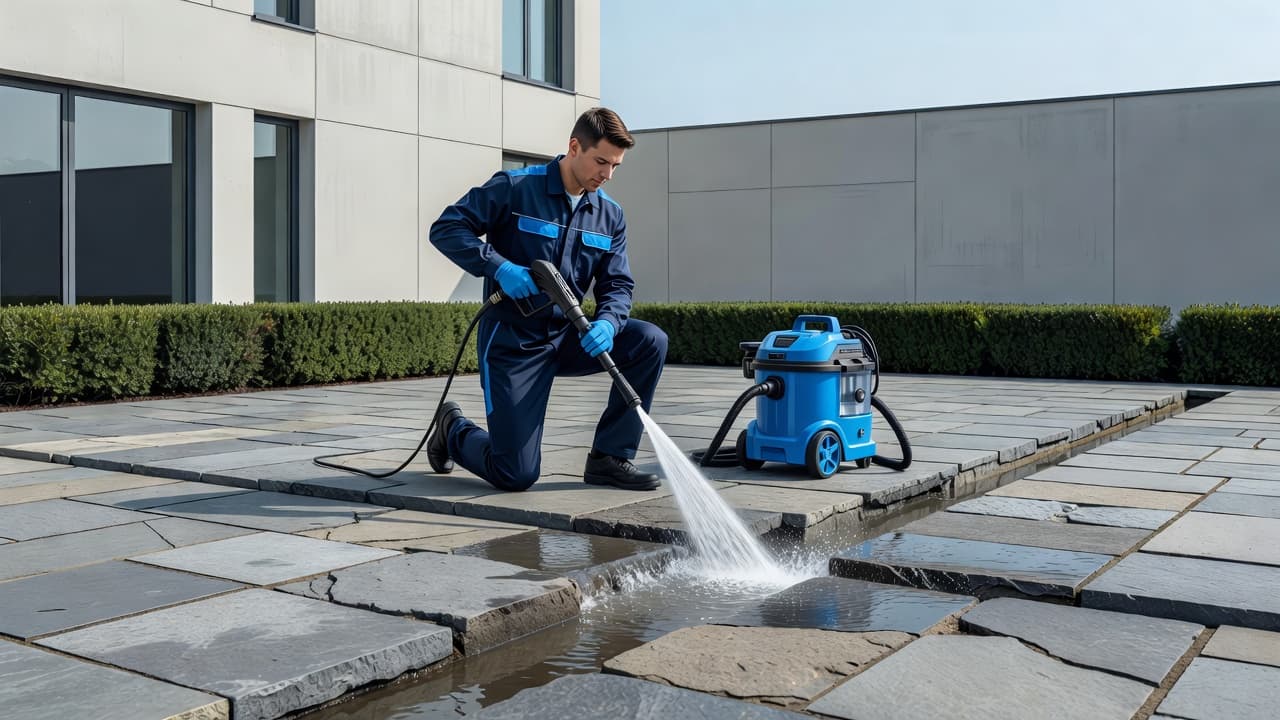
For a paver patio, I check whether the joints need fresh sand and whether the surface needs re-leveling in the trouble spots. If runoff is the main issue, I look at downspout extensions, drain clearing, grading changes, and edge containment before I blame the whole patio.
Sealing can help protect pavers after repairs, but I never confuse protection with correction. A sealer won’t fix a bad slope. It won’t stop water from pooling in a low spot. It works best after the drainage problem has been addressed.
When the patio is already shifting, slick, or washing out after storms, I think it’s smart to bring in a pro. If you need help with cleaning, re-sanding, sealing, or surface correction, Get a Quote and deal with it before one small wet area turns into a larger rebuild.
Frequently Asked Questions
Can I fix patio drainage issues myself?
You can address minor maintenance items like clearing debris from drains, extending downspouts, or topping off paver joint sand. However, if the patio has a significant slope issue or is sinking, professional intervention is necessary to prevent long-term structural damage.
Why do my patio pavers keep moving?
Pavers shift when water infiltrates the underlying base material, washing away the bedding layer and compromising the stability of the surface. This is usually a late-stage symptom of chronic drainage problems that have allowed water to pool or run off incorrectly for an extended time.
Is moss on my patio always a drainage problem?
While shade contributes to moss growth, a persistent strip of algae or moss typically signals that moisture is trapped in that specific area. If your cleaning efforts don’t stop the moss from returning quickly, it is a clear sign that water is lingering and the drainage needs attention.
How can I tell if water is heading toward my house foundation?
Pay attention to the pitch of your patio after heavy rain and ensure that the surface slopes away from the home structure. If you see water pooling near the door threshold or house foundation, this is an urgent drainage issue that requires professional grading or the installation of a channel drain.
The patio is telling on itself
Most patio drainage problems do not show up all at once. They start with a puddle that lasts too long, a patch of algae that keeps coming back, or one area that feels a little lower than it used to. Whether you have a paver patio or a concrete patio, the structure is susceptible to significant damage if standing water is allowed to remain after a storm.
That is why I trust the early signs. If water keeps following the same bad path, the patio will keep paying for it. The sooner I catch the pattern, the easier it is to fix the cause instead of chasing the mess it leaves behind. By staying observant, you can resolve your patio drainage problems before they become costly repair projects.