
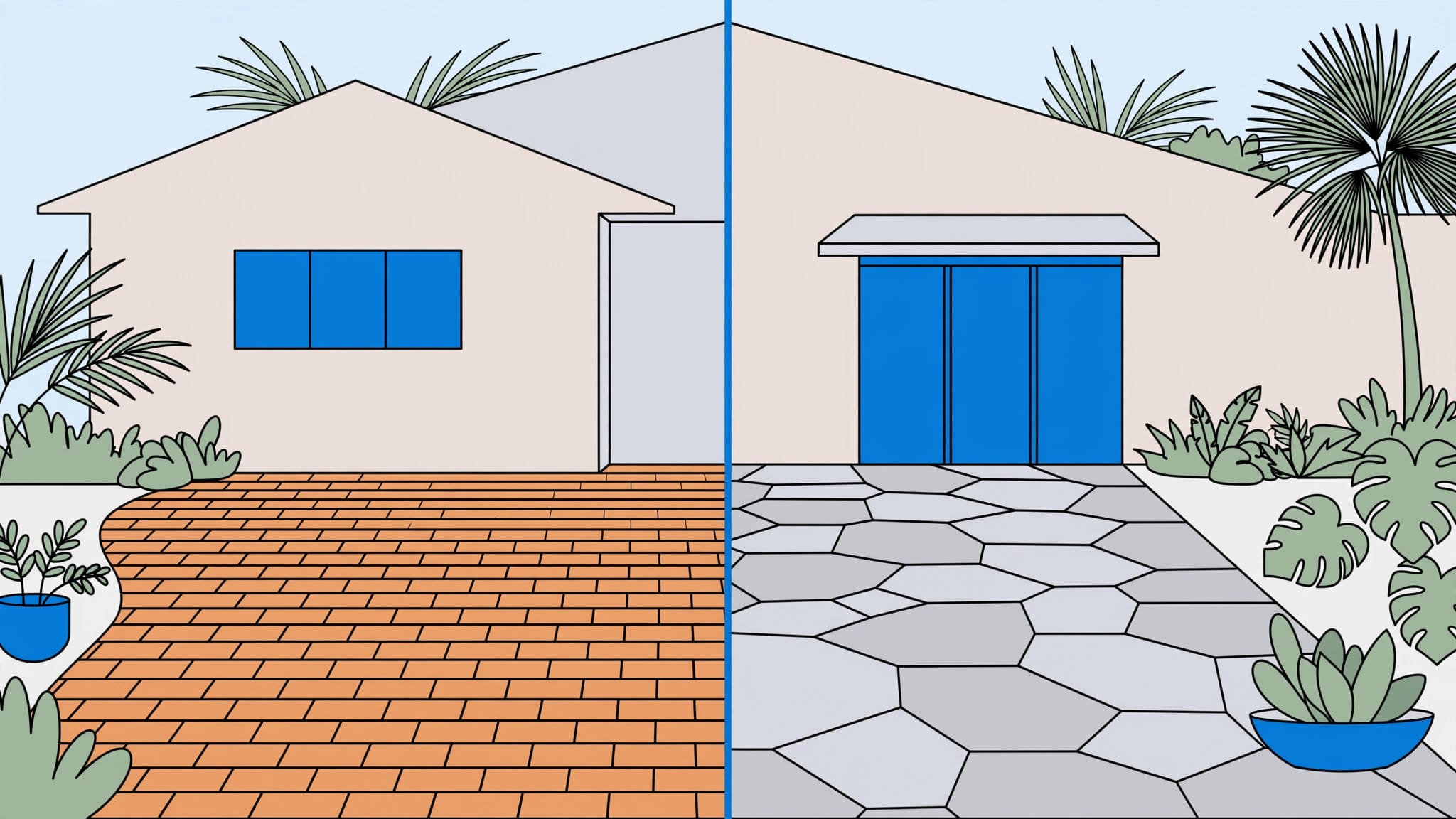
Southwest Florida patios need surfaces that handle more than foot traffic. When comparing brick vs concrete pavers, I recommend starting with drainage, daily use, and maintenance, then choosing the color and pattern. Installation quality matters, too.
Concrete usually offers a lower starting cost and more design choices, while fired clay brick offers lasting color and a traditional appearance. Both materials can provide a dependable surface when the base, joints, and drainage are properly built. First, it’s important to understand what you’re buying.
Clay Brick and Concrete Pavers at a Glance
In Florida, homeowners often use “brick pavers” to describe kiln-fired clay pavers and brick-shaped units. Those materials have different manufacturing methods and care requirements. Keep that distinction clear when comparing project estimates.
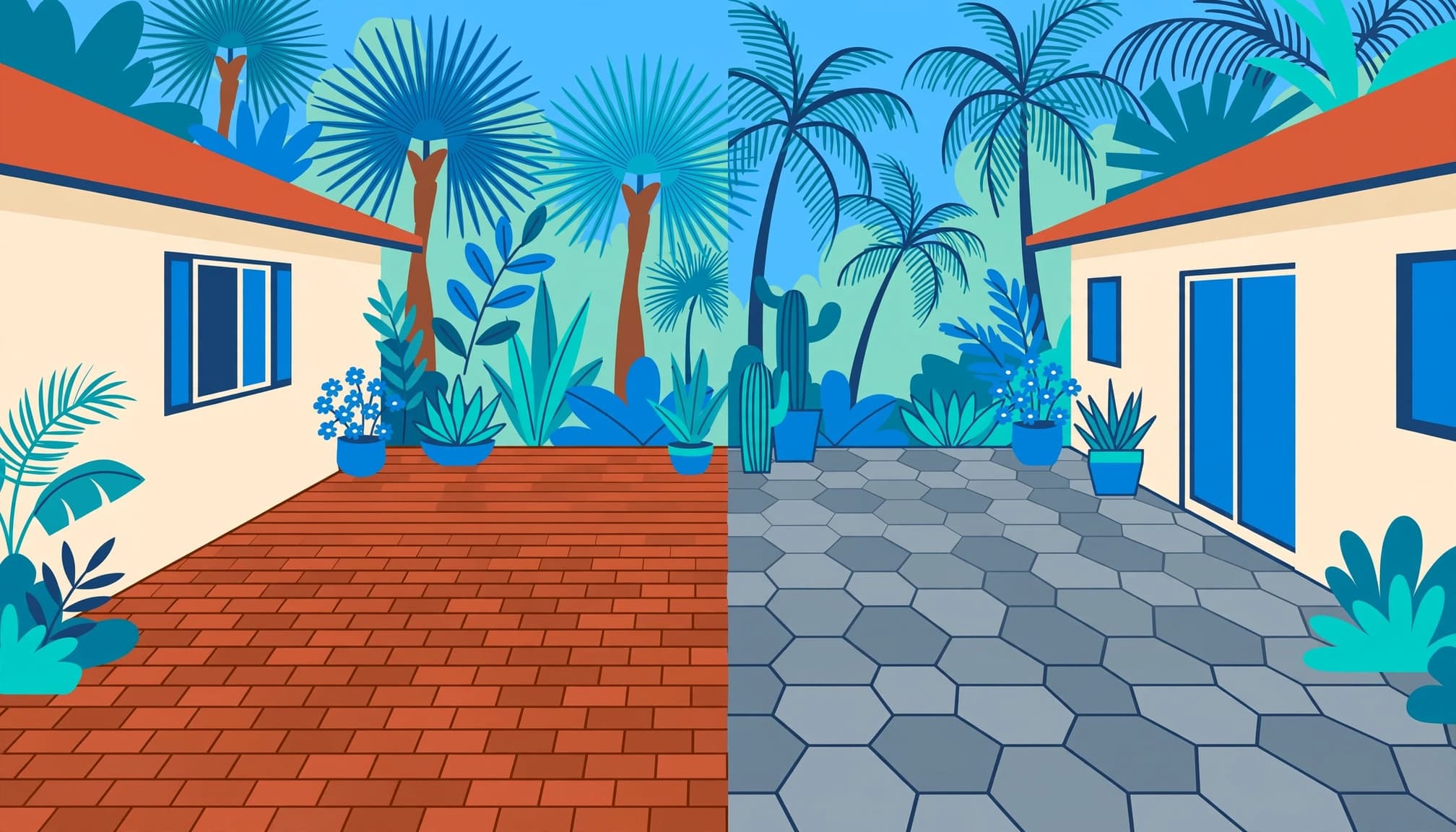
Clay brick has color fired into the material
These units are made from natural clay and hardened in a kiln. Their color runs through the material rather than coming from an applied surface coating, which helps them resist fading over time.
Reds, browns, and earthy blends suit traditional homes, courtyards, and covered lanais. The color range is narrower than concrete, but homeowners often choose brick for its familiar appearance.
Concrete offers more design choices
Concrete pavers contain cement, sand or aggregate, and pigments. Manufacturers cast them into many shapes, sizes, and textures, including finishes that resemble brick or natural stone.
They work well when you want gray tones, lighter colors, larger units, or a coordinated driveway and patio design. Design flexibility and appearance vary by product, surface wear, exposure, and maintenance.
Here are the main differences.
| Feature | Fired material | Concrete |
|---|---|---|
| Color source | Fired through the material | Created with pigments |
| Design choices | Mostly traditional shapes and earth tones | Broad range of shapes, colors, and textures |
| Starting cost | Often higher | Generally lower |
| Sealing needs | Usually minimal for color retention | Often helpful for surface protection |
For most homeowners, the choice comes down to appearance, project requirements, and the complete installation cost.
Durability in Southwest Florida weather
Rain, drainage, and traffic affect both materials
Heavy summer rain, warm humidity, and concentrated runoff can affect both paving systems. Water can wash out joints or undermine support near downspouts, driveway edges, and drains.
A strong unit can still settle when the material underneath it moves. I prioritize drainage and base condition over broad claims about durability.
The CMHA pavement application guide describes interlocking concrete paving as a flexible system supported by compacted soil and aggregate. Its performance depends on the complete assembly.
Clay pavers and concrete pavers can often be lifted and replaced individually. These pavers allow localized repairs without removing an entire driveway or patio.
Lifespan claims need the right context
Australian Paving estimates that clay lasts more than 50 years and concrete lasts 20 to 40 years. Those are vendor estimates, not guarantees for a Florida property.
Emerson Pro Services associates paving cracks in Texas with expansive soil and temperature swings. That regional contractor’s explanation doesn’t establish how the materials compare in Southwest Florida.
Here, installation quality, vehicle loading, runoff, and ongoing maintenance deserve more attention than a promised lifespan. Neither material is maintenance-free, and neither can compensate for a failing base.
Upfront cost and long-term value
Concrete pavers are often the less expensive starting option. Landtech Scenery places concrete at the budget-friendly end, brick in the middle, and natural stone at the premium end.
That order isn’t universal. Premium concrete designs can cost more than simpler clay products. Access, demolition, drainage work, and installation details also affect the total.
Some clay brick products have less consistent dimensions. Sorting them, managing joint widths, and making difficult cuts can add labor. More uniform sizing makes pavers easier to cut.
I recommend comparing complete project scopes rather than material prices alone. Excavation, bedding sand, edging, joints, drainage corrections, and finishing all belong in the comparison.
Start with the actual driveway area. Lowe’s paver planning guide uses square footage to determine quantities of pavers, base, and sand.
Long-term value also includes cleaning, repairs, and future sealing. A lower purchase price doesn’t help much if omitted drainage work leads to repeated settlement.
Base preparation and installation matter most
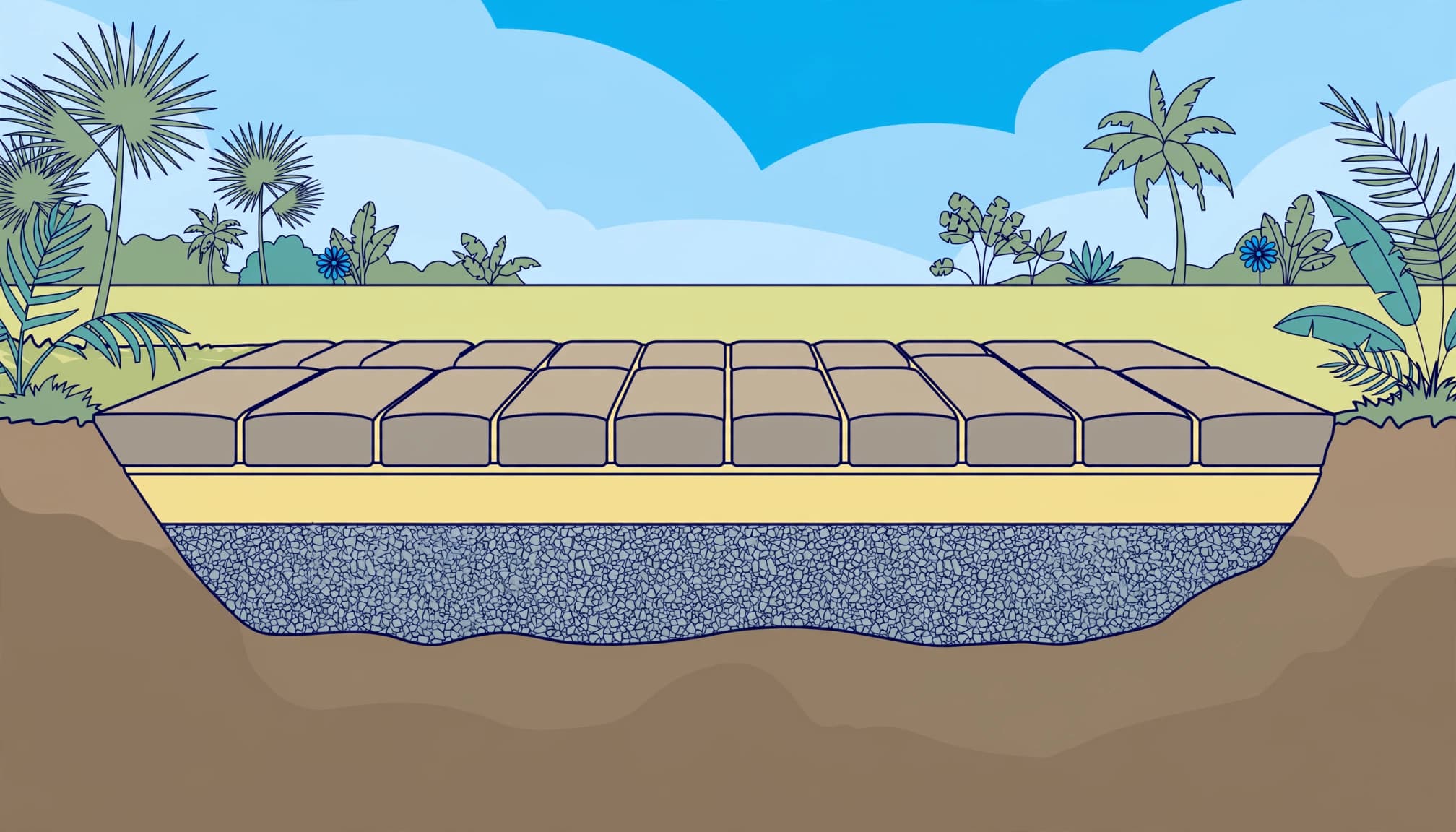
Build support beneath the pavers
For conventional sand-set installation, both clay and concrete pavers need prepared soil, a compacted aggregate base, and a bedding-sand course. Loose dirt or scattered pebbles won’t provide dependable support.
Compact aggregate in layers. Rebuild soft or washed-out areas before resetting the units. Where the design calls for it, geotextile separates native soil from the supporting aggregate.
Bedding sand provides a thin leveling course. It shouldn’t fill a deep hole or replace missing base support.
Edge restraints keep pavers from spreading. Joint material helps the units work together, but it can’t stabilize a failed base.
Adding joint sand or sealer won’t repair settlement caused by missing support underneath the pavers.
Plan dimensions, drainage, and excavation
A walkway should be at least 3 feet wide. A driveway needs enough space for the vehicle, door clearance, and comfortable entry and exit.
Buy about 10 percent extra units for cuts, breakage, and future repairs. Keep usable leftovers for easier color matching later.
Before excavation, call 811. Sunshine 811’s homeowner guidance explains how member utilities receive requests to mark underground facilities.
Set the grade before placing the bedding course. Water needs a working drainage path, including an outlet low enough to receive it.
Cleaning and sealing for lasting appearance
Treat buildup without damaging the surface
Warm, damp conditions encourage algae, mildew, and moss, especially around shaded lanais and pool decks. Organic growth can make either material slippery.
White, chalky efflorescence is different. It’s a mineral deposit, not algae, and needs a suitable treatment rather than aggressive washing.
I recommend sweeping debris and treating spills early. Oil, fertilizer, palm berries, and mulch can stain porous pavers if left in place.
Controlled pressure washing can remove grime, but excessive pressure can etch the surface and strip joint material. Choose a cleaner suited to the masonry and stain.
Routine maintenance includes watching for recurring puddles or lost joint material.
Seal for protection, not structural repair
Fired clay generally needs minimal sealing to retain its baked-in color. A suitable product can still reduce staining and make cleaning easier.
Concrete often benefits from a protective coating to slow surface wear. The right product depends on the concrete units, existing coating, moisture conditions, and desired finish.
For either material, cleaning, repairs, and complete drying come first. Applying a protective product to damp joints, residue, or unstable pavers can create additional problems.
I don’t recommend one maintenance schedule for every property. Sun exposure, traffic, shade, pool splash, and coating condition affect when care is needed.
Which pavers fit your project?
For a driveway, brick pavers and concrete pavers can both work if they’re rated for vehicle traffic. Choose a stable base and firm edges before settling on a pattern.
Concrete is often a practical driveway choice when budget and design flexibility lead the decision. Clay suits homeowners who prefer traditional brick and lasting color retention.
For a patio or walkway, either material offers useful design options. Clay works well with warm exterior colors and traditional courtyards. Concrete makes it easier to coordinate different shapes and larger paving formats.
For a pool deck or patio, comfort and wet-surface traction deserve extra attention. Lighter color choices generally absorb less heat than darker ones, but neither material is guaranteed to stay comfortable in direct Florida sun.
Texture and sealer finish also affect traction on pavers. A glossy finish shouldn’t take priority over safe footing around water.
For a covered lanai, clay’s traditional appearance can be a good fit. Concrete suits a wider range of contemporary and coastal designs.
Key takeaways for homeowners
- Choose fired clay for a traditional appearance and lasting color in the material itself.
- Consider concrete for broader design choices and often lower upfront costs.
- Either type of pavers can perform well with suitable base preparation and maintenance.
I recommend choosing the complete paving system, not judging the project by the surface material alone.
Frequently asked questions
Should brick pavers be laid directly on dirt?
For a conventional sand-set installation, no. Prepared soil supports a compacted aggregate base and bedding sand. Direct placement on loose soil increases the risk of movement, unevenness, and drainage problems.
Do clay brick surfaces fade like concrete?
Fired material generally resists color change because its color runs through the material. Dirt, mineral deposits, and worn sealer can still make it look dull. Pigments and surface appearance can change with weathering and wear.
What are permeable pavers?
Permeable pavers allow water through open, aggregate-filled joints into a designed drainage base. They need different installation and maintenance methods. With permeable pavers, ordinary joint sand or unsuitable coatings can obstruct those openings, so conventional sealing methods aren’t automatically appropriate.
Choose dependable performance for your property
Choose based on the appearance you prefer, your budget, and how you plan to use the space. Sound construction and regular care help a patio or driveway perform reliably.