
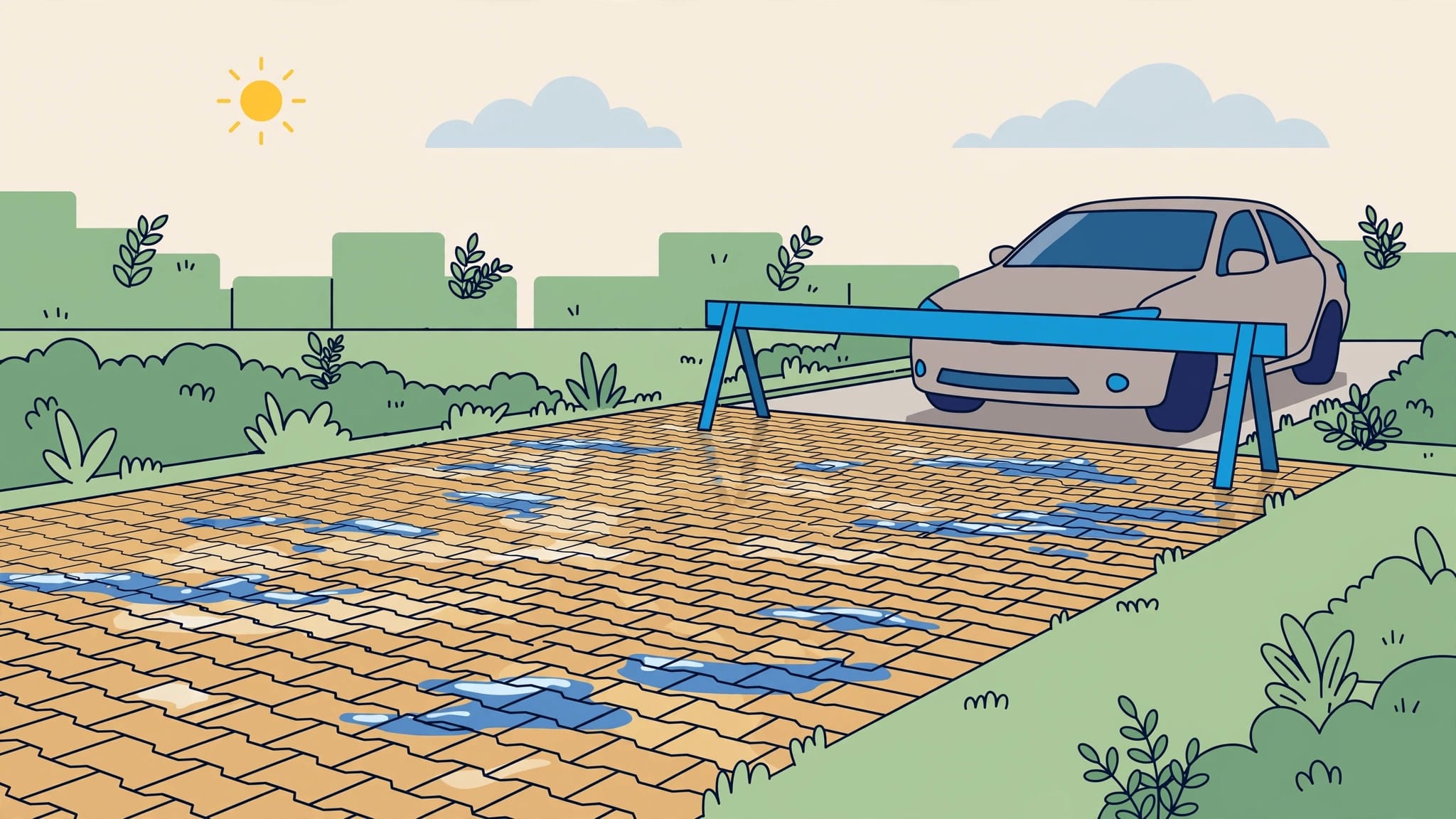
Parking too soon can leave tire marks across pavers that looked clean and finished hours earlier. Follow the product label and manufacturer’s instructions before returning cars to the driveway. The wait may be 48 to 72 hours, but temperature, humidity, shade, and other weather conditions can extend it.
Pavers can look dry before the product has had time to cure. Wait until the label says the sealed driveway is ready for vehicle use.
Key Takeaways
- Follow the sealer label and manufacturer’s cure instructions before allowing foot or vehicle traffic. Passenger cars commonly need 48 to 72 hours, but slower drying conditions may extend the wait to 3 or 4 days.
- Temperature, humidity, shade, and rain affect curing. A surface that feels dry may not be ready for tires, and a tacky coating needs more time.
- New pavers need time before first sealing. Belgard recommends one week for non-film-forming sealers and 30 days for film-forming sealers; the article’s Southwest Florida guidance recommends waiting 60 to 90 days.
- Repair pavers and drainage issues, restore missing joint sand, and let the cleaned surface dry completely before applying sealer.
How Long to Stay Off a Newly Sealed Paver Driveway
These periods are examples, not guaranteed wait times. Check the paver sealer label and manufacturer’s instructions for separate foot traffic, passenger-car, and heavy-vehicle requirements. Vehicle traffic depends on the product’s stated cure time, and temperature can affect drying time.
| Activity | Waiting period |
|---|---|
| Light foot traffic on pavers | Surface Logix gives 2 to 4 hours in ideal conditions; acrylic sealant often needs about 24 hours. |
| Passenger cars | Commonly 48 to 72 hours; allow 3 to 4 days when drying takes longer. |
| Heavy vehicles or trailers | Follow the product’s heavy-traffic cure requirements. |
| Rain exposure | Check the label and forecast, and protect the surface during any required rain-free period. |
| First sealing after pavers are installed | Belgard gives one week for non-film-forming sealers and 30 days for film-forming sealers. |
Surface Logix’s traffic guidance separates early walking from full cure, which usually takes 48 to 72 hours on pavers.
For Southwest Florida conditions, Kingsway’s sealed-paver traffic guidance allows a conservative 3 to 4 days before driving.
Why Sealer Type and Weather Change the Schedule
Surface Dryness and Full Cure Are Different
Dry-to-touch, ready for foot traffic, and fully cured are separate stages, and each product has its own cure schedule. Product chemistry, coat thickness, and retained moisture affect curing time, so follow the manufacturer’s directions for the final cure before reopening the driveway.
A coating that feels dry may still lack the strength to handle tires on pavers. Early driving can leave impressions, lift the coating, or cause delamination. Warm tires can soften an uncured finish and pull it away from the pavers.
If the coating is still tacky, keep vehicles off it even when the planned waiting period has passed.
Temperature, Humidity, and Rain Matter
Belgard identifies about 75°F and sunny weather as ideal, with 50°F to 90°F generally suitable. Surface Logix warns that a temperature below 50°F slows the process and makes sealing a poor choice.
High humidity, shade, and other weather conditions can extend the wait. A solvent-based sealer may evaporate faster, but its product directions still control the schedule.
Rain during the first 24 hours can wash away uncured material or leave a cloudy, uneven finish. A full day doesn’t guarantee readiness for every product. Protect the surface from sprinklers and cleaning runoff too.
When a New Installation Is Ready for Sealing
Film-Forming and Penetrating Sealers Offer Different Finishes
Film-forming sealers create a physical barrier over concrete pavers. They generally offer stronger surface protection and can produce a color-enhanced finish or a wet look.
Non-film-forming sealers penetrate without leaving the same surface coating. They look more natural and may last somewhat longer, depending on the product and exposure.
Belgard’s paver-sealant guidance gives initial waiting periods of one week for non-film-forming sealers and 30 days for film-forming products. The product label controls when a new installation is ready, and damp surfaces aren’t ready just because the waiting period has passed.
Florida Installations Often Need More Time
For new Southwest Florida installations, I recommend a conservative 60 to 90 days before first sealing. This local guidance gives moisture more time to escape and salts more time to reach the surface, where efflorescence can appear.
Remove efflorescence and let moisture dry before sealing. The longer local allowance accounts for humidity and installation conditions, but it doesn’t replace the manufacturer’s directions.
A coating won’t correct sunken units, missing joint sand, or drainage problems. Repair those conditions before sealing.
Prepare the Driveway Before Applying Sealer
Good surface preparation starts with clean, stable, completely dry pavers. I recommend completing roof cleaning or nearby soft wash work first, so rinse water doesn’t reach the paver driveway.
Follow this preparation order:
- Repair loose or uneven pavers and address drainage problems before cleaning.
- Use controlled pressure washing to remove dirt, algae, and residue without damaging paver faces or washing out joint sand.
- Remove efflorescence with a compatible cleaner. Belgard describes Paver Prep as opening pores to improve sealer penetration.
- Restore missing joint sand, then follow the product label for any activation period and drying time. Let the joint sand dry for the full interval.
- Allow the cleaned surface to dry completely before sealing.
- Apply the specified coverage evenly. Where the system calls for saturation, follow with a dry roller to absorb excess and prevent lines or drip marks.
Pavers must be completely dry before sealing. Trapped moisture can create a white, hazy blush beneath the finish.
Kingsway’s guidance on drying pavers in Florida humidity explains why shaded joints and low areas can retain moisture longer than the visible paver surface.
Resealing Costs and Long-Term Maintenance
Check the paver sealer manufacturer’s maintenance guidance. A 3-to-5-year resealing interval is a general estimate, not a fixed schedule. Traffic, sunlight, product performance, and surface wear affect that timing. Inspect the finish rather than adding coats automatically.
Professional paver sealing commonly costs about $1.00 to $6.00 or more per square foot. DIY materials for a typical driveway may run $100 to $250. These are broad planning ranges, not Kingsway prices.
Cleaning, repairs, joint-sand replacement, and stripping failed coatings can increase project costs. Excess coating can also create haze or slippery areas, so additional product doesn’t automatically provide better protection.
Frequently Asked Questions
How long should I wait before parking on a newly sealed paver driveway?
Passenger cars commonly need 48 to 72 hours, but some conditions require 3 to 4 days. Follow the product label, since cure times vary by sealer and weather.
Is a driveway ready for cars when the sealer feels dry?
No. Dry-to-touch and fully cured are separate stages, and tires can damage an uncured coating. Keep vehicles off the pavers if the coating is tacky.
How long should new pavers wait before their first sealing?
Belgard recommends one week for non-film-forming sealers and 30 days for film-forming products. For new Southwest Florida installations, the article recommends a conservative 60 to 90 days, while still following the product directions.
What should I do before applying sealer?
Repair loose or uneven pavers and drainage problems, clean the surface, restore missing joint sand, and let the pavers dry completely. Trapped moisture can cause a white, hazy blush beneath the finish.
Give the Driveway Time to Cure
I recommend planning alternate parking before sealing begins. Treat 48 to 72 hours as a planning reference, not a guarantee. Follow the product label and allow more curing time if conditions slow the cure.
Protecting the fresh finish is easier than repairing tire damage. You can Get a Quote for paver sealing or pressure cleaning in Southwest Florida.