
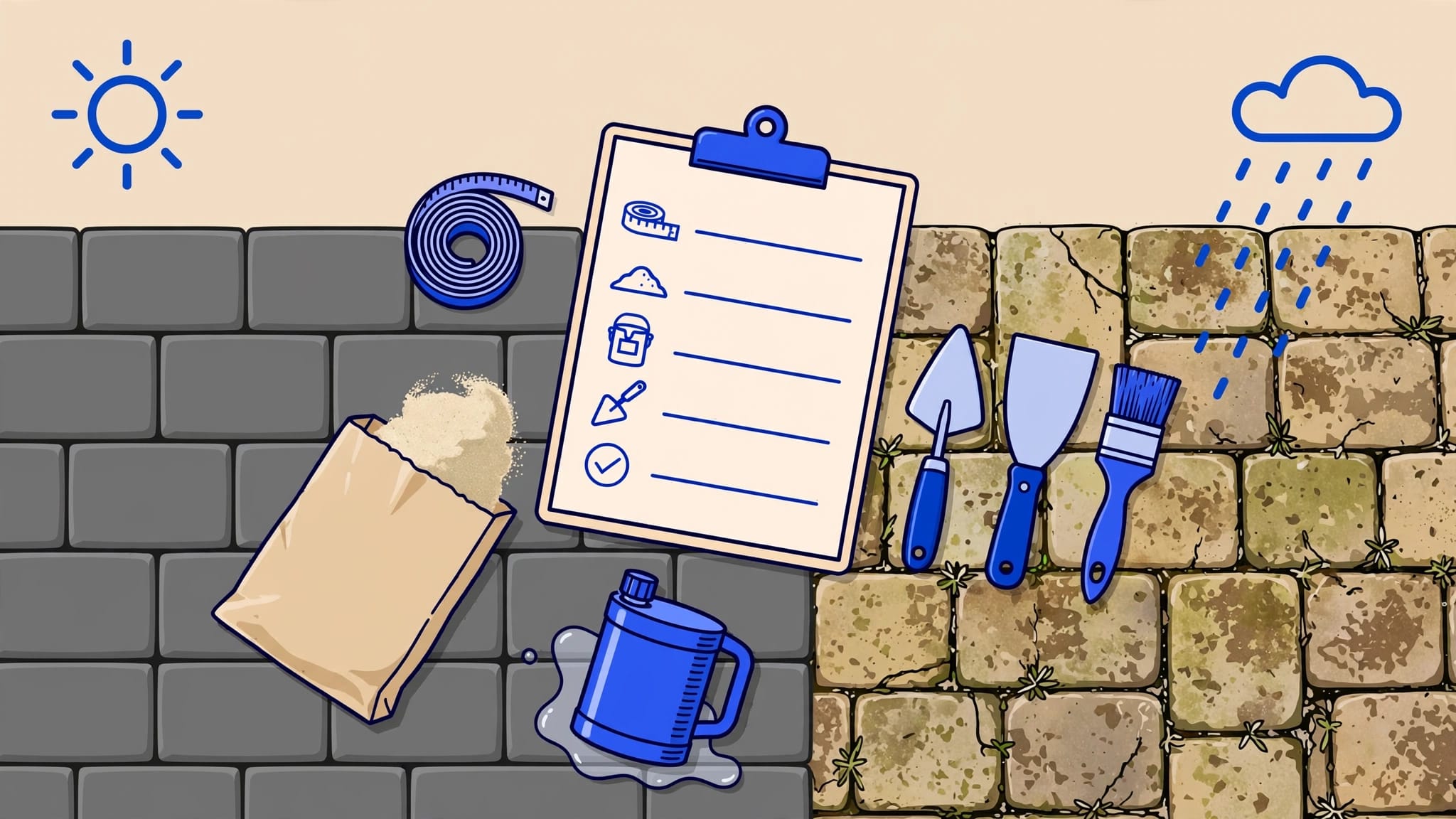
A low price isn’t always a problem, but a vague paver sealing quote can hide missing work. This checklist explains how to compare quotes by scope, preparation, sealer, repairs, drainage, timing, coverage, and maintenance, not price alone.
I have seen Florida pavers take a beating from sun, humidity, heavy rain, irrigation, salt air, and traffic. A detailed quote protects your property, budget, and the appearance of your driveway, patio, pool deck, or lanai.
Use this checklist before you hire a contractor for paver restoration and sealing.
Key Takeaways
- Compare paver sealing quotes by measured area, preparation, repairs, materials, labor, access, exclusions, and maintenance—not price alone.
- A complete quote should explain cleaning, stain treatment, joint sand, drying time, sealer type, number of coats, final cleanup, and weather delays.
- Drainage problems, loose or rocking pavers, missing joint material, and old sealer should be identified and priced separately before sealing.
- Florida’s sun, humidity, rain, salt air, pool water, and traffic affect preparation, curing, sealer performance, and long-term maintenance.
- Ask for an itemized written scope and compare contractors using the same measured areas and included services.
Start With the Size and Condition of Your Paver Area
A contractor should inspect and measure the pavers before giving a final price. Square footage matters, but condition and access also affect the work.
A clean, stable patio with good joint sand and limited weed growth is quicker to restore than a driveway with black mildew, loose pavers, missing sand, old peeling sealer, and oil stains. I review the full condition and access before recommending cleaning, sanding, sealing, or repair.
Measure every area included in the quote
Ask the contractor to list each area being sealed and note access, furniture, screens, landscaping, and difficult edges. The quote should clearly state whether it includes the driveway, walkways, patio, pool deck, front entry, lanai, or side yard.
Ask for the measured square foot total for every included area. Slopes, tight access, furniture, screens, landscaping, and extra preparation can increase labor costs.
A rough guess can change after the crew arrives. Measuring each area helps homeowners understand what they’re paying for.
Common surfaces included in Florida paver projects are:
- Brick paver driveways with tire marks, mold, and faded color.
- Pool decks that need careful cleaning around screens and coping.
- Travertine patios and lanais that need a sealer matched to natural stone.
- Walkways where joint material has washed out after summer storms.
Look beyond the paver surface
The pavers may look worn, but the real issue can be underneath. Rocking pavers, low spots, and standing water can signal drainage concerns. Separated edge restraints, missing joint material, old coating, and stains may require repairs before sealing.
Sealing should not hide a problem that needs repair. I recommend taking photos of damaged areas before work begins, especially after heavy rain or landscaping work. Request a written list of needed repairs before approving the sealing.
A good quote lists cleaning and sealing separately from base repair, paver replacement, and drainage correction. These should appear as separate line items, with no repair hidden inside the sealing work.
What a Florida Paver Sealing Quote Should Include
A complete quote should explain each step in plain language. The written scope should identify the pressure washing method, stain treatments, drying time, joint work, sealing, and final cleanup. If it only says “pressure wash and seal,” ask more questions before you approve it.
Cleaning is not a quick rinse
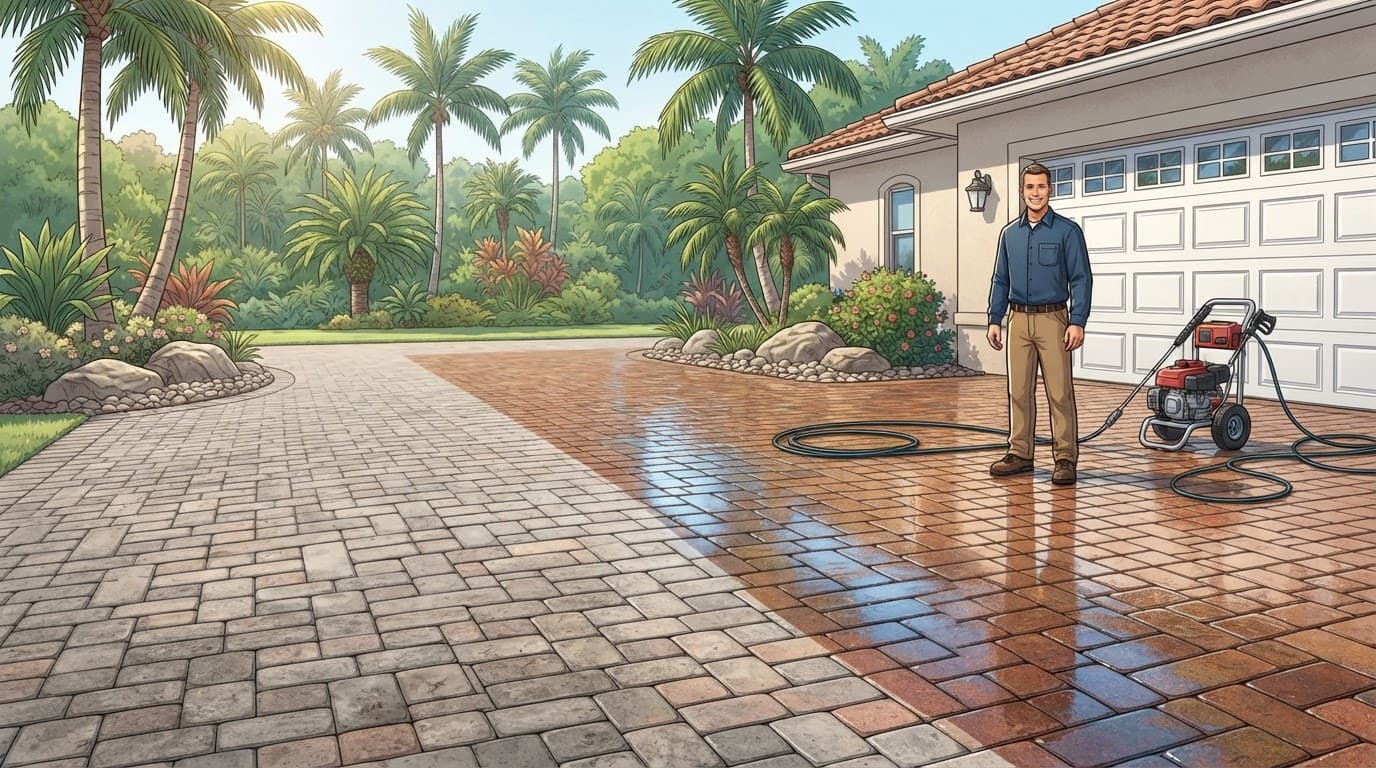
Florida pavers often hold algae, mildew, dirt, leaf tannins, fertilizer stains, rust, oil, and old sealer residue. Proper surface prep may include pre-treatment for these contaminants, controlled cleaning, rinsing, drying, and detail work along edges.
High pressure alone isn’t the answer. Poorly controlled pressure washing can etch the paver face, leave straight lines, strip old coating unevenly, or wash away joint sand. Pressure-washing guidance for patio pavers also warns that excessive PSI can damage the surface. I use a controlled approach because pavers are durable, but they aren’t indestructible. The goal is to remove buildup without creating a bigger restoration problem.
Joint sand should be addressed clearly
Cleaning often removes joint sand from the joints. That sand helps interlocking pavers stay locked together and helps limit shifting, weed growth, and washout during Florida storms. When joints are left open, storm runoff can carry away more material.
Your quote should state whether it includes new joint sand, what type will be used, who replaces it, and whether the contractor will sweep and compact it properly. Ordinary replacement sand isn’t the same as polymeric sand or joint stabilizing sand. If a stabilizing product is included, verify its required curing period before sealing. Product technical directions vary, and Techniseal’s paver-protector directions provide one example of a 30-day wait after polymeric sand installation before applying that product.
Compare Paver Sealing Costs the Right Way
For professional paver sealing in Florida, the paver sealing cost often falls between $1.25 and $3.50 per square foot. This range isn’t guaranteed, because site conditions control the final price. Compare bids only when their scope and cleaning, materials, prep, repairs, access, and labor costs are similar.
A simple 1,000-square-foot driveway may cost less than a smaller pool deck requiring pool deck sealing. Screening, coping, difficult access, organic growth, delicate surface care, and protection around furniture and landscaping can add labor.
Use price ranges as a starting point
This table gives a practical way to review common project sizes. For a fair comparison, ask each company to use the same measured square foot area.
| Paver area | Typical professional range | What can increase the cost |
|---|---|---|
| 300 sq. ft. patio | $375 to $1,050 | Heavy staining, furniture moving, tight access |
| 600 sq. ft. pool deck | $750 to $2,100 | Screen enclosure, algae, travertine care |
| 1,000 sq. ft. driveway | $1,250 to $3,500 | Old sealer removal, missing joint sand, oil stains |
| 1,500 sq. ft. driveway and walkways | $1,875 to $5,250 | Large surface area, repairs, detailed edges |
A practical cost breakdown should show cleaning, joint material, sealer, repairs, furniture moving, taxes, and labor. It should identify drainage-related exclusions, such as correcting standing water or redirecting runoff. Each item should be marked included or billed separately. Request an itemized free estimate for the same measured scope before comparing totals.
The lowest quote is not always the best value. Ask for the exact sealant type, number of coats, and whether the crew will return if the finish dries unevenly.
Surface Preparation Makes the Sealer Last
Sealer needs a clean, rinsed, fully dry, stable surface free of incompatible residue. Complete surface prep helps prevent a cloudy finish, peeling, trapped stains, or early wear.
Cleaning should match the material
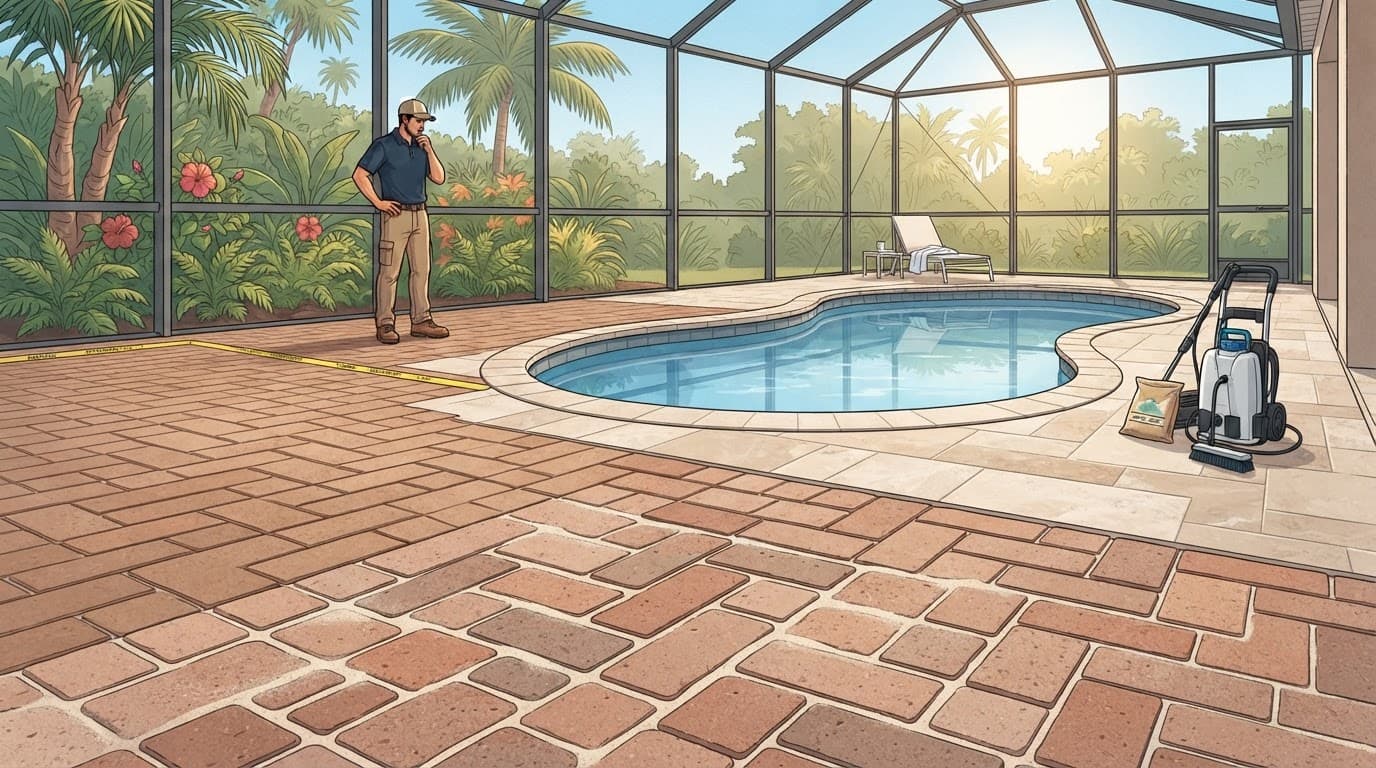
Brick pavers, concrete pavers, and travertine can respond differently to cleaners and pressure settings. A product that works on one surface may discolor or damage another.
I inspect the paver type, existing coating, stains, joint condition, and nearby surfaces before choosing a cleaner. I use controlled pressure washing appropriate for the material, or a gentler method where delicate areas could be damaged.
Before applying sealer, I confirm the pavers are clean, rinsed, stable, and fully dry. I check moisture in the joints and pores, forecasted rain, Florida humidity, and shaded areas. The rescheduling policy should explain when conditions require a delay and whether a return visit is included.
Dry time is part of the job
Pavers can look dry on top while moisture remains in the joints or pores. Florida humidity and shaded areas can extend drying time, so both deserve extra attention.
Rain also changes the schedule, so in Southwest Florida I watch the forecast closely before applying sealer. A contractor should explain how weather delays are handled and whether a return visit is included.
Sakrete’s guidance on existing paver joints also notes that joint material needs time to harden before sealing. Drying and curing time should never be skipped to rush a job.
Choose the Right Sealer for Your Pavers
The best sealer is not always the shiniest one. Some homeowners want a natural look. Others prefer richer color, a wet-look finish, or added joint stabilization.
Your quote should name the exact sealant type and expected sheen. It should confirm compatibility with your pavers, the number of coats, curing conditions, and maintenance needs. In Florida’s heat and humidity, the application process should control product quantity, overlap, puddling, and cure time.
Water-based and solvent-based sealers
Water based sealers offer less odor and a natural look; solvent based sealers deepen color and add a wet-look finish.
Either option may suit driveways, patios, and pool decks when the surface is prepared correctly. The product label should specifically support concrete pavers when applicable.
Some formulas enhance color, but over-application can leave the surface overly glossy, sticky, or uneven.
For example, Seal Rx’s exterior paver sealer is described as a water-based color-enhancing option for concrete pavers and brick surfaces.
Ask about slip resistance near pools
Pool deck sealing needs extra attention. A shiny finish may look great, but it shouldn’t create a slick walking surface when wet.
Ask whether the sealer is suitable for pool decks and whether a slip resistant additive is recommended. Wet traction matters more than appearance near steps, water features, and shaded areas where mildew can return faster.
Questions to Ask Before Approving the Work
You don’t need to know every product name or cleaning method. You do need a contractor who gives clear answers and puts the full scope in writing.
Ask these questions before you schedule driveway paver sealing or patio paver sealing:
- Does the written scope include cleaning, stain treatment, joint material, sealing, and final cleanup?
- How will the surface be cleaned, dried, and prepared before sealer application?
- Will you treat algae, mildew, rust, oil, tannin, or fertilizer stains before sealing?
- Is the sealer compatible with my pavers and any existing coating?
- How will you address poor drainage, low spots, puddling, or areas that dry slowly?
- How many coats are included, and how will you prevent puddling or streaks?
- Will damaged, loose, chipped, or rocking pavers be repaired before sealing?
- Which repairs are excluded, and will I receive a separate price for that work?
- How will rain, high humidity, or damp conditions affect the schedule?
- How long must vehicles, furniture, pets, and foot traffic stay off the surface?
- What maintenance will I need to handle after the work is complete?
- What does the written warranty cover, which exclusions apply, how long does it last, and what homeowner maintenance is required?
Be cautious of a vague one-line scope, a quote that names no product, or a schedule with no drying time. Pressure marks, same-day sealing after rain, missing repair exclusions, and terms that don’t define coverage are also warning signs.
A contractor should also be honest about stains that may not fully disappear. Deep rust, oil, cigarette burns, and absorbed discoloration can remain even after thorough cleaning. Sealing over a remaining stain can make future treatment harder.
DIY Paver Sealing Versus Professional Service
DIY paver sealing can look cheaper at first, but the total paver sealing cost includes more than materials.
Materials for 1,000 square feet may run about $145 to $350, depending on the sealer and supplies you choose.
That price doesn’t include cleaning supplies, joint material, stain treatment, protective gear, tools, disposal, or equipment rental. Renting equipment also doesn’t remove the learning curve or risk of damaging the pavers.
The biggest DIY risk is uneven preparation
The sealer is only the last step. The harder part is cleaning evenly, correcting joint material, getting the surface fully dry, and applying the product without roller marks, puddles, lap lines, or overspray.
Florida’s heat can shorten your working time. Humidity and unexpected rain can also complicate drying.
I often see homeowners call after an old coating turns white, starts peeling, or leaves shiny patches across a driveway. Removing failed sealer can cost more than having the work done properly the first time.
Professional paver sealing makes sense when the area is large, heavily stained, previously sealed, or near a pool enclosure. It also makes sense when you want clear communication, reliable scheduling, and a finish that looks consistent across the whole property.
Your apparent savings may shrink once you account for your time and possible rework, so the contractor’s labor costs should be visible in the quote.
Plan for Ongoing Paver Maintenance
Paver sealing is not permanent. Florida’s UV exposure, heat, humidity, salt air, heavy rain, pool water, irrigation, traffic, and shade gradually wear down the protective finish. A realistic service recommendation should account for these conditions instead of promising a fixed lifespan.
Most driveways and patios should be evaluated every two to three years, but this is only a guideline. High-traffic driveways, shaded patios, and pool decks may have greater maintenance needs and require attention sooner.
Keep small issues from becoming expensive repairs
Sweep leaves and palm berries before they stain. Rinse fertilizer and salt residue quickly. Monitor joint sand loss after storms, especially along driveway edges and downspouts. Replace missing material before erosion spreads.
Routine pressure washing can help keep surfaces clean, but use appropriate pressure, distance, and technique. Consumer Reports’ pressure-washing safety guidance is a good reminder that powerful water can damage surfaces when used carelessly.
If you see cloudy sealer, faded color, weed growth in open or eroded joints, loose pavers, or new low spots, address the issue before the next rainy season. Maintenance can preserve appearance, but it can’t correct a failed base, recurring drainage problem, or improperly applied sealer.
Frequently Asked Questions
How much does professional paver sealing cost in Florida?
Professional paver sealing often costs about $1.25 to $3.50 per square foot. The final price depends on the measured area, cleaning needs, joint sand, repairs, access, sealer, and surface condition.
What should be included in a paver sealing quote?
A quote should identify the areas included, cleaning method, stain treatment, joint material, drying time, sealer type, number of coats, final cleanup, labor, and taxes. Repairs, drainage corrections, furniture moving, and other exclusions should be listed separately.
Should paver repairs be completed before sealing?
Yes, loose or rocking pavers, missing joint material, damaged edges, and drainage problems should be addressed before sealing. Sealer can protect a properly prepared surface, but it will not correct a failed base, standing water, or unstable pavers.
How long should pavers dry before sealing?
Pavers should be fully dry, including the joints and pores, before sealer is applied. Florida humidity, shade, and rain can extend the drying time, so the contractor should explain weather delays and whether a return visit is included.
How often should Florida pavers be resealed?
Most driveways and patios should be evaluated every two to three years, but this is only a general guideline. Pool decks, shaded patios, and high-traffic areas may need attention sooner because of moisture, UV exposure, traffic, and weather.
A Clear Quote Leads to Better Paver Results
A reliable paver sealing quote should define the measured area. It should explain cleaning, sand in the joints, preparation, repairs, drainage exclusions, and the coating selected. It should also identify weather and curing time, access, labor costs, final finish, guarantee terms, and maintenance expectations.
I believe homeowners deserve fair pricing and clear communication before work begins. A complete paver restoration plan should show what’s included, what’s excluded, and how the area should be maintained afterward.
For a driveway, patio, pool deck, walkway, or lanai, a Get a Quote request can provide one comparison point. Then ask a qualified Florida contractor for comparable documentation and a free estimate.