
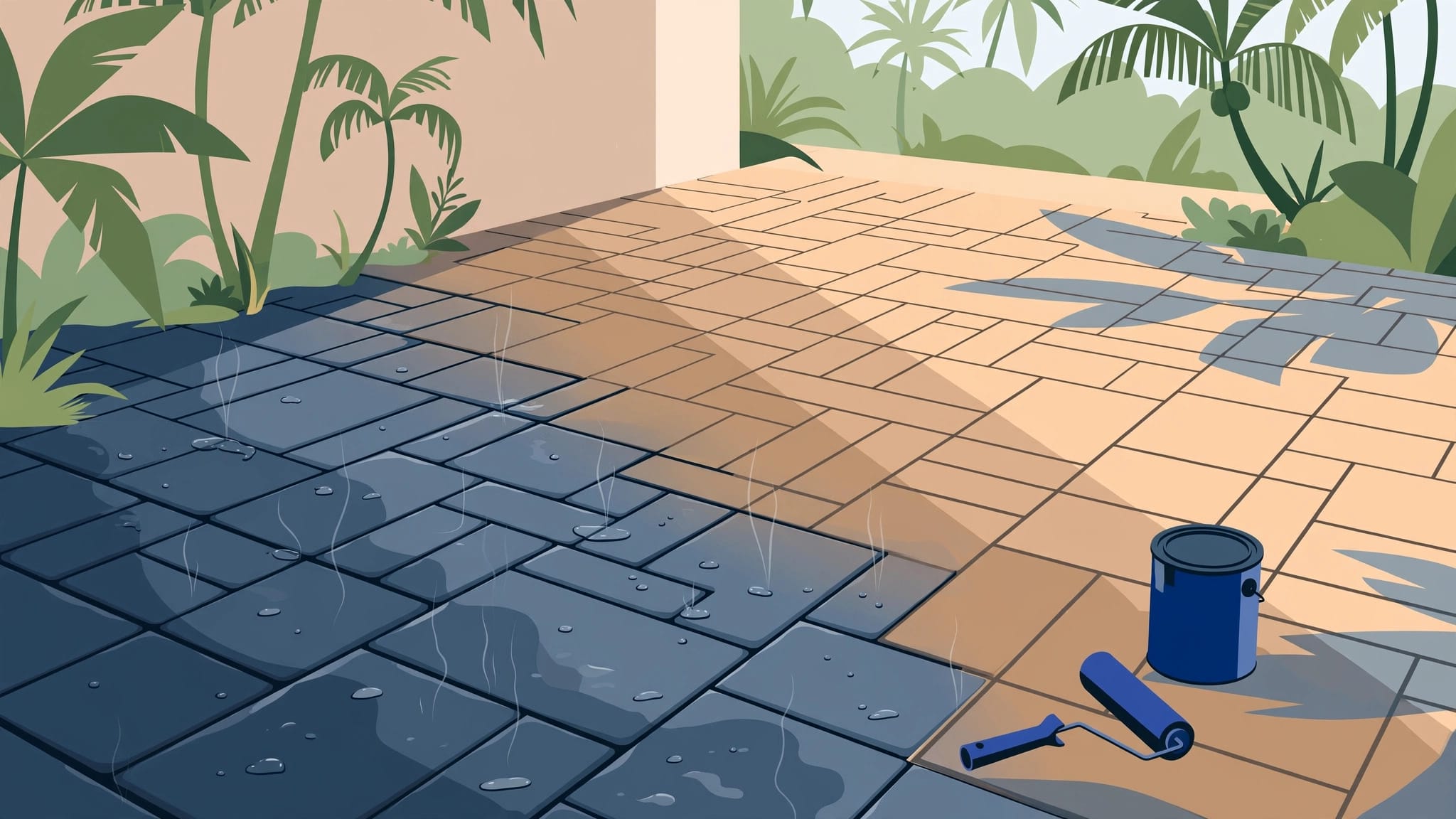
Freshly washed pavers can look ready for sealer long before they’re actually dry enough. The right waiting period before sealing helps protect your driveway, patio, pool deck, or lanai from cloudy sealer, white haze, and uneven color.
I recommend waiting at least 24 to 48 hours after pressure washing before you seal pavers. That’s a starting point, not a universal guarantee. In Southwest Florida, weather, shade, humidity, surface moisture, the cleaning method, and the sealer label can all affect the timeline. The surface must be clean and dry before any sealer goes down.
How Long to Wait Before Sealing Pavers
Pressure washing removes algae, dirt, stains, and loose residue. It also pushes water into the paver joints, polymeric sand, and below the surface. That moisture must come out before sealing.
Start with 24 to 48 hours of dry weather
A paver sealing wait time of 24 to 48 hours is a safe starting point for a sunny, open patio or driveway. That baseline assumes a dependable dry window.
Weather conditions, relative humidity, the cleaning method, rinse volume, and product directions can all affect the final schedule. I allow more time when the pavers sit in shade, have deep joints, or were heavily rinsed.
Don’t judge the surface by appearance alone. The visible dry time can look complete while moisture remains below the surface or inside the joint sand.
Check the area early in the morning, when morning dew can show that the surface is still near the dew point. If the joints look darker than the paver faces or feel damp, the area is not ready. A simple moisture check can prevent a costly sealer failure.
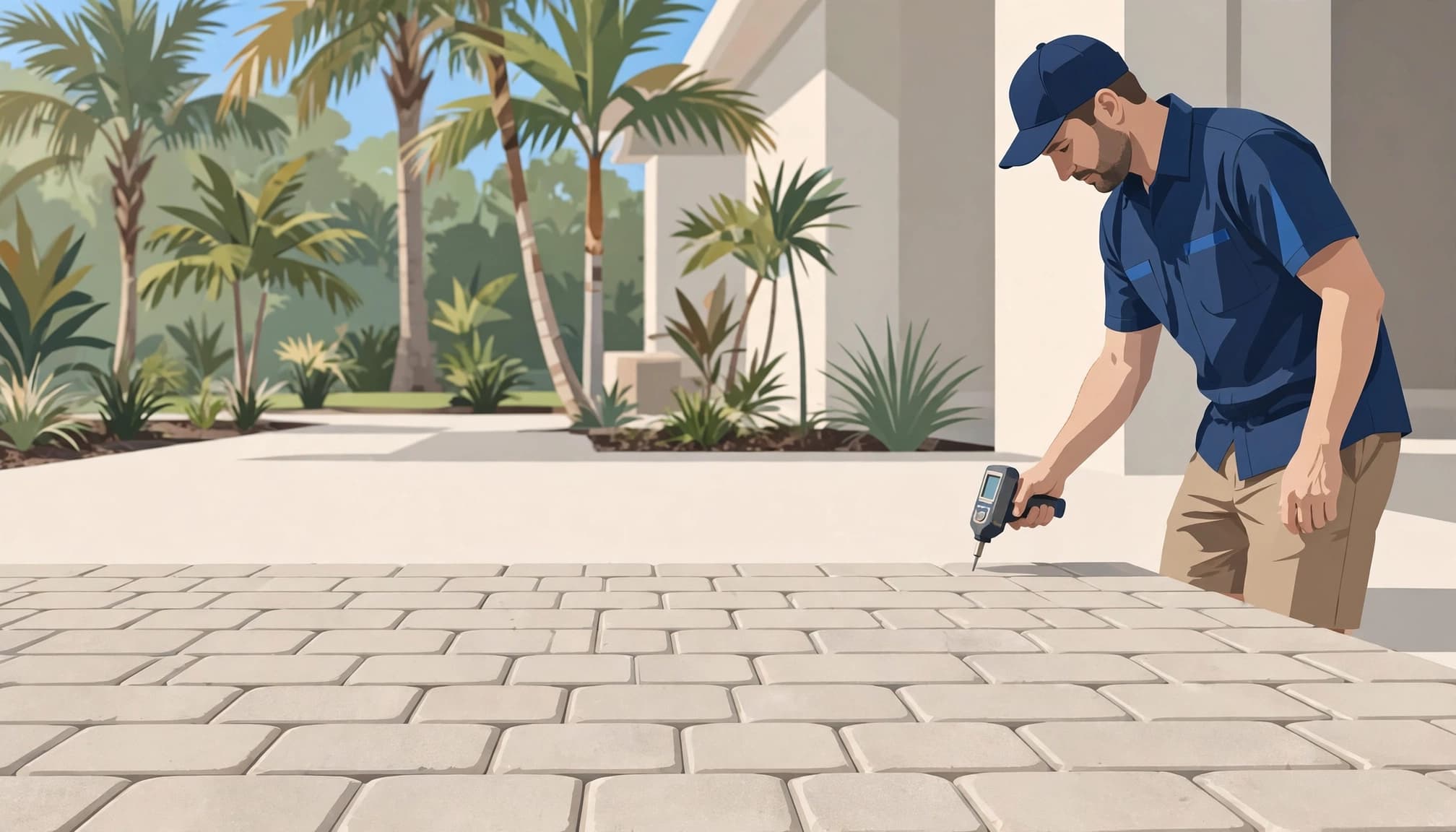
Watch the joints, edges, and low areas
The slowest areas to dry are usually around screen enclosures, retaining borders, pool coping, and low spots where water collects. Shaded or enclosed spaces can stay close to the dew point longer, especially with limited airflow.
Polymeric sand also needs time to settle and dry after cleaning. Inspect the joints closely to confirm the sand isn’t damp, soft, or unsettled.
I don’t rush the job because the pavers feel dry under my shoes. I inspect the full area, including the joints and drainage path. Sealer applied over hidden moisture can turn milky, peel, or lose its bond.
New Pavers Need More Than a Drying Period
New pavers need time to release moisture and minerals after installation. Concrete pavers release moisture differently than natural stone. Stone pavers can also retain moisture in their joints. Pressure washing cleans the surface, but it doesn’t shorten that installation-related moisture-release period.
Most installations should wait about 30 to 90 days before the first sealing job. The material, installation method, joint sand, weather, and product requirements control the final timing, so follow the manufacturer instructions. Polymeric sand needs time to stabilize in the joints, and fresh polymeric sand may need additional time before the surface is ready.
During this waiting period, the dew point matters because overnight moisture can settle back onto the surface. A cool morning near the dew point can delay drying.
Give efflorescence time to show itself
Efflorescence is the white, powdery mineral residue that can appear as moisture moves through concrete pavers. It is common, especially on newer installations. Remove this residue before sealing. If efflorescence remains, or if the pavers and joints are damp, a coat of sealer can lock in residue and leave moisture trapped beneath the coating.
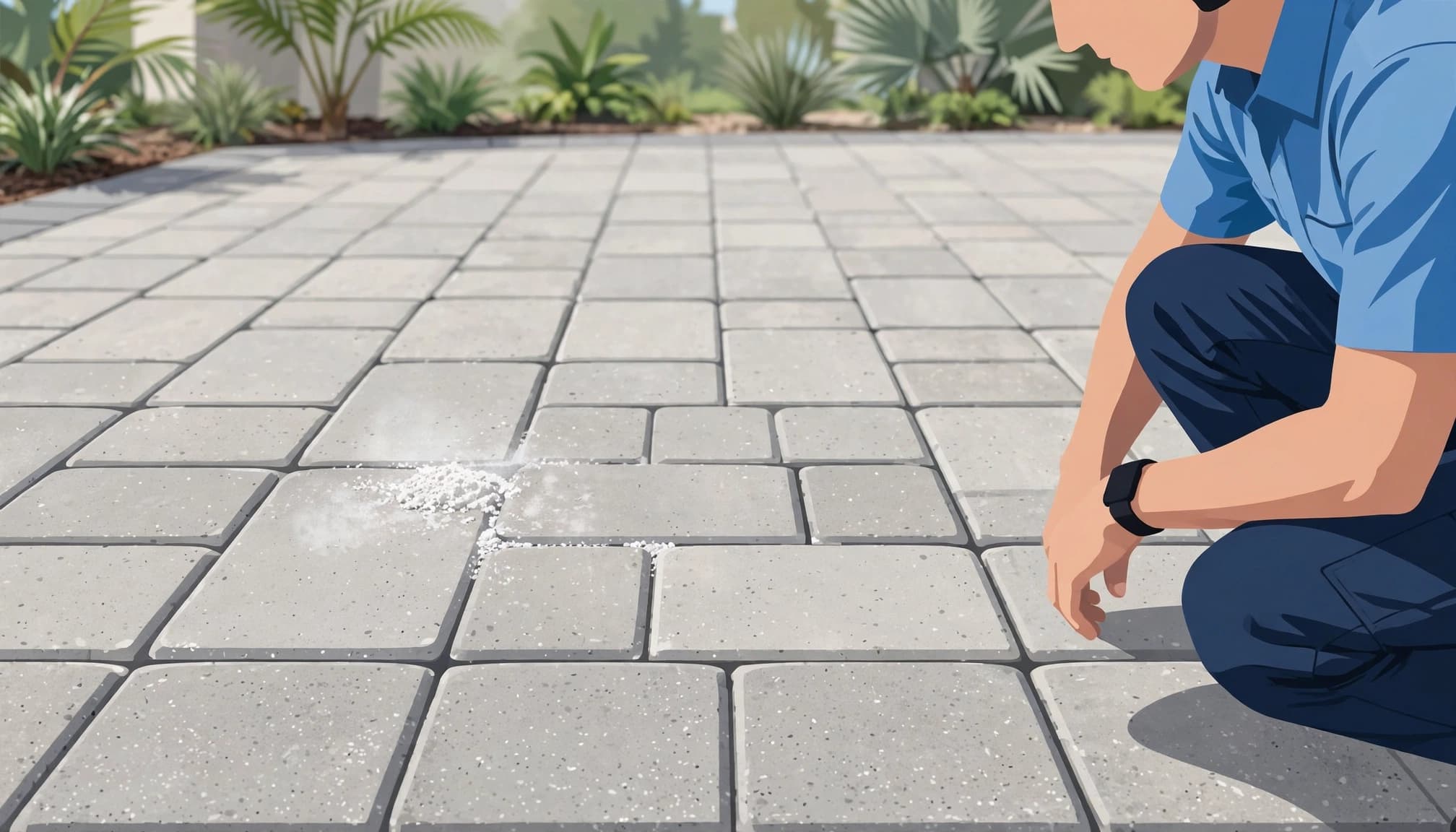
A powdery white film is different from a cloudy white sealer. Powder usually brushes or cleans away. A milky haze that looks trapped below a shiny coating often points to moisture or sealer failure.
Sealer can protect a clean paver, but it cannot hide moisture, damaged joint sand, or a remaining stain.
Before you seal pavers, remove all remaining residue, clean the full surface evenly, and confirm that the pavers and joints are completely dry.
Florida Weather Can Extend Dry and Cure Times
A clear forecast helps, but it isn’t enough to assess local weather conditions. Fort Myers, Cape Coral, Naples, and Bonita Springs often have strong sun, but afternoon rain, high humidity, and shaded lanais can still delay drying.
The same weather planning I use for a soft wash or roof cleaning job matters even more when applying paver sealer. Rain can interrupt cleaning, but rain during the sealer’s cure time can ruin the finish. Screen incoming rain and check the dew point before scheduling.
Heat and humidity change the schedule
Warm conditions can help pavers dry, but high relative humidity slows evaporation. When the dew point stays close to air temperature, moisture leaves pavers slowly. Cooler weather and shaded lanais can keep a surface wet longer than expected.
Follow manufacturer instructions, since they override any generic timeline. For example, TCC Materials’ water-based paver sealer data sheet notes that water-based sealers may have a longer dry time when humidity is high or temperatures are cool.
I schedule sealing during a dependable dry window, after checking the forecast and dew point for morning condensation risk. I avoid applying sealer when rain is expected soon, early dew is forming, the surface temperature is unsuitable, or conditions fall outside the product’s approved temperature range.
Dry Time Is Not the Same as Full Cure Time
A surface that feels dry on top may still be curing underneath, with moisture trapped below the coating. Initial drying only means the surface no longer feels wet; full curing gives the protective seal its intended durability.
Some topical products dry within several hours, but solvent-based sealers and water-based products may follow different schedules. According to Covertec’s paver-sealer guidance, topical sealers often need three to four hours between coats. Use that interval as a guide before applying another coat of sealer.
Overnight condensation can form if the coating reaches the dew point before curing. Check the dew point before nighttime exposure, and protect the coating if moisture is likely.
Wait before using the sealed area
Use this conservative timeline as a general framework, not a guarantee. Surface moisture, cleaning conditions, forecast, and the approved temperature range can change it. Follow all manufacturer instructions, and let the product label control the actual recoat, use, and cure schedule.
| Use of the surface | Recommended wait |
|---|---|
| Light foot traffic | 4 to 8 hours |
| Outdoor furniture and planters | 24 to 48 hours |
| Light vehicle traffic | 48 to 72 hours |
| Full chemical cure | Up to 7 days |
For driveway sealing, I prefer keeping vehicle traffic off the surface for at least 48 to 72 hours. Sharp turns and hot tires can mark a coating before it reaches full cure.
Keep foot traffic off the area, close gates, move patio furniture before the job, and plan another entrance if possible. Heavy vehicles, turning tires, and furniture can mark fresh sealer before full cure, leaving footprints, chair-leg marks, and tire patterns.
Do Not Seal Over a Surface Problem
Pressure washing should be controlled, not aggressive, and it doesn’t prove the surface is ready to be sealed. A narrow nozzle held too close can etch brick, strip old sealer, and remove polymeric sand from the joints.
I use the gentlest method that can clean the surface properly. For broad flat areas, surface cleaning with a surface cleaner, proper pre-treatment, and a measured rinse gives a more even result than blasting one spot repeatedly.
If the pavers have white haze, efflorescence, sticky patches, dark stains, or stripped sealer, stop before you seal pavers. Loose or incomplete polymeric sand must be repaired first. Check the dew point before proceeding, and postpone work if it is close to the paver temperature and overnight condensation is likely.
For homeowners who want professional cleaning, re-sanding, restoration, or preparation for the sealing process, Get a Quote for your property.
Frequently Asked Questions
How long should I wait to seal pavers after pressure washing?
Wait at least 24 to 48 hours of dry weather before sealing pavers. Extend that timeline when the area is shaded, humid, heavily rinsed, or has damp joint sand.
Can I seal pavers when the surface looks dry?
Not necessarily, because moisture can remain below the surface or inside the joints. Check the joints, edges, low areas, and drainage paths, and postpone sealing if any area feels damp or looks darker.
How can I tell if pavers are dry enough to seal?
Inspect the area early in the morning and look for dew, dark joints, or moisture in shaded spots. A moisture meter can provide a more reliable check than appearance or the feel of the pavers underfoot.
How long should new pavers wait before their first sealing?
Most new paver installations should wait about 30 to 90 days before the first sealing job. Follow the paver, joint-sand, and sealer manufacturer’s instructions because materials and installation conditions can change the timeline.
How long should I keep traffic off freshly sealed pavers?
Keep light foot traffic off the surface for about 4 to 8 hours and vehicle traffic off for at least 48 to 72 hours. Follow the product label, and wait longer if cool, humid, or damp conditions slow the cure.
Give the Pavers Time They Need
The best paver sealing wait time starts with 24 to 48 dry hours after cleaning, but that is only a starting point, not a guarantee. Check the weather, surface moisture, cleaning method, and the sealer manufacturer’s product directions before deciding. Review the forecast, dew point, and pavers again in the morning.
New pavers need a longer timeline. Fresh sealer also needs protection from vehicle traffic after application. A clean, fully dry surface gives your driveway or patio the even, long-lasting finish you want.