
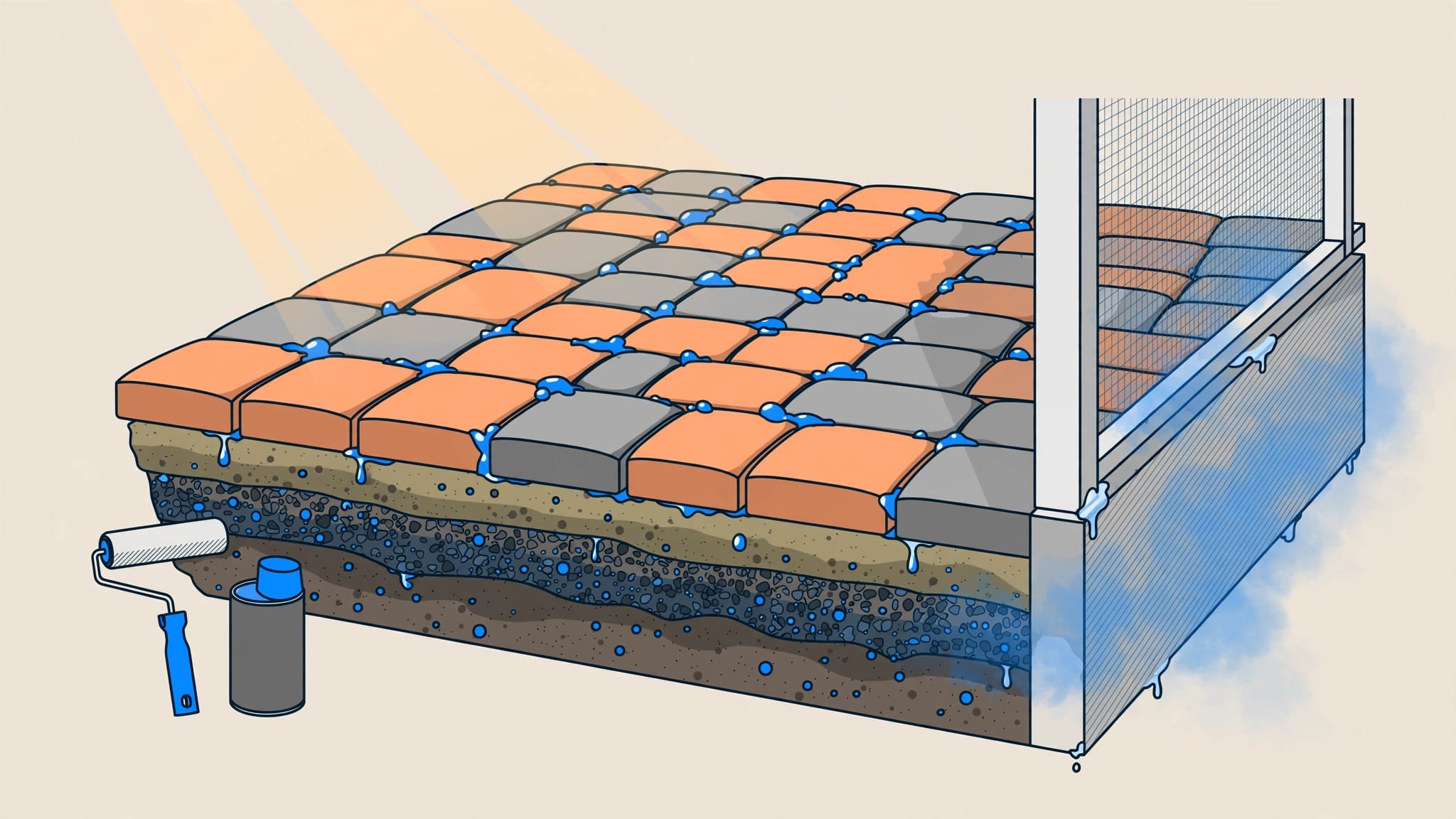
A paver surface can look dry in the afternoon while moisture remains below the surface. That hidden moisture can compromise a fresh coat of sealer.
Direct sunlight and heat can help, but Florida humidity, shade, rainfall, morning dew, limited airflow, and a high dew point can slow drying. Evaluate the forecast, product label, surface condition, and surface moisture together before applying.
Key Takeaways
- Florida humidity slows evaporation, especially in shaded patios, lanais, pool decks, and paver joints where polymeric sand can retain moisture.
- A dry-to-the-touch surface isn’t always ready for paver sealer. Moisture can remain in the pores and below the surface.
- Check the product’s approved temperature, relative humidity, dew point, coat, and traffic requirements before starting.
- Cleaned pavers often need at least a full day without rain. Shade and humid conditions may require more time.
- Don’t rush foot traffic, furniture, or vehicles onto a fresh finish. Product instructions control the wait, and a dry surface may not mean the coating is fully cured.
- Haze, whitening, tackiness, and peeling often point to trapped moisture, excess sealer, or a coating compatibility problem.
Why Florida Humidity Slows Paver Sealer Drying Times
Florida weather is hard on outdoor surfaces. A driveway may get strong sun, while a covered patio stays damp through the morning. Afternoon storms can appear after a clear start. That makes a paver sealer’s drying schedule unpredictable.
Humidity slows how fast water or solvents leave the coating. High relative humidity keeps both pavers and sealer damp longer. If the dew point is close to the air temperature, condensation can form overnight before the finish has cured.
Dry on top is different from cured underneath
A newly sealed surface may stop feeling wet before it develops full protection. Initial drying only means the top has started to set. Full chemical cure is when the coating hardens enough to handle normal use and resist moisture, dirt, and wear.
This is why I don’t rely on a quick touch test. The curing process takes longer than surface drying. If the pavers still smell strongly of solvent, feel soft under a shoe, or mark easily, they need more time. A coating that looks ready can still be vulnerable underneath.
Overnight moisture can create problems
Dew is common in Southwest Florida, even after a dry day. Once the paver surface cools near the dew point, moisture can settle on the sealer. That can interrupt curing and leave a cloudy or uneven finish.
Several coating manufacturers use a five-degree buffer from the dew point. Sherwin-Williams concrete sealer guidance lists an 85% maximum and calls for the surface to stay at least 5 degrees Fahrenheit warmer. Your selected product may have different limits, so its data sheet always controls.
A sunny forecast does not guarantee dry pavers. Shade, irrigation, damp joints, and overnight dew can hold moisture where you cannot see it.
Sealer Type Changes the Drying Schedule
The right paver sealer depends on the material, finish, traffic, shade, and moisture exposure. A driveway, pool deck, and screened lanai may need different protection.
I also check whether an existing coating is already on the surface. An incompatible product can cause bonding problems, streaking, or peeling.
Water-based and solvent-based products
Water-based sealer usually has less odor and offers easier cleanup. It can be more comfortable around landscaping, doors, windows, and pets. Solvent-based sealer often provides stronger color enhancement and the richer wet-look appearance many homeowners want.
Neither option is automatically better. The solids content affects coverage, appearance, and humidity sensitivity. High humidity can extend drying time for either product. Compare water-based and solvent-based paver sealers based on the surface and conditions, not finish alone.
Topical and penetrating sealers
A topical sealer creates a protective film on the paver surface. It can provide color enhancement, sheen, and joint stabilization when properly matched to the system. The topical sealer needs careful application because heavy coats, puddling, and trapped moisture can leave the finish sticky or hazy.
A penetrating sealer absorbs into porous materials and usually leaves a more natural appearance. The solids content, porosity, and compatibility all affect its performance. Concrete pavers and natural stone pavers may respond differently to the same product.
The penetrating sealer may suit surfaces that need protection without a visible film. Choose a compatible topical sealer for a surface film or a penetrating sealer for absorption. A maintenance coat should follow the manufacturer’s instructions and the existing finish.
Prepare Pavers for a Clean, Dry Finish
Good surface preparation protects the final result. Sealer can’t correct loose pavers, missing joint sand, drainage problems, or an old failing coating. Even a maintenance coat needs a clean, dry, stable surface.
Concrete pavers and natural stone pavers can respond differently to cleaning products. Use a compatible stone cleaner for residue removal, and check the label for sealer compatibility. Rinse thoroughly, since a stone cleaner left behind can interfere with bonding.
Pressure washing is often part of paver restoration, but it starts the drying clock. I never schedule sealing the same afternoon as pressure washing.
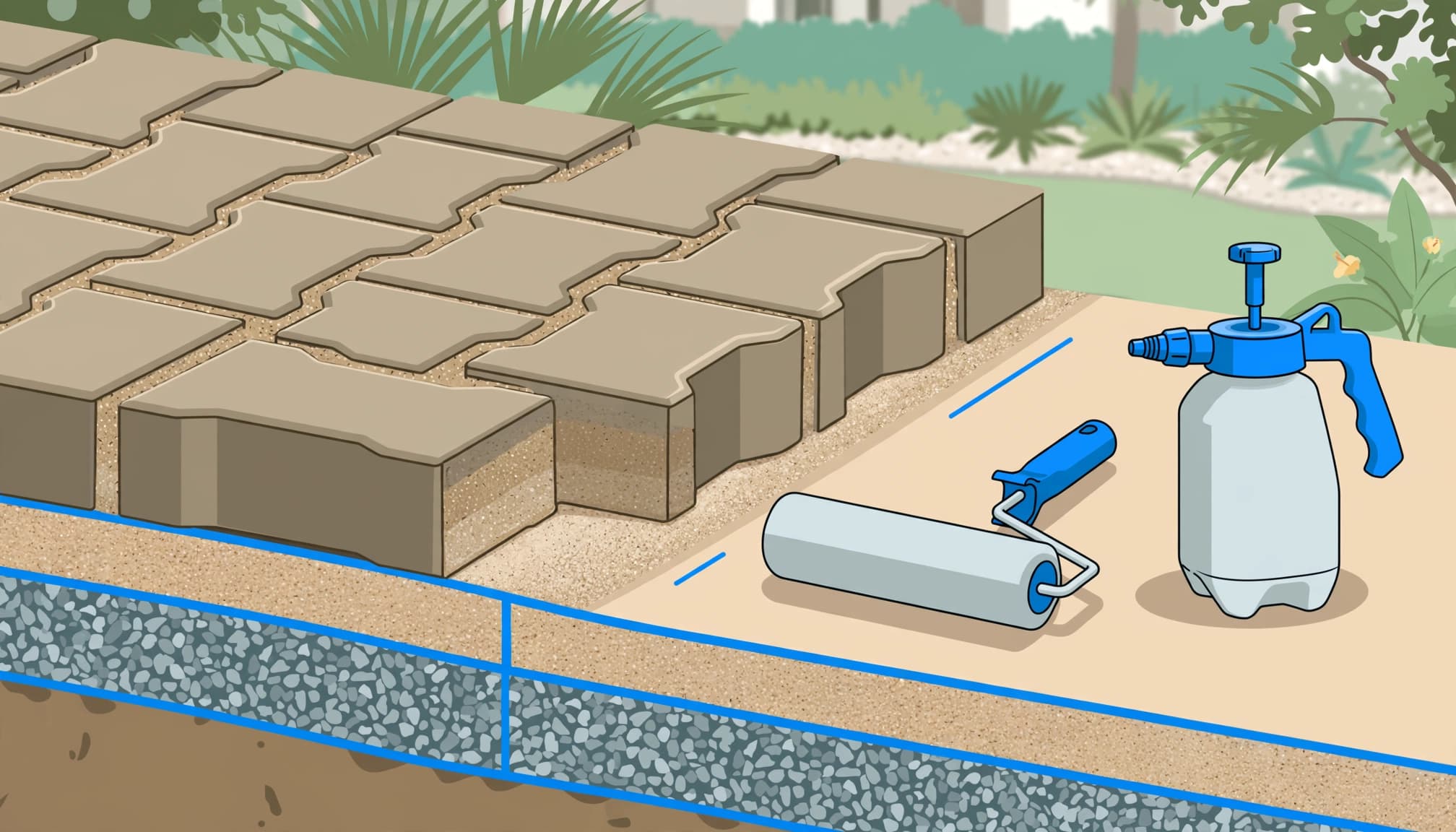
Give washed pavers enough dry weather
After cleaning, allow the surface and joints time to dry. Twenty-four hours is a common starting point, not a guarantee. A shaded lanai, recent rain, poor drainage, or humid weather may require a longer window.
Check low areas, edges near landscaping, and joints between pavers. Those areas usually dry last. Turn off sprinkler overspray before the job, and keep leaves, dirt, and pets off the surface while it is curing.
If roof cleaning, gutter work, or a soft wash is planned, complete that work before the final paver seal. Runoff and debris from above can create more cleanup and bring moisture back onto a prepared surface.
Check joint sand and new pavers
Polymeric sand needs time to harden according to its own instructions. Fresh polymeric sand that hasn’t set properly can create problems when a sealer is added. Loose or contaminated joint material should be removed and corrected before coating.
New pavers need patience too. Polymeric sand in a fresh installation needs the right moisture balance and enough time to set. Allow moisture to leave, and let efflorescence appear before sealing. This makes it easier to remove efflorescence instead of trapping white mineral residue under the finish.
Temperature, Humidity, and Rain Checks
The best application day isn’t always the hottest day. Direct sun can heat pavers quickly, while shade leaves them cooler and damp. Check air temperature and surface temperature before work, then recheck surface temperature in shaded areas.
Manufacturer limits vary. Simiron lists an air temperature range of 40 to 85 degrees Fahrenheit for its water-based CURE & SEAL product. It also requires the surface to remain at least 5 degrees above the dew point. Review the full Simiron CURE & SEAL data sheet before using that product or a similar system.
Plan around Florida rain patterns
A clear morning isn’t enough. Check the forecast for rain and dew point, then find a dry window for the entire job. Account for relative humidity, cleaning, drying, application, and early curing. If conditions move near the dew point, postpone the work.
Rain during curing can affect the appearance and bond of a paver sealer. Wind matters as well. Blowing leaves, grass, and dust can stick to a wet finish. If the forecast changes, delaying the work is better than applying sealer under poor conditions.
Keep coats thin and even
More sealer doesn’t mean more protection. Thick coats, especially with high solids content, can remain soft, turn cloudy, or collect dirt. Apply only the amount the product calls for, and avoid puddles.
A maintenance coat should follow the product’s coverage requirements. Some products allow a wet on wet application, while others require a set interval between coats. If the label allows wet on wet, follow its timing exactly. If it doesn’t mention wet on wet, wait before applying a second coat.
A maintenance coat isn’t automatically appropriate for every product or surface. Don’t use a generic schedule. Follow the instructions for the exact sealer on your pavers.
When Foot Traffic and Vehicles Can Return
Homeowners often want one exact answer for when people can walk on pavers again. The honest answer is that the label controls. Product chemistry, coat thickness, weather, and surface conditions all change the timeline.
Dry-to-touch, traffic-ready, and fully cured are separate milestones. The curing process for a paver sealer may take longer in humid weather, even when the surface feels dry.
Keep people, pets, furniture, grills, and vehicles off the area until the product’s traffic guidance has been met. In humid Florida weather, I extend the wait if the surface remains soft, tacky, cloudy, or strongly scented. Don’t judge slip resistance while the coating is wet or overapplied.
Treat driveways with extra care
Driveway sealing needs more cure time than a front walkway because tires, vehicle weight, and heat put more stress on the coating. Warm tires can damage a topical film that has not hardened fully. This is often called hot tire pickup.
Returning vehicles before the film hardens can also cause hot tire pickup. Don’t drag furniture across a fresh patio finish either. Lift items when it is safe to return them, and avoid placing heavy furniture on the surface before the label allows it.
Protect the finish after curing
Once the sealer has completed its full chemical cure, regular care helps it last. Clean spills before they bake into the surface. Watch for sprinkler overspray, standing water, and algae growth in shaded areas.
Florida pavers typically face humidity, rainfall, heat, and moisture more often than repeated freeze-thaw cycles. A maintenance coat may help protect the finish when the product and surface conditions are suitable.
A clean driveway and stable joints make future maintenance easier. Benefits of sealing your pavers include better stain resistance and easier upkeep, but only when the original preparation and curing process were done right.
Fixing Milky, Sticky, or Hazy Sealer
Milky white haze is one of the most frustrating paver sealer problems. It may appear immediately or after the first rain. A topical sealer can trap moisture below its film, making cloudiness more visible. A penetrating sealer soaks in, so it usually doesn’t create the same surface film.
Don’t apply a second coat to hide the problem. Excess solids content or too much product can make the finish even thicker and cloudier.
Start with drying and a small test area
Keep traffic off the pavers and let the surface dry through several clear days if conditions allow. Check a hidden area first. If the haze fades as the surface dries, moisture may be the cause, especially beneath a topical sealer.
If the white film stays put, inspect for efflorescence, old buildup, or a failed coating. A suitable stone cleaner may help with surface residue, but pressure washing won’t remove moisture trapped beneath a film.
Know when stripping is needed
A thick, sticky, peeling, or permanently cloudy coating may need professional removal before resealing. A maintenance coat won’t correct a failed layer, and the correct stripper depends on the product already on the pavers.
I recommend identifying the original product whenever possible. If it’s unknown, test a small hidden area before cleaning or recoating. Proper surface preparation helps prevent the same problem from returning.
Frequently Asked Questions
How long should pavers dry after pressure washing?
Allow at least 24 hours after pressure washing before applying a paver sealer. Then inspect the pavers, joints, shaded areas, and forecast. Florida humidity, recent rain, and poor airflow can require more time. The sealer label has the final word.
Can pavers be sealed during Florida summer?
Yes, but summer requires closer weather planning. Heat, afternoon storms, humidity, morning dew, and the dew point can shrink the safe application window. A water-based sealer and a solvent-based sealer can both dry more slowly in high Florida humidity, so follow their individual label limits. I avoid sealing when rain is expected soon or the surface falls outside the product’s approved temperature range.
Why did my pavers look fine until it rained?
Rain can reveal trapped moisture beneath a topical coating or reactivate a finish that never cured properly. Uncured polymeric sand in the joints can also contribute to moisture-related problems. Rain may expose mineral residue sealed below the surface, too. Let the area dry, inspect a small test spot, and identify the cause before recoating.
A Better Finish Starts With a Better Schedule
Florida humidity does not make paver sealing impossible. It makes timing, preparation, airflow, and product selection more important.
The best results come from clean, stable pavers, dry polymeric sand joints, and a weather window that supports the sealer’s cure requirements. A future maintenance coat still depends on proper preparation and protection from rainfall. Patience protects your pavers far better than rushing a coat before the surface is ready.