
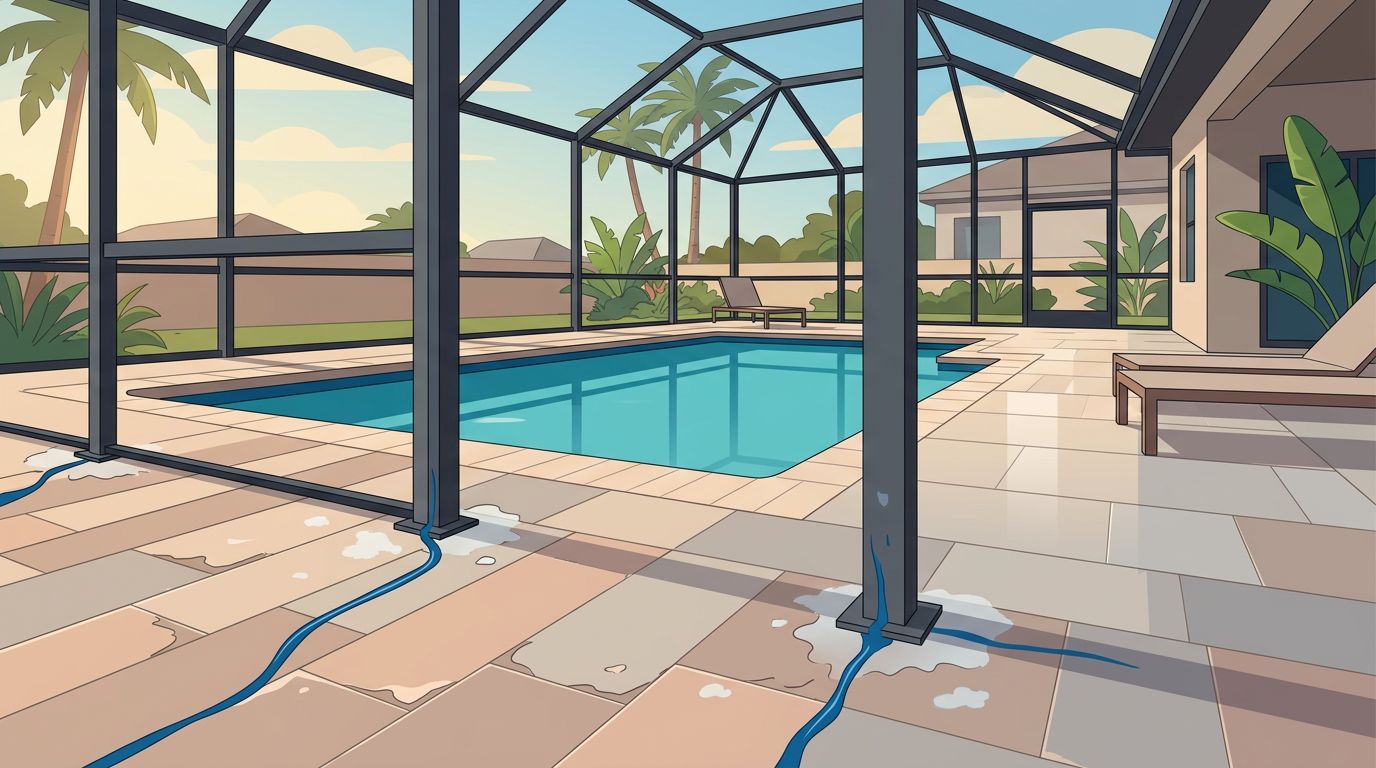
Dealing with paver sealer peeling around pool cages is frustrating because the rest of the patio often remains clean and attractive. It is common to see one specific section start flaking, turning cloudy, or lifting around the cage posts while the open areas of the deck look perfectly fine.
I see this issue often on Southwest Florida pool decks and lanais. The problem usually stems from trapped moisture, concentrated runoff from the screen enclosure, inadequate surface preparation, or applying too much product before the pavers were fully dry. Recognizing these factors is essential, as the right approach to fix sealer failure starts with identifying the root cause rather than simply adding another coat over the damaged area.
Key Takeaways
- Pool cage runoff frequently carries moisture, algae, mold and mildew, minerals, and aluminum residue directly onto your pavers.
- Paver sealer may begin peeling when pavers are damp, dirty, over-sealed, or coated with an incompatible product.
- Issues like a cloudy white haze, dark stains, and flaking sealer often look similar, but they require distinct remediation treatments.
- Routine pressure washing alone will not fix peeling sealer if the old coating remains bonded to the paver surface.
- Ensuring proper cleaning, moisture removal, and precise product application will protect your finish from future damage caused by rain and pool water exposure.
Why Paver Sealer Peels Around Pool Cages
A pool cage changes how water moves across your concrete pavers. Rain falls on the aluminum frame and screen, then runs down the posts or collects along the cage perimeter. Pool splash and regular rinsing add even more moisture to these same areas.
When water stays against sealed pavers, it can get trapped under a film forming coating. As temperatures rise, the moisture tries to escape. That pressure creates trapped moisture, which pushes the coating upward and causes bubbles, flakes, or peeling. Florida heat makes this process happen faster, especially on a pool deck that receives direct afternoon sun.
The concrete pavers near the cage may also receive less sunlight than the open patio. Shaded sections dry slower after storms, pool cleaning, and routine rinsing. Pollen, dirt, algae, and organic residue stay wet for longer periods. When a coating is applied over that residue, it may look good at first but will fail after repeated wet weather.
The type of product also matters. A topical sealer sits on top of the surface and creates a visible film. Other options, known as a penetrating sealer, soak into the material to offer a more natural finish. While a topical sealer can provide excellent color enhancement, it has a greater chance of failing when moisture gets underneath, leading to a loss of sealer adhesion. A penetrating sealer usually does not peel in large sheets, although it can still haze, stain, or wear unevenly.
I also check whether the pool cage has old oxidation or corrosion. Aluminum can leave a chalky residue on nearby surfaces. If that residue is not removed before sealing, the new product bonds to the residue instead of the concrete pavers. The coating then loses adhesion around the cage before it begins to fail in other areas.
How Pool Cage Runoff Damages the Finish
Pool cage runoff does not look dangerous when it is only a thin stream of water. The problem is what that water carries and where it repeatedly lands.
Rainwater can collect dust, pollen, leaves, bird waste, and algae from the screen enclosure. Water moving down the posts may also carry oxidized aluminum residue, while pool water adds chlorine, sunscreen, body oils, and other contaminants. These materials settle along the cage edge and build up under or over the sealer. In these damp areas, mold and mildew thrive, further compromising the integrity of the protective coating.
A small drainage issue can make the problem worse. If the patio slopes toward the cage, water may remain along the perimeter after every storm. If the paver joints are low or the joint sand has washed away, water collects beside the posts. The sealer is then exposed to constant saturation instead of normal drying cycles.
This is why I do not inspect only the peeling patch. I look at the cage roof, frame, downspouts, deck slope, and nearby landscaping. A palm tree or dense plant bed may block airflow and keep one side of the patio damp. Furthermore, a clogged gutter or roof edge may send a large volume of water toward the pool area.
The same principle applies to nearby roof cleaning. If roof runoff lands at the cage or patio edge, cleaning chemicals and loosened organic matter travel onto the pavers. The roof should be handled with a proper soft wash method and controlled runoff. Using a high powered pressure washer around a pool cage is often a mistake; it can damage screens, displace essential joint sand, push water beneath the coating, and spread debris across the deck.
When you are cleaning pavers, it is vital to account for these runoff patterns. A sealer cannot correct poor drainage. If water has nowhere to go, the finish will continue to struggle even after a careful restoration.
Other Reasons Paver Sealer Starts Flaking
Moisture is common, but it is not the only cause. I usually look at four conditions before recommending a repair.
The surface was sealed before it was dry. Pavers can feel dry on top while moisture remains in the joints and pores. This often happens after rain, pool deck cleaning, or pressure washing. If the polymeric sand remains wet during the sealing process, that moisture becomes trapped under the coating. Applying sealer too soon traps that water, leading to potential failure.
The pavers were not prepared properly. Dirt, old sealer, efflorescence, and sunscreen residue can prevent strong adhesion. An acrylic sealer, in particular, will struggle to bond if applied directly over efflorescence, as the salt deposits create a weak barrier. Pool decks collect more contaminants than many driveways because people walk barefoot, use sunscreen, and splash water across the surface every day.
Too much product was applied. A heavy coat does not always provide better protection. Excess sealer may remain soft, sticky, or uneven. When water reaches the underside, the thick film can separate from the paver and peel in patches.
Different products were layered together. A water-based sealer and a solvent-based sealer do not always bond properly. A new product applied over an unknown old coating can cause whitening, bubbling, or flaking. The same problem can happen when a homeowner applies a second coat without checking the compatibility of the existing finish.
Not every light-colored area is peeling. A white haze may be trapped moisture, excess product, or efflorescence. Dark patches may be organic growth, dirt under the coating, or a section that has absorbed more water. I test the surface before choosing a cleaner or stripping method.
A peeling spot is often a surface symptom. The real cause may be moisture, drainage, contamination, or an old coating that has already lost adhesion.
Travertine requires extra care because its porous, textured surface can be damaged by harsh chemicals and excessive pressure. I avoid treating natural stone like concrete. A stone-safe cleaner, light agitation, and controlled rinsing are often safer than a narrow high-pressure spray.
What to Do When Sealer Is Peeling
Start by stopping additional sealer applications. Adding a fresh layer over loose or failing material usually makes the finish look worse. The old coating needs to be evaluated and removed where it has lost its bond.
I first inspect whether the damage is isolated around the pool cage or spread across the entire patio. Small areas may need targeted cleaning and coating removal. Larger failures often require using a professional sealer stripper or paver sealer remover to strip old sealer from the full surface so the restored sections do not look patchy.
The repair process normally includes:
- Inspecting the pavers and drainage. I check for standing water, wet joints, cage runoff, and nearby sources of contamination.
- Testing a small area. This shows how the old sealer reacts to cleaning agents and whether the paver color changes during removal.
- Cleaning the surface carefully. The method depends on whether the patio is brick, concrete paver, travertine, or another material.
- Removing loose and failing sealer. Pressure washing may help, but the pressure and tip must match the surface. Too much force can etch travertine or wash essential joint sand out of the joints.
- Allowing the patio to dry fully. Drying time depends on weather, shade, humidity, and the condition of the joints.
- Applying a compatible sealer. For a long-lasting, professional finish, I recommend a high-grade sealer such as a two-part polyurethane, which is excellent for achieving a durable wet look. The product should match the paver material, traffic, pool exposure, and owner expectations.
A proper driveway sealing process follows the same basic rule. The pavers must be clean, stable, dry, and free from loose coating before new sealer is applied. Pool decks simply require more attention to water movement, chemical exposure, and the stabilization of joint sand.
I also protect screens, cage trim, walls, plants, and pool equipment during cleaning. A controlled method keeps the work area cleaner and prevents damage to the parts surrounding the pavers.
How to Prevent Paver Sealer Peeling Around a Pool Cage
Prevention starts before the sealer reaches the pavers. I recommend inspecting the pool cage and patio together instead of treating them as separate areas.
Keep gutters, screen channels, and drainage paths clear. Watch where rainwater flows during a storm. If water runs down one post and spreads across the deck, that area will need more attention than a dry section. When choosing a product, prioritize a breathable sealer. These formulas allow trapped moisture to escape from the stone, which significantly reduces the risk of clouding or peeling. Unlike driveway surfaces where you might worry about hot tire pickup, pool decks require a product focused on chemical resistance and moisture permeability.
Cleaning pavers properly is essential for longevity. If you use a pressure washer, be sure to use the correct settings. Excessive pressure can etch the surface or damage the integrity of the joints. Regular maintenance is also vital. Remove sunscreen, bird waste, algae, and leaves before they remain on the surface for long periods. These materials can stain porous pavers and make future sealing more difficult. A light rinse is useful for routine care, but it should not replace thorough cleaning when residue has built up.
Avoid harsh acids and random chemicals from the garage. They can discolor brick, damage natural stone, or strip the protective layer unevenly. When the surrounding home also needs exterior care, schedule roof cleaning and house washing so runoff does not settle on your freshly sealed pavers.
Do not seal immediately after cleaning. The patio, joints, and porous material need time to release all moisture. I also recommend testing an inconspicuous area when the existing sealer type is unknown. That small test can prevent a large peeling problem across the entire pool deck.
For professional cleaning, restoration, or sealing in Southwest Florida, homeowners can Get a Quote and have the surface inspected before work begins.
Frequently Asked Questions
Why does my sealer peel only near the pool cage posts?
The pool cage acts as a collection point for rainwater, debris, and pool splash, which keeps these specific areas consistently damp. This moisture gets trapped beneath the sealer film, eventually causing the bond to fail and the product to flake or bubble in those high-exposure spots.
Can I just apply a new coat of sealer over the peeling areas?
Applying new sealer over failing, loose material will typically make the issue worse because the new product cannot bond to the compromised base. You must remove the loose or failing coating and ensure the surface is clean, dry, and properly prepared before attempting to re-seal.
How long should I wait for my pavers to dry before sealing?
Even if the surface appears dry, moisture often remains deep within the paver pores and the joint sand. It is best to wait at least 24 to 48 hours after cleaning or rainfall, depending on humidity levels and sun exposure, to ensure all moisture has fully evaporated.
What type of sealer is best for pool decks?
Breathable sealers are generally preferred for pool decks because they allow trapped moisture to escape rather than creating a rigid, non-porous film. A high-quality, breathable product reduces the risk of clouding and peeling compared to heavy, topical acrylic sealers that trap water underneath.
Conclusion
Paver sealer peeling around pool cages is most often a symptom of trapped moisture, which prevents a proper bond between the coating and the stone. Whether caused by constant runoff, surface residue, or an incompatible initial application, shade and persistent water exposure make the perimeter of your pool cage especially vulnerable to degradation.
Ensuring a long-lasting finish requires more than just applying another quick coat. A professional-grade sealing process is essential, as it involves a thorough inspection, the correct cleaning methods, and ample drying time before applying the final product. By properly addressing the underlying drainage issues and following a high-quality sealing process, your pool deck will have the best chance to remain clean, even, and fully protected against the harsh Florida elements.