
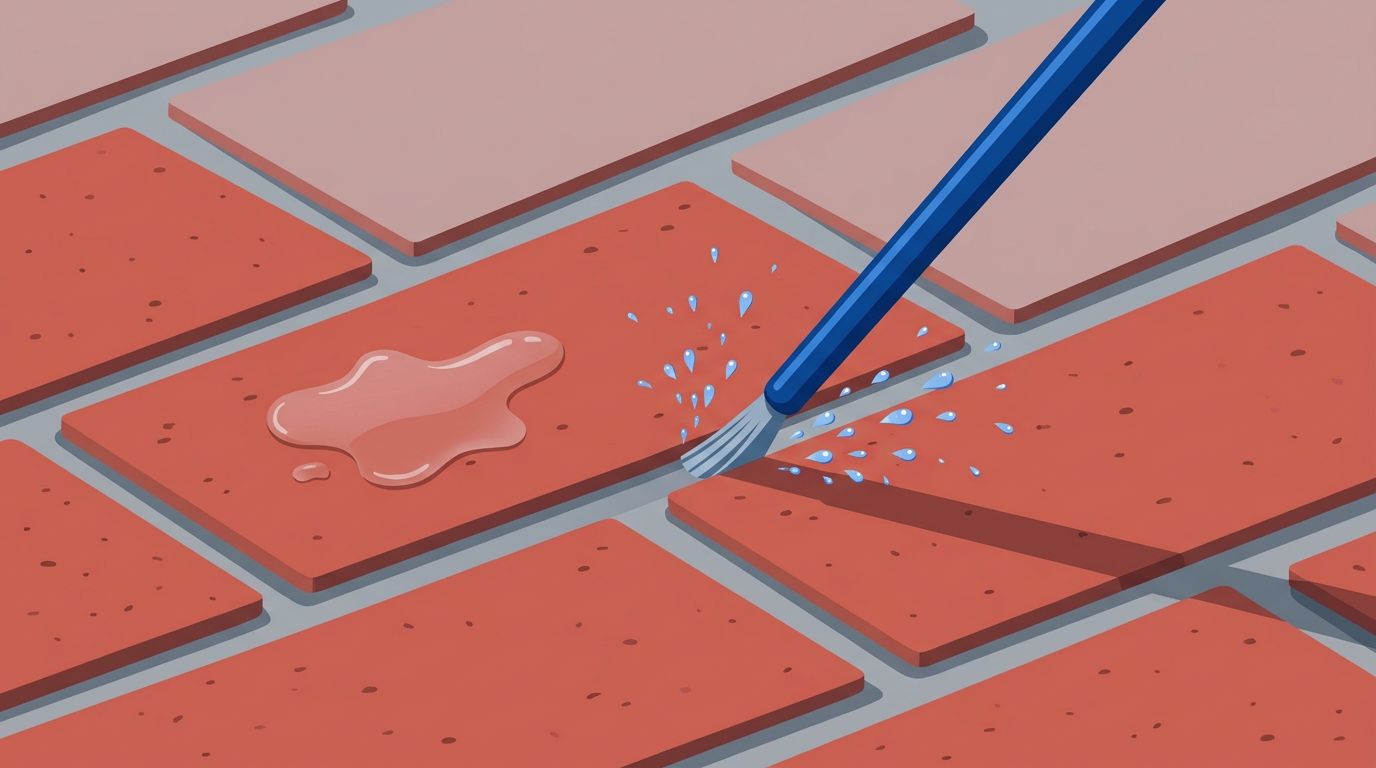
Silicone and caulk can make a clean patio look sloppy fast. Whether you are dealing with brick pavers or concrete pavers, one drip across the surface or one smear near a joint can make the whole area look patched instead of polished.
I see this a lot after patio repairs, fire pit work, and quick sealant fixes. Because brick pavers are porous, the residue often grabs hold firmly and does not always wipe off like normal dirt. The good news is that most silicone stains on brick pavers can be handled if I start gently and use the right order.
Key Takeaways
- Silicone and caulk are not the same as ordinary dirt; they bond deeply to porous surfaces and require specialized stain removal techniques to clean properly.
- Fresh smears are easier to remove than hardened beads or old residue in the joints.
- Pressure washing can help, but only after the stain has been loosened first.
- A good sealer makes future cleanup easier and helps protect the brick from absorption.
- If the pavers are scratched, rough, or loose, I treat it like brick restoration, not a simple wash.
Why Silicone and Caulk Stick to Brick So Hard
Brick pavers are built to breathe. That is great for drainage, but it also means they can grab onto sealant residue fast. Silicone and caulk can sink into the tiny pores of the clay brick or concrete surface, then dry into a rubbery film that holds onto dirt.
I see the worst marks on unsealed brick pavers and older patios. A little overspray during repair work can spread into a wide smear before anyone notices. Once that happens, the paver stain is no longer sitting on top of the surface. It is deeply embedded and stuck to the material.
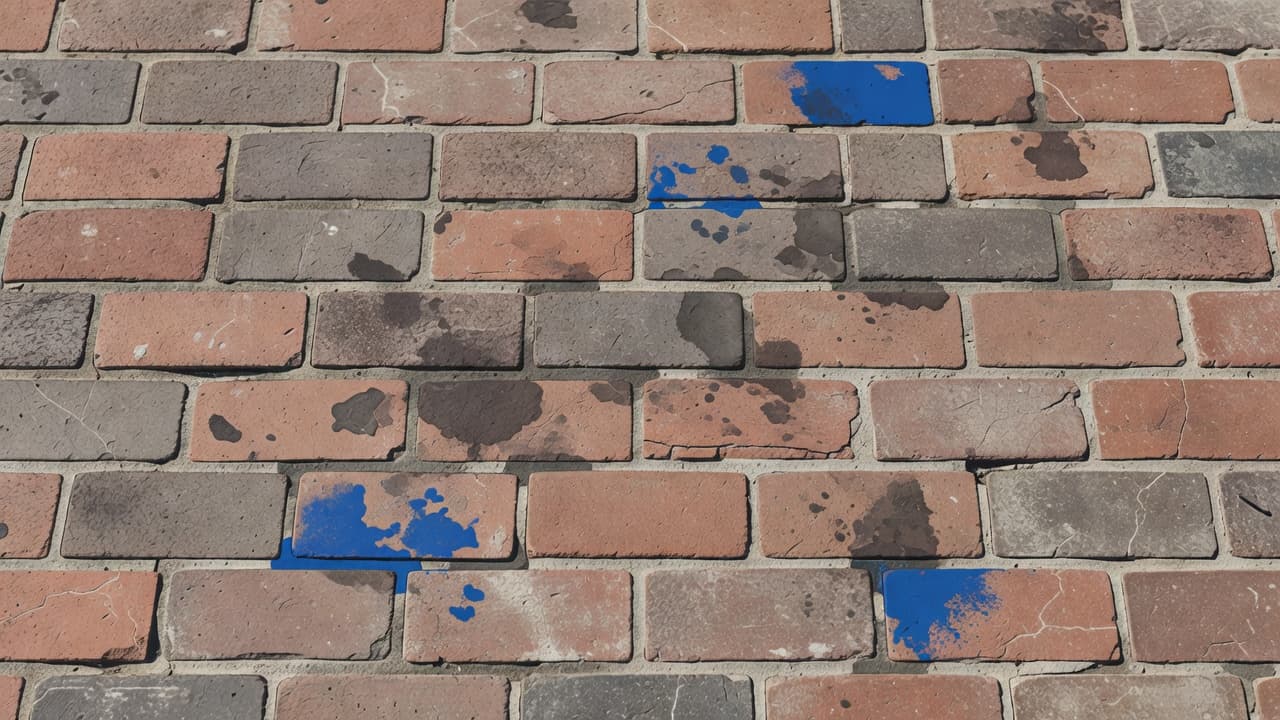
That is why I do not treat silicone stains on brick pavers like mud or pollen. Mud rinses away easily. Silicone clings to the texture, and caulk hardens as it cures. If a repair was done near a fire pit, garden edge, or expansion joint, I also check for old drips in the seams. Those hidden spots can keep making the patio look dirty even after the main area is cleaned.
How I Tell Silicone, Caulk, and Ordinary Dirt Apart
Before I clean anything, I look closely at the stain. A shiny smear, a rubbery bead, or a dark spot from oil stains all need different treatment. If I guess wrong, I waste time and can make the mess worse.
Here is the quick read I use on site:
| What I see | What it usually means | My first move |
|---|---|---|
| Shiny or wet-looking smear | Fresh silicone transfer | Let it settle, then scrape carefully |
| Hard rubbery bead | Cured caulk sitting on top | Lift the bead before cleaning the residue |
| Thin cloudy film | Silicone haze after a repair | Use a mild cleaner and soft agitation |
| Dark grit in the joints | Dirt or oil stains caught in residue | Brush gently and rinse with control |
If the stain smears instead of lifting, I slow down. More force usually spreads the problem.
That first read matters. A surface stain and a joint stain do not behave the same way. Because I am often working on porous brick, I keep in mind that the material absorbs liquids differently than smoother surfaces. If the brick is already faded, rough, or chalky, I also keep in mind that the damage may be from harsh cleaning or an old failed sealer, not the caulk alone, which is why identifying the specific paver stain is so vital to my success.
The Cleaning Method I Trust on Pavers
I never start with the strongest tool first. That is how brick gets scratched, joint sand gets blown out, and a small cleanup turns into a bigger repair.
My process stays simple for effective surface cleaning:
- I clear loose debris first with a soft broom or vacuum.
- I test a mild cleaner on a hidden spot.
- I use a plastic scraper or a soft nylon pad to lift the thick residue.
- I scrub lightly with a stiff bristle brush to work the area.
- I rinse with controlled water pressure and check the result.
I also wear gloves and eye protection before I handle any cleaner. That is basic, but it matters. Strong acids, bleach, and random household chemicals can discolor the brick or leave a film behind. I stay with masonry-safe cleaners, such as Simple Green, or mild soap when the stain is light. If the area surrounding the silicone remains dull or oily, applying a gentle degreaser can help lift away the residue. Once the bulk of the silicone is removed, a quick wipe with another degreaser ensures the brick surface is clean and uniform.
If a bead of caulk has fully cured, I usually cut it away in small sections instead of tearing at it. Pulling too hard can rip the surface finish or leave a wider mark than the original stain. If the residue is stubborn, I repeat the soft steps rather than jump straight to blasting it off.
That slower approach is the same mindset I use on roof cleaning and soft wash work. Different surface, different pressure, same need for control.
When Pressure Washing Helps, and When It Doesn’t
Using a pressure washer can be useful on larger patios, but it is not the first move. I use a pressure washer after the residue is loosened, not before. That keeps me from driving the stain deeper into the pores or scarring the face of the brick.
The wrong setup can do damage fast. Even though concrete pavers are durable, a narrow tip can cut lines into the surface. Too much pressure can strip joint sand and make the pavers look worn. If the sealant is half removed and half stuck, the patio can end up looking patchy.
I use a pressure washer as a controlled rinse, not a shortcut. That means:
- keeping the spray moving
- staying off delicate edges and nearby walls
- using the least pressure that still does the job
- checking the joints after the rinse
If the patio needs more than a surface cleanup, I look at the whole area. Old silicone residue, washed-out sand, and faded color can point to a bigger restoration job. In that case, cleaning alone is not enough. The pavers may need re-sanding and sealing so the finish looks even again.
That is where driveway sealing and patio sealing start to matter. A sealed surface gives fresh drips less room to soak in, and cleanup is usually easier the next time around.
How I Keep New Stains from Coming Back
The best fix is to keep the stain from forming in the first place. I tell homeowners to protect the brick before they start a repair project, rather than trying to remove dried caulk later.
A few habits help a lot:
- Tape off the edges before applying sealant or caulk.
- Wipe drips right away, before they skin over.
- Keep a damp rag nearby for quick cleanup.
- Check the joints after the repair is done.
- Schedule professional sealing pavers services when the surface starts looking open and thirsty.
A professional-grade sealer helps because it gives silicone, caulk, or even an accidental splash of tire spray less room to soak into the surface. It does not make a patio stain-proof, but it does make cleanup easier and helps preserve the natural beauty of your clay pavers. Proper sealing pavers maintenance also helps preserve the vibrant color of the brick over time.
If the surface already looks tired, I look at brick restoration before I seal. That can include cleaning, repairing damaged mortar, replacing loose pavers, and achieving a complete color transformation that brings the aesthetic of your outdoor space back to life. A clean, sealed patio holds up better, especially in Southwest Florida weather where heat, rain, and humidity work on the surface all year.
If you want help with a stained patio, a driveway that needs sealing, or a paver area that needs a full cleanup, you can Get a Quote.
Frequently Asked Questions
Can I use a wire brush to remove stubborn silicone residue from my brick pavers?
I strongly advise against using wire brushes on brick or concrete pavers. They are too aggressive and will likely scratch or scar the surface, leaving permanent marks that are harder to fix than the original silicone stain.
Why does some silicone stain seem to reappear after I think I have cleaned it off?
This often happens because some residue was driven deeper into the porous surface during the initial attempt or was trapped inside the joints. If the area isn’t fully cleaned out, heat or moisture can draw that remaining trapped silicone back toward the surface.
Is it necessary to reseal my patio after removing a silicone stain?
It is highly recommended to seal the area once you have finished cleaning. Removing the stain and the old residue can leave that specific brick more porous and vulnerable, so a fresh coat of sealer helps protect the surface and makes future spills much easier to wipe away.
Can I use household bleach to remove dark spots left behind by caulk?
Bleach is usually not the right tool for silicone or caulk stains and can potentially discolor your bricks or kill nearby landscaping. I always stick to masonry-safe cleaners or mild degreasers that are designed to lift residue without harming the integrity or color of the paver.
Conclusion
Dealing with silicone stains on brick pavers can be frustrating, but these blemishes are rarely permanent. I treat them as bonded residue rather than ordinary dirt, which fundamentally changes how you should approach the cleanup process.
The secret is to start with gentle methods, use the right cleaner for the job, and save pressure washing for when it is truly necessary. Once you have cleared the area, sealing the surface helps ensure that your next repair project does not turn into a new mess. A little bit of care goes a long way when the goal is to keep your brick pavers looking clean, consistent, and ready for the next season of effective stain removal.