
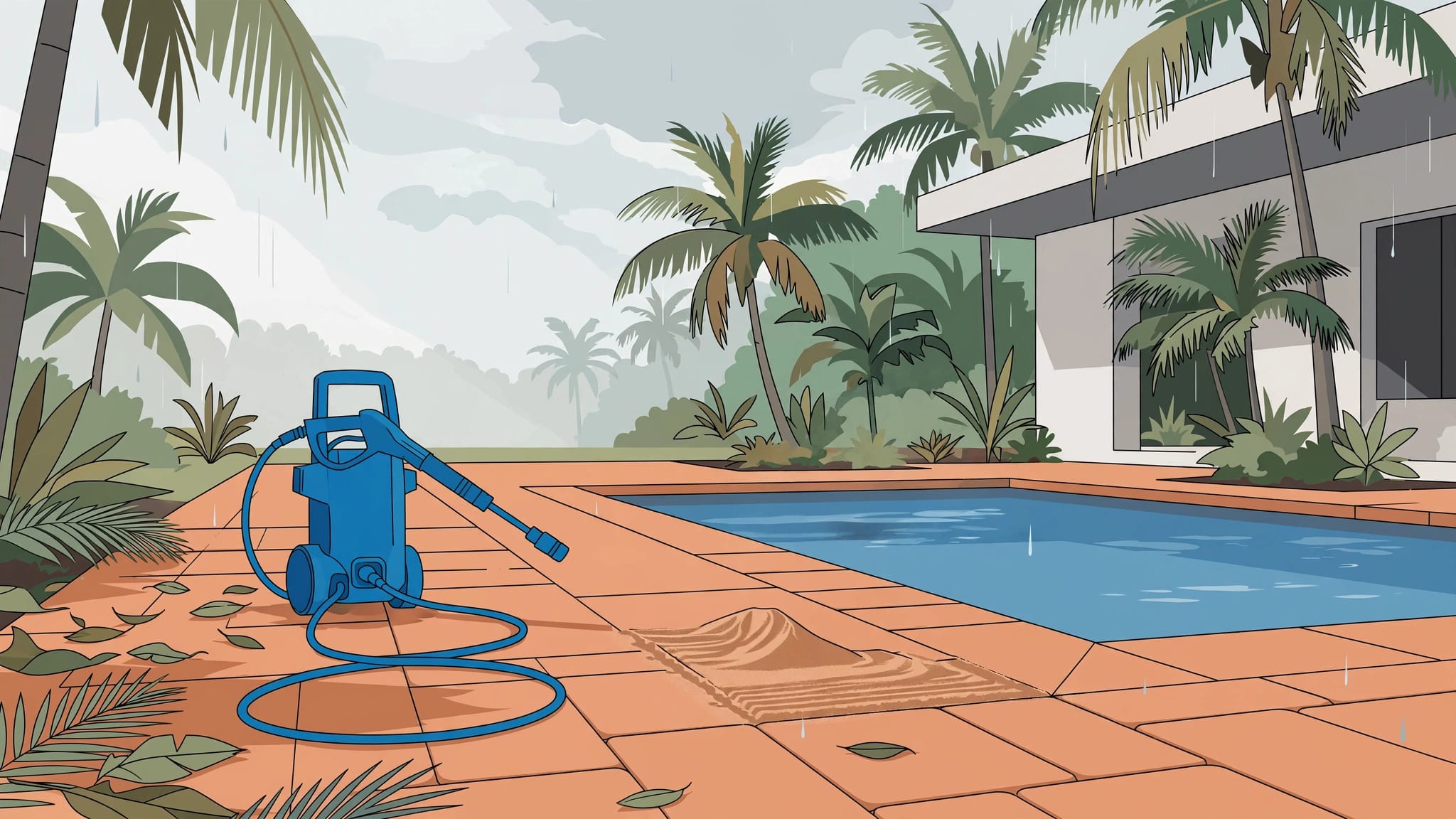
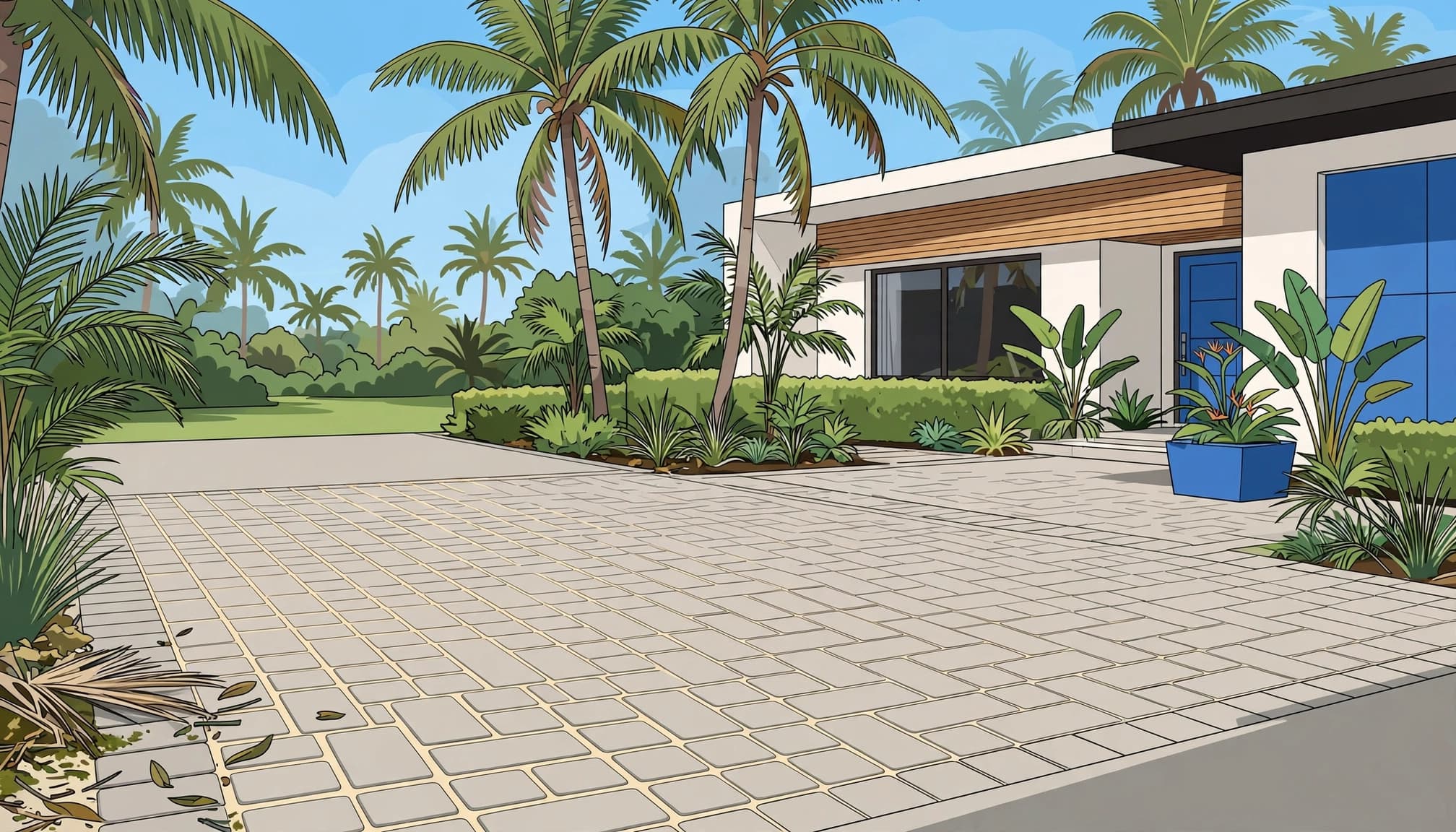
A clean paver driveway or pool deck can change the whole look of your home. In Southwest Florida, rain, humidity, tree debris, pool splash, and strong sun can make pavers look dirty much faster than homeowners expect.
The right paver cleaning frequency is usually not a one-time schedule. I recommend light upkeep all year, with professional cleaning at least once a year for most homes. That paver cleaning frequency may need to increase in shady areas, pool decks, and high-traffic driveways.
Key Takeaways
- Most Southwest Florida homes benefit from professional paver cleaning once every 12 months.
- Shaded areas, pool decks, dense landscaping, and high-traffic driveways may need cleaning every six to nine months.
- Sweep and rinse problem areas regularly, and inspect pavers after major storms for standing water, washed-out joint sand, or shifting pavers.
- Use controlled pressure and paver-safe cleaners to avoid damaging the surface, sealer, or joint material.
- Clean, repair, and fully dry pavers before applying sealer, and address drainage or joint problems before they become larger repairs.
Why Southwest Florida Pavers Get Dirty Faster
Southwest Florida weather is hard on exterior surfaces and can quickly affect a home’s curb appeal. Heavy summer rain moves dirt into the joints, while warm humidity makes damp, shaded areas slippery. Leaves, palm berries, and tree sap can also leave brown or dark stains on porous brick and concrete pavers.
Driveways collect tire marks, oil and grease stains, rust stains, fertilizer residue, and dust. Pool decks deal with sunscreen, wet feet, and growth around shaded edges, while a small fresh residue mark may respond to dish soap and warm water. Paver patio maintenance may require more attention beneath oak trees than on an open walkway with full sun.
I tell homeowners that effective paver maintenance starts with watching how quickly the surface darkens or becomes slippery, rather than relying only on the calendar. If the pavers look darker, slippery, patchy, or green around the edges, it is time to clean them.
Moss and algae on a wet pool deck, entryway, or walkway can become a slip hazard, not only a curb appeal issue.
A Practical Paver Cleaning Schedule for Florida Homes
Most properties need a simple routine between professional services. Regular paver maintenance keeps debris from becoming set-in staining and helps protect the joint sand between pavers.
Sweep and rinse problem areas monthly
Sweep leaves, dirt, mulch, and palm debris off pavers every few weeks. For patios, pool decks, and shaded outdoor areas, this simple step is part of regular paver patio maintenance. It keeps moisture from sitting against the surface and helps prevent leaf tannins from leaving dark outlines after rain.
Rinse light dirt with a garden hose when needed. For small spots, use dish soap and warm water with a stiff bristle brush suited to the paver surface. Test the method in a small area first. Pay attention to corners near gutters, screen enclosures, planters, and downspouts, since these areas often stay damp longer.
After a major storm, inspect the driveway and patio for washed-out joint sand, standing water, or pavers that have started to rock. Together, sweeping, rinsing, and post-storm inspections form an ongoing paver maintenance routine. This preventative maintenance won’t fix a drainage or base problem, but catching one early can prevent a larger repair.
Plan a full cleaning at least once a year
For most Southwest Florida homes, I recommend professional paver cleaning once every 12 months. Homes with shade, dense landscaping, heavy vehicle use, or a pool may need cleaning every six to nine months.
Annual cleaning removes organic buildup before it becomes harder to treat. It also gives you a clear view of stains, loose joints, faded sealer, and shifting pavers.
If you keep up with cleaning, it’s easier to plan when to clean and seal pavers. The surface must be clean, stable, and completely dry before you seal your pavers with a paver sealer.
Clean Pavers Without Damaging Them
A dirty paver surface can tempt you to use the highest setting on a pressure washer. That is where many homeowners run into trouble. Too much force can etch the paver face, leave wand lines, strip old sealer, and damage the installation.
Controlled pressure washing protects the installation
A pressure washer is useful for wide driveways, patios, walkways, and pool decks. The process should match the paver material and surface condition.
I use cleaning solutions matched to the stain and paver material. Measured pressure, proper dwell time, and even rinsing provide surface protection. The goal is to lift dirt and growth without blasting the joint sand apart. A surface cleaner can provide a more even result on broad, flat areas than a narrow spray wand.
Prosoco’s paver-cleaning guidance also recommends following the joint-sand manufacturer’s directions before cleaning an installation with polymeric sand.
Treat stains before they become permanent
For stain removal, absorb a fresh spill first, then use dish soap and warm water for mild residue. Oil and grease stains often need more than water pressure, so test a paver-safe degreaser in an inconspicuous area. Let it work as directed, then agitate gently with a stiff bristle brush suited to the finish and rinse carefully.
For tree sap, leaf stains, rust stains, or other unknown marks, don’t start with harsh acid or a wire brush. Brick and concrete surfaces can be porous, and the wrong cleaner can fade color or damage the sealer. Natural stone pavers, including travertine, need a stone-safe cleaner and shouldn’t be treated with acidic products, which is why deep travertine buildup is often best handled with professional pressure cleaning for travertine tile.
If you see white powder on concrete pavers, it may be efflorescence. This happens when moisture carries salts to the surface as it dries. Don’t use a cleaner for this residue blindly. Some products can weaken the joints, as explained in this efflorescence cleaner warning.
Check Joint Material and Sealer After Cleaning
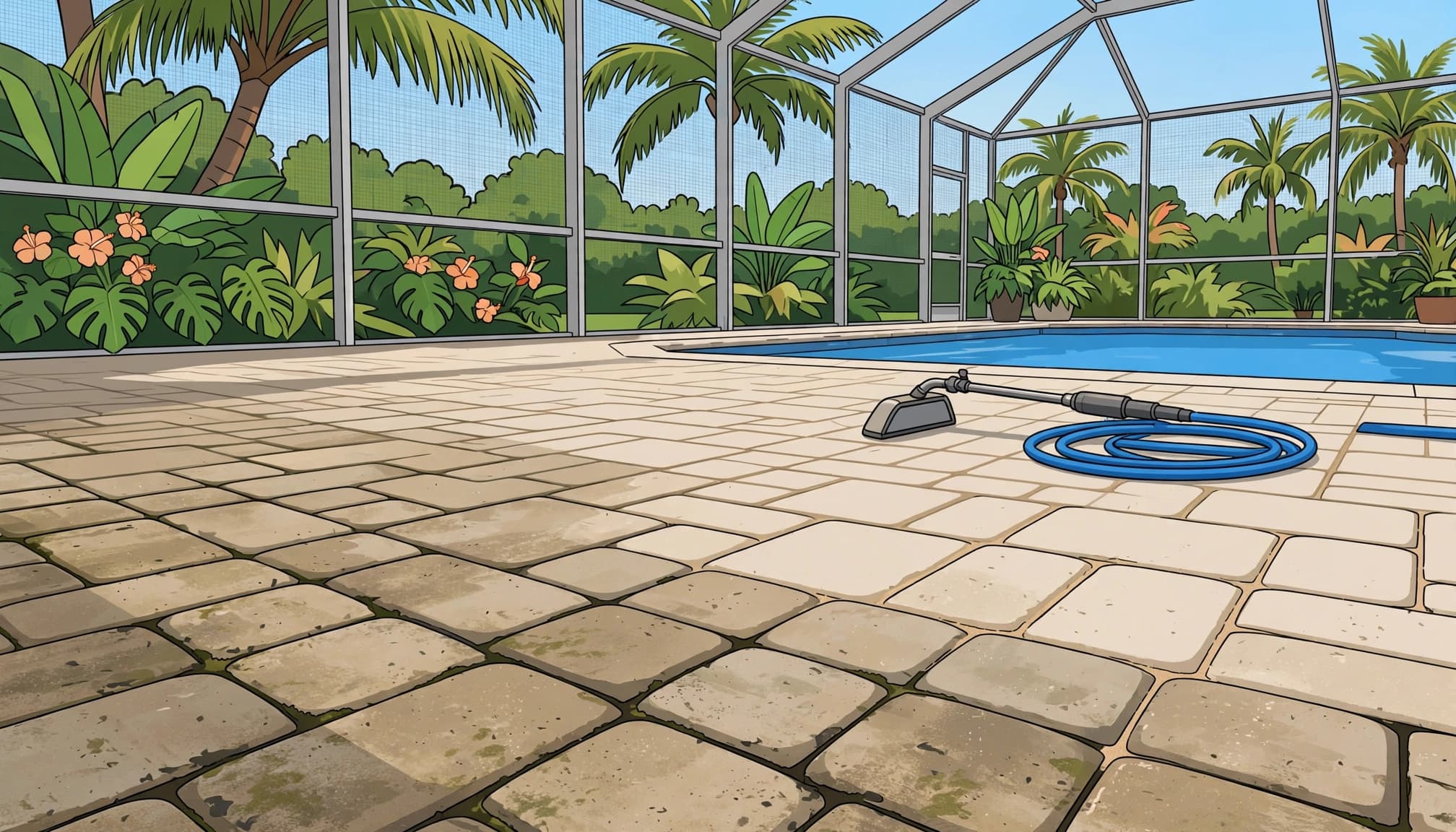
Cleaning does more than brighten the surface. It can reveal joint, drainage, and surface problems, making it an important part of paver maintenance. Look for empty joints, weeds, loose pavers, or sand collecting along the driveway edge as part of broader hardscape maintenance.
Regular and hardened joint materials work differently
Regular joint sand fills the gaps and may need replacement after storms or cleaning. Polymeric sand is activated with water and hardens in the joints, which can help limit weed growth and sand loss.
Neither product is permanent if water is washing through the base or downspouts are dumping onto the pavers. If joint material keeps disappearing, check drainage before adding more. Once drainage and base conditions are addressed, proper material replacement can support joint stabilization.
A paver sealer can help reduce water absorption and make future cleanup easier. Still, sealer isn’t a fix for stains, unstable pavers, or failed joints. Clean and repair the surface first. The timing of sealers and cleaning matters, so apply sealer only when the surface and joints are ready.
Frequently Asked Questions
How often should pavers be professionally cleaned in Southwest Florida?
Most homes should have their pavers professionally cleaned once every 12 months. Shaded areas, pool decks, dense landscaping, and high-traffic driveways may need cleaning every six to nine months.
What should I do between professional paver cleanings?
Sweep leaves, dirt, mulch, and palm debris every few weeks, then rinse light dirt with a garden hose as needed. Dish soap, warm water, and a suitable stiff-bristle brush can help remove small areas of fresh residue.
Can I pressure wash my pavers myself?
Pressure washing can be effective, but excessive force may etch the paver face, strip sealer, leave wand marks, or remove joint sand. Use controlled pressure and a method suited to the paver material and surface condition.
When should pavers be cleaned before sealing?
Pavers should be cleaned, repaired, and completely dry before sealer is applied. Sealing over stains, unstable pavers, failed joints, or trapped moisture can lead to poor results and future problems.
What are signs that my pavers need cleaning sooner?
Darkening, slippery surfaces, green growth, patchy staining, and buildup around shaded edges are signs that cleaning may be needed. Persistent joint loss, standing water, or shifting pavers may also indicate a drainage or base problem that needs attention.
Keep Your Pavers Looking Clean Longer
The best paver cleaning frequency for Southwest Florida is simple: sweep often, inspect after storms, and schedule a full cleaning before buildup becomes difficult to remove. Most homes need annual service, while shaded or high-use areas may need two cleanings each year.
Between services, dish soap and warm water can remove light surface residue, but they won’t replace professional treatment for embedded staining or organic growth. The same schedule guides paver patio maintenance for patios, pool decks, driveways, and lanais.
I have seen careful cleaning and proper sealing restore the look of tired driveways, patios, pool decks, and lanais. Annual cleaning and sealing may suit some properties, but cleaning, drying, and inspection should come first if you plan to seal your pavers. Consistent maintenance can support weather protection, protect your investment, and help avoid costly restoration later.
If stains, slippery growth, uneven pavers, drainage issues, or joint loss persist, evaluate the surface. A qualified local paver-cleaning professional can help with further paver maintenance.