
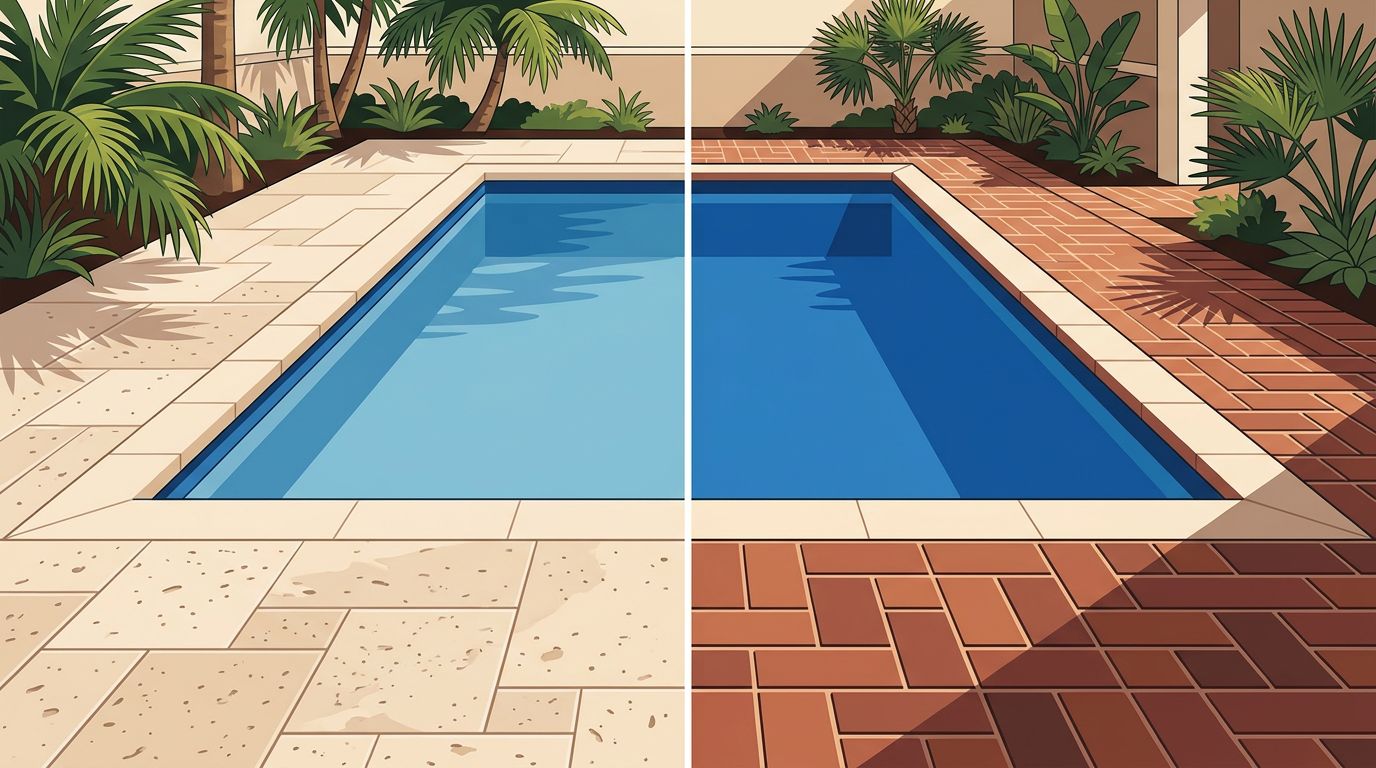
Around a Florida pool, bare feet often make the decision before a homeowner ever looks at a color sample. Light-colored travertine pavers can be a strong starting point, but this comparison goes beyond color.
I’ve worked around pavers long enough to know that a beautiful pool area can become a daily frustration if the surface gets too hot, holds water after heavy rain, or becomes difficult to clean. Heat, traction, maintenance, and long-term appearance matter more than a low starting price. Start with the material that fits how you use the outdoor living space.
Key Takeaways
- Light-colored travertine is often the better choice for uncovered Florida pool decks because it stays cooler underfoot and offers natural texture for traction.
- Fired brick provides a traditional, durable appearance, but darker colors can become hot in direct sun and may work better in shaded patios, walkways, or driveways.
- The total project cost depends on more than the paver price. Excavation, base preparation, drainage, coping, edge restraints, and installation quality all affect long-term value.
- Proper slope, compacted base, joint sand, cleaning, and sealing help prevent sinking, staining, algae, and premature wear for both materials.
- A mixed layout can use travertine around the pool and brick in shaded or lower barefoot-traffic areas, combining comfort, style, and budget considerations.
Travertine vs Brick: Heat, Texture, and Poolside Comfort
Florida sun is hard on every outdoor surface. Around a Florida pool deck, the wrong surface can become uncomfortable barefoot.
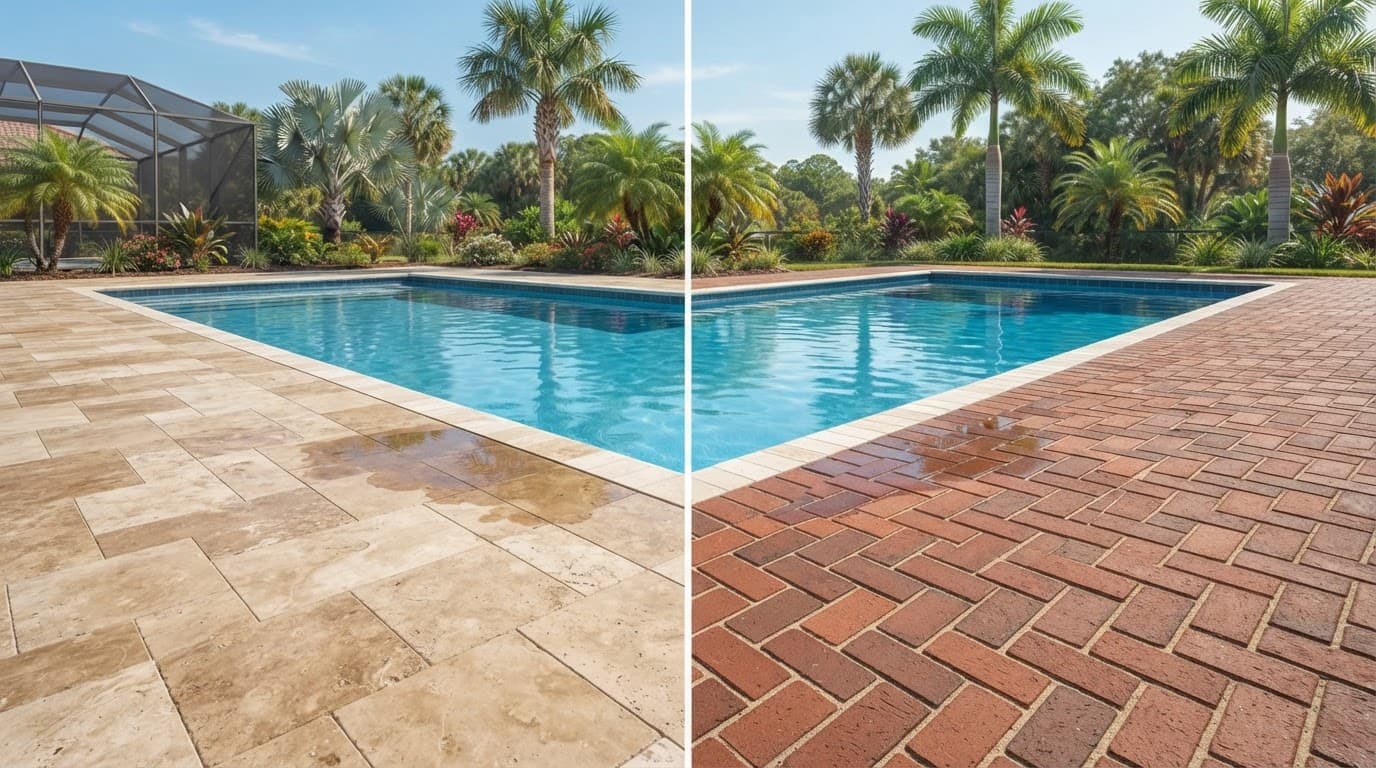
Light-colored travertine is usually the better choice beside pools because it stays cool underfoot in direct sun. Its natural pores and textured surface can improve traction. That can make it slip resistant, but finish, water, slope, and maintenance still affect safety.
Why travertine feels cooler underfoot
Travertine is a natural limestone with small voids and a lighter surface. These features help reduce heat retention compared with dense, dark paving materials.
On a hot summer afternoon, light travertine may stay in a manageable range for bare feet. Darker brick can become much hotter, sometimes sending people quickly back to the pool or toward shade.
The exact surface temperature changes with color, shade, moisture, and time of day. Still, the difference is easy to feel. South Florida pool-deck material guidance also points to natural stone as a cooler choice than brick for areas with frequent barefoot traffic.
Why brick gets hot around pools
Traditional brick is dense and holds heat. Red, brown, charcoal, or dark-gray brick pavers may look great in a courtyard, but they can be uncomfortable beside an uncovered pool.
Brick can still work around a pool when the area has reliable shade. A covered lanai, mature trees, umbrellas, or a screened enclosure can change the experience. Without shade, I usually recommend keeping dark brick farther away from the water.
The surface closest to the pool gets the most bare feet, splashing, sunscreen, and sun. That is where comfort should come first.
Know What “Brick Paver” Means Before Pricing It
The phrase “brick paver” can mean two different things in Florida. Some homeowners mean traditional fired clay brick. Others mean interlocking concrete brick pavers manufactured to resemble it.
This article compares travertine with fired brick. If you are collecting estimates, ask the contractor to write the exact material on the quote for your pool deck. Concrete, fired brick, and travertine have different costs, heat levels, and maintenance needs.
Travertine has a natural stone look
Travertine has color movement, natural texture, and slightly different patterns from one piece to the next. No two sections look perfectly identical, which is part of its aesthetic appeal.
I often see homeowners choose ivory, beige, cream, or shell tones for Southwest Florida pool areas. Those colors work well with stucco homes, blue water, palms, and screened lanais.
Brick offers a more traditional finish
Brick has a more uniform and classic look, with a traditional aesthetic that suits Mediterranean homes, cottage-style homes, and older neighborhoods. Traditional clay brick patio pavers also work well in patios where a warm, traditional appearance is the goal.
Traditional clay brick patio pavers can offer good durability in suitable applications. Their color is fired through the material, which generally limits color fading. For a formal courtyard, front walkway, or shaded patio, brick can be a strong choice.
Initial Cost, Repairs, and Long-Term Value
Travertine usually costs more upfront than brick. The stone itself costs more, and paver installation may require extra cutting, sorting, and detail work around coping, drains, steps, and curved pool lines.
That does not mean brick is always the less expensive project. The complete price for a Florida pool deck depends on demolition, excavation, base repairs, access through the property, edge restraints, drainage work, pool coping, and deck size.
Compare complete installation quotes
I recommend asking for a clear quote that separates material, labor, excavation, base preparation, drainage corrections, coping, edge restraints, and sealing. A low square-foot price can leave out the work that keeps pavers stable after Florida rains.
Travertine can add value through comfort and appearance, while durability for either material depends on installation quality, drainage, and timely repairs. Brick may save money in secondary zones where people wear shoes and the pavers receive less direct sun.
Both materials can be repaired one paver at a time
One benefit of pavers is that damage does not always mean replacing an entire deck. Travertine pavers and brick pavers can often be removed and replaced individually when one unit is stained, chipped, or cracked.
The same is true for sand-set travertine units. Keep leftover pavers after installation if possible. Matching stone or brick years later can be difficult because colors, product lines, and weathering change over time.
Travertine coping is a different situation. A loose or cracked coping stone needs its base and setting material inspected before it is reset or replaced.
Base Preparation and Drainage Prevent Sinking
A pool deck can have premium travertine or beautiful brick, but it won’t stay level on a weak base. Florida’s sandy soil, strong storms, and repeated wet-dry cycles quickly expose poor installation work.
I look beyond the surface when a deck starts rocking, sinking, or separating at an edge. Joint sand, drainage, and base movement often tell the real story.
A stable paver installation starts below the surface
After excavation, the installer adds a compacted base and level bedding layer. Solid edge restraints and correctly filled joints complete the system. Layer thickness depends on soil, traffic, and site conditions, while these components support long-term durability for either material.
The area also needs water to move away from the home and pool structure. Standing water can stain pavers, feed algae, wash out joint sand, and weaken the base over time.
The Florida Department of Health’s pool deck checklist lists a minimum 1% slope for paver-type decks. Your installer should also verify current local requirements and site-specific drainage conditions for your property.
Joint sand is part of the system
The sand between pavers is not there only for appearance. It helps lock the units together and limit movement.
When joint sand washes out, pavers can shift and edges can loosen. Open joints may also invite weeds and ants. Re-sanding after cleaning is often needed before the deck is sealed.
Cleaning and Sealing Travertine and Brick
Both surfaces need routine cleaning in Florida. Humidity, pool water, leaves, sunscreen, mildew, and windblown dirt can make a clean deck look tired faster than homeowners expect.
The main difference in paver maintenance is simple, but maintenance needs vary with exposure, splash zones, and traffic. Travertine is a porous material and needs more attention to stains and sealer condition. Brick pavers need attention at the joints and should be cleaned without damaging the face of the paver.
Protecting a travertine pool deck
I prefer a penetrating sealer for many travertine surfaces because it protects the pores without leaving a heavy coating on top. Sealing travertine can help reduce staining from chlorine, saltwater splash, sunscreen, drinks, and leaf tannins while preserving a natural finish.
Check your deck every year. If water stops beading and starts soaking into the stone, it may be time to clean and reseal. A resealing interval of two to three years is a common starting point, but pool equipment, splash zones, and regular traffic can require earlier attention.
For fresh stains, start with mild soap and water rather than harsh acids. The Natural Stone Institute’s stone stain guide has useful advice for treating different types of stains.
Cleaning brick without stripping the joints
Brick pavers are durable, but that durability doesn’t make high-pressure cleaning safe. A narrow nozzle held too close can leave lines, remove joint sand, chip the paver face, or strip old sealer unevenly.
I use controlled pressure washing, a wide spray pattern, paver-safe cleaners, and a surface cleaner on open flat areas. The goal is to remove buildup without blasting the deck apart.
This surface should not be cleaned the same way as roof cleaning. A soft wash may be appropriate for algae on nearby stucco, screens, or other delicate areas, but pavers need a method suited to masonry and their joint system.
Before sealing, the pavers must be clean and fully dry. Belgard’s paver sealant guide also recommends cleaning pavers before applying sealer.
Use Each Material Where It Works Best
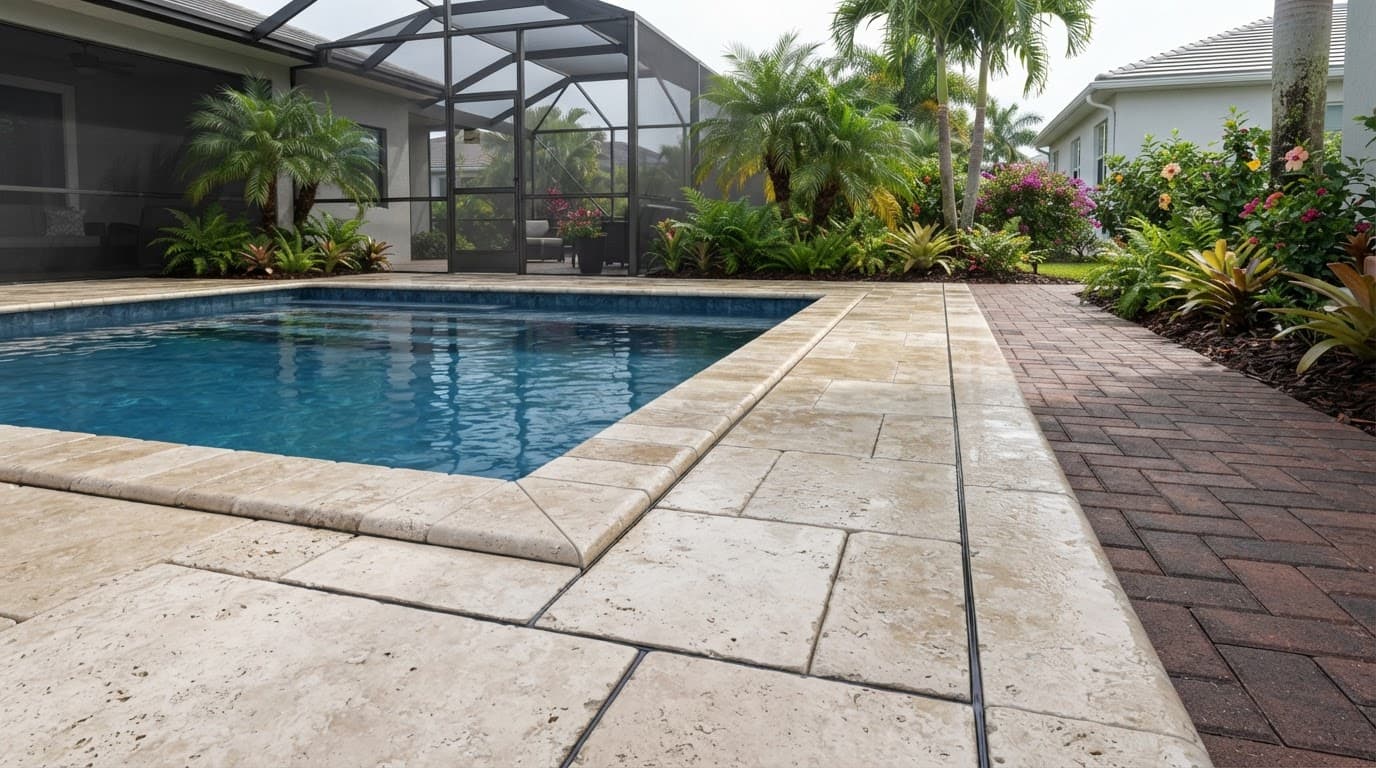
You do not have to use one material across the whole property. A mixed layout can give you the comfort of travertine where it matters and the classic look of brick across your outdoor living space.
When homeowners ask me about travertine vs brick, I often suggest looking at the property in zones instead of treating the entire project as one decision.
| Area of the property | Better fit in many Florida homes | Main reason |
|---|---|---|
| Pool surround and tanning area | Light travertine pavers | Lower heat underfoot and natural traction |
| Covered lanai or shaded patio | Brick or travertine | Style and budget can guide the choice |
| Driveway pavers and front walk | Brick pavers | Traditional curb appeal and reliable performance |
| Pool equipment path | Brick or concrete pavers | Practical access where bare feet are less common |
The strongest layout often uses travertine around the water, then transitions to brick along shaded pathways and front entries. Patio pavers can define an outdoor dining space without disrupting the flow.
The two materials can complement each other when colors are chosen with care and the transition supports the overall landscape design. During paver installation, your contractor can coordinate transitions, edge restraints, and color changes.
Match the sealer to the area
Driveway sealing has different needs than sealing a pool deck. A driveway deals with vehicle traffic, tire marks, oil spots, and turning pressure. A poolside area deals with wet feet, salt or chlorine exposure, and slip concerns.
I recommend choosing a sealer based on the material, location, finish, and condition of the pavers. A glossy wet look may suit a driveway, but it is not always the right choice next to a swimming pool.
If your travertine or brick needs cleaning, re-sanding, restoration, or protection in Fort Myers, Naples, Bonita Springs, Cape Coral, or nearby communities, Get a Quote for clear recommendations and professional service.
Frequently Asked Questions
Is travertine or brick better for a Florida pool deck?
Light-colored travertine is usually the better choice for an uncovered pool deck because it stays cooler underfoot and has a naturally textured surface. Brick can still work well in shaded areas or where a traditional appearance is the priority.
Does travertine become slippery when it gets wet?
No surface is automatically slip resistant when wet, but travertine’s natural texture and pores can improve traction. The finish, slope, drainage, cleaning, and maintenance also affect pool-deck safety.
Is travertine more expensive than brick?
Travertine usually costs more upfront because the stone and installation can require additional sorting, cutting, and detail work. However, the complete price depends on excavation, base repairs, drainage, coping, access, and the size of the deck.
How often should a travertine pool deck be sealed?
Resealing every two to three years is a common starting point, but splash zones, pool equipment, and heavy traffic may require earlier attention. Check whether water still beads on the surface and follow the sealer manufacturer’s recommendations.
Can travertine and brick be used together?
Yes, a mixed layout can place travertine around the pool and brick along shaded pathways, patios, or front entries. The transition should be planned with compatible colors, edge restraints, drainage, and installation details.
The Right Pool Deck Choice Starts With Comfort
For most uncovered Florida settings, travertine is the better choice because it stays cool underfoot and offers a natural, slip resistant texture. No surface is automatically safe when wet, so proper care still matters.
It costs more upfront, but many homeowners feel the daily comfort is worth it.
Brick still has a place on Florida properties. Its durability and repairability make it attractive for shaded patios, walkways, and driveways.
The best deck is not only the one that looks good on installation day. It is the one that stays level, drains properly, feels good under bare feet, and is maintained properly for years to come.